ASML raises tool parts prices 10% for Samsung and SK hynix
The across-the-board increase covers EUV and DUV replacement components starting in January 2027, adding operational costs as both memory makers expand advanced DRAM and HBM lines.
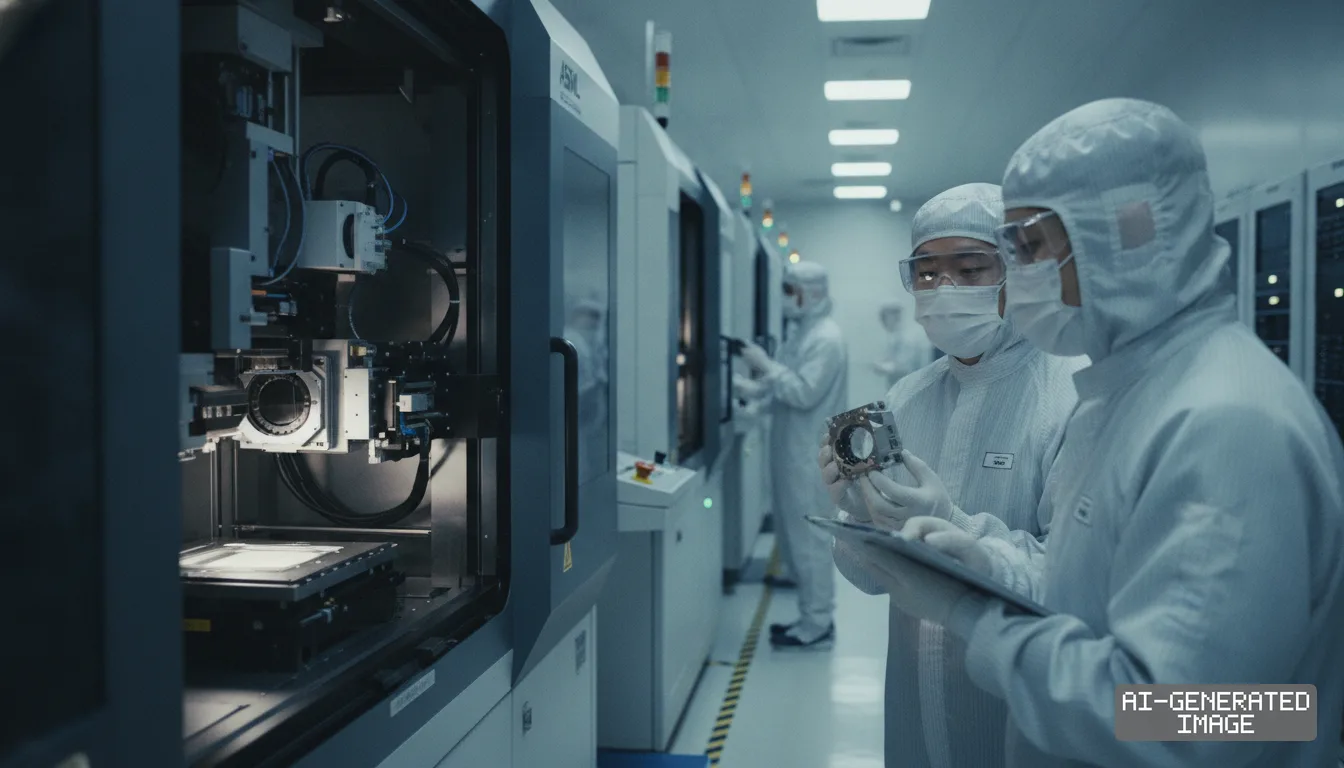
ASML notified Samsung Electronics and SK hynix on Oct. 12, 2026, that it will raise replacement component prices by 10% for its lithography equipment in South Korea.
The price increase applies across all replacement parts for extreme ultraviolet (EUV) and deep ultraviolet (DUV) scanners. The higher rates will take effect for component deliveries starting in January 2027.
Installed Base Management brought in €8.193 billion ($8.9 billion) for ASML last year. That business, covering servicing, spare parts and upgrades, made up 25% of the company's €32.667 billion in total net sales.
ASML headquarters delivered the proposed revision through its South Korean subsidiary in early September. The Dutch equipment maker reached final terms following weeks of talks with procurement teams at both memory manufacturers.
The 10% price revision affects standard consumables as well as high-value mission-critical units. It covers optical mirrors, collector lenses, tin-droplet light sources and high-precision wafer positioning stages.
Lithography systems print nanometer-scale circuit patterns onto silicon wafers using focused light beams. The machinery forms the most capital-intensive step in advanced semiconductor manufacturing.
A single extreme ultraviolet scanner costs about $200 million. High numerical aperture EUV units, known as High-NA systems, command prices exceeding $400 million each.
ASML holds an absolute monopoly in extreme ultraviolet lithography systems. No other toolmaker in the world produces commercial EUV scanners capable of printing leading-edge semiconductor circuitry.
South Korea represents one of the largest regional markets for advanced lithography. Both Samsung Electronics and SK hynix rely on ASML scanners across their domestic fabrication clusters.
Samsung Electronics operates EUV production lines at its mega-fab complex in Pyeongtaek. SK hynix runs high-volume EUV operations at its primary M16 fabrication facility in Icheon.
The memory makers use EUV tools to manufacture 10-nanometer-class dynamic random-access memory (DRAM). These cutting-edge nodes, designated 1b and 1c, form the foundation for high-bandwidth memory (HBM).
Production of HBM4 stacks, which feature advanced base dies, requires multiple critical lithography exposures. Any increase in scanner operating costs flows directly into memory packaging and wafer fab operations.
ASML previously adjusted component pricing on an item-by-item basis. Those earlier changes reflected sudden spikes in specialized raw material costs or temporary disruptions in precision component manufacturing.
A blanket 10% markup across an entire parts catalog is unusual for the semiconductor equipment sector. The move demonstrates the immense pricing power ASML commands over its global customer base.
Replacement components degrade under intense plasma radiation inside EUV vacuum chambers. Extreme ultraviolet light requires tin-plasma generation, creating a harsh internal environment that demands regular optical refurbishment.
Optics supplier Carl Zeiss SMT produces the specialized mirrors and collector optics for ASML. Those specialized assemblies have no alternative suppliers anywhere in the global semiconductor value chain.
Operating costs for lithography scanners already run into millions of dollars annually per machine. The 10% increase will lift routine fab maintenance expenditures across South Korean memory lines.
The pricing adjustment in South Korea could establish a precedent for other semiconductor tool vendors. Upstream suppliers face rising labor costs, specialized metal expenses and heavy research spending.
Applied Materials said during its August earnings briefing that it had raised prices on new and existing product lines. Tokyo Electron also cited cost inflation when adjusting equipment prices earlier this summer.
Discussions regarding complete tool orders are also progressing between ASML and chipmakers. The Dutch firm is discussing price increases for newly ordered lithography scanners slated for shipment beyond 2026.
ASML forecast earlier this year that revenue from its Installed Base Management unit would grow more than 30%. The upcoming component price adjustments will accelerate expansion in that high-margin services division.
ASML, Samsung Electronics and SK hynix have published no regulatory filings or public notices regarding the component agreement. Contract values, itemized price lists and exact cost increases for memory fabrication lines remain undisclosed.
Deliveries of replacement parts under the adjusted pricing framework begin on Jan. 1, 2027. Both South Korean chipmakers will absorb the updated price list across all domestic fab sites.
Impact map
How this development propagates across the region and out to global buyers.
| Event | Korea | China | Japan | Global impact |
|---|---|---|---|---|
| ASML 10% parts price hike | Samsung and SK hynix face 10% higher EUV and DUV parts costs across Pyeongtaek and Icheon fabs | SMIC and CXMT face separate DUV maintenance cost pressure under tighter supply rules | Tokyo Electron gains pricing leverage as peer equipment maintenance costs rise | Memory production costs climb for 1b DRAM and HBM4 base dies ahead of 2027 |
In this story
- Companies
- ASMLSamsung ElectronicsSK hynix
- Tickers
- ASML005930.KS000660.KS
- Exposed
- Carl Zeiss SMTApplied MaterialsTokyo Electron
- Policy
- Economic Security
- Impact
- Cost StructureSupply ChainPricing
Track every Economic Security development →
Related briefings
- Comparing East Asia Fab Subsidies Across Japan, Korea, and China Also on Applied Materials, ASML, Tokyo Electron
- Taiwan clears TSMC fab site for sub-1.4nm chips at Longtan Also on Applied Materials, ASML, Tokyo Electron
- Japan Linear Guide Makers Expand Ultra-Clean Units for 2nm Fab Robotics Also on Applied Materials, ASML, Tokyo Electron
- Skytech opens TSMC-backed advanced process lab to speed chip tool verification Also on Applied Materials, ASML, Tokyo Electron
Sources
Reporting
Confidence: medium — how we grade this
The documents behind this briefing are linked above. East Asia Brief produces its English text with AI assistance under human editorial review, and does not translate or republish other outlets' articles. See our methodology and AI policy. Spotted an error? Tell us.
The Morning Brief
What changed in Korean, Chinese and Japanese industry overnight — and what it means for your supply chain. One email, weekday mornings, US time. Free.
The Morning Brief is in preparation. Leave your address and we will write to you once — when the first issue is ready. Nothing before that.