Japan Linear Guide Makers Expand Ultra-Clean Units for 2nm Fab Robotics
THK, NSK, and IKO scale maintenance-free motion hardware and zero-outgassing stages as sub-3nm semiconductor fabs require particle-free automated wafer transport.
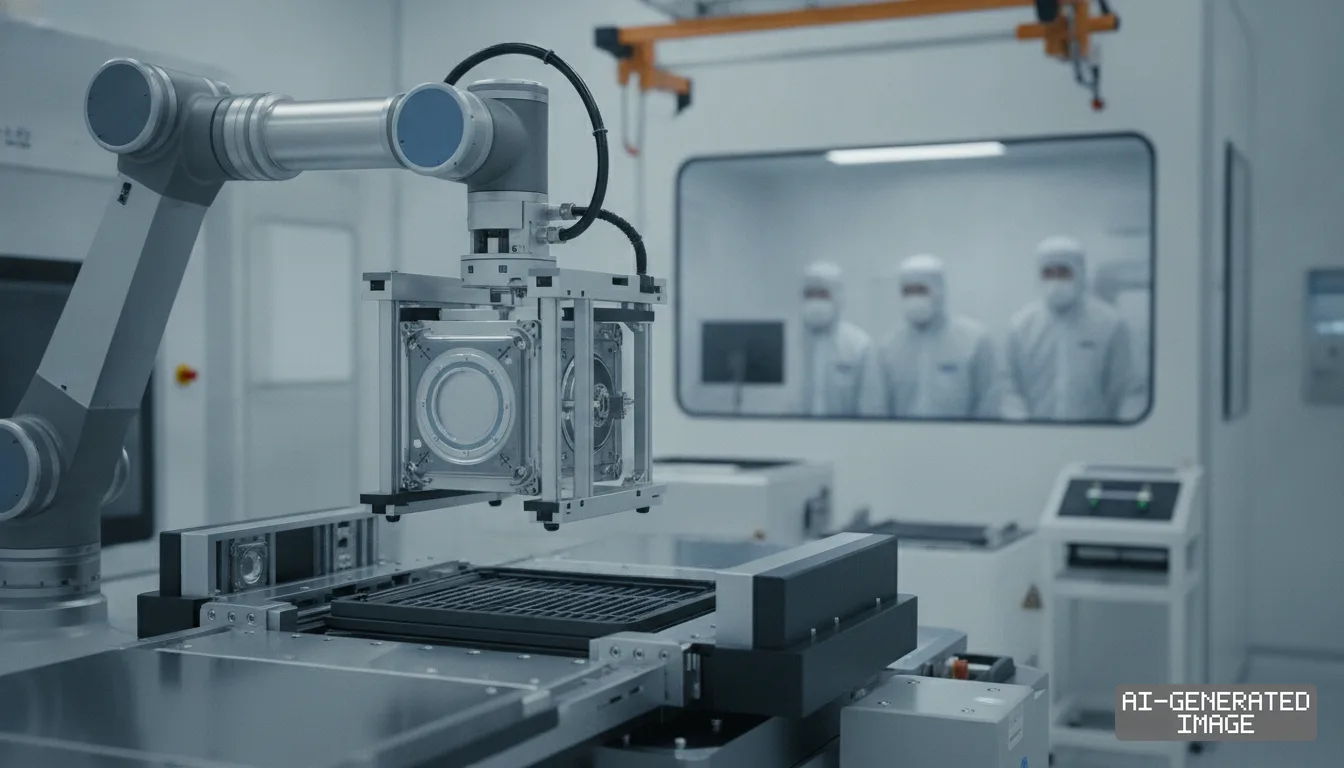
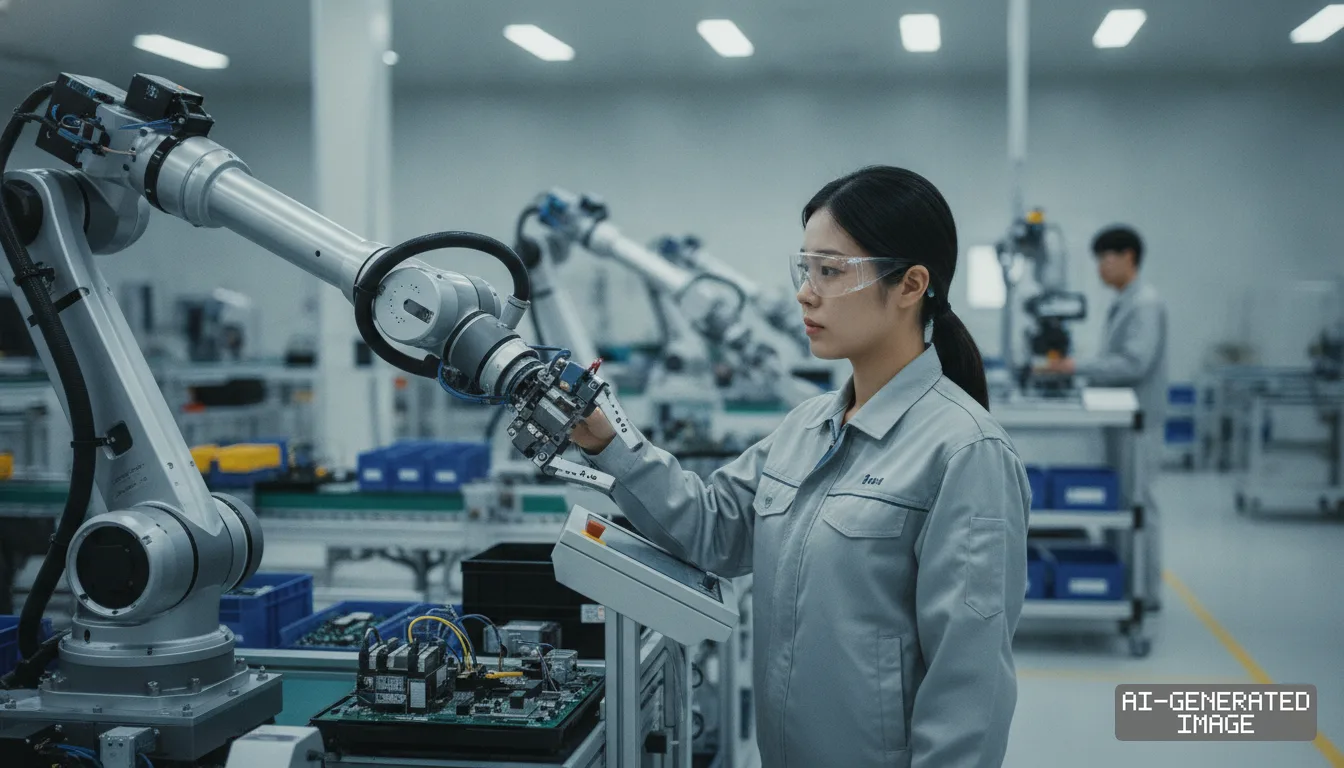
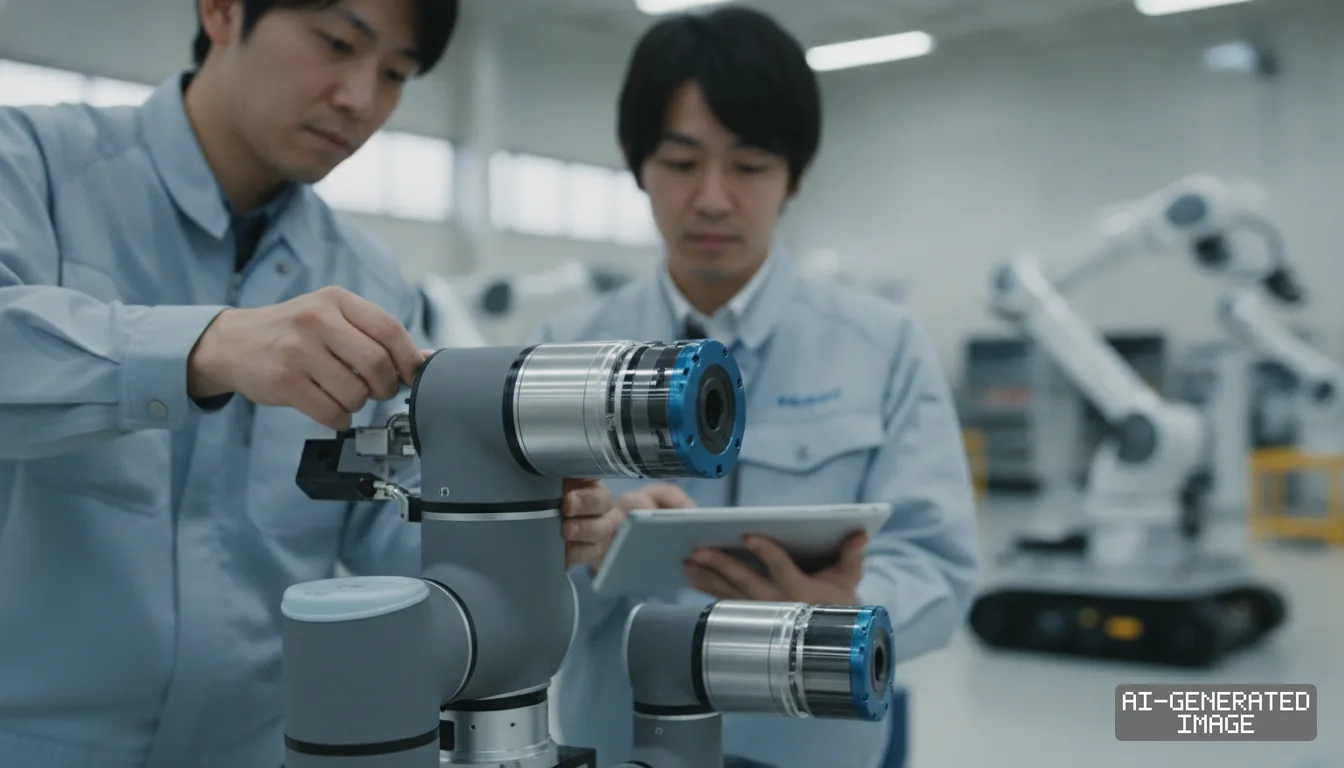
Japanese precision motion component manufacturers are expanding production allocations for cleanroom-grade linear guides and multi-axis positioning stages to meet rising delivery requirements from semiconductor tool builders retrofitting production lines for 2-nanometer and sub-3-nanometer wafer manufacturing. The transition to smaller process nodes has compressed permissible particulate contamination thresholds inside front-end fab automation to near-zero levels, forcing automated material handling systems, overhead hoist transports, and vacuum transfer robots to replace conventional linear ball guides with sealed, low-dust, and zero-outgassing motion assemblies.
In advanced front-end wafer fabrication facilities, automated material handling systems and front opening unified pod transfer mechanisms operate in environments where airborne chemical contamination and microscopic metallic debris directly compromise wafer yields during extreme ultraviolet lithography and atomic layer deposition. Standard industrial linear guides shed microscopic steel particles under high-speed ball-track recirculation and release volatile organic compounds from standard petroleum lubricants under cleanroom vacuum conditions. To prevent wafer contamination and optical haze on lithography mirrors, semiconductor equipment manufacturers require linear motion assemblies engineered with synthetic low-dust greases, fluorinated surface coatings, and isolated mechanical seals that eliminate shedding during continuous high-acceleration operations.
THK Co., Ltd. is addressing this requirement by expanding cleanroom delivery allocations for its SPR and SPS series ultra-low weaving linear motion guides and CSKR cleanroom electric actuators. The Tokyo-based precision machinery maker has deployed its AHR series miniature linear motion guides, engineered with four-way equal load distributions and low rolling resistance to support rapid automated pick-and-place cycles at velocities reaching 5 meters per second and accelerations up to 300 meters per second squared. To prevent chemical contamination on sensitive wafer surfaces, THK utilizes its proprietary AFE-CA metal-free cleanroom grease alongside nanometer-resolution piezoelectric positioning stages designed specifically for vacuum inspection tools and extreme ultraviolet mask aligners. The company has structured dedicated semiconductor engineering units across its domestic production network to support tool integration schedules for domestic and overseas fab projects.
NSK Ltd. has simultaneously increased precision component output across its SPACEA series, which encompasses cleanroom-rated, vacuum-compatible, and corrosion-resistant linear guides, miniature ball screws, and specialized bearing assemblies. The company utilizes proprietary synthetic lubricating compounds, including LG2, LGU, and DL2 low-dust greases, alongside its patented E-DFO and V-DFO fluorinated bake-on lubrication coatings that eliminate grease vaporization in high-vacuum deposition chambers. In its first-quarter financial disclosures for the fiscal year ending March 2027, released on July 30 and July 31, 2026, NSK confirmed that operating income in its industrial machinery segment was elevated by sustained order momentum from semiconductor manufacturing equipment builders in Japan, North America, and East Asia, prompting internal manufacturing adjustments to clear backlogs for high-precision motion subassemblies.
Nippon Thompson Co., Ltd., marketing under the IKO brand, is directing additional precision assembly capacity toward its TC series clean precision positioning tables and Nano Linear NT direct-drive translation units. IKO incorporates patented liquid-crystal lubrication technologies and C-Lube self-lubricating systems across its stainless steel linear way portfolio, delivering maintenance-free operational lifespans exceeding tens of thousands of kilometers without releasing oil mist into wafer transport corridors. These integrated positioning tables combine direct-drive linear motors, optical linear encoders, and isolated guideways into pre-aligned subassemblies, enabling tool makers to reduce assembly cycle times on wafer handling robotics while maintaining sub-micron path accuracy.
The commercial dynamics of the precision mechanical sector reflect the premium captured by certified cleanroom motion hardware. Industry pricing benchmarks indicate that semiconductor-grade, vacuum-certified linear motion guides command average selling prices two to five times higher than standard general-machinery guide rails of equivalent structural dimensions. This price differential reflects specialized metallurgical treatments, cleanroom ultrasonic washing procedures, vacuum bake-out processing, and individual particle-emission certification required before installation. The broader global linear guide rail market, valued at $4.19 billion in 2025, is projected to reach $6.70 billion by 2031, driven predominantly by front-end fab cleanroom investments and automated back-end advanced packaging facilities across East Asia, the United States, and Europe.
Rather than committing capital to greenfield manufacturing plants, Japanese motion component leaders are expanding cleanroom guide throughput by reconfiguring existing precision machining facilities, converting standard assembly lines into ISO Class 1 and Class 100 clean assembly zones, and increasing the supply of ready-to-install motion subassemblies. Tool builders such as Tokyo Electron, Applied Materials, Lam Research, and ASML increasingly procure integrated mechanical stages and pre-tested multi-axis transport modules directly from component suppliers to streamline fab tool delivery lead times.
Tool integration schedules for upcoming 2-nanometer pilot and commercial lines scheduled across East Asia and North America through 2027 will determine the delivery timelines for these specialized motion assemblies.
Impact map
How this development propagates across the region and out to global buyers.
| Event | Korea | China | Japan | Global impact |
|---|---|---|---|---|
| Cleanroom linear guide expansion | memory fab transport orders | tool component procurement | precision motion margins | 2nm fab equipment delivery schedules |
In this story
- Companies
- THK Co.Ltd.NSK Ltd.Nippon Thompson Co.Ltd.
- Tickers
- 6481.T6471.T6480.T
- Exposed
- Tokyo ElectronASMLApplied MaterialsLam Research
- Policy
- Economic Security
- Impact
- Supply ChainOrder BookPricingCapex
Track every Economic Security development →
Related briefings
- Daifuku expands cleanroom transport backlogs as Asian chipmakers accelerate fab builds Also on Ltd., Tokyo Electron, Order Book
- Skytech opens TSMC-backed advanced process lab to speed chip tool verification Also on Lam Research, Applied Materials, ASML
- Chinese private yards expand dual-fuel bulker berths as European owners accelerate green fleet renewal Also on Ltd., Order Book
- Chinese heavy machinery plants install automated ultrasonic gantries to verify welds Also on Ltd.
Sources
Reporting
Confidence: medium — how we grade this
The documents behind this briefing are linked above. East Asia Brief produces its English text with AI assistance under human editorial review, and does not translate or republish other outlets' articles. See our methodology and AI policy. Spotted an error? Tell us.
The Morning Brief
What changed in Korean, Chinese and Japanese industry overnight — and what it means for your supply chain. One email, weekday mornings, US time. Free.
The Morning Brief is in preparation. Leave your address and we will write to you once — when the first issue is ready. Nothing before that.