TSMC revenue rises 53% on AI demand to record NT$514 billion
The Taiwanese contract chipmaker reached NT$514.81 billion in August sales as advanced-node orders widened its global foundry market lead to 72.5% over rival Samsung.
Taiwan Semiconductor Manufacturing Co. confirmed Sept. 12 that its August revenue surged 53.3% to NT$514.81 billion ($16.1 billion), marking the contract chipmaker's highest single-month sales total on record.
The monthly intake pushed cumulative sales for January through August to NT$3.39 trillion ($106 billion), representing an increase of 39.3% over the NT$2.43 trillion generated during the same eight months of 2025.
August net revenue exceeded July sales of NT$467.58 billion by 10.1%, crossing the NT$500 billion threshold for the first time in corporate history, according to the monthly financial statement signed by Chief Financial Officer Wendell Huang.
The year-over-year expansion accelerated from August 2025, when the company posted monthly net revenue of NT$335.77 billion prior to the widespread commercial adoption of next-generation artificial intelligence server racks.
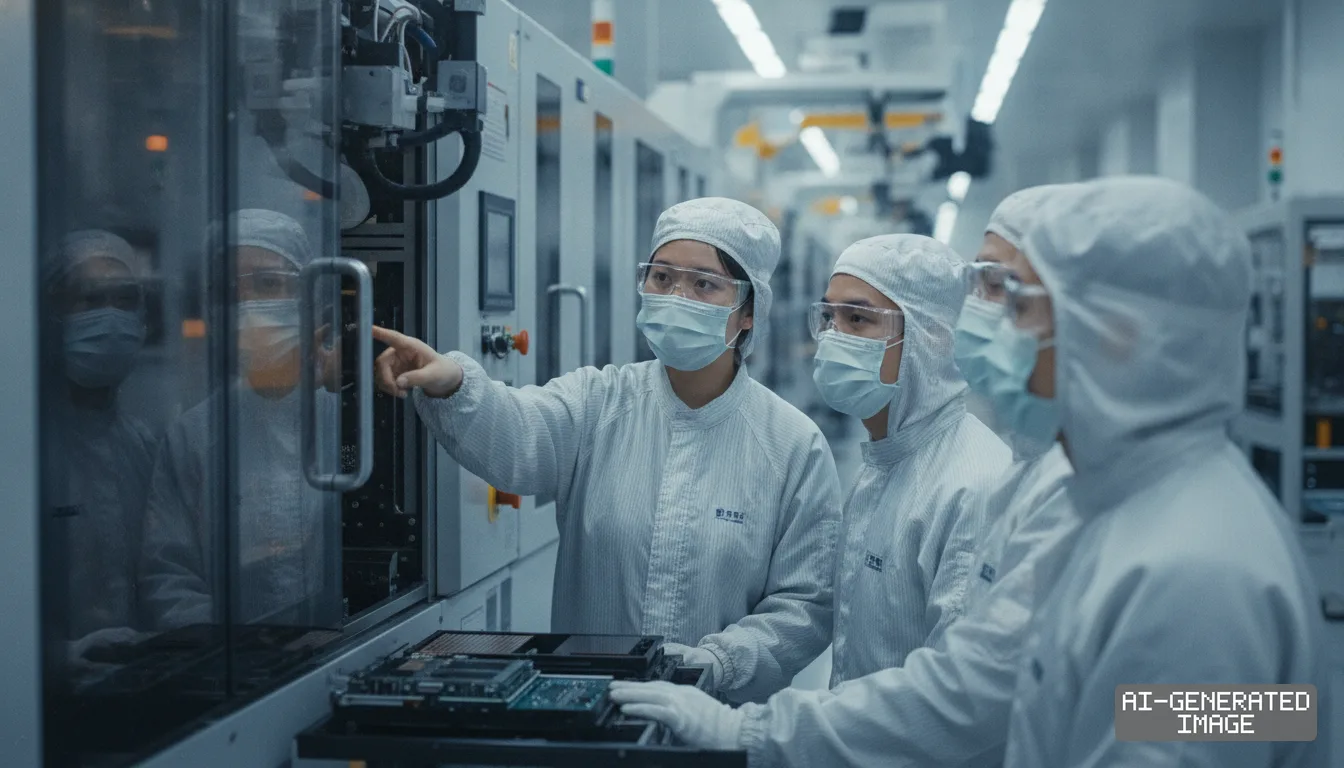
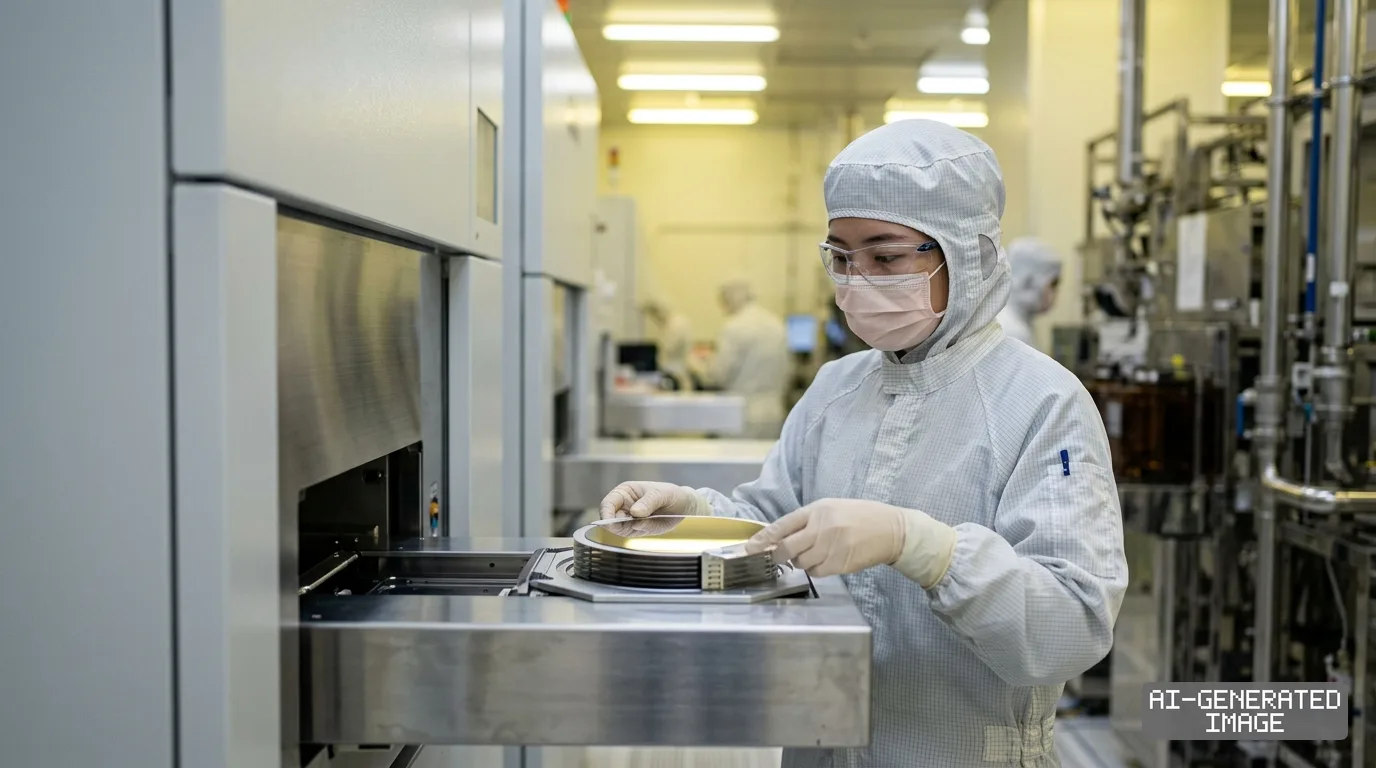
TSMC generates the vast majority of its leading-edge output from domestic fabrication clusters in Taiwan, where specialized cleanrooms produce advanced processors for North American fabless technology customers.
Surging enterprise orders for accelerator hardware have concentrated fabrication volumes onto TSMC manufacturing lines, widening the operational performance gap between the Taiwanese foundry and its primary regional competitors.
TSMC commanded 72.5% of the global contract chip foundry market during the second quarter of 2026, according to industry market share data published by research firm TrendForce.
Samsung Foundry captured 5.9% of global contract chipmaking revenue over the same period, while China's Semiconductor Manufacturing International Corp. held a 5.4% share, the research data showed.
The 66.6 percentage point lead over Samsung Electronics illustrates how high-performance accelerator production has consolidated almost entirely within TSMC fabrication complexes located in Hsinchu, Taichung and Tainan.
Nvidia and other major processor designers rely on TSMC for all commercial shipments of advanced accelerator silicon, reserving production allocations across 5-nanometer, 4-nanometer and 3-nanometer manufacturing lines.
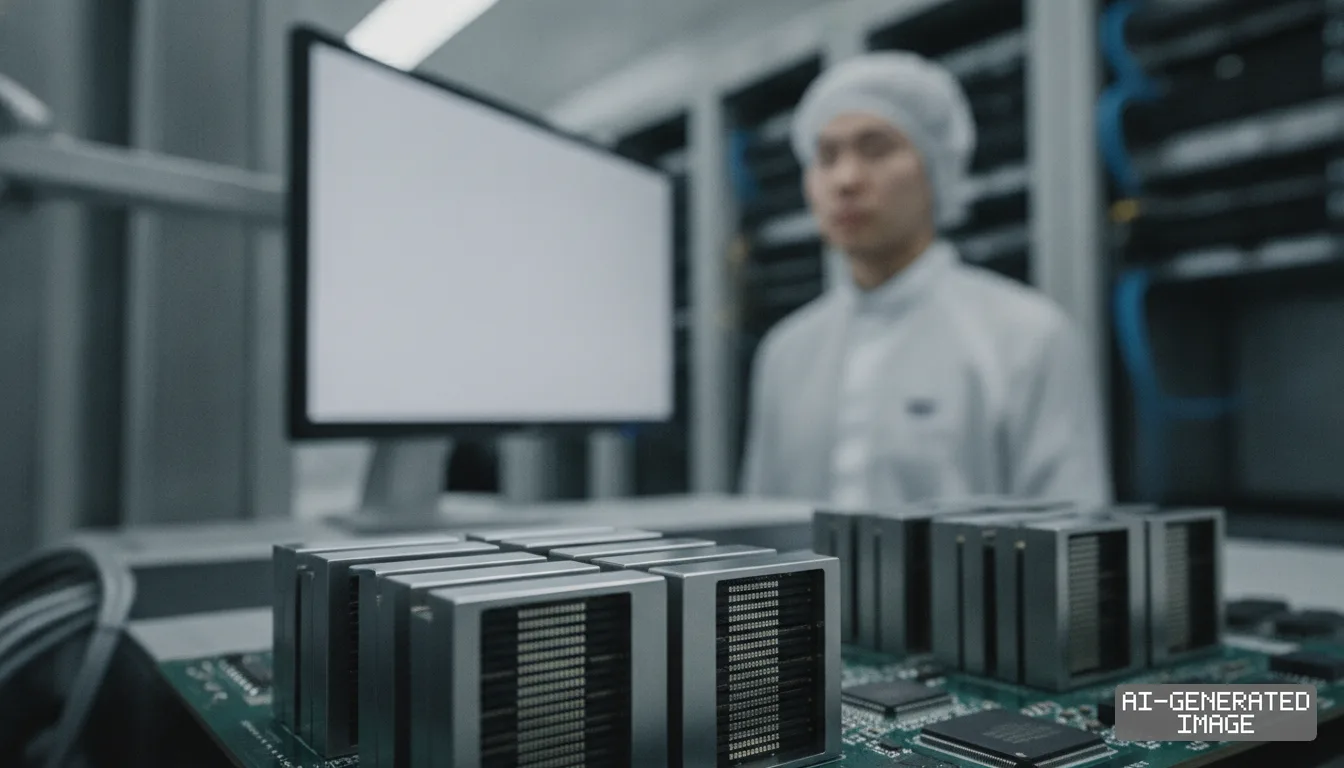
Modern accelerator architectures require chip-on-wafer-on-substrate packaging — a technique known as CoWoS that stacks logic dies and high-bandwidth memory chips side by side across an underlying silicon interposer.
Packaging bottlenecks have constrained global processor shipments, prompting TSMC to double its advanced packaging cleanroom capacity across multiple domestic fabrication facilities over the past 12 months.
Foundry production lines for 3-nanometer wafers remained fully booked through August, supported by smartphone processor production schedules alongside unrelenting enterprise server accelerator orders, TrendForce reported.
Rival manufacturers have struggled to match those production yields, leaving Samsung Electronics and Intel unable to win comparable high-volume commitments from Tier-1 hyperscale artificial intelligence system designers.
Samsung Foundry has attempted to regain customer share by offering gate-all-around transistor architecture, but low commercial yields have prevented the Korean conglomerate from capturing commercial accelerator volume.
Trade restrictions have simultaneously restricted China's Semiconductor Manufacturing International Corp. to mature logic nodes, eliminating mainland Chinese foundries from participating in advanced global artificial intelligence processor fabrication.
In July, TSMC raised its planned capital expenditure for 2026 to between $60 billion and $64 billion to fund aggressive node upgrades and packaging facility construction.
Management guided full-year consolidated revenue to grow slightly above 40% in US-dollar terms, supported by higher wafer pricing and initial contributions from pilot 2-nanometer development lines.
The elevated capital spending plan has increased procurement volumes for specialized tool makers, driving equipment bookings at ASML Holding, Tokyo Electron and Applied Materials to support long-term construction schedules.
The geographic concentration of advanced wafer fabrication leaves global hardware supply chains dependent on Taiwan, where commercial facilities produce nearly all leading-edge graphics processors currently deployed worldwide.
TSMC did not disclose specific node-level revenue splits, total wafer shipment figures or individual customer delivery volumes within the monthly financial release signed by Huang.
The company is scheduled to publish audited third-quarter earnings on Oct. 15, 2026, when corporate executives will review fourth-quarter capacity bookings and update capital deployment targets.
Impact map
How this development propagates across the region and out to global buyers.
| Event | Korea | China | Japan | Global impact |
|---|---|---|---|---|
| AI foundry concentration | Samsung Foundry holds 5.9% market share, trailing TSMC by 66.6 percentage points | SMIC restricted to mature nodes at 5.4% share under multilateral equipment controls | Tokyo Electron captures increased tool orders driven by TSMC $60-64B capex program | AI server suppliers face single-source bottleneck as TSMC commands 72.5% of global foundry orders |
In this story
- Companies
- Taiwan Semiconductor Manufacturing Co.
- Tickers
- 2330.TWTSM
- Exposed
- NvidiaSamsung ElectronicsSemiconductor Manufacturing International Corp.IntelASML HoldingTokyo Electron
- Policy
- Export ControlsSubsidies
- Impact
- Supply ChainCapexPricing
Track every Export Controls development → Track every Subsidies development →
Related briefings
- Naura and SMEE Accelerate Domestic Tool Shipments to Chinese Fabs Also on ASML Holding, Tokyo Electron, Export Controls
- TSMC Reaffirms 2028 Target for 1.4nm Chips at Taichung Fab Also on Taiwan Semiconductor Manufacturing Co, Intel, Nvidia
- Silicon interposer scaling drives foundry and OSAT shifts in 3.5D chiplets Also on Taiwan Semiconductor Manufacturing Co, Intel, Samsung Electronics
- SK hynix and foundries advance hybrid bonding for AI silicon in 2027 Also on Intel, Tokyo Electron, Nvidia
Sources
Reporting
Confidence: medium — how we grade this
The documents behind this briefing are linked above. East Asia Brief produces its English text with AI assistance under human editorial review, and does not translate or republish other outlets' articles. See our methodology and AI policy. Spotted an error? Tell us.
The Morning Brief
What changed in Korean, Chinese and Japanese industry overnight — and what it means for your supply chain. One email, weekday mornings, US time. Free.
The first issue goes out shortly. Sign up now and you will not miss it.