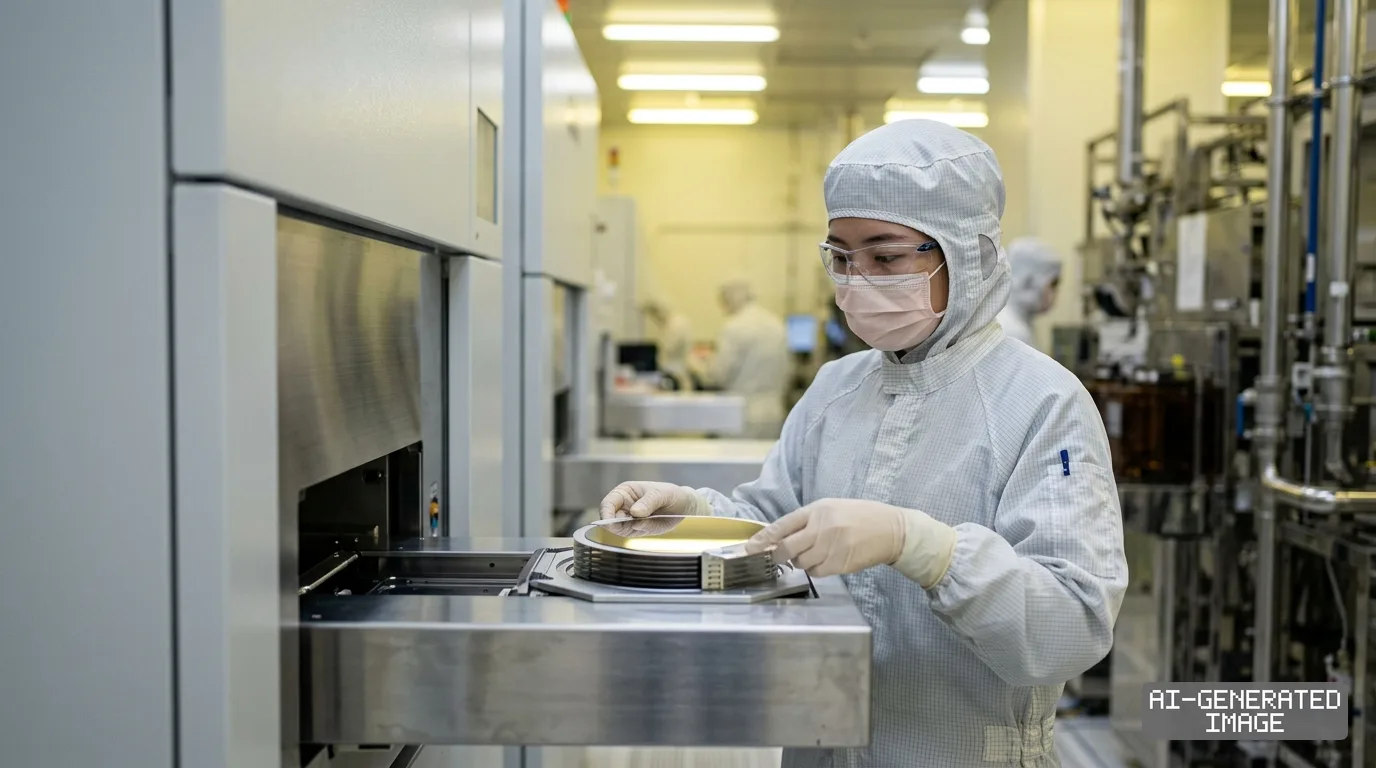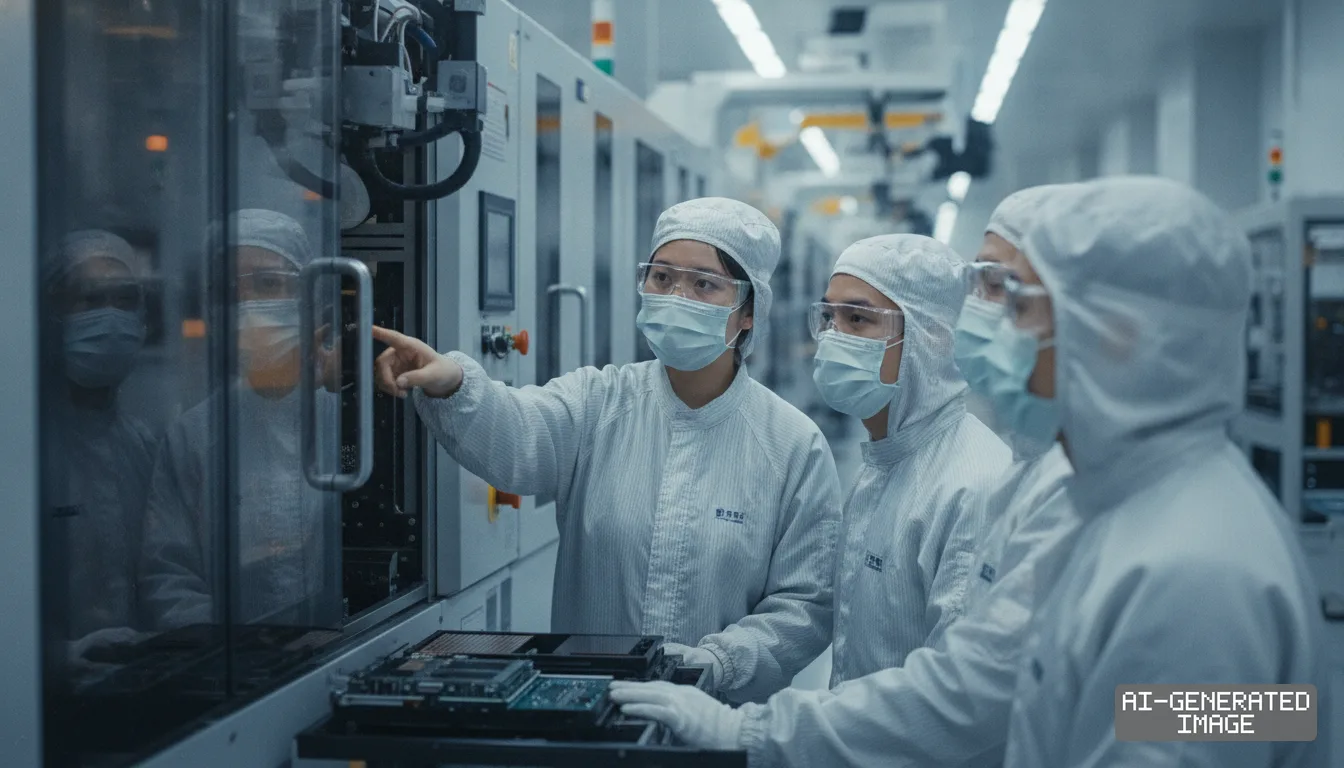
China and South Africa advance battery mineral refining pact
Beijing seeks overseas processing hubs to bypass Western trade barriers as Pretoria demands that refiners add value to its 37% share of global manganese production.
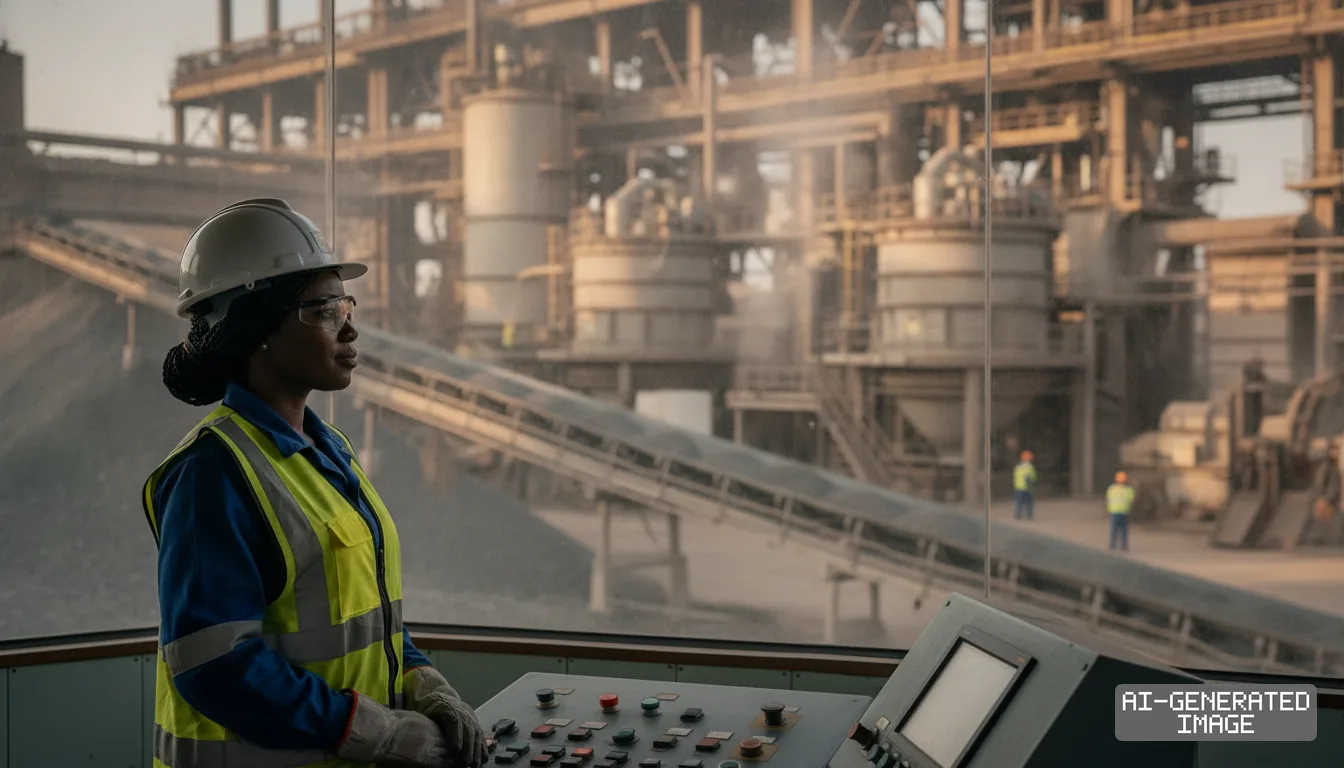
South African President Cyril Ramaphosa called on Chinese industrial partners on Sept. 13 to build domestic battery mineral refining plants under the two countries' bilateral economic partnership.
South Africa holds roughly 70% of global high-grade manganese reserves and accounts for 37% of worldwide manganese ore production. The country refines only 14% of that output inside its borders.
China processes approximately 87% of the world's critical battery minerals. Chinese chemical refiners dominate the conversion of raw manganese ore into battery-grade manganese sulfate for electric vehicle cells.
The renewed push builds on the Comprehensive All-Round Economic Partnership Framework Agreement signed in Beijing on Feb. 6. South Africa became the 33rd African country to adopt that bilateral trade structure.
South African Trade Minister Parks Tau and Chinese Commerce Minister Wang Wentao signed the pact to eliminate tariffs on South African goods. The agreement took effect on May 1 following preliminary procedures.
The Early Harvest Agreement under that framework grants zero-tariff entry for South African exports across 100% of tariff lines. That provision removes import duties on unwrought ores, refined concentrates and finished metallurgical goods.
Ramaphosa reiterated the demand for downstream processing during the concluding sessions of the BRICS summit in New Delhi on Sept. 13. He said raw mineral exporters must capture industrial value.
South Africa defines local refining as mineral beneficiation — the metallurgical process of transforming mined ores into high-purity chemical inputs. The strategy targets cathode chemicals for electric vehicles and utility storage.
Between 2020 and 2024, South Africa produced millions of tonnes of raw manganese but processed only 2.7 million tonnes domestically. Mining companies exported the remainder as unrefined bulk material.
Pretoria's Critical Minerals and Metals Strategy places manganese in its highest criticality tier alongside platinum and iron ore. The policy requires mining houses to support domestic chemical manufacturing.
Chinese battery giants face intensifying Western trade barriers that restrict supply chains rooted in mainland processing. United States rules under the Inflation Reduction Act exclude subsidies for packs containing Chinese-refined material.
Tariff measures have also hit South African manufacturers after Washington placed 30% import duties on selected South African industrial shipments in 2025. Pretoria has looked toward Asian markets to offset Western penalties.
Contemporary Amperex Technology, known as CATL, manufactures roughly 37% of the world's electric vehicle battery cells. The company relies on uninterrupted inflows of manganese and lithium feedstock for nickel-manganese-cobalt chemistries.
Automaker BYD produces more than 3 million new energy vehicles annually and has acquired direct stakes in six African lithium deposits. Tau held formal talks with BYD and CATL regarding processing investments.
Chinese battery makers produce roughly 75% of global cathode active materials. Sourcing refined chemical salts from African facilities allows manufacturers to diversify processing nodes while retaining operational control over downstream precursor production.
Domestic researchers in South Africa have already completed testing on a pilot facility producing manganese sulfate from metal. A separate study finished engineering plans for a 10,000-liter battery precursor facility.
University of Limpopo professor Phuti Ngoepe said on Sept. 12 in Shanghai that both governments are negotiating a formal China-Africa mining and metallurgy alliance to transfer chemical extraction technology.
The bilateral initiative connects South African technical laboratories directly with Chinese industrial research institutes. The collaboration focuses on purifying manganese ore directly into battery cathode precursor materials.
Chinese authorities had previously incorporated African refining assistance into the Forum on China-Africa Cooperation Action Plan for 2025 through 2027. Clause 7.1.2 explicitly pledges Chinese support for local value-addition plants.
China's Ministry of Commerce advanced that framework in November 2025 by unveiling a green mining initiative at the Group of 20 summit in Johannesburg. South African trade officials backed the joint proposal.
To ease market access, Tau signed an agreement on July 2 with Chinese market regulators in Beijing. The memorandum aligns technical standards, product accreditation and industrial quality inspection rules between both markets.
Sub-Saharan Africa contains approximately 30% of global critical mineral deposits, yet regional facilities process less than 10% of extracted ores. South Africa seeks to position its industrial zones as the refining gateway for neighboring states.
Logistical bottlenecks continue to squeeze overland mineral transport across South Africa. Freight rail constraints and harbor backlogs force mining operators to move heavy bulk manganese ore using diesel trucks.
Refining minerals domestically reduces shipping mass by over 80% compared to transporting raw ore rocks. Converting ore into battery-grade chemical crystals at mine sites cuts port congestions and shipping freight costs.
Unreliable electricity supply remains an obstacle for proposed chemical refineries. South Africa's national power utility has imposed rolling power cuts, while metallurgical processing requires continuous, multi-megawatt base-load electrical capacity.
The Department of Trade, Industry and Competition has not published a binding project roster, capital expenditure commitments or foreign equity limits for Chinese battery refineries.
South African industrial delegates will travel to Shanghai in November 2026 to attend dedicated mining and steel investment forums during the ninth China International Import Expo.
Impact map
How this development propagates across the region and out to global buyers.
| Event | Korea | China | Japan | Global impact |
|---|---|---|---|---|
| China-South Africa mineral processing partnership | LG Energy Solution and POSCO Future M monitor non-China manganese precursor flows | CATL and BYD secure African refining footholds to hedge Western export controls | Panasonic and trading houses face tighter competition for South African battery inputs | Manganese sulfate supply shifts from mainland ports toward African coastal hubs |
In this story
- Companies
- Contemporary Amperex TechnologyBYD
- Tickers
- 300750.SZ002594.SZ
- Policy
- Critical MineralsTariffsIndustrial PolicyExport Controls
- Impact
- Supply ChainCapexCompliance
Track every Tariffs development → Track every Industrial Policy development → Track every Export Controls development →
Related briefings
- Korea doubles US rare earth imports to counter China quotas Also on Critical Minerals, Export Controls
- LG Energy Solution converts EV lines to accelerate ESS LFP pouch cell output Also on BYD, Contemporary Amperex Technology, Tariffs
- BYD confirms solid-state battery car test for 2027 rollout Also on Industrial Policy, BYD
- Korean cathode makers retool production lines for LMFP chemistry as price war spreads Also on BYD, Contemporary Amperex Technology, Tariffs
Sources
Primary documents
Reporting
Confidence: high — how we grade this
The documents behind this briefing are linked above. East Asia Brief produces its English text with AI assistance under human editorial review, and does not translate or republish other outlets' articles. See our methodology and AI policy. Spotted an error? Tell us.
The Morning Brief
What changed in Korean, Chinese and Japanese industry overnight — and what it means for your supply chain. One email, weekday mornings, US time. Free.
The first issue goes out shortly. Sign up now and you will not miss it.