TSMC widens CoWoS supply chain with $2 billion US interposer deal
A five-year agreement with GlobalFoundries establishes the first US manufacturing source for AI silicon interposers, challenging Samsung's turnkey packaging push.
Taiwan Semiconductor Manufacturing Co. widened its advanced packaging supply chain on Oct. 12, 2026, confirming operational preparations for a $2 billion multi-year silicon interposer supply arrangement.
The agreement, structured across an initial five-year term, commits contract chipmaker GlobalFoundries to produce silicon interposers at its fabrication facility in Malta, New York.
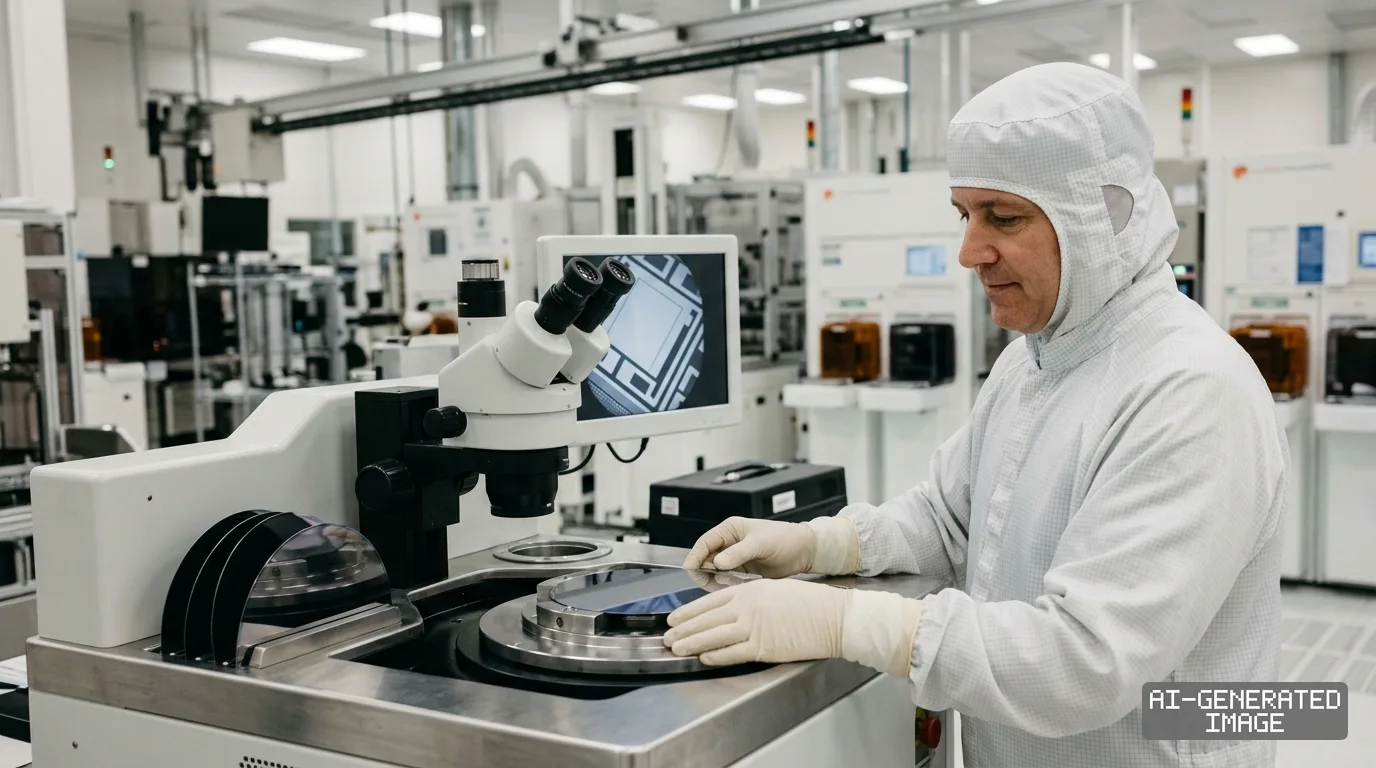
Silicon interposers are ultra-thin silicon layers containing microscopic wiring that connect graphic processing units and high-bandwidth memory stacks inside a single package.
The deal establishes the first domestic production footprint in the United States for interposers used in TSMC’s proprietary Chip-on-Wafer-on-Substrate advanced packaging platform.
TSMC controls more than 70% of worldwide foundry capacity for advanced AI accelerators. Severe capacity shortfalls in CoWoS packaging lines have constrained deliveries of AI processors across global cloud providers.
The Malta facility will integrate deep trench capacitors directly into the silicon interposers. Deep trench capacitors are microscopic energy storage devices etched into silicon to steady high-power current flows.
GlobalFoundries will run the manufacturing line under manufacturing service protocols specified by TSMC. The structure allows TSMC to outsource passive silicon manufacturing while preserving its proprietary chip assembly recipes.
Advanced packaging has become the primary physical barrier to scaling high-performance compute engines, said Ed Kaste, senior vice president of CMOS Business at GlobalFoundries.
By establishing a trusted manufacturing footprint in New York, the company creates a scalable source of packaging components to support customer deployment schedules, Kaste said.
The geographic diversification marks a shift for TSMC, which has kept the bulk of its advanced packaging operations clustered in Taiwan.
United States customers designing AI accelerators have sought domestic manufacturing options to qualify for federal support programs and manage geopolitical exposure.
The expansion alters the competitive dynamic for Samsung Electronics. Samsung has promoted a turnkey manufacturing model that integrates front-end logic fabrication, high-bandwidth memory production and proprietary I-Cube 2.5D packaging.
Samsung argued that its unified memory-and-foundry footprint eliminates interposer bottlenecks for AI hardware designers. Its foundry division has campaigned to capture fabless customers seeking shelter from TSMC’s packaging delays.
TSMC’s move to farm out interposer fabrication directly weakens that alternative pitch. By enlisting GlobalFoundries, TSMC expands interposer availability without building capital-intensive trailing-edge cleanrooms in Taiwan.
The move also reinforces the commercial position of SK hynix. SK hynix supplies roughly 60% of the world’s high-bandwidth memory, shipping the majority of its stacks into TSMC’s packaging ecosystem.
SK hynix has aligned its next-generation HBM roadmap with TSMC through joint development agreements for HBM4 base dies and HBM5 packaging validation.
Additional interposer volume in North America protects SK hynix from secondary packaging constraints that previously threatened to delay high-bandwidth memory deployments.
Global packaging tool builders will also absorb shifting capital expenditures. Equipment specialists Tokyo Electron and Disco supply grinding and chemical mechanical planarization equipment essential for interposer wafer thinning.
Those equipment vendors will see delivery schedules extend to upstate New York as GlobalFoundries equips cleanroom space in Malta.
The supply arrangement leaves several details unresolved. GlobalFoundries did not publish the target monthly wafer output for the Malta interposer lines, nor did it disclose specific wafer allocations reserved for customers Nvidia and Advanced Micro Devices.
TSMC has not issued a separate financial breakdown detailing its direct capital expenditure commitment toward the New York site tooling.
The next scheduled benchmark arrives in early 2028. Volume production ramping at the Malta facility begins during the first half of 2028, setting the timeline for US-packaged accelerator commercialization.
Impact map
How this development propagates across the region and out to global buyers.
| Event | Korea | China | Japan | Global impact |
|---|---|---|---|---|
| US silicon interposer diversification | Samsung turnkey packaging loses leverage as SK hynix defends ~60% HBM share via expanded CoWoS ecosystem | Domestic AI developers face widening packaging performance gap without access to advanced interposers | Equipment makers Tokyo Electron and Disco capture cleanroom tool orders for Malta fab expansion | Hyperscale cloud providers gain dual-sourced 2.5D interposer capacity for advanced AI accelerators |
In this story
- Companies
- Taiwan Semiconductor Manufacturing Co.GlobalFoundriesSamsung ElectronicsSK hynix
- Tickers
- TSMGFS005930.KS000660.KS
- Exposed
- NvidiaAdvanced Micro DevicesTokyo ElectronDisco
- Policy
- Economic SecuritySubsidies
- Impact
- Supply ChainCapexOrder Book
Track every Economic Security development → Track every Subsidies development →
Related briefings
- Samsung opens Yokohama chip packaging lab to rival TSMC lead Also on Disco, Tokyo Electron, Samsung Electronics
- Hanmi Semiconductor wins $18 million tool deal from Samsung Also on Disco, SK hynix, Order Book
- GlobalFoundries agrees to build silicon interposers for TSMC in $2B deal Also on GlobalFoundries, Taiwan Semiconductor Manufacturing Co., Nvidia
- TSMC captures 72.5% foundry share as gap with Samsung widens Also on GlobalFoundries, Taiwan Semiconductor Manufacturing Co., Nvidia
Sources
Reporting
Confidence: medium — how we grade this
The documents behind this briefing are linked above. East Asia Brief produces its English text with AI assistance under human editorial review, and does not translate or republish other outlets' articles. See our methodology and AI policy. Spotted an error? Tell us.
The Morning Brief
What changed in Korean, Chinese and Japanese industry overnight — and what it means for your supply chain. One email, weekday mornings, US time. Free.
The Morning Brief is in preparation. Leave your address and we will write to you once — when the first issue is ready. Nothing before that.