GlobalFoundries agrees to build silicon interposers for TSMC in $2B deal
The five-year contract establishes domestic manufacturing in Malta, New York, for TSMC's CoWoS packaging ecosystem, with commercial production scheduled to ramp in the first half of 2028.
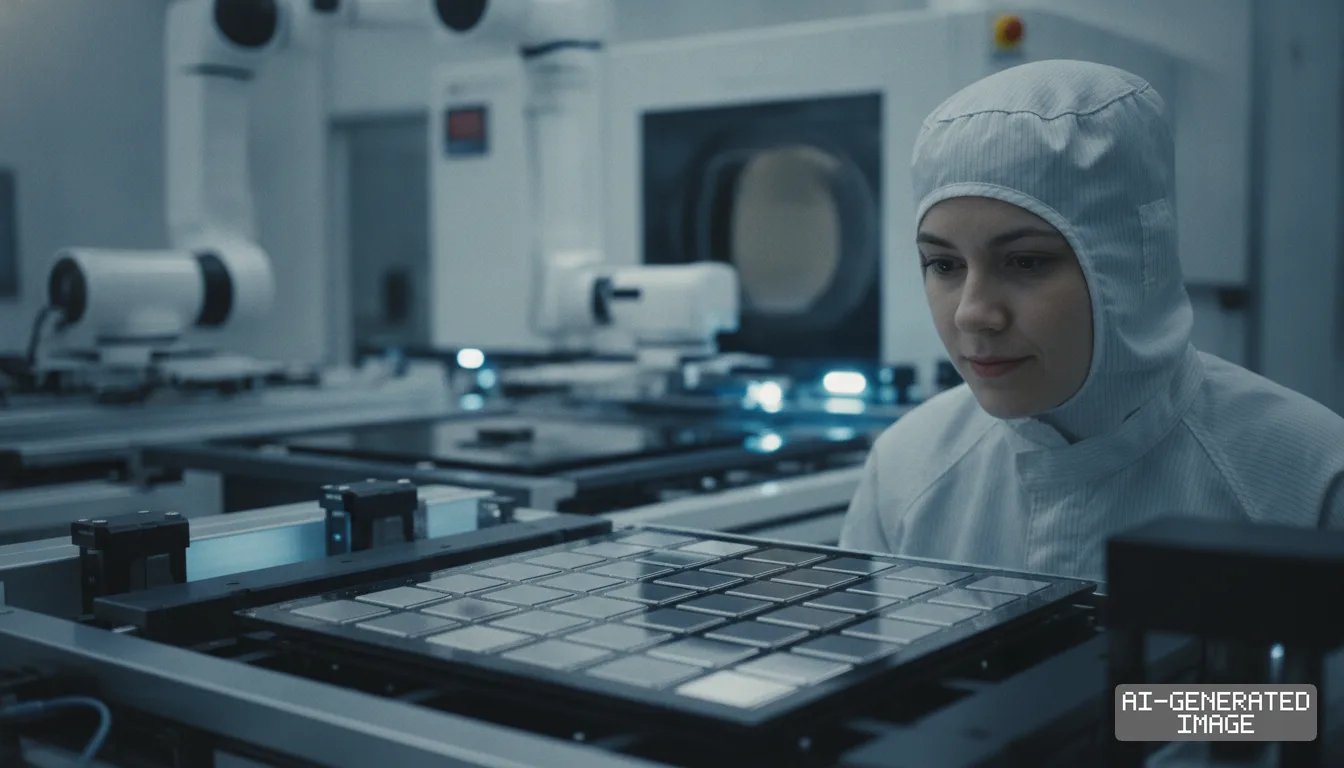
GlobalFoundries agreed Oct. 8, 2026, to manufacture silicon interposers for Taiwan Semiconductor Manufacturing Co. under a five-year contract valued at $2 billion to support advanced artificial intelligence chip packaging.
The agreement establishes the first commercial production source on American soil for silicon interposers used in TSMC's proprietary Chip-on-Wafer-on-Substrate packaging platform.
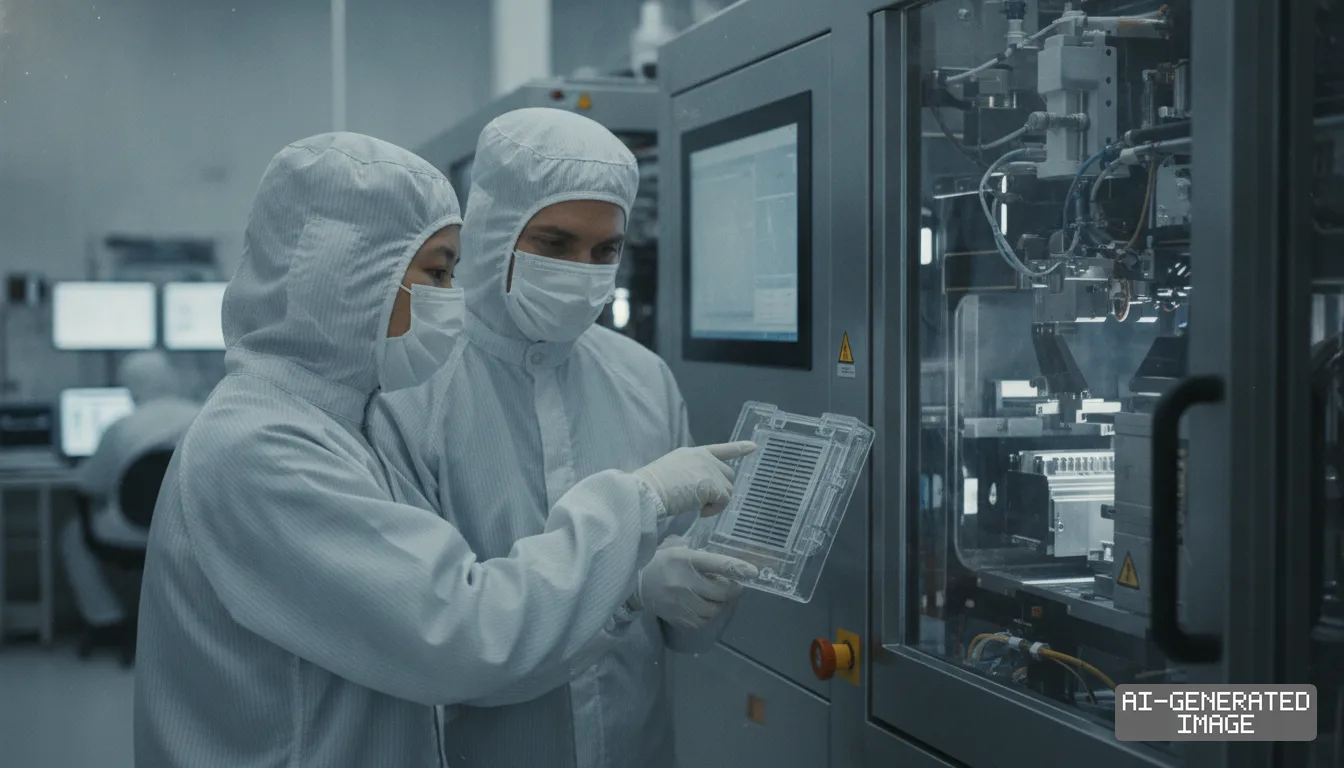
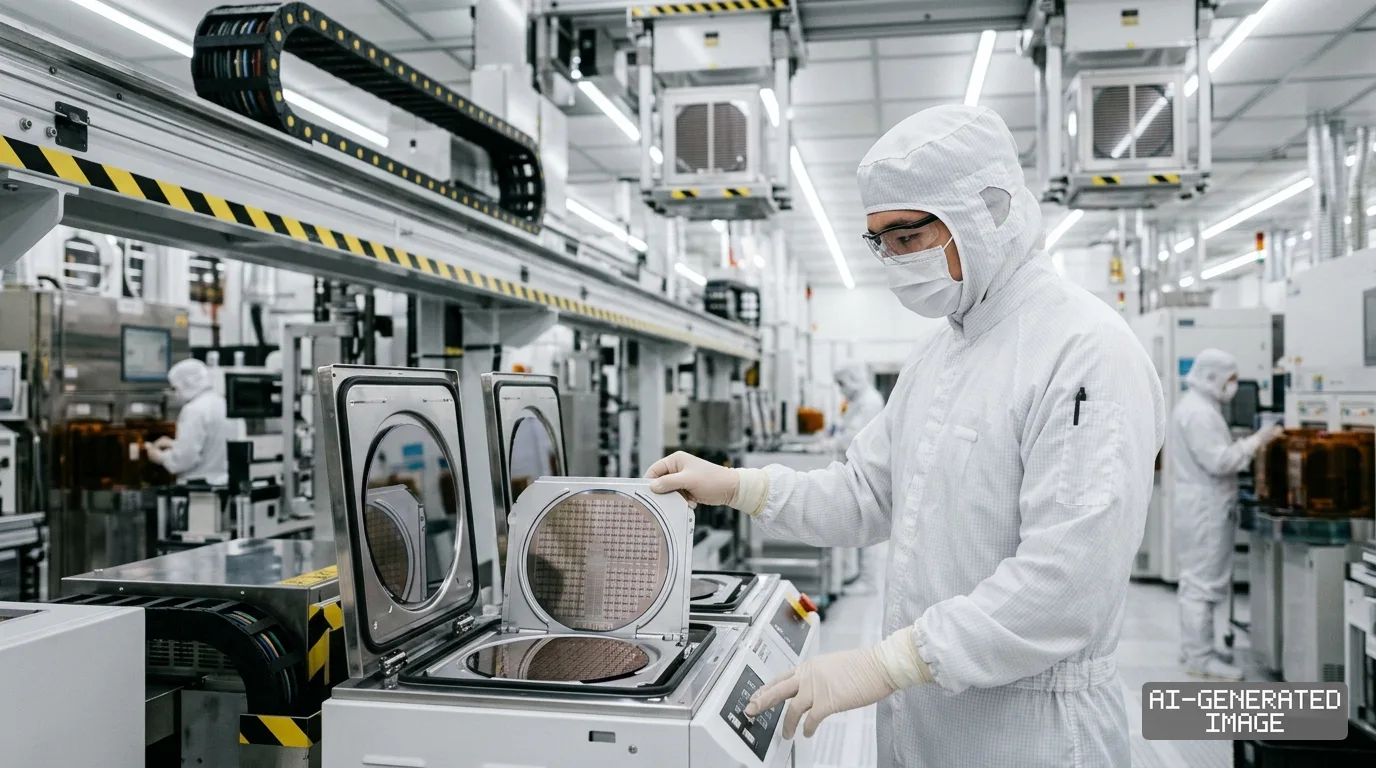
GlobalFoundries will expand fabrication capacity at its Fab 8 site in Malta, New York, adding cleanroom capacity designed to support advanced logic chiplets and high-bandwidth memory.
The $2 billion contract addresses a persistent manufacturing bottleneck that has constrained shipments of leading artificial intelligence processors worldwide across the past three years.
Interposers serve as thin intermediary silicon layers that route electrical signals and power between processors and memory stacks at transmission densities standard printed circuit boards cannot handle.
TSMC relies on silicon interposers for its CoWoS-S packaging process, which houses graphic processing units and custom accelerators designed by Nvidia and competing cloud infrastructure providers.
Severe packaging constraints across TSMC facilities in Taiwan have regularly extended delivery lead times for artificial intelligence accelerators beyond nine months during peak demand cycles.
Under the contract terms, commercial volume production at the Malta facility is scheduled to begin ramping during the first half of 2028.
GlobalFoundries will integrate embedded deep trench capacitor components directly into the interposer silicon to stabilize power delivery during intensive data calculations.
The capacitor structures suppress voltage drops across multi-die packages, improving operational energy efficiency for power-hungry neural network clusters.
Advanced packaging has become essential to deliver the performance, power efficiency and scale required for next-generation computing systems, CMOS Business Senior Vice President Ed Kaste said.
Supplying these components from an American manufacturing footprint creates a secure and scalable domestic source for advanced packaging elements, Kaste said.
The supply agreement operates on an initial five-year term and includes a structured framework for additional capacity expansions as customer demand grows.
Fabricating silicon interposers does not require cutting-edge extreme ultraviolet lithography scanners, allowing GlobalFoundries to use mature 300-millimeter cleanroom space at the Malta site.
Interposer production relies on mature 65-nanometer and 40-nanometer lithography tools to pattern fine metal lines and etch vertical through-silicon vias through the wafer.
Through-silicon vias create microscopic vertical electrical connections through the interposer, linking top-tier processors to package substrates beneath.
Silicon interposers match the thermal expansion rates of silicon computing dies, preventing warpage that disrupts high-density micro-bump connections during sustained server operation.
Each completed interposer wafer is diced and mounted onto organic build-up substrates supplied by Japanese packaging specialists, including Ibiden and Shinko Electric Industries.
TSMC will combine the Malta-built interposers with high-bandwidth memory modules sourced from SK hynix, Samsung Electronics and Micron Technology during final package assembly.
Industry analysts at Counterpoint Research estimate packaging supply shortfalls for high-performance artificial intelligence chips will persist across global foundries until new capacity comes online in 2027.
The Malta site operates as an accredited Trusted Foundry, allowing the facility to supply defense and aerospace contractors alongside commercial data center operators.
The partnership allows TSMC to localize a critical hardware component in the United States as its own Phoenix, Arizona front-end wafer fabrication facilities increase production volume.
TSMC has committed $65 billion to its Arizona manufacturing hub, but the company continues to ship completed front-end wafers back to Taiwan for final advanced packaging.
The Malta interposer supply line reduces transpacific shipping dependencies, enabling TSMC to construct a localized packaging network for North American cloud customers.
Packaging bottlenecks have previously forced merchant chipmakers to ration accelerator shipments, driving capital expenditure into alternative packaging lines at Samsung Electronics and Intel.
By outsourcing interposer fabrication to GlobalFoundries, TSMC frees up cleanroom floor space at its Taiwan fabs to concentrate on final micro-bump assembly and wafer stacking.
The arrangement represents the first major manufacturing alliance between the two foundries, which previously competed directly for mature-node custom silicon contracts.
GlobalFoundries has shifted strategic capital toward specialized manufacturing processes, including silicon photonics, radio-frequency chips and heterogeneous packaging substrates.
The company opened its Advanced Packaging and Photonics Center at the Malta site to provide wafer bonding, assembly and testing under one roof.
Integrating deep trench capacitors into interposer wafers draws on capacitor patents GlobalFoundries acquired through its purchase of IBM Microelectronics in 2015.
The press release does not specify the commercial structure of the $2 billion agreement, including the split between TSMC capital contributions, advance payments and firm wafer purchase orders.
Neither company disclosed monthly wafer start targets or specific unit volume quotas planned for the Malta facility.
GlobalFoundries and TSMC plan to begin tool qualifications and process alignment during 2027 ahead of the scheduled commercial ramp in the first half of 2028.
Impact map
How this development propagates across the region and out to global buyers.
| Event | Korea | China | Japan | Global impact |
|---|---|---|---|---|
| GlobalFoundries $2B TSMC interposer agreement | SK hynix and Samsung Electronics gain a direct US delivery path for high-bandwidth memory into CoWoS lines | Mainland AI chip developers remain restricted from accessing onshore US CoWoS advanced packaging capacity | Substrate and film suppliers Ibiden and Resonac capture expanded materials orders for US packaging integration | Hyperscale cloud providers secure a secondary non-Taiwan manufacturing source for AI silicon interposers ramping 1H 2028 |
In this story
- Companies
- GlobalFoundriesTaiwan Semiconductor Manufacturing Co.
- Tickers
- GFSTSM
- Exposed
- NvidiaSK hynixSamsung Electronics
- Policy
- Economic SecuritySubsidies
- Impact
- Supply ChainCapexOrder Book
Track every Economic Security development → Track every Subsidies development →
Related briefings
- TSMC captures 72.5% foundry share as gap with Samsung widens Also on GlobalFoundries, Taiwan Semiconductor Manufacturing Co., Nvidia
- SMIC narrows foundry gap with Samsung as Q2 sales surge 20% Also on GlobalFoundries, Samsung Electronics, Order Book
- US and Japan weigh $19 billion GlobalFoundries fab under tariff pact Also on GlobalFoundries, Order Book
- Samsung Electronics opens HBM4 base die supply to rival TSMC for AI Also on Taiwan Semiconductor Manufacturing Co., Nvidia, SK hynix
Sources
Primary documents
Reporting
Confidence: high — how we grade this
The documents behind this briefing are linked above. East Asia Brief produces its English text with AI assistance under human editorial review, and does not translate or republish other outlets' articles. See our methodology and AI policy. Spotted an error? Tell us.
The Morning Brief
What changed in Korean, Chinese and Japanese industry overnight — and what it means for your supply chain. One email, weekday mornings, US time. Free.
The Morning Brief is in preparation. Leave your address and we will write to you once — when the first issue is ready. Nothing before that.