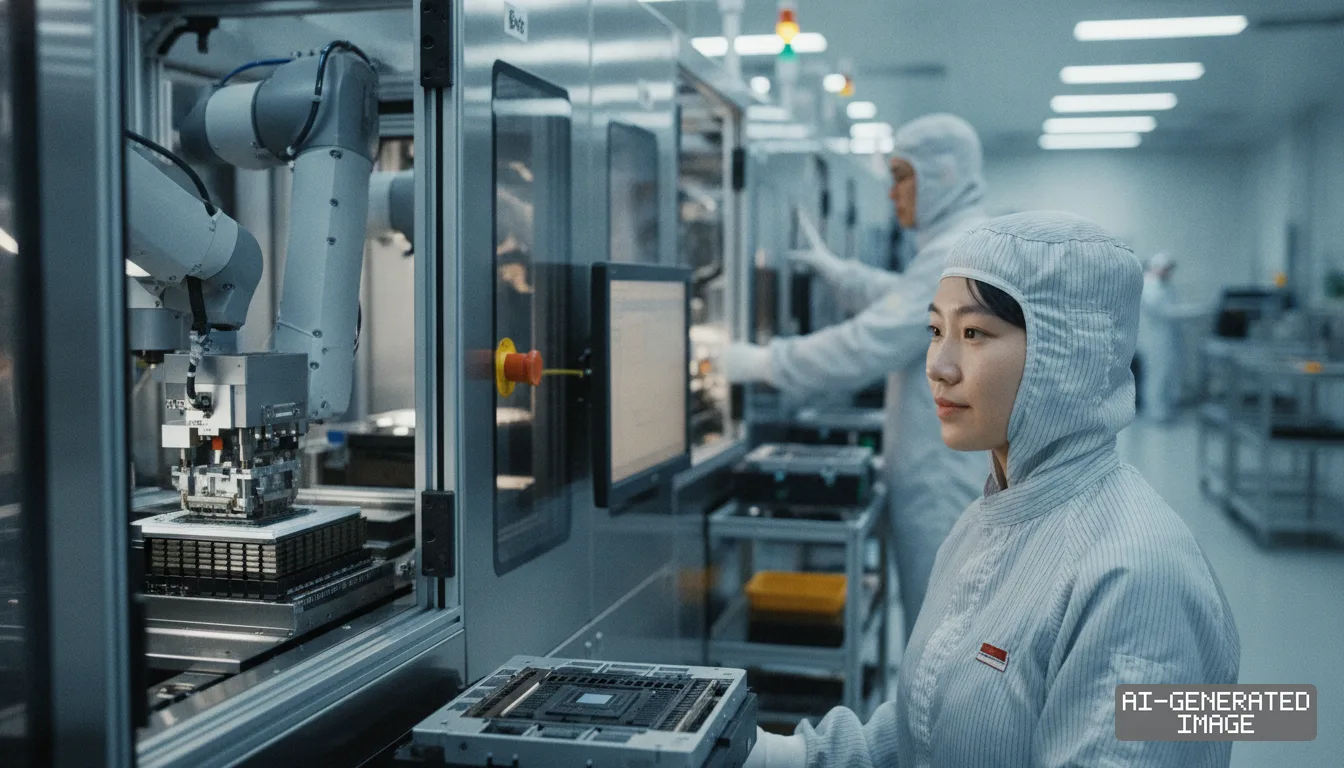
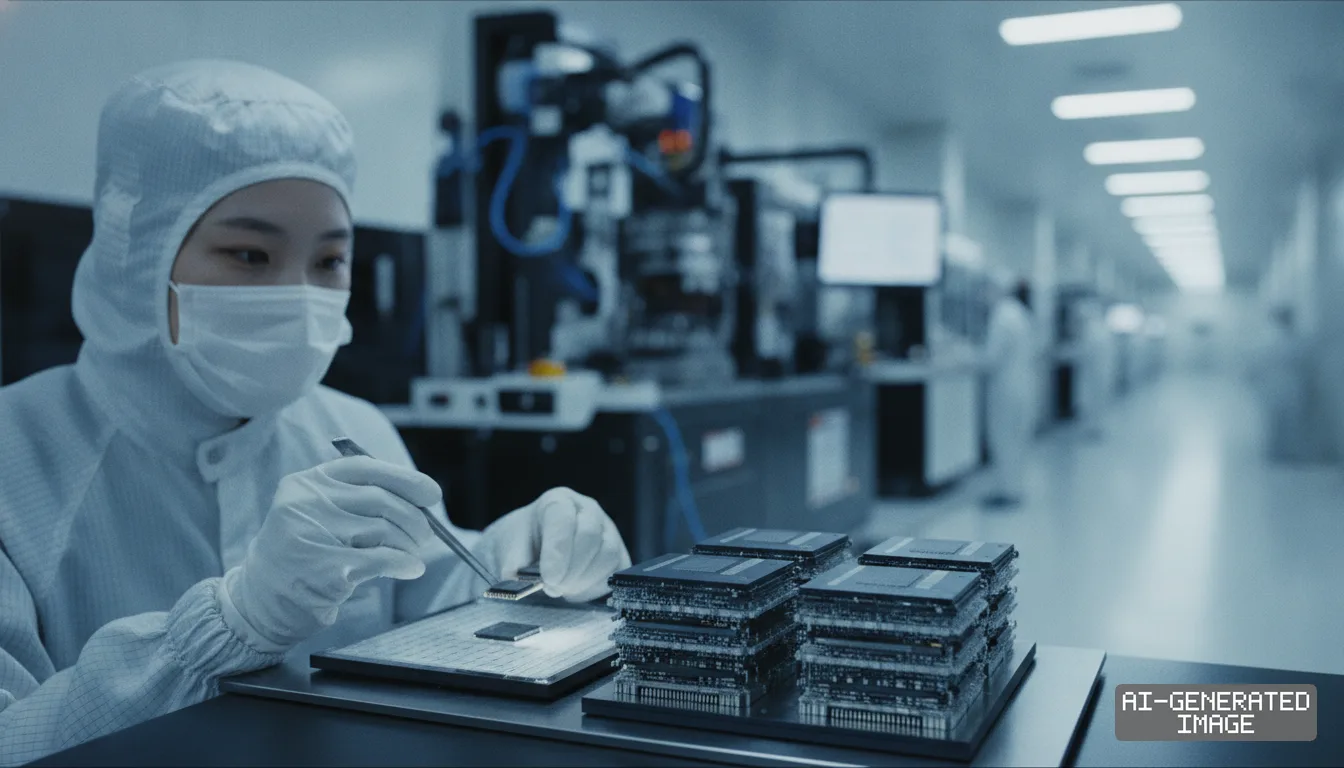
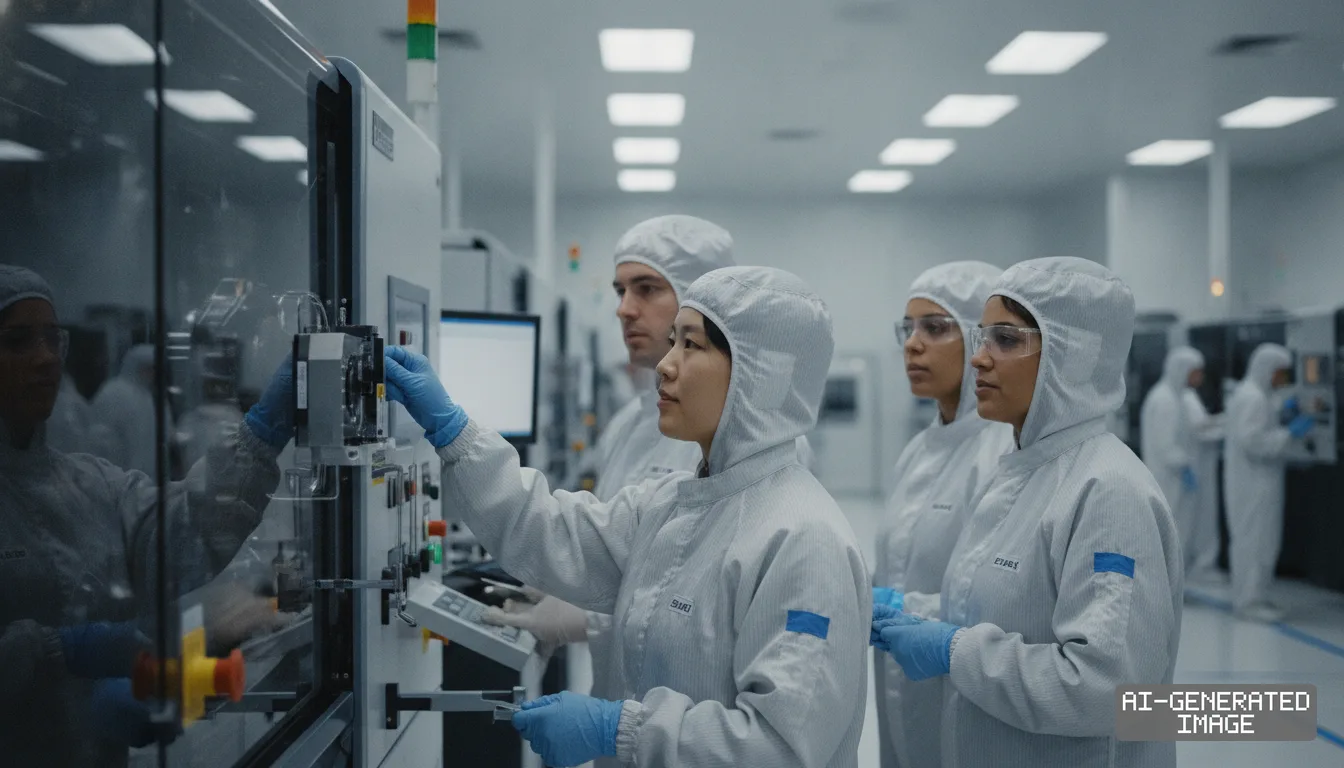
South Korea sets chip cluster rules to shield domestic fabs from tariffs
Notice No. 2026-669 establishes site rules while existing 33 trillion won in state loans and 70% power grid subsidies buffer capex at Yongin against trade pressure.
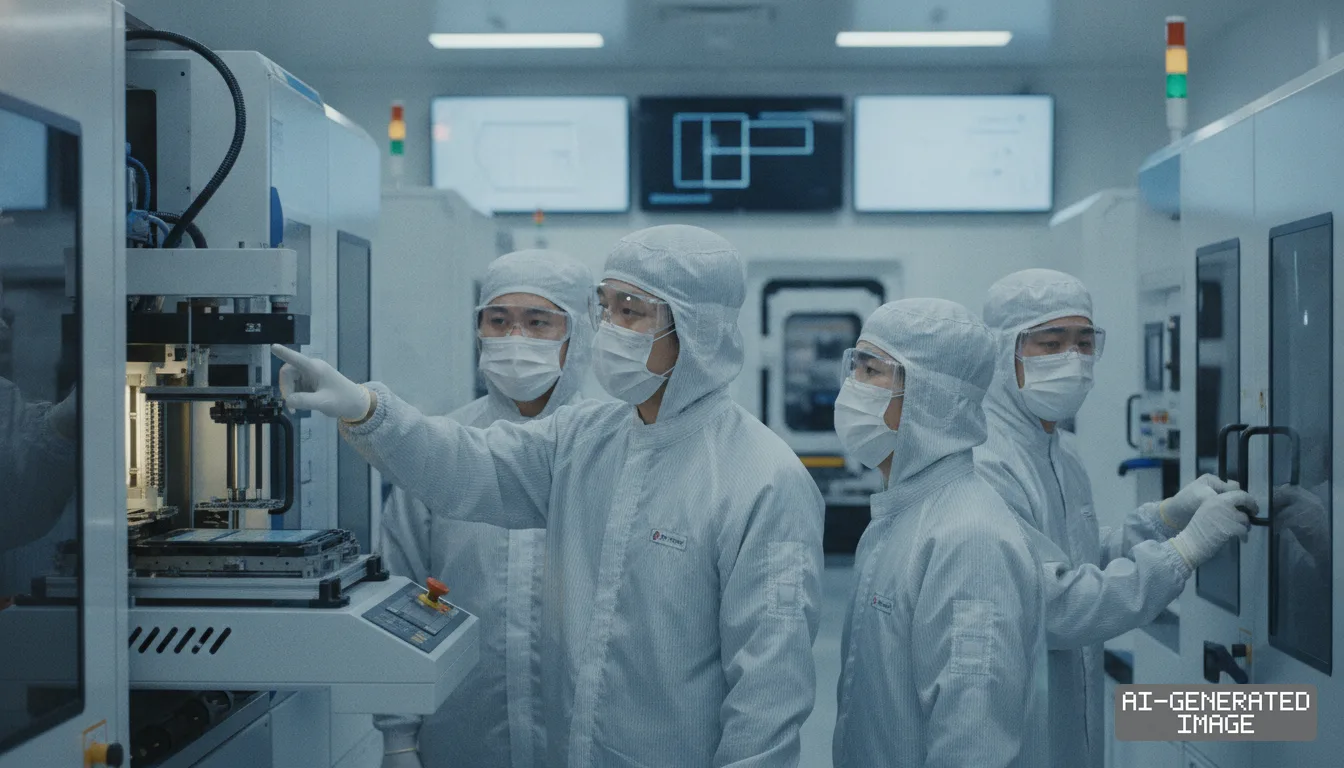
South Korea's Ministry of Trade, Industry and Energy issued operating guidelines on Oct. 29, 2026, to standardize the designation of semiconductor clusters as domestic chipmakers confront rising United States tariff uncertainties.
The ministry, which directs industrial subsidy programs and manufacturing cluster zoning across South Korea, published Public Notice No. 2026-669 in the official gazette to formalize cluster development procedures.
The regulatory measure operates alongside an existing 33 trillion won ($24 billion) state financing program, which the government enlarged by 27% in April 2025 to shield chipmakers from overseas trade friction.
State planners had established the policy foundation with a 26 trillion won ($19 billion) credit package in June 2024 before adding 7 trillion won to cover escalating infrastructure requirements.
The central government committed to fund 70% of the cost to place high-voltage electricity transmission lines underground, cutting capital spending burdens for industrial parks in Gyeonggi Province.
The ministry also activated a 2 trillion won ($1.45 billion) trade finance program on Oct. 19, 2026, aimed at stabilizing supply chain liquidity among mid-tier chip material suppliers.
Samsung Electronics carries heavy capital exposure at the Yongin mega cluster, where it plans to spend 360 trillion won ($262 billion) through 2047 to construct six advanced chip fabrication facilities.
The Yongin development represents more than 70% of the company's domestic capacity expansion program, concentrating its foundry and next-generation memory production within a single municipal jurisdiction.
SK hynix faces an equal infrastructure challenge at its neighboring site in Yongin, committing 122 trillion won ($89 billion) to erect four high-bandwidth memory fabrication lines through 2046.
The initial SK hynix fabrication plant requires more than 3 gigawatts of baseload electricity supply, making state transmission subsidies crucial to keeping construction timelines on schedule, industry officials said.
Potential United States trade tariffs threaten export cash flow just as both manufacturers increase domestic capital expenditures to counter aggressive capacity buildouts in China and Taiwan, trade officials said.
Below-market state lending provided through Korea Development Bank lowers interest expenses, freeing operating cash flows to offset potential tariff margins on semiconductor goods exported to Western markets.
Korea Development Bank provides 17 trillion won ($12.4 billion) in preferential loans under the financial framework, discounting interest rates by up to 120 basis points for large fab operators.
Public Notice No. 2026-669 outlines administrative criteria for local governments to qualify for national cluster designation, governing land acquisition, environmental review schedules and utility hookup permits.
The framework prevents administrative disputes among neighboring municipalities over industrial water conduits, an issue that had previously delayed civil engineering work at Yongin by more than a year.
The Ministry of Environment and state utility planners are engineering pipelines to deliver 1.34 million metric tons of industrial water daily from the Paldang reservoir and Lake Hwacheon to Yongin.
Mid-tier suppliers of semiconductor materials, components and equipment receive concessional interest rates up to 150 basis points below commercial benchmarks under the financial package, the ministry said in its program rules.
The state covers between 30% and 50% of qualifying supplier capital outlays up to a ceiling of 20 billion won ($14.5 million) per individual corporate balance sheet.
The National Assembly passed the Semiconductor Special Act to grant statutory authority for cluster infrastructure acceleration, directing central ministries to absorb administrative clearance timelines, the ministry said.
Foreign news reports had asserted that Seoul activated a new $23 billion rescue package on Oct. 29, 2026, to directly counter impending trade penalties from Washington.
The ministry notice does not establish a new $23 billion funding pool, and the government published no decree on Oct. 29 expanding financial aid beyond the existing 33 trillion won program.
Financial authorities confirmed that state-backed loans continue to disburse through the existing Korea Development Bank credit line rather than under an emergency tariff relief authorization, regulators said.
Public comments on the cluster designation guidelines in Notice No. 2026-669 close Nov. 18, 2026, before the Ministry of Trade, Industry and Energy codifies the measure into ministerial decree.
Industrial power line ground-breaking for the first Yongin transmission corridor remains scheduled for the second quarter of 2027, according to ministry infrastructure planning logs.
Impact map
How this development propagates across the region and out to global buyers.
| Event | Korea | China | Japan | Global impact |
|---|---|---|---|---|
| Semiconductor cluster support | Samsung and SK hynix preserve 482 trillion won Yongin capex with 70% grid aid | SMIC faces wider cost gap against subsidized Korean advanced memory lines | Tokyo Electron and Shin-Etsu retain supply commitments to Yongin cluster fabs | Global chip buyers see reduced supply disruption risks as mega fab construction timelines hold |
In this story
- Companies
- Samsung ElectronicsSK hynix
- Tickers
- 005930.KS000660.KS
- Policy
- Subsidies
- Impact
- CapexCost Structure
Track every Subsidies development →
Related briefings
- Merck opens South Korea molybdenum plant to feed memory fabs Also on SK hynix, Samsung Electronics, Cost Structure
- GlobalFoundries signs $2 billion TSMC chip interposer deal Also on SK hynix, Samsung Electronics, Cost Structure
- GlobalFoundries signs $2B TSMC packaging deal for AI chips Also on SK hynix, Samsung Electronics, Cost Structure
- Korea unfreezes Honam grid to add 2.6 GW of solar capacity Also on SK hynix, Samsung Electronics, Cost Structure
Sources
Primary documents
Reporting
Confidence: high — how we grade this
The documents behind this briefing are linked above. East Asia Brief produces its English text with AI assistance under human editorial review, and does not translate or republish other outlets' articles. See our methodology and AI policy. Spotted an error? Tell us.
The Morning Brief
What changed in Korean, Chinese and Japanese industry overnight — and what it means for your supply chain. One email, weekday mornings, US time. Free.
The Morning Brief is in preparation. Leave your address and we will write to you once — when the first issue is ready. Nothing before that.