GlobalFoundries signs $2 billion TSMC chip interposer deal
The five-year manufacturing agreement establishes a domestic supply base at Malta, New York, easing advanced packaging bottlenecks across high-performance computing hardware.
GlobalFoundries and Taiwan Semiconductor Manufacturing Co. confirmed Oct. 19, 2026, that their manufacturing partnership is an initial $2 billion contract for silicon interposers, setting terms for U.S.-based artificial intelligence packaging.
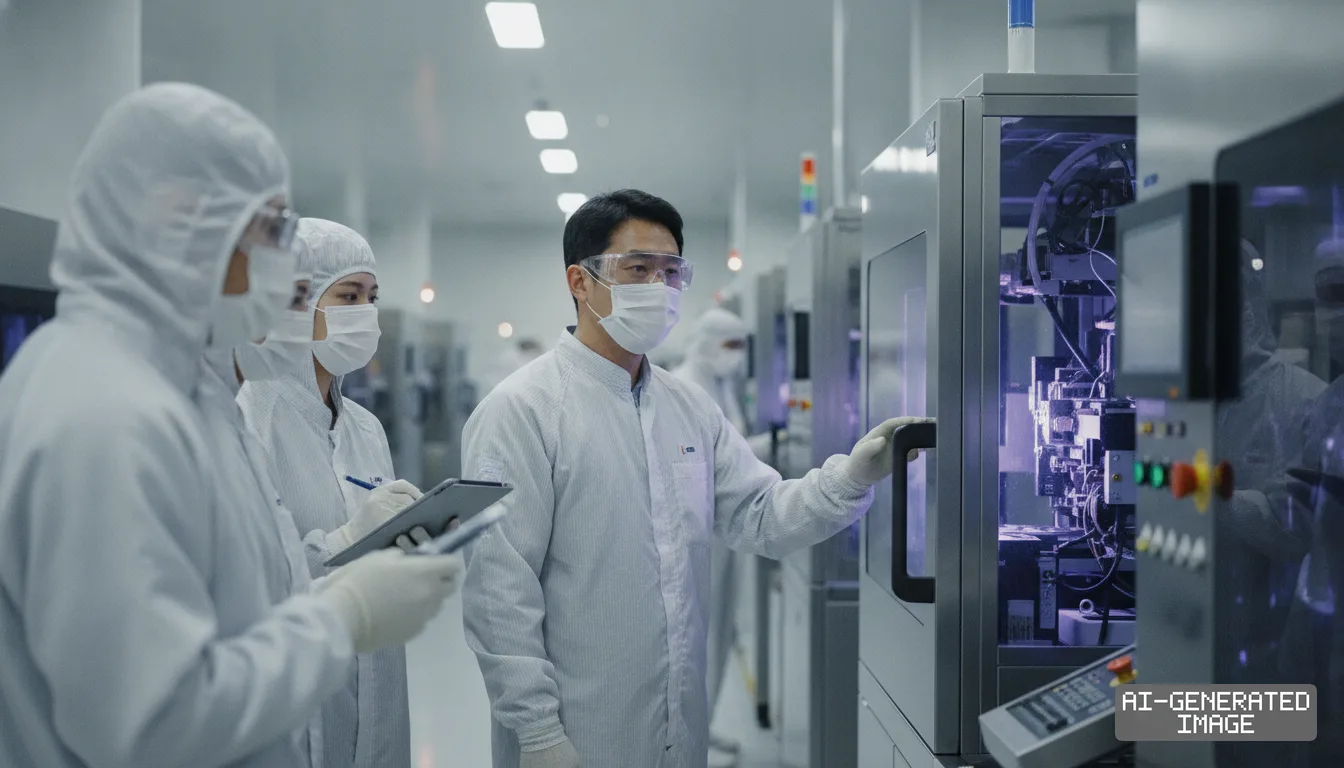
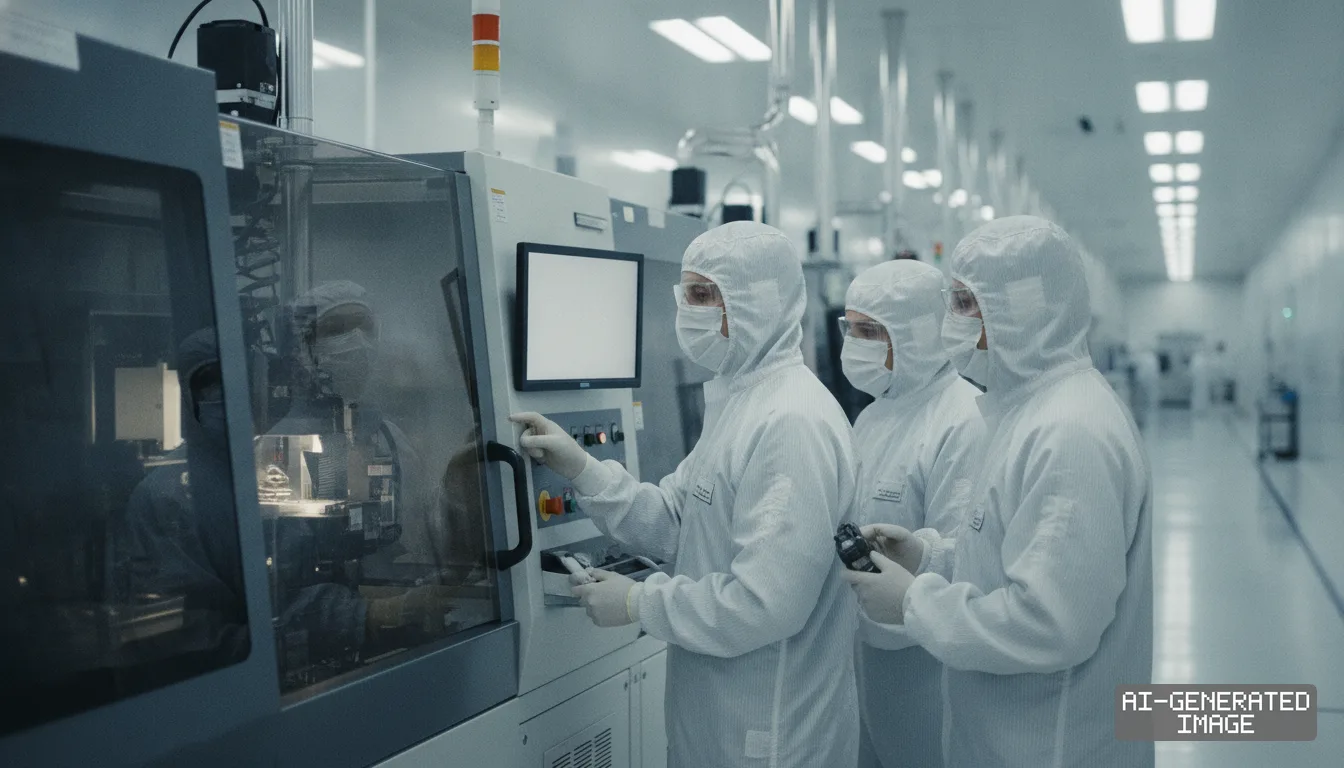
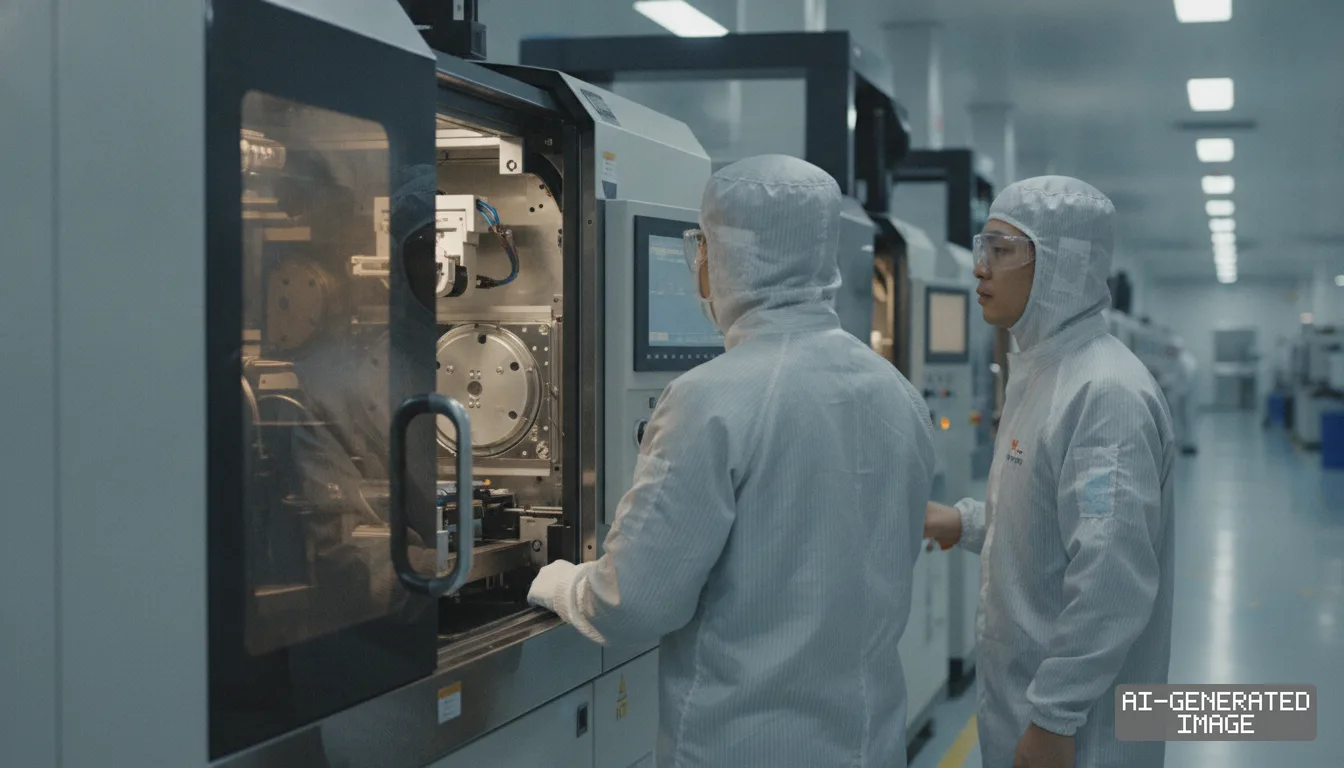
The five-year agreement commits GlobalFoundries to manufacturing silicon interposers at its Fab 8 facility in Malta, New York, according to the contract release. That work averages $400 million in annual revenue, representing roughly 6% of the company's $6.79 billion in 2025 sales.
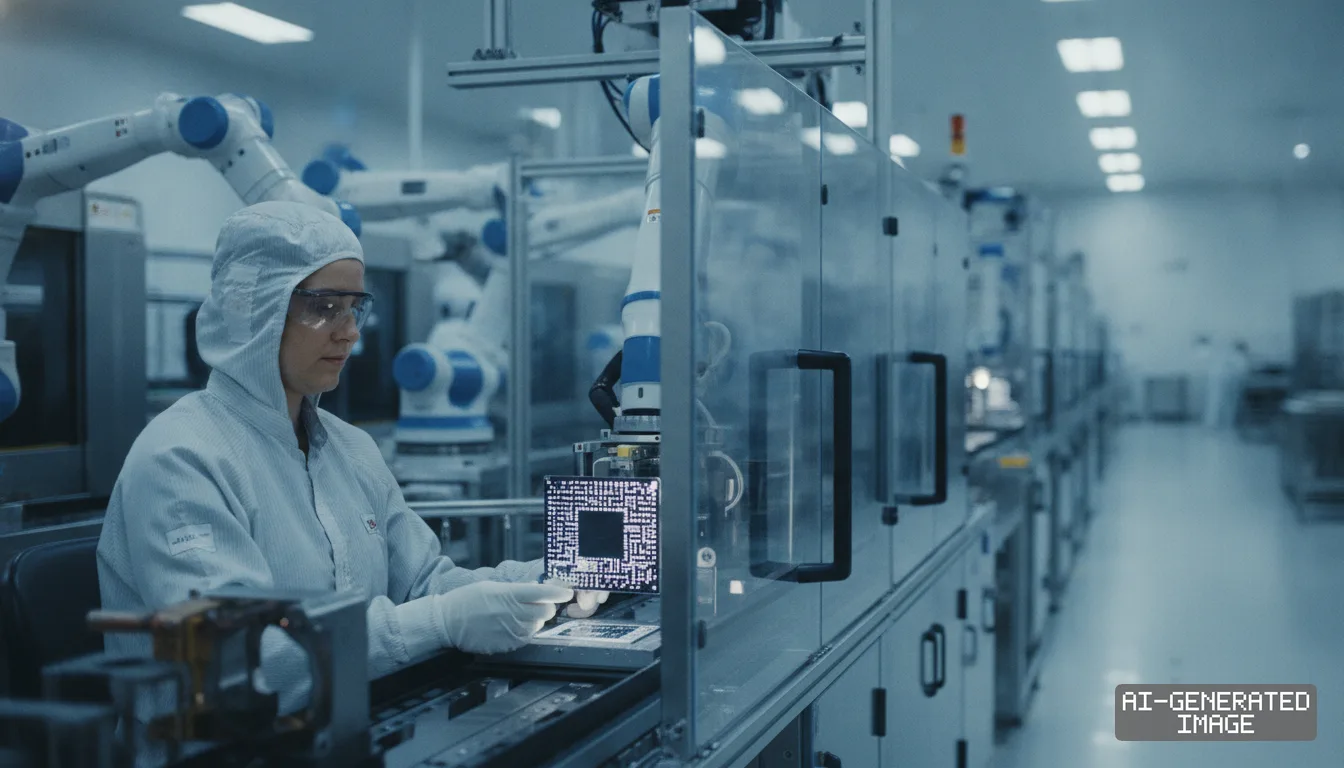
Silicon interposers act as intermediary wiring layers in TSMC's Chip-on-Wafer-on-Substrate packaging, known as CoWoS. The thin silicon slabs route electrical connections between advanced processor compute dies and High Bandwidth Memory stacks through microscopic vertical channels called through-silicon vias.
Under the supply terms, GlobalFoundries will integrate embedded deep trench capacitor components into the interposer wafer lines, the company said. Those integrated capacitors stabilize high-frequency power delivery to graphics processors and custom accelerators running intensive artificial intelligence models.
TSMC faced persistent capacity bottlenecks across its advanced packaging cleanrooms throughout 2025 and 2026 as demand outstripped supply, according to supply chain dispatch data. CoWoS packaging volume climbed from roughly 35,000 wafers per month in late 2024 to approximately 130,000 monthly wafers by late 2026.
Fabricating interposers consumes fab cleanroom floor capacity and lithography tools while generating lower profit margins than cutting-edge logic nodes, according to foundry operating filings. By transferring interposer wafer manufacturing to GlobalFoundries, TSMC frees its domestic Taiwan fabs to concentrate on 2-nanometer and 3-nanometer logic processing.
GlobalFoundries abandoned development of sub-7-nanometer logic transistors in 2018 to focus on mature and specialty manufacturing processes, according to company filings. Producing passive silicon interposers relies on mature lithography tools, aligning directly with the legacy tooling installed across the company's New York manufacturing site.
GlobalFoundries inherited its deep trench capacitor architecture through its 2015 acquisition of IBM's microelectronics division, according to acquisition records. That proprietary capacitive technology provides higher electrical storage density than standard surface capacitors, making the Malta fab technically suited for high-density interposer integration.
Nvidia and Advanced Micro Devices represent the primary commercial customers reliant on TSMC's CoWoS packaging architecture, according to packaging order books. Both chip designers purchase tens of thousands of completed processor modules monthly for installation across enterprise hyperscale data centers.
Packaging finished AI accelerators currently requires transporting raw wafers between Taiwan foundries, Asian testing facilities and North American assembly hubs, according to logistics filings. Establishing interposer output in New York creates an operational link for processors destined for domestic United States server assembly.
The agreement marks a turnaround in relations between the two contract chipmakers, according to court records. TSMC and GlobalFoundries engaged in patent litigation in 2019 before settling all claims through a 10-year mutual patent cross-licensing agreement covering their proprietary technologies.
United States industrial policy played a direct role in funding the required fabrication capacity, according to Department of Commerce award documents. GlobalFoundries secured $1.5 billion in direct grants under the U.S. CHIPS and Science Act, providing capital to expand cleanroom infrastructure in upstate New York.
Taiwan's Market Intelligence and Consulting Institute projected the United States will host 40% of Taiwanese companies' AI server manufacturing capacity by 2030. Sourcing interposers locally reduces the logistics risks associated with shipping sensitive intermediate silicon across the Pacific Ocean.
The silicon interposers fabricated in New York will interface with organic package substrates supplied by Japanese manufacturers such as Ibiden and Shinko Electric, according to component integration roadmaps. The resulting modular packaging stacks will connect High Bandwidth Memory dies from Samsung Electronics and SK hynix.
SK hynix and Samsung Electronics sell the entirety of their High Bandwidth Memory inventory into packaging pipelines governed by TSMC's CoWoS standard, according to supplier shipping manifests. Standardized interposer dimensions ensure memory stacks integrate mechanically with logic chiplets regardless of where interposer wafers are processed.
The contract specifically targets the CoWoS-S variant, which uses a full silicon interposer rather than organic redistribution layers, according to engineering specifications. While organic interposers offer lower production costs, silicon substrates remain mandatory for the highest-density multi-chip configurations requiring sub-micron line spacing.
The agreement includes an expansion framework enabling both foundries to increase production volumes if customer demand accelerates, the company said. GlobalFoundries will allocate existing cleanroom shell capacity at Fab 8 rather than constructing an entirely new facility to fulfill the initial run.
Long-term foundry supply pacts typically insulate mature wafer manufacturers against volatility in commercial consumer electronics demand, according to foundry operating filings. Securing dedicated multi-year packaging revenue provides GlobalFoundries with predictable operating rates across its 300-millimeter equipment fleet.
GlobalFoundries and TSMC have not published the exact wafer capacity allocations for the Malta site, and neither company disclosed contract terms supporting the speculative $5 billion figure.
Commercial volume production is scheduled to ramp at the Malta facility during the first half of 2028 under the initial five-year framework, according to the contract release.
Impact map
How this development propagates across the region and out to global buyers.
| Event | Korea | China | Japan | Global impact |
|---|---|---|---|---|
| TSMC-GF silicon interposer contract | Samsung Electronics and SK hynix retain full HBM integration compatibility across U.S. interposers | SMIC remains blocked from CoWoS packaging supply chains under multilateral export licensing | Ibiden and Shinko Electric supply organic package substrates to mate with Malta silicon interposers | Hyperscalers gain dual-sourced AI server assembly in North America as TSMC adds U.S. interposers |
In this story
- Companies
- GlobalFoundriesTaiwan Semiconductor Manufacturing Co.
- Tickers
- GFS2330.TW
- Exposed
- NvidiaAdvanced Micro DevicesSK hynixSamsung Electronics
- Policy
- Subsidies
- Impact
- Supply ChainCapexCost Structure
Track every Subsidies development →
Related briefings
- TSMC widens CoWoS supply chain with $2 billion US interposer deal Also on GlobalFoundries, Advanced Micro Devices, Taiwan Semiconductor Manufacturing Co.
- GlobalFoundries signs $2B TSMC packaging deal for AI chips Also on GlobalFoundries, Advanced Micro Devices, Nvidia
- GlobalFoundries agrees to build silicon interposers for TSMC in $2B deal Also on GlobalFoundries, Taiwan Semiconductor Manufacturing Co., Nvidia
- TSMC captures 72.5% foundry share as gap with Samsung widens Also on GlobalFoundries, Taiwan Semiconductor Manufacturing Co., Nvidia
Sources
Reporting
Confidence: medium — how we grade this
The documents behind this briefing are linked above. East Asia Brief produces its English text with AI assistance under human editorial review, and does not translate or republish other outlets' articles. See our methodology and AI policy. Spotted an error? Tell us.
The Morning Brief
What changed in Korean, Chinese and Japanese industry overnight — and what it means for your supply chain. One email, weekday mornings, US time. Free.
The Morning Brief is in preparation. Leave your address and we will write to you once — when the first issue is ready. Nothing before that.