SK hynix denies US memory fab deal with Intel at Ohio site
The South Korean memory maker refuted reports of leasing space at Intel's New Albany facility, while Seoul noted any HBM transfer faces national security review.
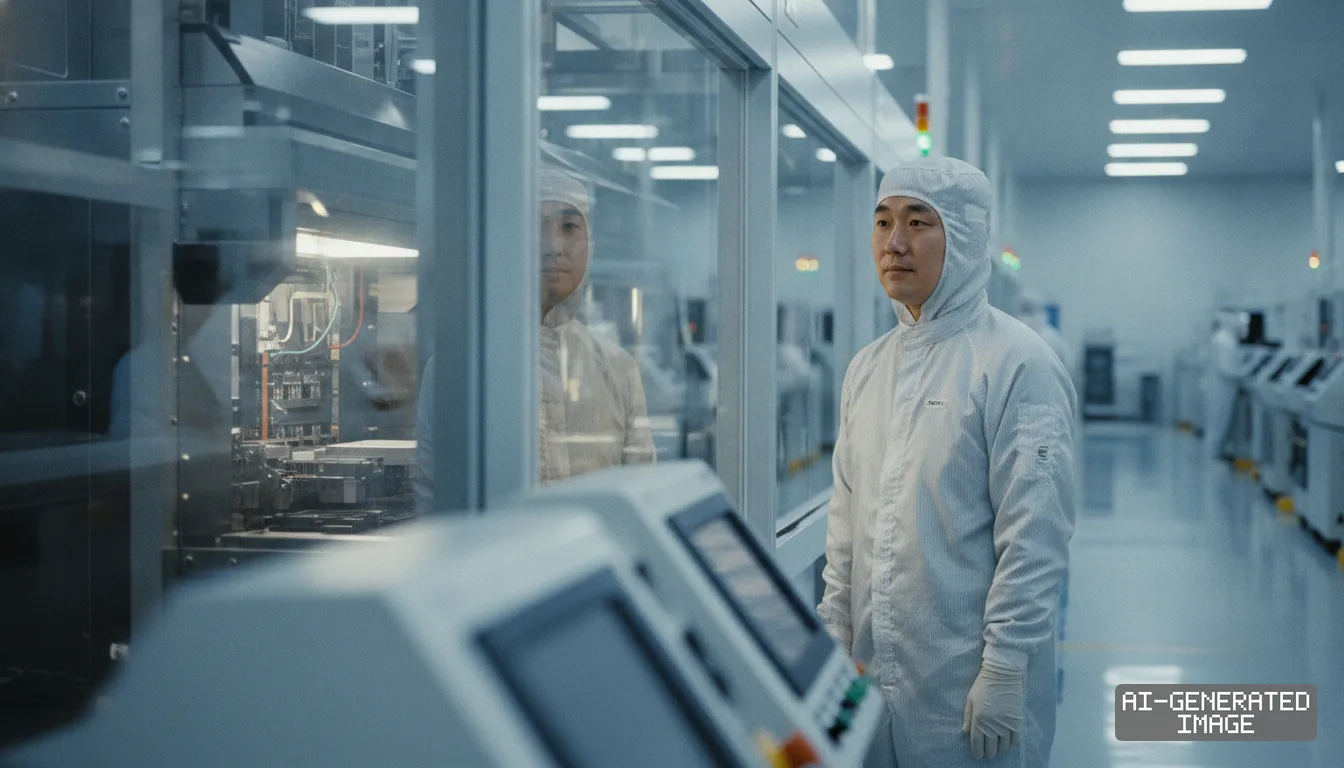
SK hynix said Sept. 16 it has finalized no agreement to lease Intel's Ohio fabrication facility or establish a joint venture for US memory chip manufacturing.
The South Korean chipmaker issued the clarification after reports indicated preliminary discussions to rent cleanroom space at Intel's New Albany campus. SK hynix emphasized that no commercial terms have been determined.
The company already committed more than $4 billion to construct an advanced packaging and research hub in West Lafayette, Indiana. That project broke ground on Aug. 27, representing its sole confirmed US capital deployment.
SK hynix stated that while it evaluates options to strengthen its market position, it has made no binding commitments. The statement directly rejected reports outlining specific joint venture structures with cloud providers.
Intel separately described the reported discussions as speculation, while reiterating that work on its Ohio site continues as scheduled. Neither firm provided contract filings or disclosed lease figures.
The reported arrangement would have marked the first wafer fabrication base for SK hynix outside Asia. The company currently manufactures all front-end DRAM and High Bandwidth Memory wafers at domestic facilities in Icheon and Cheongju.
Memory fabrication in the United States faces significant cost hurdles compared with established Asian supply clusters. Industrial estimates indicate building and operating cleanrooms domestically requires substantial wage and utility premiums.
South Korea's Ministry of Trade, Industry and Energy noted that overseas investment remains a corporate commercial decision. The ministry added that transferring high-volume DRAM or HBM technologies requires state review.
Under South Korea's Industrial Technology Protection Act, advanced semiconductor fabrication methods carry national core technology designations. Companies transferring designated processes outside South Korea must obtain government authorization before moving technical documentation.
SK hynix previously clarified similar market rumors on July 22 in a regulatory disclosure to the Korea Exchange. That filing confirmed the company was not pursuing or finalizing any acquisition of Intel's Ohio assets.
The company's confirmed US manufacturing footprint remains confined to advanced packaging rather than front-end wafer fabrication. Advanced packaging connects finished silicon dies vertically or horizontally, bypassing physical scaling limits on single chips.
The Indiana packaging facility covers a 133.5-acre site at the Purdue Research Park. The project secured up to $458 million in proposed direct funding under the US CHIPS and Science Act.
SK hynix expects the Indiana cleanroom to open by October 2028, according to project disclosures. Commercial mass production of next-generation packaging lines is scheduled to begin in the second half of 2029.
Under that operational model, SK hynix will fabricate raw wafers in South Korea before shipping them to Indiana. The West Lafayette site will complete wafer dicing, stacking and final testing for North American customers.
Leasing finished shell space from Intel would theoretically bypass multi-year environmental reviews and site preparation. Intel broke ground in Ohio in 2022 but adjusted construction schedules as market conditions shifted.
A domestic front-end fab would allow SK hynix to produce wafers directly within the North American tariff boundary. US trade officials have signaled rising scrutiny over foreign semiconductor supply chains.
However, operating a front-end fab requires chemical supply chains, extreme ultraviolet lithography systems and specialized materials. SK hynix maintains those integrated supply chains exclusively at its domestic manufacturing campuses.
The company is currently constructing the Yongin Semiconductor Cluster in South Korea, committing 54 trillion won ($39 billion) for initial fab development. That project anchors its long-term manufacturing capacity through the next decade.
Intel has sought external partners and co-investment models to distribute capital costs across its foundry operations. Yet Intel has not announced any third-party tenant agreements for its New Albany manufacturing modules.
What remains unconfirmed is whether SK hynix submitted a preliminary term sheet or held informal discussions with Intel foundry executives. SK hynix public notices and exchange filings do not settle whether third-party intermediaries proposed the structure.
South Korea's trade ministry convenes its industrial technology protection committee periodically to review foreign technology licensing. The ministry has scheduled no licensing review regarding SK hynix US manufacturing transfers through the fourth quarter.
Impact map
How this development propagates across the region and out to global buyers.
| Event | Korea | China | Japan | Global impact |
|---|---|---|---|---|
| Intel Ohio fab lease denial | SK hynix keeps wafer fabrication domestic while preparing $4B Indiana back-end site | Domestic memory suppliers face no direct capacity competition from US-based Korean fabs | Semiconductor material suppliers retain supply flows to Korean fabs rather than US sites | Cloud providers must source HBM packaging from Indiana in 2029 rather than onshore wafers |
In this story
- Companies
- SK hynixIntel
- Tickers
- 005930.KS000660.KSINTC
- Exposed
- NvidiaTSMC
- Policy
- SubsidiesExport ControlsEconomic Security
- Impact
- CapexSupply ChainCompliance
Track every Subsidies development → Track every Export Controls development → Track every Economic Security development →
Related briefings
- South Korea funds advanced chip packaging and backside power pilot lines Also on Intel, TSMC, SK hynix
- SK hynix and foundries advance hybrid bonding for AI silicon in 2027 Also on Intel, Nvidia, SK hynix
- Montage and Panmnesia validate CXL 3.1 memory silicon with Samsung and SK hynix Also on Intel, NVIDIA, SK hynix
- TSMC revenue rises 53% on AI demand to record NT$514 billion Also on Intel, Nvidia, Export Controls
Sources
Reporting
Confidence: medium — how we grade this
The documents behind this briefing are linked above. East Asia Brief produces its English text with AI assistance under human editorial review, and does not translate or republish other outlets' articles. See our methodology and AI policy. Spotted an error? Tell us.
The Morning Brief
What changed in Korean, Chinese and Japanese industry overnight — and what it means for your supply chain. One email, weekday mornings, US time. Free.
The first issue goes out shortly. Sign up now and you will not miss it.