US chip controls threaten Nvidia's $5B compound power plan for AI centers
Korean state researchers warned at Suwon that congressional curbs on silicon carbide and gallium nitride devices risk splitting server power supply chains.
South Korea’s state research institutes warned on Nov. 19, 2026, that tightening United States export controls threaten to fracture global compound power semiconductor supply chains vital for artificial intelligence data centers.
Nvidia planned between $4 billion and $5 billion in compound semiconductor procurement to curb surging electrical consumption in high-density facilities, researchers said at the Beyond Silicon conference in Suwon.
That capital program faces mounting disruption as the United States Congress reviews wider trade curbs on wide-bandgap components, including silicon carbide and gallium nitride devices.
The forum, organized by the Korea Advanced Nano Fab Center under the Ministry of Science and ICT, gathered policy planners to examine severe supply vulnerabilities across East Asia.
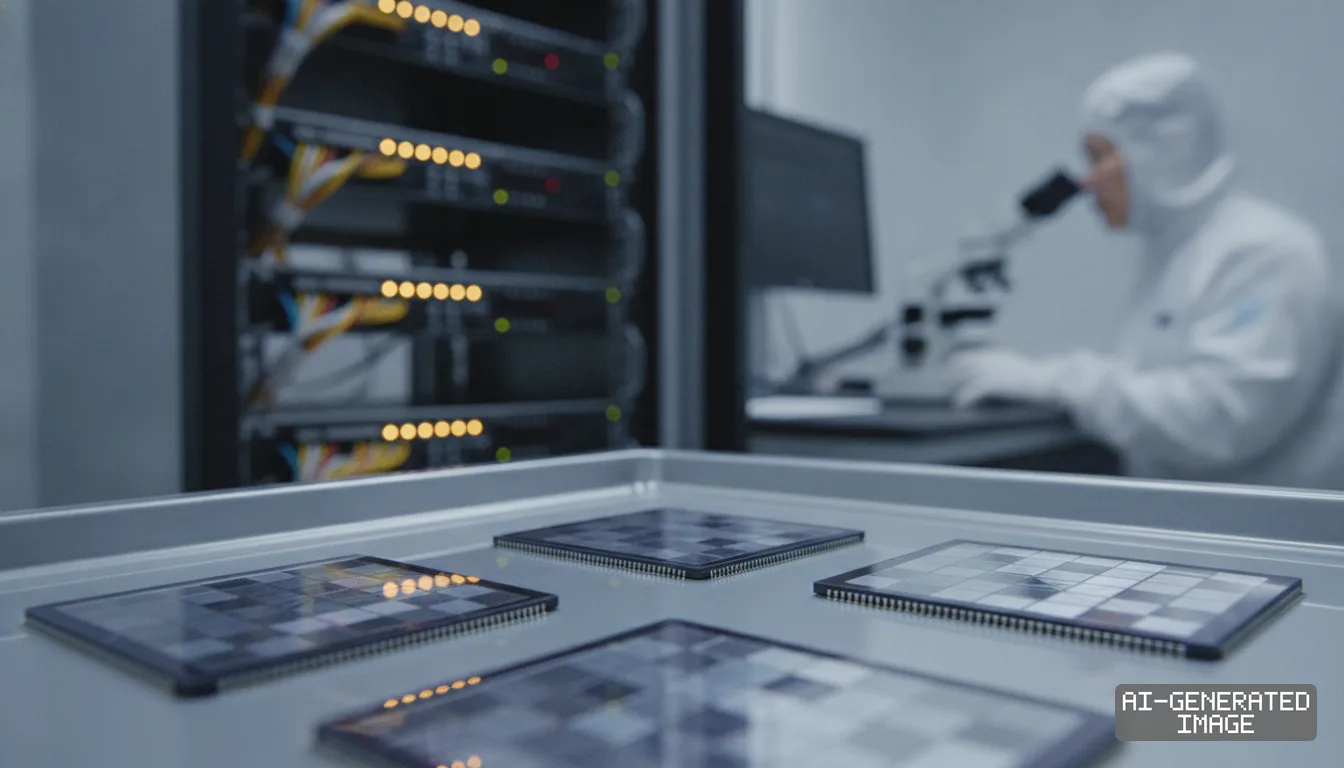
Modern artificial intelligence compute clusters consume massive electrical currents, driving operators to adopt compound power devices to prevent excessive thermal throttling during sustained data workloads.
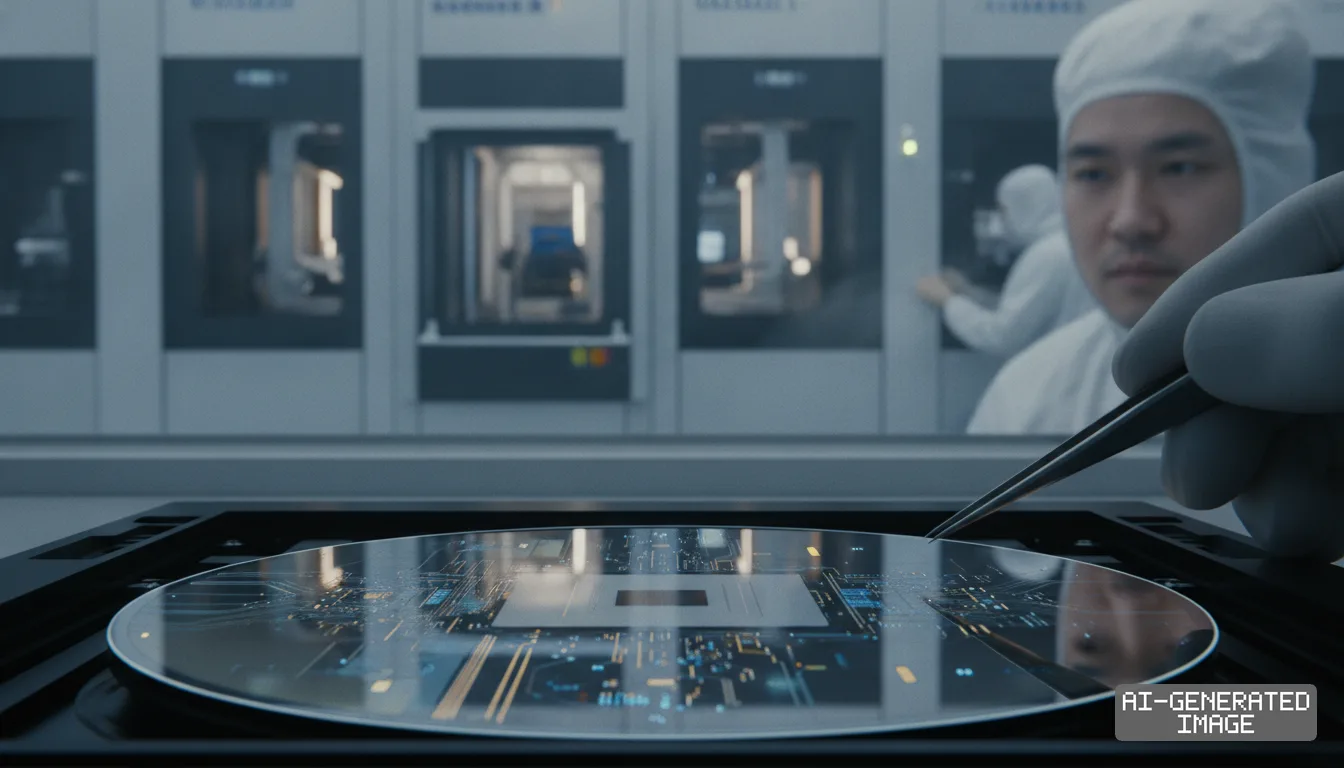
Silicon carbide and gallium nitride semiconductors conduct high voltages with lower resistance than standard silicon, cutting power conversion losses in server rack distribution units.
Western technology companies sought Asian foundry partners to guarantee volume shipments, but emerging export restrictions increasingly complicate international contracting for server power infrastructure.
Policy fellows from the Science and Technology Policy Institute and the Korea Institute for Industrial Economics and Trade said Chinese contract makers cannot offer a secure alternative.
China’s Sanan Optoelectronics constructed a $2 billion vertically integrated facility in Changsha to process wide-bandgap substrates, but executive inquiries and Western sanctions undermine its reliability, speakers said.
Global system integrators therefore encounter a narrow manufacturing base, because commercial foundries outside Taiwan and the United States lack sufficient eight-inch production capacity.
The policy presentations underscored acute domestic risks for South Korea, whose semiconductor ecosystem remains heavily concentrated in traditional commodity memory lines.
Memory products generate 90% of South Korea’s total semiconductor export revenue, creating structural vulnerability to cyclical pricing downturns in enterprise storage markets.
South Korea produces only 10% of the power semiconductors required by its domestic manufacturing sector, relying on overseas foundries for the remaining 90%, institute data showed.
National defense systems exhibit an even wider supply deficit, depending almost entirely on foreign fabrication plants for military-grade operational components.
South Korea records a defense semiconductor localization rate of just 1.9%, importing 98.1% of mission-critical chips from offshore suppliers, researchers told the conference.
The Ministry of Trade, Industry and Energy initiated a 138.5 billion won ($99 million) technology program in June 2024 to address these structural manufacturing shortfalls.
The five-year project directs 93.9 billion won in state funding through 2028, with participating private companies contributing the remaining 44.6 billion won.
The initiative established a commercial development partnership connecting substrate vendor SK siltron, integrated circuit designer ABOV Semiconductor and contract manufacturer DB Hitek.
Under the partnership framework, SK siltron produces wide-bandgap wafer substrates, while DB Hitek adapts its eight-inch foundry lines to fabricate circuits designed by ABOV Semiconductor.
The industry ministry also funded an open testbed in Busan in June 2024 to accelerate eight-inch silicon carbide device prototyping and commercial qualification.
The Busan regional facility operates 11 specialized processing systems to evaluate 1,700-volt power components, enabling domestic designers to test industrial devices without operating private fabs.
Private chipmaker Aiq Lab broke ground on a 100 billion won eight-inch fabrication facility in Busan in June 2024 to support domestic production.
The United States Bureau of Industry and Security has not published an export control rule establishing specific technical thresholds or licensing mandates for commercial silicon carbide power semiconductors.
The forum documents do not state whether upcoming Congressional measures will target raw wafer substrates, processed power dies, or finished server power supplies.
Consortium steering members and ministry officials will review first-phase component test results in Seoul on Dec. 15, 2026, before finalizing tool procurement plans for the 2027 fiscal year.
Impact map
How this development propagates across the region and out to global buyers.
| Event | Korea | China | Japan | Global impact |
|---|---|---|---|---|
| AI power chip export curbs | DB Hitek and SK siltron scale eight-inch domestic line to offset 90% import reliance | Sanan Optoelectronics faces Western compliance limits on its $2 billion Changsha fab | Power device makers capture secondary orders from Western server designers | Nvidia faces component delays as AI data center power infrastructure fractures |
In this story
- Companies
- NvidiaSanan OptoelectronicsSK siltronDB HitekABOV Semiconductor
- Tickers
- NVDA600703.SS000990.KS102120.KQ
- Policy
- Export ControlsSubsidies
- Impact
- Supply ChainCapexCompliance
Track every Export Controls development → Track every Subsidies development →
Related briefings
- East Asia accelerates 8-inch silicon carbide capacity race as power chip makers scale output Also on Sanan Optoelectronics, SK siltron, DB Hitek
- Samsung Electronics will close 8-inch foundry lines by 2030 Also on ABOV Semiconductor, DB HiTek
- East Asian SiC wafer makers shift to laser slicing to cut 8-inch ingot processing loss Also on SK siltron, Subsidies
- China expands 300mm silicon wafer capacity to cut reliance on Japanese suppliers Also on SK Siltron, Subsidies
Sources
Primary documents
Reporting
Confidence: high — how we grade this
The documents behind this briefing are linked above. East Asia Brief produces its English text with AI assistance under human editorial review, and does not translate or republish other outlets' articles. See our methodology and AI policy. Spotted an error? Tell us.
The Morning Brief
What changed in Korean, Chinese and Japanese industry overnight — and what it means for your supply chain. One email, weekday mornings, US time. Free.
The Morning Brief is in preparation. Leave your address and we will write to you once — when the first issue is ready. Nothing before that.