TSMC weighs Texas fab campus to broaden US foundry footprint
Taiwan Semiconductor Manufacturing Co. confirmed site evaluation teams in Texas as quarterly revenue jumped 50.9% to NT$1.49 trillion.
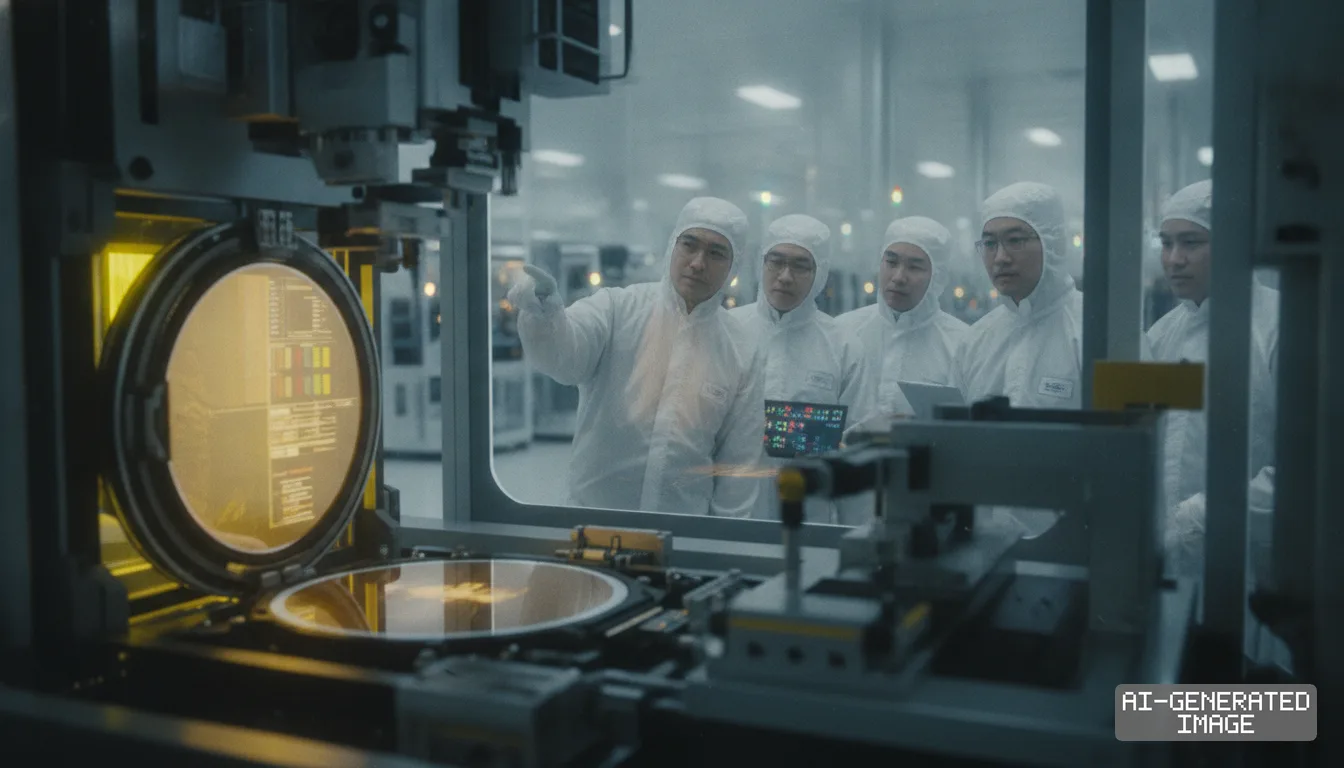
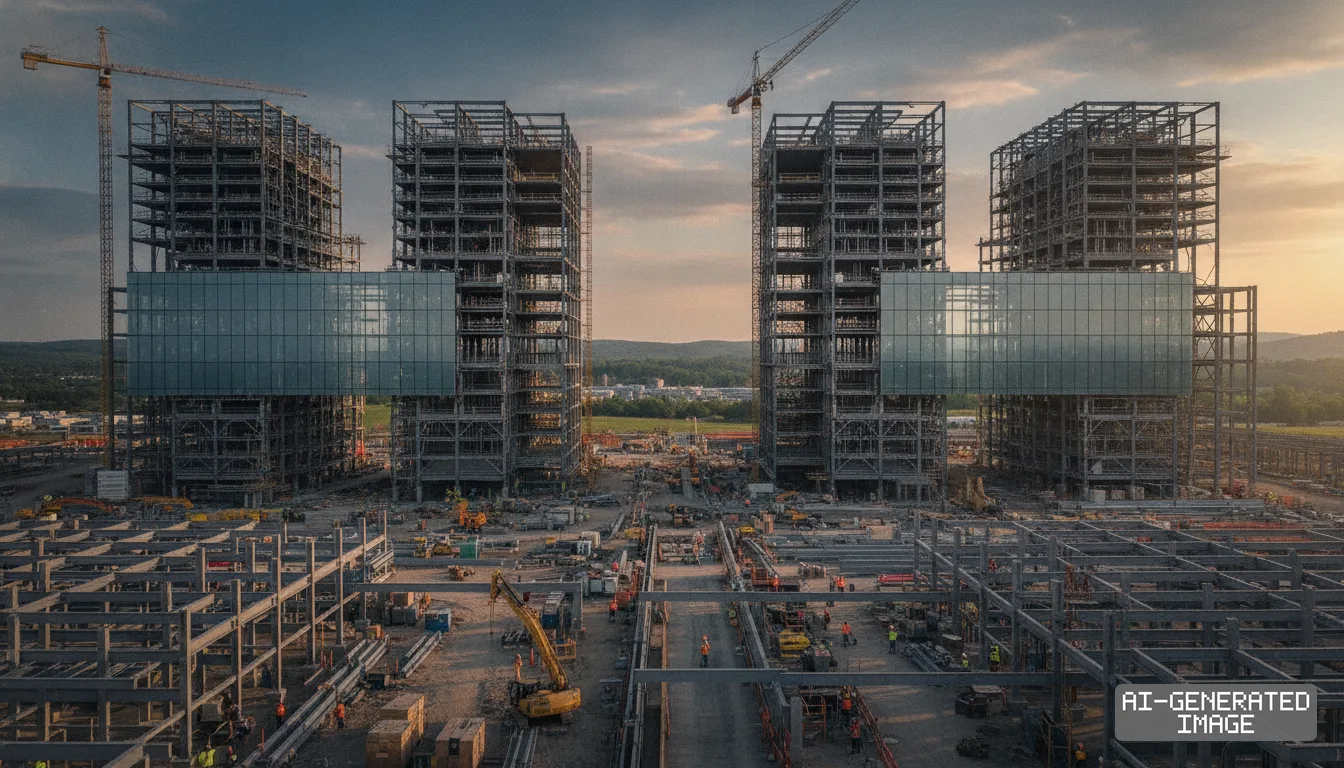
Taiwan Semiconductor Manufacturing Co. confirmed Oct. 15, 2026 that it has dispatched site evaluation teams to Texas to assess a potential manufacturing expansion beyond its Arizona campus.
Chief Executive Officer C.C. Wei announced the technical review during the company's third-quarter earnings conference. The prospective expansion would establish a second manufacturing anchor inside the United States.
The foundry booked consolidated third-quarter revenue of NT$1,494.24 billion ($46.72 billion), up 50.9% from NT$989.92 billion a year earlier. High-performance computing demand accounted for more than half of net wafer receipts.
The company maintained its 2026 capital expenditure guidance between $60 billion and $64 billion. Management reiterated that elevated capital commitments will continue through 2028 to support advanced logic nodes.
The Texas evaluation follows a cumulative $265 billion manufacturing pledge in Phoenix, Arizona. That allocation includes a $100 billion expansion tranche approved in July to support four additional wafer facilities.
Operating outside Arizona would distribute physical concentration risks across separate utility grids and labor pools. Water constraints and construction staffing shortages in the Phoenix metropolitan area have slowed successive construction phases since 2022.
Wei confirmed TSMC has opened commercial discussions with Elon Musk's Terafab project regarding prospective wafer allocations in Texas. Terafab is developing large-scale hardware infrastructure to manufacture proprietary processors for electric vehicles and artificial intelligence.
Operational sovereignty remains a mandatory condition for any formal commitment, Wei said. The company requires direct operational command over cleanrooms, tool installation and wafer processing protocols in any prospective joint facility.
The managerial condition mirrors TSMC's operational model for overseas joint ventures in Kumamoto, Japan and Dresden, Germany. In both structures, external equity partners fund equipment costs while TSMC retains day-to-day manufacturing execution.
Musk stated earlier in October that commercial arrangements with external foundries would involve subleasing physical space rather than integrated operational partnerships. Those conflicting frameworks leave the governance structure of any Texas installation unresolved.
A deployment in Texas places TSMC inside the primary production corridor of Samsung Electronics. The South Korean chipmaker committed $44 billion to construct leading-edge logic and packaging lines in Taylor, Texas.
Samsung Electronics expects its Taylor campus to anchor advanced foundry procurement for North American clients seeking geographic separation from East Asia. TSMC's presence in Texas would challenge Samsung Electronics directly for regional engineering talent and institutional tax subsidies.
Intel Corporation also faces heightened procurement pressure across domestic accounts. Intel operates high-volume logic manufacturing in Oregon and Arizona while advancing greenfield fabrication sites across Ohio under federal subsidy contracts.
Nvidia, Apple and Advanced Micro Devices purchase virtually all of their high-volume accelerators and processors from TSMC. Those companies have lobbied contract manufacturers to establish geographically redundant cleanroom capacity across multiple American jurisdictions.
Texas offers established infrastructure corridors near Austin and Dallas, supported by dedicated high-voltage industrial substations and extensive chemical supply lines. Local supply networks already service legacy facilities operated by Texas Instruments and NXP Semiconductors.
Industrial electricity costs in Texas track below average utility tariffs in Arizona. However, winter grid instability and extreme summer heat create operational vulnerabilities for sensitive photolithography equipment that requires uninterrupted power frequency.
Equipment vendors anticipate secondary installation revenue if TSMC expands into a second American jurisdiction. Applied Materials, Lam Research and Tokyo Electron would need to establish duplicated maintenance hubs between Phoenix and central Texas.
TSMC reported net income of NT$763.06 billion ($23.6 billion) for the third quarter, representing a 68.7% rise over the same period last year. Diluted earnings per share reached NT$29.43, up from NT$17.44 in the third quarter of 2025.
The company projected full-year 2026 revenue growth of approximately 44% in US-dollar terms. Management indicated that capacity utilization across 3-nanometer lines remains fully committed through the end of 2027.
The earnings release does not state prospective capital budgets, exact acreage, or municipal jurisdictions under review in Texas, and TSMC's board of directors has not formally approved a second American manufacturing hub.
TSMC scheduled volume expansion of its 2-nanometer architecture for 2027, with pilot line validation on next-generation A14 silicon targeted for the same calendar year. The company reviews annual capital allocations ahead of its scheduled board meeting in January 2027.
Impact map
How this development propagates across the region and out to global buyers.
| Event | Korea | China | Japan | Global impact |
|---|---|---|---|---|
| TSMC Texas site evaluation | Samsung Electronics faces direct competition for foundry accounts and local engineers around Taylor, Texas | Domestic foundries like SMIC remain constrained by export controls on sub-5nm lithography | Japanese toolmakers including Tokyo Electron gain dual-state installation and service contract opportunities | High-performance compute customers gain geographic redundancy for advanced packaging and sub-3nm wafer allocation |
| TSMC Texas site evaluation | Samsung Electronics faces direct competition for foundry accounts and local engineers around Taylor, Texas | Domestic foundries like SMIC remain constrained by export controls on sub-5nm lithography | Japanese toolmakers including Tokyo Electron gain dual-state installation and service contract opportunities | High-performance compute customers gain geographic redundancy for advanced packaging and sub-3nm wafer allocation |
In this story
- Companies
- Taiwan Semiconductor Manufacturing Co.Samsung ElectronicsIntel Corporation
- Tickers
- TSM005930.KSINTC
- Exposed
- NvidiaApple
- Policy
- SubsidiesEconomic Security
- Impact
- CapexSupply ChainOrder Book
Track every Subsidies development → Track every Economic Security development →
Related briefings
- AMD Reaffirms TSMC Alliance While Evaluating Rival Foundries Also on Intel Corporation, Taiwan Semiconductor Manufacturing Co., Samsung Electronics
- Lasertec ships EUV pellicle defect inspection tools for sub-2nm chip production Also on Intel Corporation
- TSMC warns AI cannot solve physical barriers for 1.4nm chips Also on Apple, Taiwan Semiconductor Manufacturing Co, Nvidia
- TSMC Reaffirms 2028 Target for 1.4nm Chips at Taichung Fab Also on Apple, Taiwan Semiconductor Manufacturing Co, Nvidia
Sources
Primary documents
Reporting
Confidence: high — how we grade this
The documents behind this briefing are linked above. East Asia Brief produces its English text with AI assistance under human editorial review, and does not translate or republish other outlets' articles. See our methodology and AI policy. Spotted an error? Tell us.
The Morning Brief
What changed in Korean, Chinese and Japanese industry overnight — and what it means for your supply chain. One email, weekday mornings, US time. Free.
The Morning Brief is in preparation. Leave your address and we will write to you once — when the first issue is ready. Nothing before that.