TSMC Demands Full Fab Control as Musk Pursues Texas Terafab
Taiwan Semiconductor Manufacturing Co. confirmed dispatching a review team to Texas for capacity discussions while ruling out any fab operations managed by third parties.
Taiwan Semiconductor Manufacturing Co. Chairman C.C. Wei said Oct. 15 that the foundry must directly run any production lines tied to the proposed Terafab semiconductor project in Texas.
The stance limits how external sponsors can structure the campus. TSMC raised its 2026 capital budget to between $60 billion and $64 billion, prioritizing wholly controlled manufacturing lines over joint operational ventures.
Advanced manufacturing nodes at 7 nanometers and below generated 74% of TSMC wafer revenue last quarter. High-performance computing chips built for artificial intelligence workloads accounted for more than 60% of that total.
Wei told analysts during TSMC's third-quarter earnings call that the company sent an evaluation team to Texas. The delegation met with Terafab planners to discuss using extra production capacity, Wei said.
The fab has got to be run by Taiwan Semiconductor, Wei said in response to questions about management rights. Talks remain preliminary, with no formal agreement signed, Wei added.
Gokul Hariharan, an analyst at JPMorgan, asked Wei whether TSMC would accept tenant or subleasing arrangements in Texas. Wei rejected any structure that separated cleanroom property from proprietary fab operation.
The comments draw a clear boundary against recent proposals from Tesla Chief Executive Elon Musk. Musk said Oct. 3 that early discussions were underway to involve TSMC in the Texas project.
Musk altered that framing Oct. 7, writing on social media that Tesla and SpaceX would build and operate Terafab directly. Any role for TSMC would be limited to subleasing cleanroom space, Musk said.
Musk also identified Intel as a primary equipment and manufacturing partner under the plan. Intel Chief Executive Lip-Bu Tan reaffirmed his company's commitment to supply its 14A process technology to the facility.
Intel needs external foundry volume to counter manufacturing losses that exceeded $7 billion in its foundry division last year. Supplying Terafab offers Intel an opening to validate its 14A node on commercial hardware.
Tesla designs proprietary silicon to support autonomous driving fleets and humanoid robotics. The company contracts its AI6 processor through a $16.5 billion multi-year supply agreement running through 2033, dividing orders across Asian foundries.
Tesla previously planned to split AI5 and AI6 orders across TSMC and Samsung Electronics. Samsung's yield delays on its 2-nanometer gate-all-around process pushed volume output to late 2027, concentrating leading-edge automotive orders at TSMC.
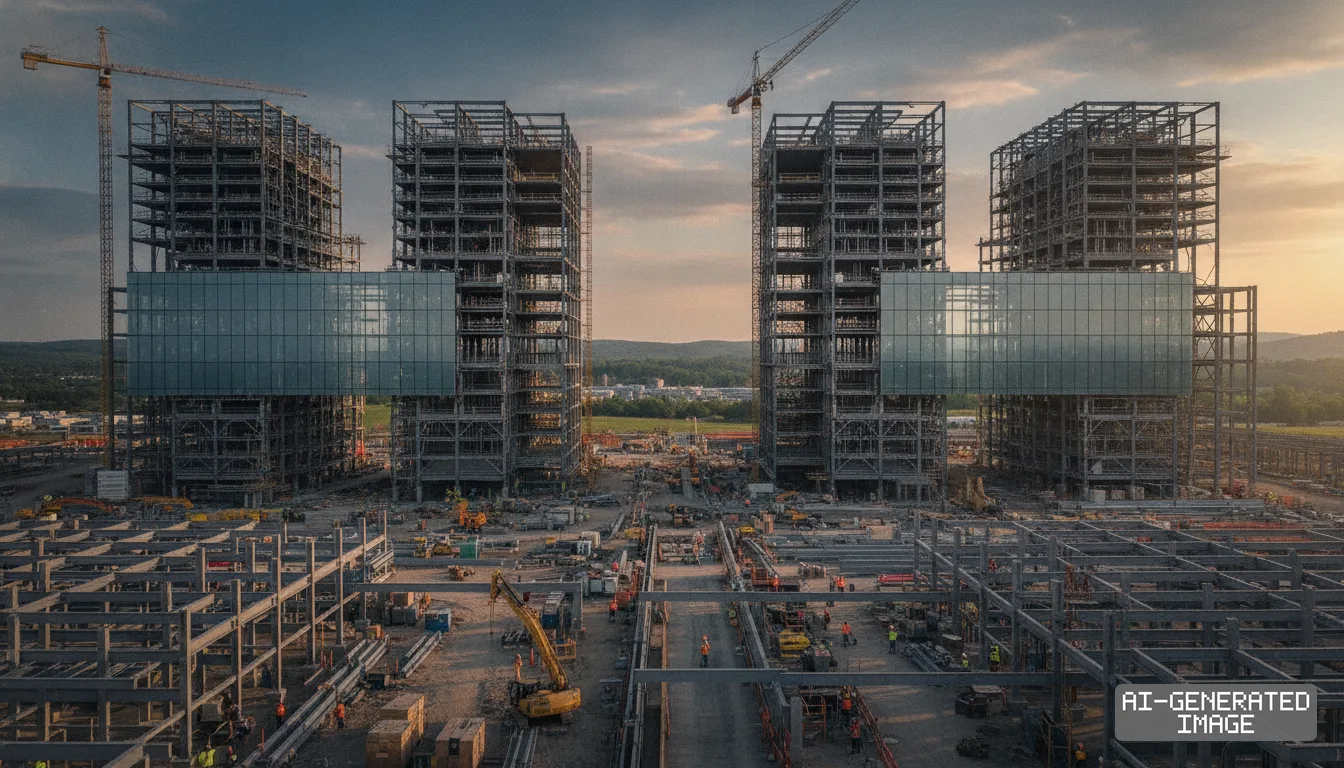
Musk's proposed Terafab campus in Grimes County, Texas envisions a vertically integrated computing and manufacturing hub. The facility targets silicon production by 2029 to supply internal vehicle, robotics and aerospace hardware pipelines.
Contract chip manufacturing depends on proprietary cleanroom protocols and delicate chemical recipes. Allowing a customer to supervise shop-floor operations risks exposing trade secrets refined across four decades of volume production, industry analysts said.
Advanced packaging forms an essential part of leading-edge production alongside front-end wafer fabrication. TSMC manufactures 5X reticle-size chip packages today and is developing 9X and 14X versions for next-generation accelerators, Wei said.
TSMC plans price increases of 5% to 10% on advanced nodes starting in 2027, according to industry procurement disclosures. Management uses its process leadership to safeguard profit margins against rising overseas construction expenses.
Senior Vice President and Chief Financial Officer Wendell Huang said overseas fab expansions create near-term margin dilution. TSMC absorbs those costs by keeping tight operational oversight across every overseas installation, Huang said.
Constructing an advanced semiconductor plant requires two to three years, Wei said earlier this year. Ramping yield rates to profitable commercial volumes typically demands another one to two years, Wei said.
TSMC already committed $265 billion toward advanced manufacturing complexes in Phoenix, Arizona. Three separate fabs in that cluster will produce 4-nanometer, 3-nanometer and 2-nanometer wafers under sole TSMC operating management.
TSMC scheduled its next capital expenditure update and board review for January 2027. Fourth-quarter revenue will reach between $52.3 billion and $54.3 billion, according to company financial guidance released Oct. 15.
The earnings conference transcript does not state the prospective process node or the capital contribution required for any Texas partnership. Management has not published a binding timeline or legal framework for the discussions.
Discussions between TSMC engineers and Terafab planners continue in Texas without an executed contract. Both sides maintain separate planning teams while evaluating power and site allocations across the state.
Impact map
How this development propagates across the region and out to global buyers.
| Event | Korea | China | Japan | Global impact |
|---|---|---|---|---|
| Terafab operating control dispute | Samsung Electronics faces reduced 2nm automotive volume on yield delays | Domestic foundries remain cut off from leading-edge nodes below 7nm | Equipment makers see high cleanroom tool demand regardless of fab operator | Cloud and automotive buyers face concentrated leading-edge foundry pricing power |
In this story
- Companies
- TSMC
- Tickers
- TSM
- Exposed
- TeslaIntelSamsung ElectronicsSpaceX
- Policy
- SubsidiesEconomic Security
- Impact
- Supply ChainCapexCompliance
Track every Subsidies development → Track every Economic Security development →
Related briefings
- Elon Musk rejects TSMC Terafab deal, backing Intel 14A node Also on SpaceX, Intel, Tesla
- TSMC Dismisses Terafab Rumors as Texas Factory Talks Surface Also on SpaceX, Intel, Tesla
- Korean chip toolmakers target Musk's $16.8 billion Texas fab Also on SpaceX, Tesla, TSMC
- Hanmi Semiconductor Wins Tool Order for Musk's Terafab Plant Also on SpaceX, Tesla
Sources
Primary documents
Reporting
Confidence: high — how we grade this
The documents behind this briefing are linked above. East Asia Brief produces its English text with AI assistance under human editorial review, and does not translate or republish other outlets' articles. See our methodology and AI policy. Spotted an error? Tell us.
The Morning Brief
What changed in Korean, Chinese and Japanese industry overnight — and what it means for your supply chain. One email, weekday mornings, US time. Free.
The Morning Brief is in preparation. Leave your address and we will write to you once — when the first issue is ready. Nothing before that.