Japan funds $21 billion GlobalFoundries build in New York
A bilateral vehicle will construct two 300mm fabs adding 1.8 million wafers of annual capacity by 2029, while the Commerce Department reallocates $955 million and takes a 4% equity stake.
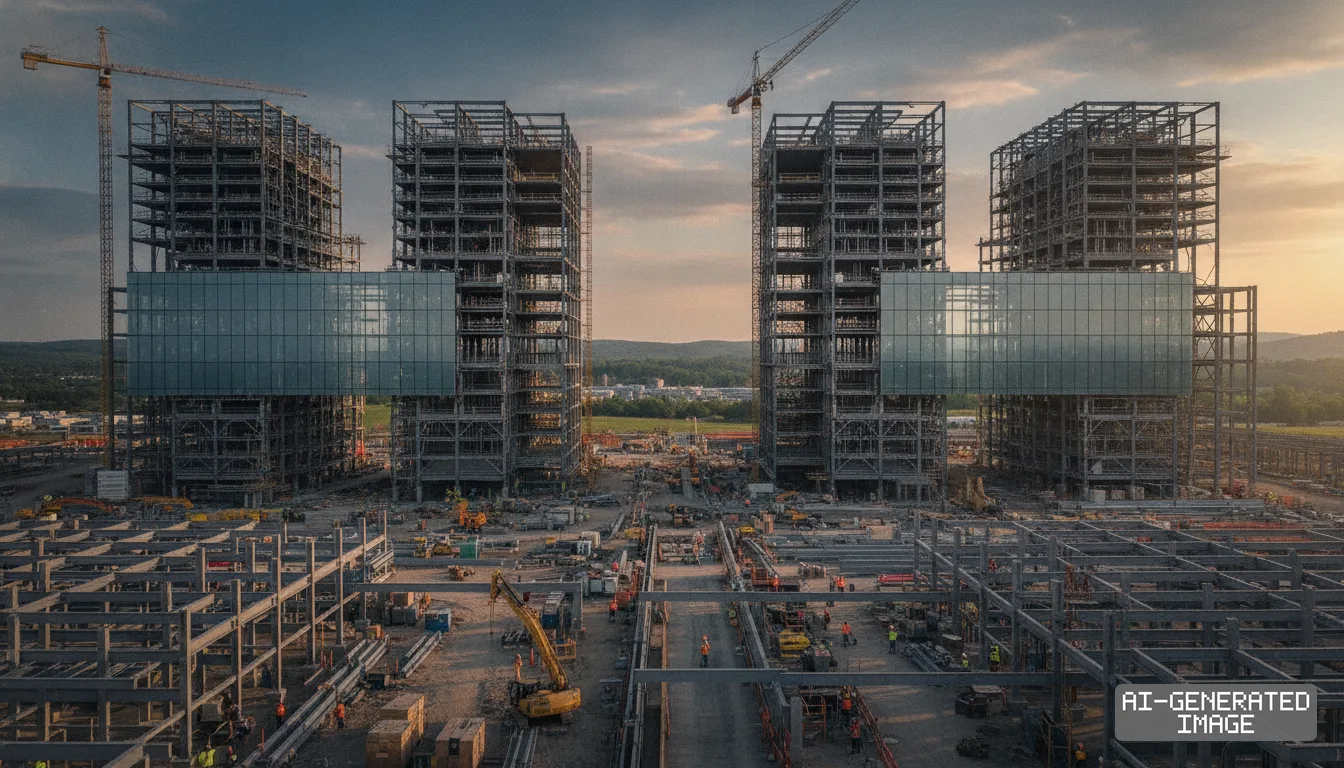
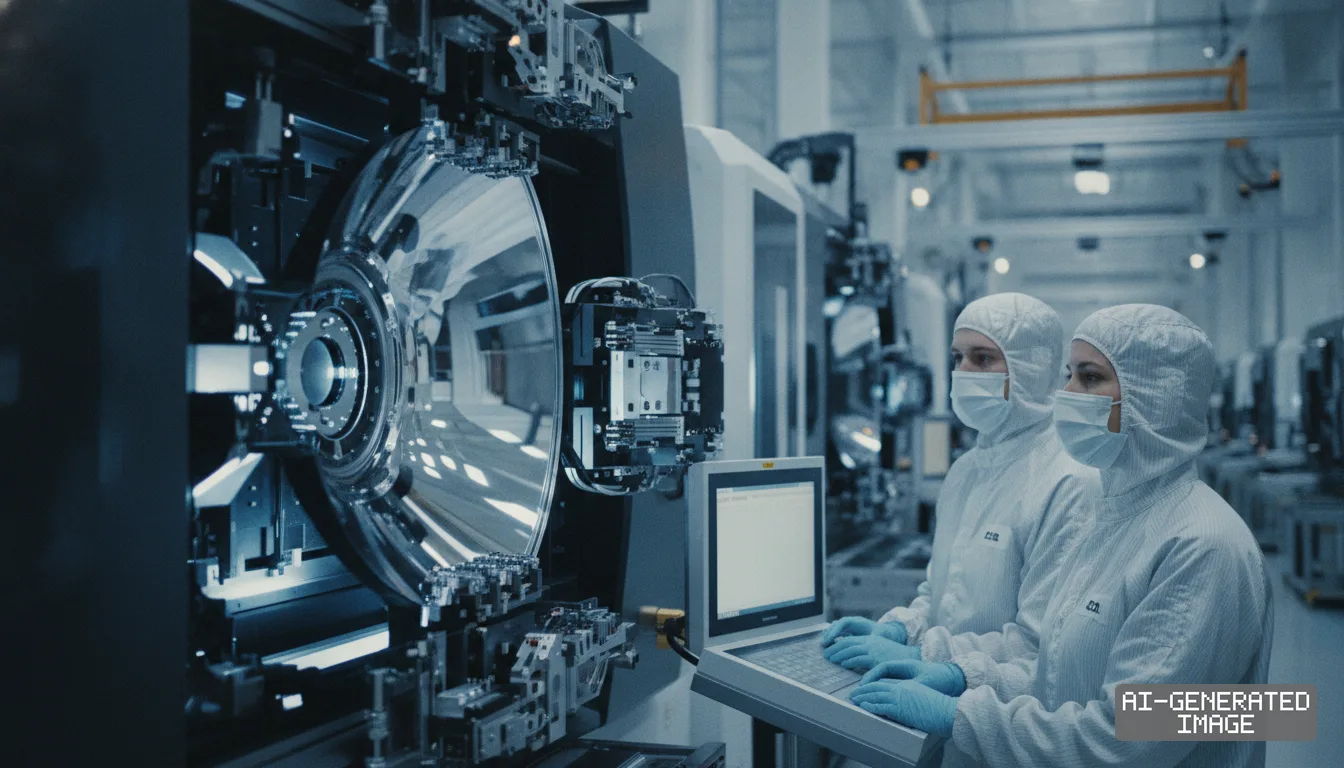
GlobalFoundries said Oct. 14, 2026, it will operate two new semiconductor manufacturing facilities in Malta, New York, under a bilateral pact backed by up to $21 billion from Japan.
The funding forms part of Japan's $550 billion trade and investment agreement with Washington. An initial $10 billion allocation will finance the first 300-millimeter wafer fab, while a second $10 billion tranche will fund a twin plant.
Each facility will deliver approximately 900,000 300-millimeter wafers annually at full operation. The combined 1.8 million wafers represent more than a doubling of existing commercial capacity at the Saratoga County manufacturing site.
The project uses an asset-light ownership structure for the operator. A special purpose vehicle jointly owned by the governments of the United States and Japan will hold title to the real estate, cleanrooms and tooling.
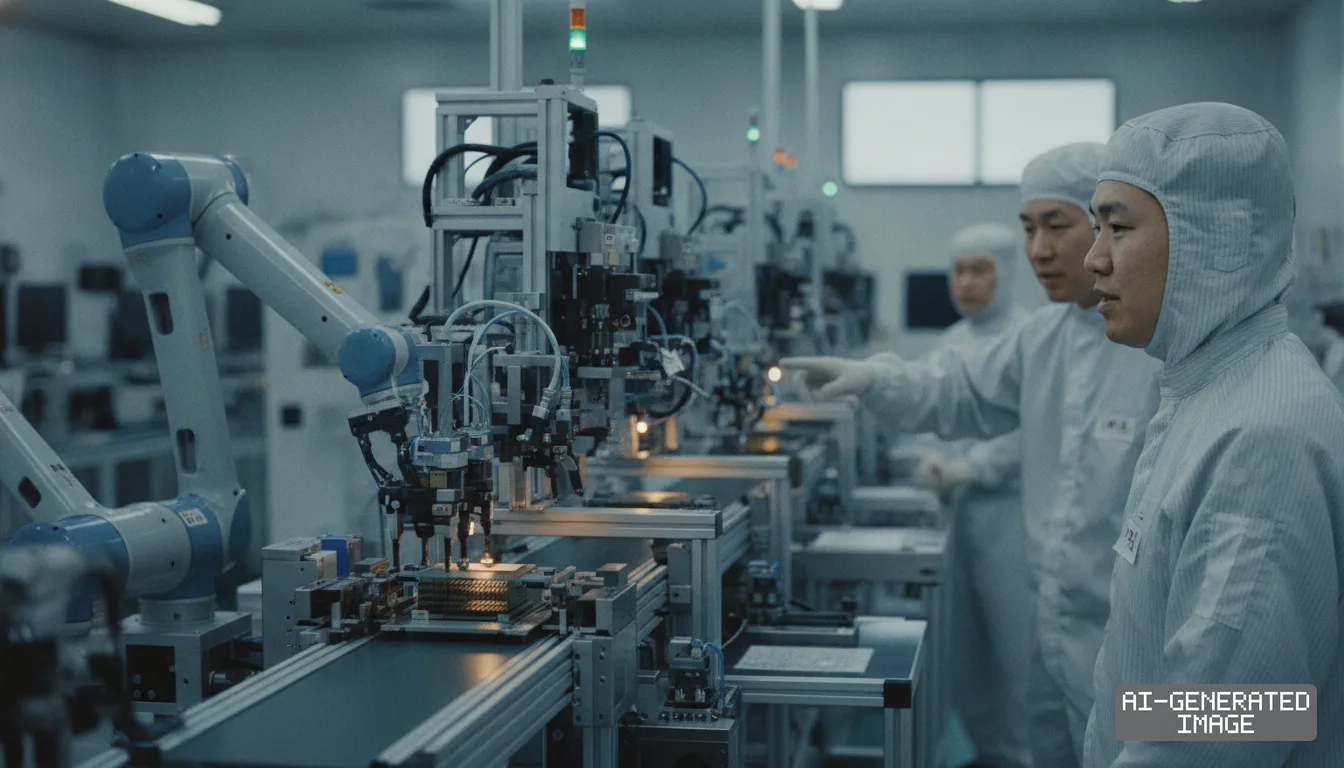
GlobalFoundries will manage daily production lines and supply proprietary process designs without committing internal capital expenditure. The chipmaker will earn contracted facility management fees, operational licensing royalties and performance dividends tied to foundry yields.
Net earnings from the special purpose vehicle will be distributed between Washington and Tokyo under a tiered schedule. Returns will split equally up to an agreed recovery ceiling, after which the US government share expands to 90%.
The US Department of Commerce revised its federal subsidy agreement with GlobalFoundries alongside the announcement. The agency restructured a prior grant under the CHIPS and Science Act, redirecting $955 million toward specialized manufacturing lines across New York and Vermont.
That capital will expand silicon photonics, silicon-germanium processes and advanced packaging at the Malta complex and Fab 9 in Burlington. Silicon photonics uses optical signals rather than electrical wiring to transmit data between processors at higher speeds.
The Department of Commerce will also obtain an equity stake of roughly 4% in GlobalFoundries through a separate bilateral warrant. The shareholding gives federal regulators direct participation in future equity appreciation and operational cash distributions.
Initial reports on Sept. 17, 2026, outlined early diplomatic discussions for a 2 trillion to 3 trillion yen semiconductor venture. Wednesday's filing finalized the legal and industrial framework between the two nations.
The bilateral agreement addresses chronic western shortages of mature-node semiconductors. Foundational chips manufactured on trailing-edge process nodes regulate high-voltage electric vehicle drivetrains, industrial robotics and military guidance systems.
East Asian fabrication hubs currently hold more than 75% of worldwide trailing-edge wafer capacity. Concentrating foundational manufacturing in coastal zones across Taiwan, South Korea and mainland China leaves automotive supply chains vulnerable to geopolitical friction and maritime blockades.
Japanese tier-one automotive suppliers face direct exposure to these Pacific supply bottlenecks. Japan imports nearly 60% of its automotive microcontrollers and peripheral power chips from overseas fabrication lines located across Greater China and Southeast Asia.
Renesas Electronics, Japan's primary automotive chipmaker, expanded a multi-billion-dollar foundry partnership with GlobalFoundries earlier in 2026. Renesas outsources roughly 30% of its total automotive microcontroller volume to third-party contract fabs.
The new Malta fabs will provide Renesas with a protected North American production base. Output from the New York lines will feed automotive assembly plants operated across North America by Toyota Motor, Honda Motor and Nissan Motor.
American original equipment manufacturers also hold direct procurement exposure to the expanded site. General Motors and Apple maintain dedicated wafer supply agreements with GlobalFoundries to protect domestic component pipelines.
Apple sources radio-frequency components and power management integrated circuits produced at the Malta facility under a $600 billion domestic spending pledge. The two new fabs will secure dedicated 300-millimeter cleanroom capacity for future device cycles.
General Motors relies on GlobalFoundries for silicon running chassis controllers and advanced driver-assistance platforms. The automotive producer established long-term capacity reservations at Malta following widespread factory shutdowns caused by microchip shortages in 2021 and 2022.
The New York project follows an agreement signed Oct. 8, 2026, between GlobalFoundries and Taiwan Semiconductor Manufacturing Co. That five-year pact will establish US-based production of silicon interposers for artificial intelligence packaging in Malta by 2028.
Interposers provide intermediate silicon wiring layers that connect computing processors directly to high-bandwidth memory stacks. Integrating interposer fabrication and high-volume wafer production creates an end-to-end semiconductor cluster in the Capital Region.
State officials project the two new facilities will generate approximately 27,000 construction jobs and more than 1,000 permanent manufacturing positions. The Malta industrial park already possesses approved environmental permits and municipal high-voltage utility connections.
Contractors will break ground on the initial 300-millimeter fab before the end of 2026, the company said. Commercial silicon manufacturing across the first 900,000-wafer line is scheduled to begin in 2029.
The Japanese government has not published ministerial notices through the Ministry of Economy, Trade and Industry or the Japan Bank for International Cooperation specifying the exact vehicle equity split or capital tranche schedules.
Impact map
How this development propagates across the region and out to global buyers.
| Event | Korea | China | Japan | Global impact |
|---|---|---|---|---|
| Japan $21B GlobalFoundries Fab Deal | Samsung trailing-edge foundry lines face North American competition for automotive contracts | Legacy fabs lose Western Tier-1 automotive qualification channels due to US-Japan supply security rules | Renesas and automakers secure dedicated 300mm output, shielding 30% of outsourced microcontroller demand from Taiwan Strait risks | Adds 1.8 million wafers of non-Asian legacy foundry capacity by 2029, easing automotive chip supply bottlenecks |
In this story
- Companies
- GlobalFoundries
- Tickers
- GFS
- Exposed
- Renesas ElectronicsAppleGeneral MotorsTaiwan Semiconductor Manufacturing Co.Toyota MotorHonda MotorNissan Motor
- Policy
- SubsidiesEconomic Security
- Impact
- Supply ChainCapexOrder Book
Track every Subsidies development → Track every Economic Security development →
Related briefings
- Japanese automakers standardize prismatic battery cold tests as EV timelines advance Also on Nissan Motor, Honda Motor, Toyota Motor
- Suzuki selects BYD LFP battery cells for inaugural Japanese mini EV Also on Nissan Motor, Honda Motor
- US and Japan weigh $19 billion GlobalFoundries fab under tariff pact Also on GlobalFoundries, Toyota Motor, General Motors
- TSMC captures 72.5% foundry share as gap with Samsung widens Also on GlobalFoundries, Apple, Taiwan Semiconductor Manufacturing Co.
Sources
Primary documents
Reporting
Confidence: high — how we grade this
The documents behind this briefing are linked above. East Asia Brief produces its English text with AI assistance under human editorial review, and does not translate or republish other outlets' articles. See our methodology and AI policy. Spotted an error? Tell us.
The Morning Brief
What changed in Korean, Chinese and Japanese industry overnight — and what it means for your supply chain. One email, weekday mornings, US time. Free.
The Morning Brief is in preparation. Leave your address and we will write to you once — when the first issue is ready. Nothing before that.