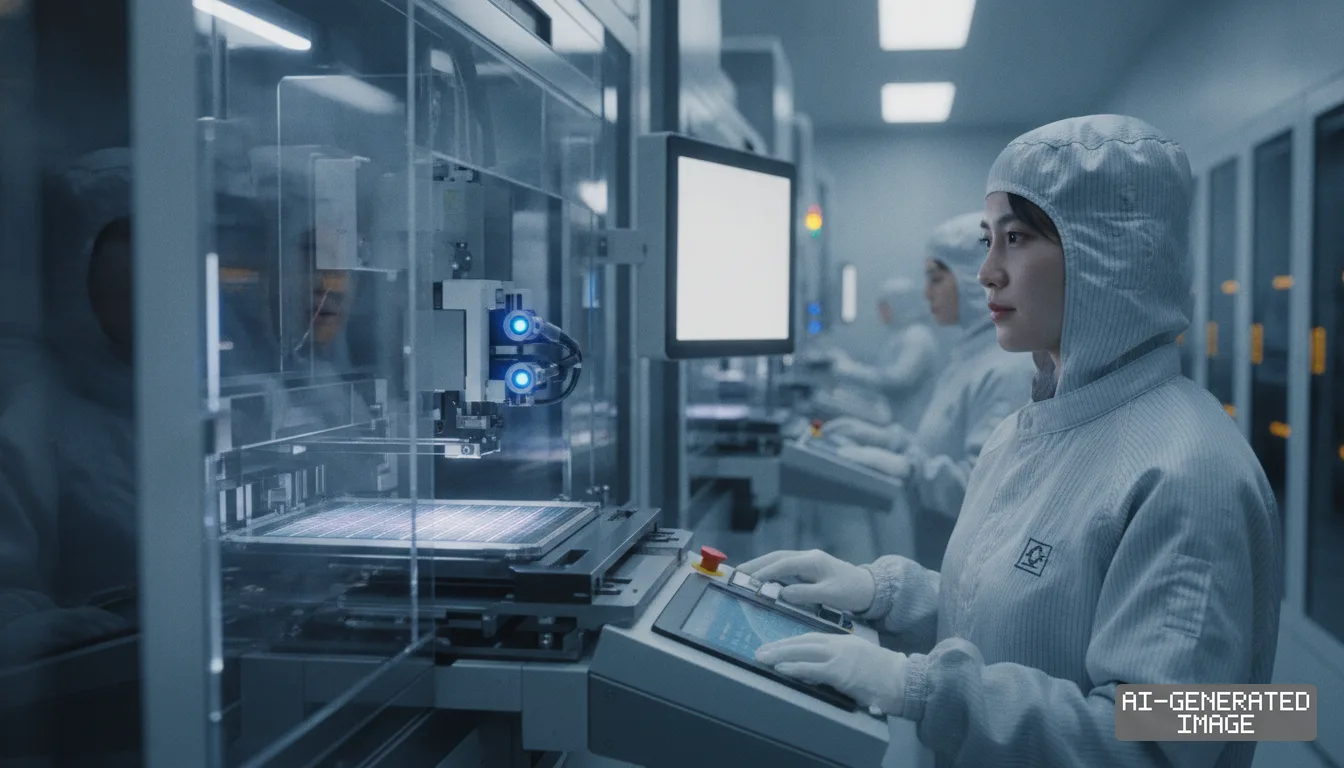
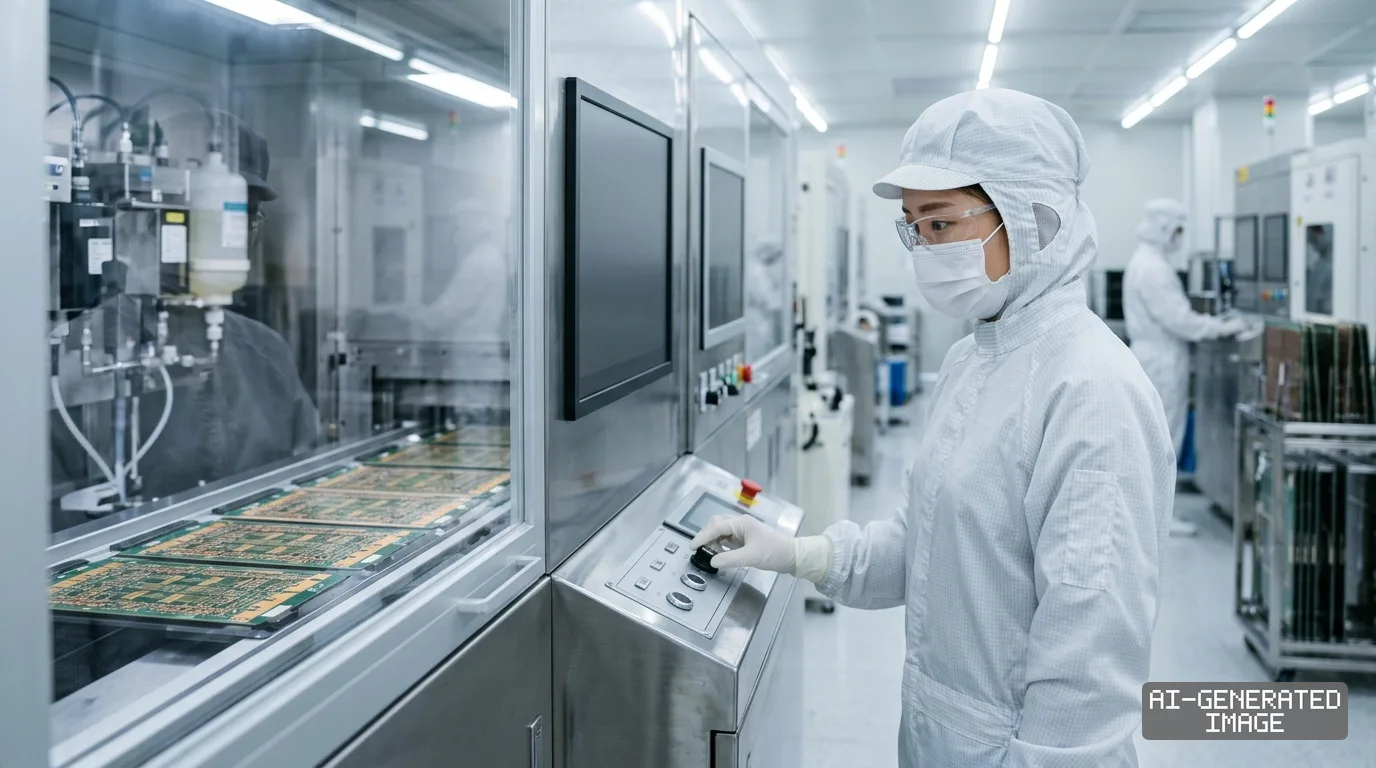
Taiwan clears $50 billion TSMC transfer to US fab and offshore unit
The approval lifted Taiwan's outbound direct investment 105.14% to $69.92 billion through October, channeling $20 billion directly to TSMC Arizona.
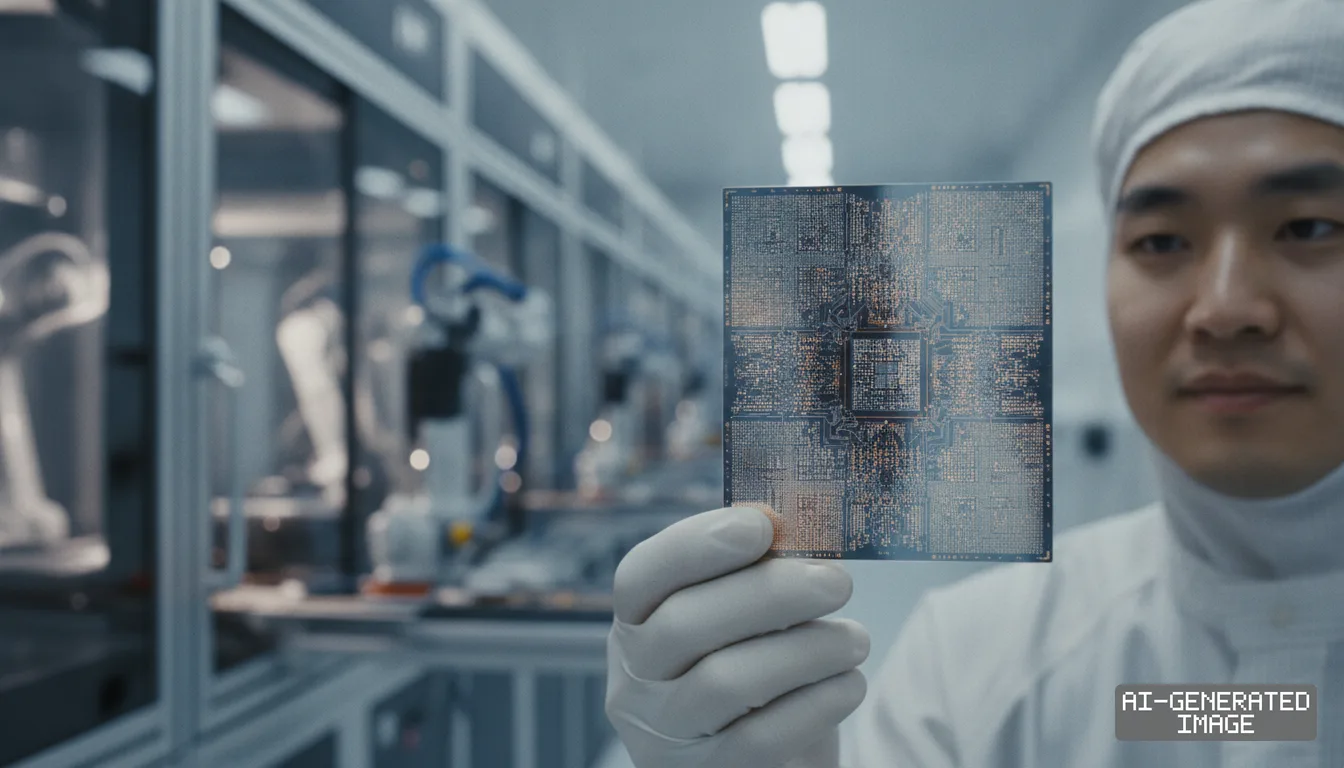
Taiwan's Ministry of Economic Affairs approved record outward direct investments on Nov. 16, 2026, driven by $50 billion in capital injections from Taiwan Semiconductor Manufacturing Co. into foreign subsidiaries.
Total approved outbound direct investment surged 105.14% year-on-year to $69.916 billion across 612 projects between January and October, the ministry's Department of Investment Review said. TSMC allocations accounted for 71.5% of all approved outbound capital.
The regulatory approvals channeled $30 billion to TSMC Global Ltd. in the British Virgin Islands and $20 billion to TSMC Arizona Corporation in the United States, according to agency records.
The American disbursement included an equity increase cleared by regulators on July 2, 2026. The capital funds advanced wafer fabrication facilities currently operating and expanding in Phoenix, the department said.
Taiwan has cleared $44 billion across seven separate equity tranches for the Arizona subsidiary since December 2020. That cumulative figure represents 16.6% of TSMC's total planned $265 billion capital commitment to American fab projects.
TSMC designated the $30 billion transfer to TSMC Global Ltd. for foreign exchange hedging and currency risk management. The company manages overseas financial obligations through the entity to reduce procurement overhead, corporate filings showed.
Inbound foreign direct investment into Taiwan also established a record high during the same 10-month period. Approved foreign capital inflows jumped 127.5% year-on-year to $20.899 billion across 1,858 cases, surpassing the $20 billion threshold.
Micron Technology drove the inbound expansion through its Singapore entity, Micron Semiconductor Asia Pte. Ltd. The American memory manufacturer converted $9.45 billion in debt into equity for its primary local operating arm, Taiwan Micron Memory.
The paired capital flows illustrate Taipei's regulatory approach of permitting overseas fab expansion while mandating leading-edge research and fabrication stay at home. Under ministry rules, domestic facilities must remain at least one node generation ahead of offshore lines.
TSMC's board of directors authorized a capital expenditure budget of $40.927 billion on Nov. 10, 2026. The appropriation finances advanced node deployment, advanced packaging installation and cleanroom construction across domestic and international manufacturing hubs.
The capital authorization accompanied third-quarter financial results published on Nov. 10. Consolidated revenue reached NT$1.494 trillion ($46.8 billion), yielding net income of NT$763.06 billion, according to financial statements filed with the Taiwan Stock Exchange.
TSMC concentrates its two-nanometer and planned A16 process development at domestic industrial campuses in Hsinchu and Kaohsiung. Meanwhile, international fabs in Phoenix, Kumamoto and Dresden handle volume production of four-nanometer, three-nanometer and specialty automotive chips.
The Arizona project plans commercial volume manufacturing on four-nanometer lines, with subsequent phases targeting two-nanometer technologies. The Phoenix site represents the largest foreign direct investment in Arizona history, according to state commerce records.
Multinational technology customers including Apple, Nvidia and Qualcomm have demanded geographic manufacturing redundancy away from Taiwan. The outbound investment clearances allow TSMC to satisfy customer supply-chain resilience mandates without ceding commercial market share.
Despite the offshore capital disbursements, the majority of TSMC's equipment procurement remains inside Taiwan. The foundry directed more than 70% of its trailing three-year fabrication budget to domestic advanced wafer and advanced packaging lines.
The Department of Investment Review scrutinizes outbound semiconductor investments under strict economic security criteria. Regulators verify that overseas transfers do not compromise domestic technological leadership or weaken home-market operational stability before granting approval.
In contrast to rising American capital transfers, approved Taiwanese investments in mainland China dropped 20.24% year-on-year to $712.4 million through September. Strict cross-strait regulations and American export controls curtailed new fabrication outlays across Chinese sites.
Outbound foundry funding has drawn domestic chemical, gas and substrate vendors into international hubs. Material providers and cleanroom contractors have opened American and European branches to match TSMC's construction and tool hook-up schedules, trade data showed.
Financing offshore operations through TSMC Global Ltd. cushions the company from foreign exchange volatility in the New Taiwan dollar. Substantial capital goods purchases denominated in dollars and euros necessitate continuous balance-sheet hedging, corporate disclosures indicated.
The ministry notice does not state whether the investment commission evaluated additional offshore fabrication projects, such as a second European production line, during its latest monthly approval meeting.
TSMC closes its shareholder register from March 13 through March 17, 2027, ahead of distributing its third-quarter cash dividend of NT$9.0 per share to domestic and American depositary shareholders on April 8, 2027.
Impact map
How this development propagates across the region and out to global buyers.
| Event | Korea | China | Japan | Global impact |
|---|---|---|---|---|
| TSMC overseas capital approvals | Samsung foundry faces direct capacity competition in US contract manufacturing | Taiwanese fab investments down 20.24% as cross-strait chip capital shifts west | Kumamoto joint venture secures equipment supply lines tied to global expansion | US fab footprint captures $44B in cumulative equity approvals to date |
In this story
- Companies
- Taiwan Semiconductor Manufacturing Co.Micron Technology
- Tickers
- 2330.TWMU
- Exposed
- AppleNvidiaQualcomm
- Policy
- Investment ScreeningSubsidies
- Impact
- CapexSupply ChainOrder Book
Track every Investment Screening development → Track every Subsidies development →
Related briefings
- TSMC plans to lift wafer foundry prices by 3% to 6% from 2027 Also on Qualcomm, Apple, Taiwan Semiconductor Manufacturing Co.
- TSMC raises 2nm wafer target to 120,000 units as orders surge Also on Qualcomm, Apple, Nvidia
- TSMC sees 3nm revenue overtake 5nm node on surge in AI accelerators Also on Qualcomm, Apple, Nvidia
- Iran pitches $300B transport and energy portfolio in Shanghai forum Also on Investment Screening, Order Book
Sources
Reporting
Confidence: medium — how we grade this
The documents behind this briefing are linked above. East Asia Brief produces its English text with AI assistance under human editorial review, and does not translate or republish other outlets' articles. See our methodology and AI policy. Spotted an error? Tell us.
The Morning Brief
What changed in Korean, Chinese and Japanese industry overnight — and what it means for your supply chain. One email, weekday mornings, US time. Free.
The Morning Brief is in preparation. Leave your address and we will write to you once — when the first issue is ready. Nothing before that.