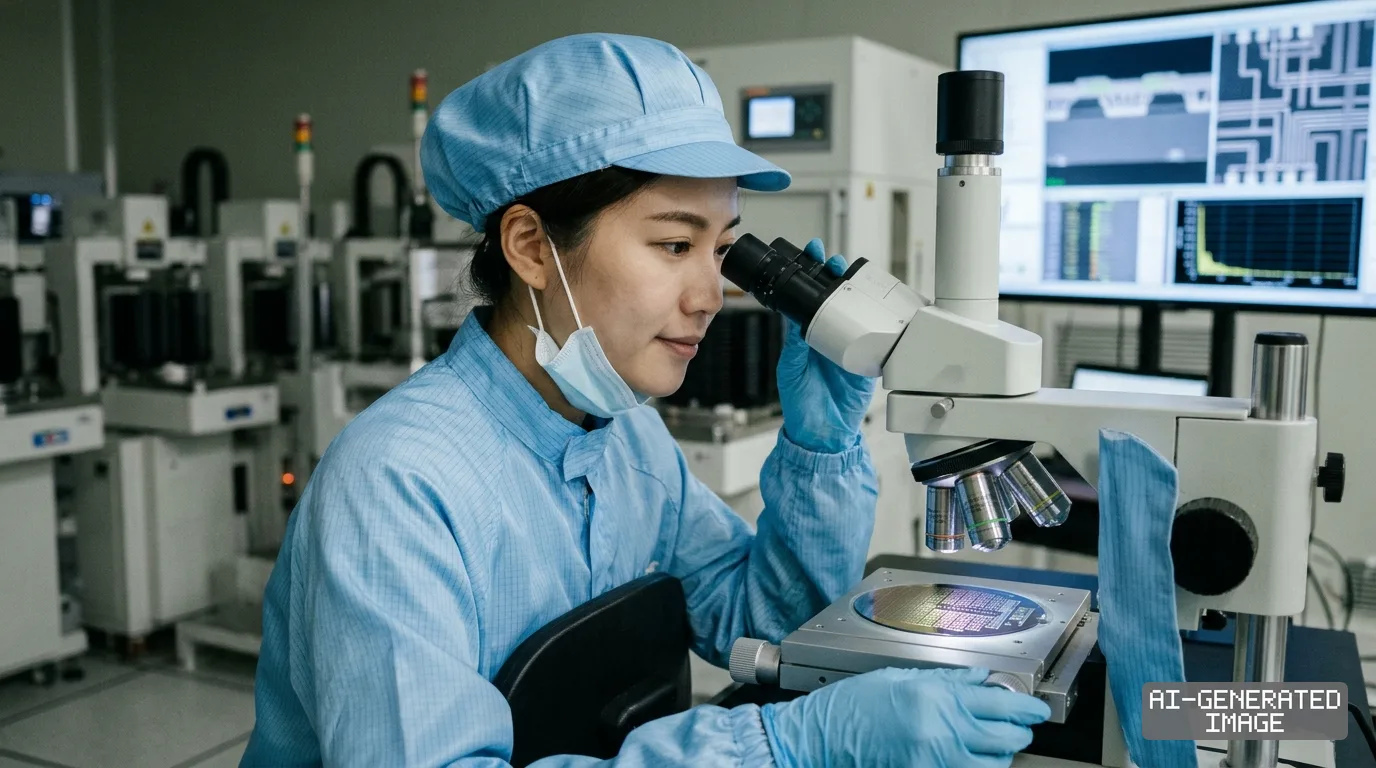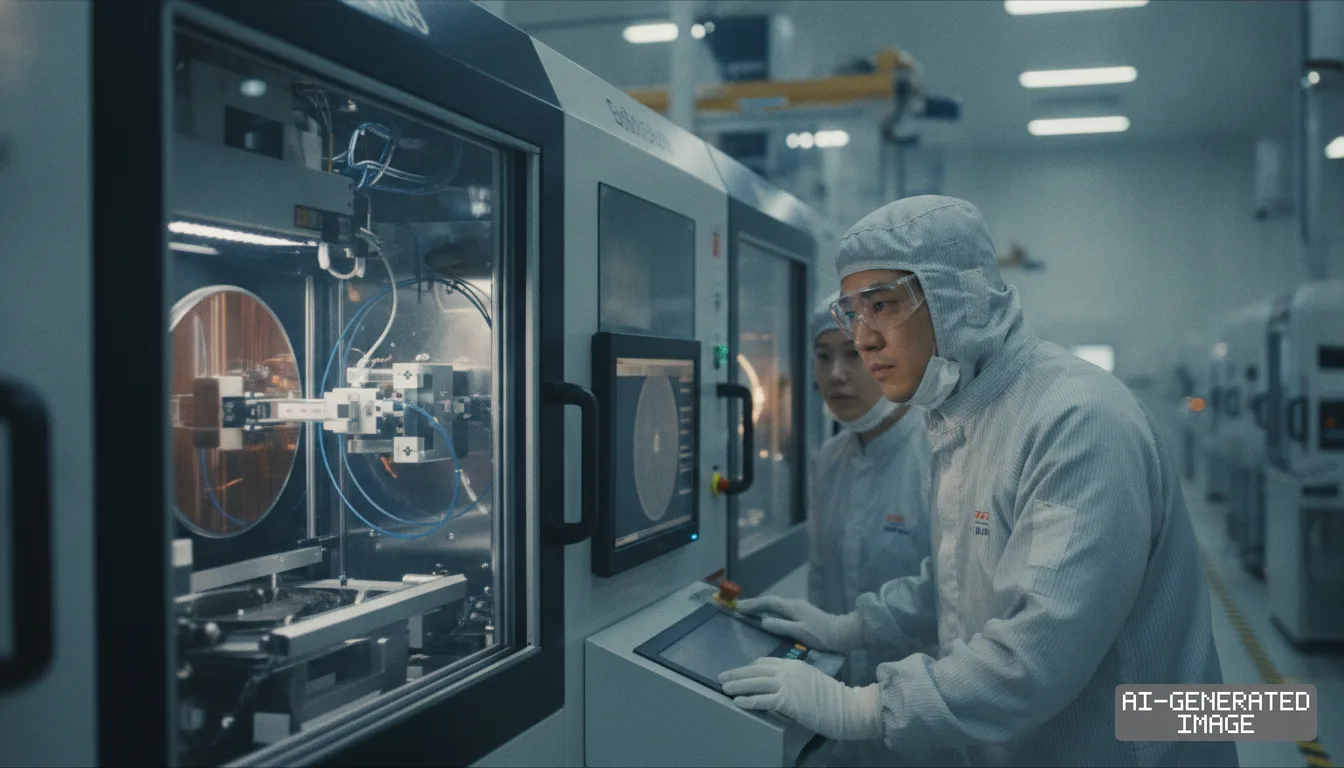
SK hynix reveals MARS rack architecture for AI clusters at SC26
The chipmaker demonstrated CXL-based memory pooling alongside its HBM4 portfolio as long-term contracts secure high-bandwidth memory capacity through 2029.
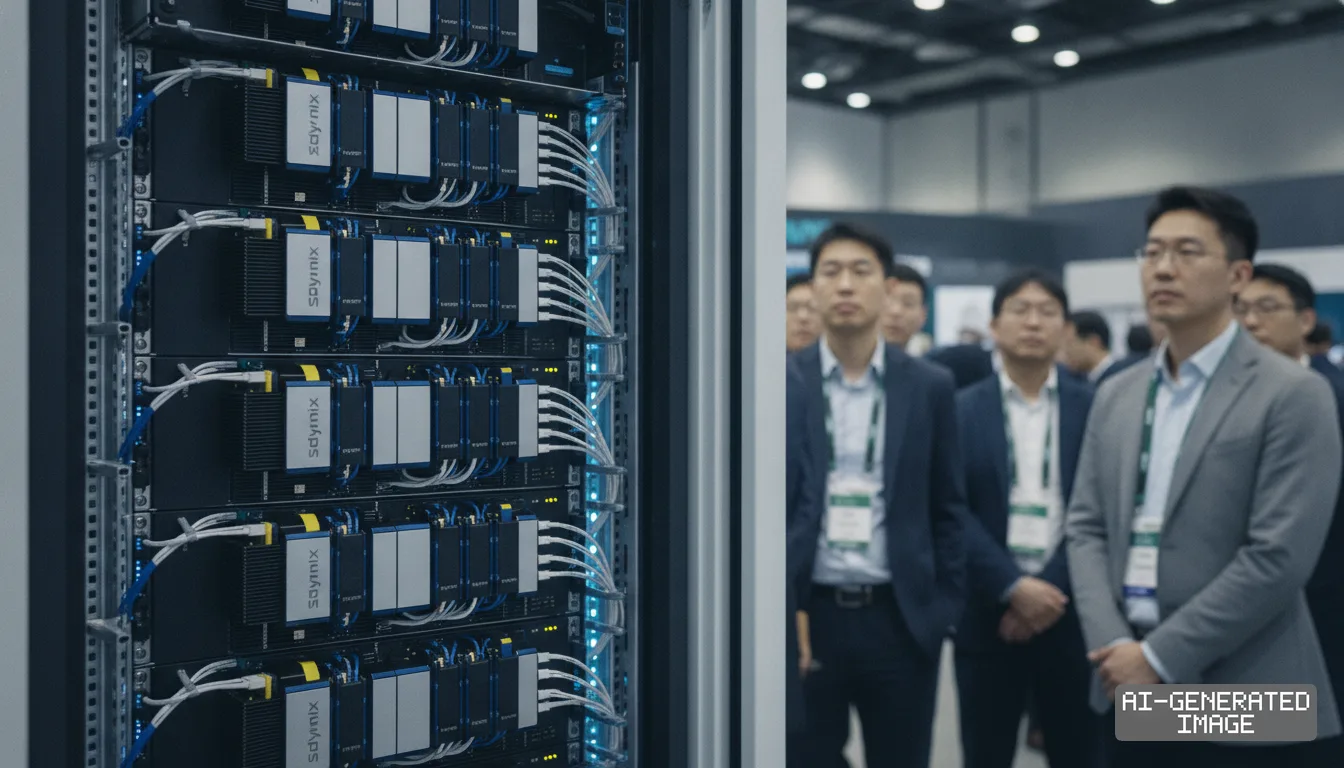
SK hynix unveiled its Memory-centric AI Rack System on Nov. 20, 2026, demonstrating hardware designed to process artificial intelligence workloads directly inside memory pools at the Supercomputing 2026 conference in Chicago.
The trade show drew roughly 10,000 visitors and 500 exhibiting organizations to the six-day event. SK hynix used the gathering to pivot from presenting standalone memory chips toward integrated data-center server racks.
The move targets high-bandwidth memory demand that the company has already booked through 2029 under long-term customer contracts. High-bandwidth memory accounted for more than 40% of the firm's dynamic random-access memory revenue in recent quarters.
The rack architecture, branded as MARS, places memory pools at the physical core of server infrastructure. The design connects processing units and memory modules inside a single standard frame to bypass bandwidth limits between server chassis.
Traditional computing clusters attach memory directly to graphics processing units, which restricts physical capacity and forces repetitive data recomputation. MARS separates memory resources into shared pools accessible across multiple host processors via Compute Express Link connections.
Compute Express Link, an open standard known as CXL, provides high-speed connections that allow different processors to access shared pools of dynamic random-access memory. That link reduces data transfer delays between server clusters, the company said.
The first of three live demonstrations showed CXL-based pooled memory managing key-value caches at the rack scale. Key-value caches store temporary conversation data generated by large language models, expanding continuously as user queries grow longer.
SK hynix tiered the cache between dynamic random-access memory and enterprise solid-state drives inside hybrid memory modules. The system stores historical context on flash storage and loads predicted data into DRAM before computation begins, the company said.
A second demonstration featured computational memory pools that process arithmetic operations directly within dynamic random-access memory. The architecture executes bit-level data comparisons without routing traffic through central processors or accelerator buses, reducing host communication overhead.
A third test demonstrated token sharing across separate central processing unit servers for multimodal artificial intelligence tasks. Sharing input tokens across machines removed duplicate prefill computations and eliminated idle queue time for accelerator chips, according to the presentation.
The architecture cut response latency in benchmark tests conducted with hardware partner Intel. In a multi-turn conversation trial, the time required to generate the first token dropped from 80.76 seconds to 15.45 seconds, a 5.2-fold improvement.
Intel participated in the underlying rack design to align server processor interfaces with the pooled memory modules. The collaboration gives Intel a validation platform for server processors that connect natively to disaggregated memory systems, the company said.
South Korean cloud operator NAVER Cloud also completed proof-of-concept testing using the CXL-based cache sharing system. NAVER Cloud applied the hardware to its OmniServe platform to evaluate response latency across multi-step artificial intelligence agent workflows.
The demonstration marks an evolution from the company's exhibits at SC24 and SC25, which focused primarily on component-level memory specifications. The current rack deployment reflects customer demand for coordinated system solutions that prevent accelerator underutilization.
Modern accelerator chips face physical perimeter limits that cap the number of memory stacks bonded to a single processor substrate. Placing memory in external pools allows server operators to expand total memory capacity without redesigning accelerator package footprints.
At its exhibition booth, SK hynix displayed three tiers of high-bandwidth memory, including fifth-generation HBM3E and sixth-generation HBM4 modules. The company also showcased preview units of HBM4E modules designed for next-generation artificial intelligence accelerators.
Sixth-generation HBM4 modules trade at prices roughly 50% above previous-generation HBM3E components. That premium reflects base-die logic fabrication shifted to advanced foundry processes to meet customer data bandwidth requirements, the company said.
Suppliers of back-end packaging equipment will begin delivering tools to the company's P&T6 facility in Cheongju during the first quarter of 2027. Full installation is scheduled to conclude before July 2027 to support volume HBM4 packaging lines.
The company statement does not state the commercial shipping dates, operating power envelopes or unit pricing for complete MARS rack assemblies. The chipmaker has not published qualification timetables for third-party cloud infrastructure operators.
SK hynix plans to submit technical specifications for CXL hybrid memory modules to open industry standards groups in the second quarter of 2027. The formal standard review will determine whether hyperscale cloud operators adopt uniform hardware dimensions.
Impact map
How this development propagates across the region and out to global buyers.
| Event | Korea | China | Japan | Global impact |
|---|---|---|---|---|
| MARS rack architecture launch | SK hynix expands portfolio from HBM4 memory to disaggregated CXL server racks | CXMT remains limited to legacy DDR4 and DDR5 memory without CXL pool capability | Tokyo Electron books advanced packaging tool demand for Cheongju P&T6 plant | Cloud providers lower AI inference latency by offloading KV caches to shared DRAM |
In this story
Related briefings
- Korea expands tax credits for artificial intelligence compute infrastructure Also on Naver, Cost Structure
- Intel pits EMIB-T packaging against TSMC to win AI chip orders Also on Intel, SK hynix, Cost Structure
- SK hynix and foundries advance hybrid bonding for AI silicon in 2027 Also on Intel, SK hynix, Cost Structure
- Montage and Panmnesia validate CXL 3.1 memory silicon with Samsung and SK hynix Also on Intel, SK hynix, Cost Structure
Sources
Reporting
Confidence: medium — how we grade this
The documents behind this briefing are linked above. East Asia Brief produces its English text with AI assistance under human editorial review, and does not translate or republish other outlets' articles. See our methodology and AI policy. Spotted an error? Tell us.
The Morning Brief
What changed in Korean, Chinese and Japanese industry overnight — and what it means for your supply chain. One email, weekday mornings, US time. Free.
The Morning Brief is in preparation. Leave your address and we will write to you once — when the first issue is ready. Nothing before that.