Korea expands tax credits for artificial intelligence compute infrastructure
Revisions to the Restriction of Special Taxation Act grant up to 25 percent facility credits for high-performance computing centers.
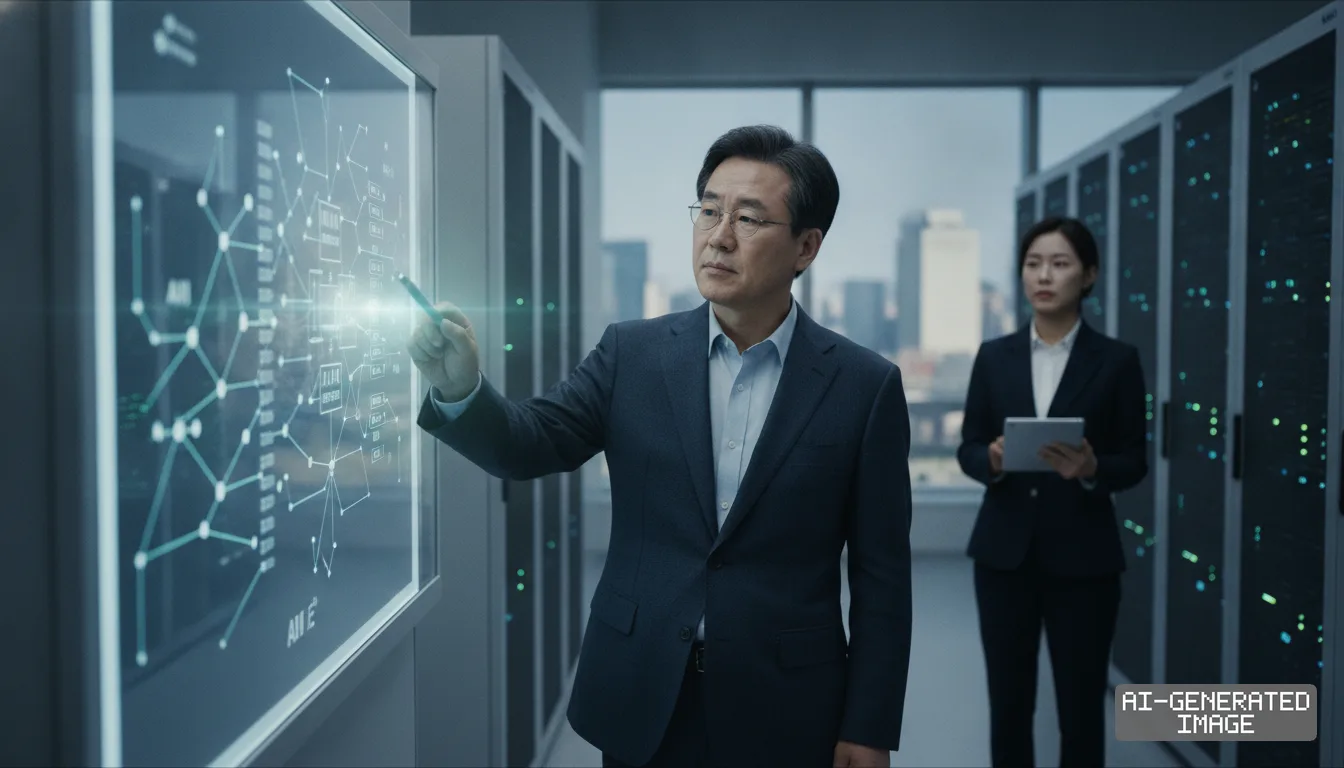
South Korea’s Ministry of Economy and Finance has codified targeted facility tax write-offs and investment credits for advanced artificial intelligence computing infrastructure, embedding high-performance data centers directly into the nation’s top-tier statutory incentive system under the Restriction of Special Taxation Act.
The revised fiscal architecture classifies core artificial intelligence systems as a National Strategic Technology alongside advanced semiconductors, rechargeable batteries, and display panels. For multinational enterprise operators and domestic cloud providers building out high-density computing clusters, the designation sets a baseline facility investment tax credit of 15 percent for large corporations and middle-market enterprises, while small and medium-sized enterprises qualify for a 25 percent deduction against corporate income taxes. Qualifying facilities can claim additional percentage-point bonuses when year-on-year capital expenditure exceeds the three-year trailing average.
The statutory update addresses capital allocation bottlenecks created by the unprecedented hardware refresh cycles of frontier computing clusters. By defining enterprise-grade artificial intelligence data centers as commercialization facilities for national strategic technologies, the Ministry of Economy and Finance extends fiscal relief to high-density server racks, liquid-cooling distribution units, advanced power backup systems, and specialized network switching fabrics. Research and development outlays linked to artificial intelligence development qualify for separate tax deductions ranging from 30 percent to 50 percent depending on corporate capitalization.
Tax strategists navigating Asian deployment programs have observed a deliberate structural bifurcation between semiconductor fabrication and computing hardware integration. Semiconductor production lines in South Korea receive an elevated facility tax credit ceiling of up to 20 percent for large conglomerates and 30 percent for smaller suppliers. The artificial intelligence framework establishes parallel coverage for computational operators, addressing specific software-hardware integration workloads including generative model architectures, agentic computing engines, and low-power inference clusters.
The fiscal decree introduces crucial operational boundaries for global infrastructure developers and original design manufacturers. While the framework provides write-offs for server systems, high-bandwidth interconnects, and cooling apparatus deployed within operational computing hubs, the policy does not extend discrete production subsidies to standalone server chassis assembly plants. Global server assembly lines remain anchored in Taiwan, North America, and Southeast Asia, whereas South Korea’s statutory credits focus directly on accelerating domestic computing capacity and high-bandwidth memory integration.
Depreciation schedules represent a central consideration for infrastructure investment analysts assessing the economic lifespan of high-density accelerator hardware. Enterprise groups led by SK Telecom, Naver Cloud, and the Korea Chamber of Commerce and Industry have petitioned fiscal authorities to compress statutory depreciation timetables from the standard five-year straight-line schedule down to two or three years. Because artificial intelligence accelerators and high-performance server clusters experience rapid economic and thermal obsolescence within 36 months, accelerated depreciation remains an active legislative agenda item in parliamentary finance committee hearings.
Cross-border infrastructure funds and foreign direct investors entering South Korea’s computing market operate under overlapping incentive programs. Under the Foreign Investment Promotion Act, foreign entities investing in qualifying national strategic technology infrastructure can access government cash grants of up to 75 percent of total capital expenditure alongside corporate and local property tax reductions extending up to seven years. These foreign direct investment concessions require explicit technology transfer covenants and joint operational structures with domestic industrial participants.
Grid interconnect allocations and regional dispersion mandates also dictate the net tax yields realized by infrastructure operators. The Ministry of Trade, Industry and Energy has tied grid access approvals to regional distribution targets, prioritizing data center projects outside the congested Seoul metropolitan capital region. Infrastructure builds situated in designated non-capital development zones benefit from reduced local acquisition taxes and preferential transmission line access evaluations, countering the metropolitan grid saturation that has stalled multiple hyperscale developments.
The finalized tax rules apply to capital expenditures booked across active corporate accounting periods, providing statutory certainty through 2027 as operators construct next-generation compute capacity. Detailed technical specifications governing server power efficiency ratings, computational density thresholds, and qualifying liquid-cooling retrofits remain administered under the presidential enforcement decrees of the Restriction of Special Taxation Act.
Impact map
How this development propagates across the region and out to global buyers.
| Event | Korea | China | Japan | Global impact |
|---|---|---|---|---|
| AI compute tax credit | cloud and data center operators | computing hardware divergence | enterprise data center competition | infrastructure fund capex models |
In this story
- Companies
- SK TelecomNaver
- Tickers
- 017670.KS035420.KS
- Policy
- Tax CreditsSubsidiesEconomic Security
- Impact
- CapexCost StructureCompliance
Track every Tax Credits development → Track every Subsidies development → Track every Economic Security development →
Related briefings
- KKR deploys record $3 billion into South Korea AI hardware Also on SK Telecom
- Posco Holdings starts direct lithium extraction test runs for Korean cathode lines Also on Tax Credits, Compliance, Cost Structure
- SK hynix taps HanmiGlobal for $4B Indiana HBM packaging fab Also on Tax Credits, Compliance
- LG Energy Solution locks US lithium supply in Smackover pact Also on Tax Credits, Compliance
Sources
Primary documents
Reporting
Confidence: high — how we grade this
The documents behind this briefing are linked above. East Asia Brief produces its English text with AI assistance under human editorial review, and does not translate or republish other outlets' articles. See our methodology and AI policy. Spotted an error? Tell us.
The Morning Brief
What changed in Korean, Chinese and Japanese industry overnight — and what it means for your supply chain. One email, weekday mornings, US time. Free.
The Morning Brief is in preparation. Leave your address and we will write to you once — when the first issue is ready. Nothing before that.