SK hynix locks over half its memory capacity through 2028
Five-year pacts with 14 cloud giants commit HBM lines after operating margin hit 79.7% on 83.33 trillion won in quarterly profit.
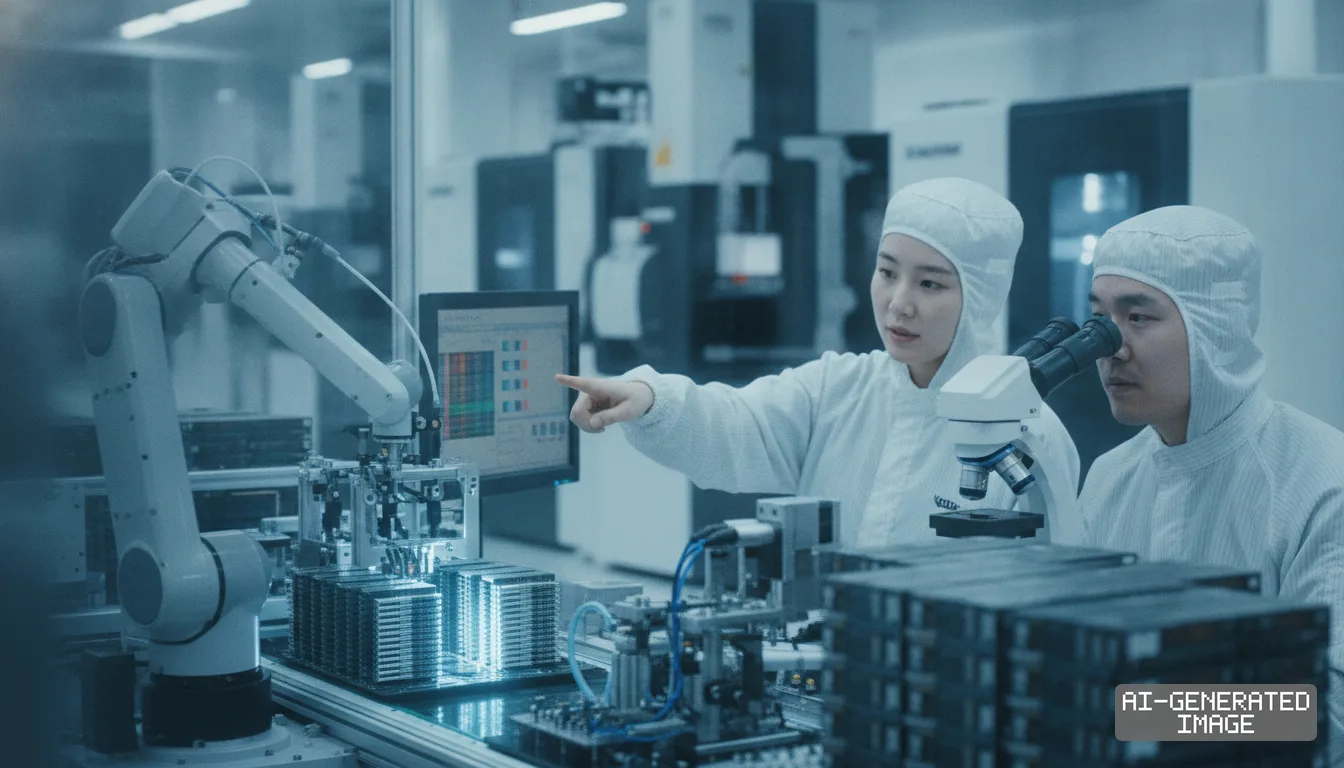
SK hynix secured advance supply agreements on Nov. 9, 2026, locking up more than 50% of its memory production capacity through 2028 across 14 major cloud and artificial intelligence infrastructure operators.
The agreements cover five-year supply terms for high-bandwidth memory and server dynamic random-access memory. Combined with procurement plans currently under active customer review, the total volume leaves production lines effectively sold out through 2029, the company said.
Third-quarter revenue reached 104.62 trillion won ($78.17 billion), generating an operating profit of 83.33 trillion won ($62.25 billion). The operating profit margin reached 79.7%, driven by rising contract prices for server DRAM and high-bandwidth memory, the company said.
The binding contracts mark a structural departure from traditional quarterly spot negotiations in the semiconductor industry. SK hynix now secures firm multi-year volume commitments alongside financial deposits to prevent unilateral order cancellations, Chief Financial Officer Kim Woo-hyun said during an earnings briefing.
The bilateral contracts do not fix absolute unit prices across the five-year window. Instead, pricing formulas float within agreed bands that adjust periodically against prevailing spot market indicators, Kim said.
Hyperscale buyers accepted structured penalty clauses and upfront cash deposits to guarantee allocation. These safeguards protect memory fabricators from the severe inventory gluts that depressed industry revenues during the 2022 and 2023 downturns, the company said.
SK hynix deliberately leaves the remaining portion of its fab output uncommitted, representing just under 50% of total capacity. This unallocated volume enables manufacturing planners to capture cyclical spot market spikes and accommodate customer transitions to emerging product standards, the company said.
Rival manufacturer Samsung Electronics is implementing a comparable long-term contracting strategy across its memory division. Samsung has signed multi-year supply pacts with 10 major customers and is negotiating agreements with 10 others to stabilize fab utilization, company executives said.
Samsung aims to place 60% to 70% of its total memory capacity under long-term supply agreements by 2030. That initiative mirrors SK hynix's effort to turn cyclical silicon manufacturing into predictable infrastructure utilities, the company said.
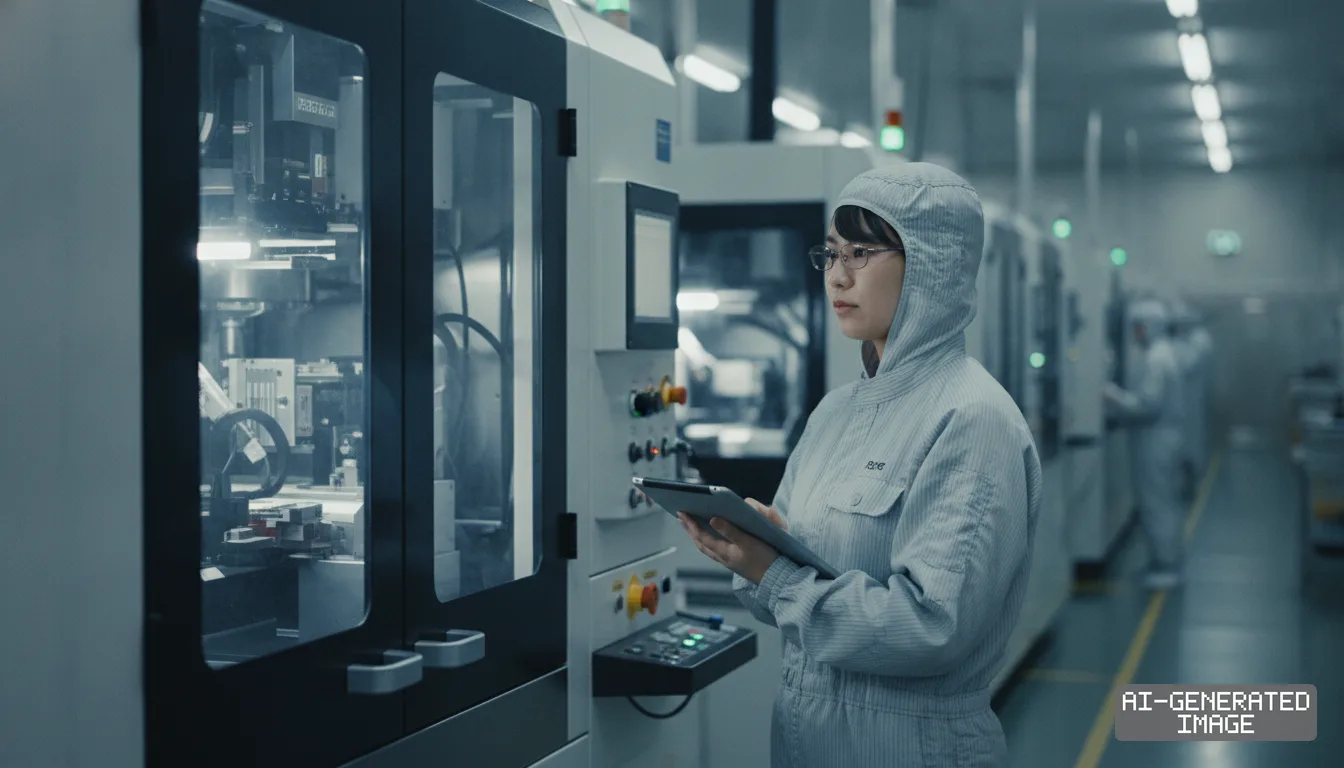
Customer demand for high-bandwidth memory continues to outstrip available factory production lines by more than two to one. Artificial intelligence accelerator developers place volume orders faster than cleanroom packaging facilities can assemble multilayer die stacks, the company said.
Commercial shipments of sixth-generation HBM4 modules commenced in the third quarter of 2026. SK hynix projects that HBM4 will surpass earlier HBM3E parts in both shipment volume and total sales revenue during the fourth quarter of 2026.
Higher manufacturing complexity slows the pace at which new silicon capacity enters global supply chains. Producing HBM4 requires larger die dimensions and additional metal interconnect layers, reducing the net yield of usable chips obtained from each 300-millimeter wafer.
Silicon yields for both HBM3E and HBM4 have exceeded initial operational projections at domestic fabs. Higher yields prompted SK hynix to raise internal production targets to satisfy customer delivery schedules, the company said.
Procurement interest is broadening beyond initial hyperscale cloud service providers. Tier-two enterprises building dedicated private data centers and national sovereign AI infrastructure initiatives are now placing forward orders alongside traditional cloud operators, the company said.
Conventional server memory is experiencing parallel capacity constraints across global supply networks. Shipments of server DDR5 modules grew more than 40% quarter over quarter, fueled by data-center operators modernizing host servers to support accelerator clusters, the company said.
Enterprise solid-state drives captured higher profit margins as data centers added high-density storage capacity. NAND flash lines shifted toward 321-layer triple-level cell designs to handle key-value caching workloads generated by large language models, the company said.
To fulfill committed contract volumes, SK hynix plans to increase capital expenditures in 2027. Fresh capital will prepare cleanrooms and install lithography equipment at the first fabrication facility inside its semiconductor cluster in Yongin, South Korea.
The company had announced on Oct. 28 that memory supply constraints will persist across the semiconductor sector through 2030. Extended construction timelines for greenfield fabrication facilities make rapid capacity additions technically unfeasible over the medium term, Kim said.
Operating cash flow supported an expanded shareholder distribution program of 100 trillion won ($74.7 billion) for fiscal 2026. The package allocates 30 trillion won to cash dividends and 70 trillion won to share repurchases and cancellations, the company said.
A portion of the capital distribution originates from realized investment gains in Japanese memory producer Kioxia Holdings. SK hynix will distribute special cash dividends to investors after closing its fiscal 2026 financial accounts, the company said.
SK hynix filings do not disclose the names of the 14 customers, individual volume allotments, or the specific deposit amounts required under the cancellation clauses.
Official exchange dockets show no new regulatory filings submitted on Nov. 9, 2026, leaving bilateral contract modifications unconfirmed in public financial registries.
Mass shipments of HBM4 will overtake previous-generation memory in the fourth quarter of 2026, while initial cleanroom equipment installation at the Yongin fab begins in early 2027.
Impact map
How this development propagates across the region and out to global buyers.
| Event | Korea | China | Japan | Global impact |
|---|---|---|---|---|
| AI memory forward commitments | SK hynix binds >50% of 2027-2028 fab capacity; Samsung books 10 clients toward 70% goal | Hyperscalers face locked out capacity as advanced HBM allocations route to Western cloud pacts | Equipment makers Tokyo Electron and Advantest secure delivery visibility for 2027 Yongin fab tools | AI server builders face rigid allocation quotas and deposit mandates, curtailing spot procurement through 2029 |
In this story
- Companies
- SK hynix
- Tickers
- 000660.KS
- Exposed
- Samsung ElectronicsKioxia Holdings
- Impact
- Supply ChainOrder BookCapex
Related briefings
- Kioxia sheds two-thirds of market value as Chinese NAND rivals surge Also on Kioxia Holdings, SK hynix, Samsung Electronics
- AI enterprise SSD demand splits fab strategies across top NAND makers Also on Kioxia Holdings, SK hynix, Samsung Electronics
- Toshiba trims Kioxia stake below 13% in NAND governance shakeup Also on Kioxia Holdings, SK hynix, Samsung Electronics
- Kioxia and Sandisk split roadmaps for 3D NAND hybrid bonding in Japan Also on Kioxia Holdings, SK hynix, Samsung Electronics
Sources
Reporting
Confidence: medium — how we grade this
The documents behind this briefing are linked above. East Asia Brief produces its English text with AI assistance under human editorial review, and does not translate or republish other outlets' articles. See our methodology and AI policy. Spotted an error? Tell us.
The Morning Brief
What changed in Korean, Chinese and Japanese industry overnight — and what it means for your supply chain. One email, weekday mornings, US time. Free.
The Morning Brief is in preparation. Leave your address and we will write to you once — when the first issue is ready. Nothing before that.