Nippon Shokubai raises annual revenue guidance to ¥475 billion
Higher selling prices and advanced packaging resins lifted operating profit targets 25.5% to ¥22 billion.
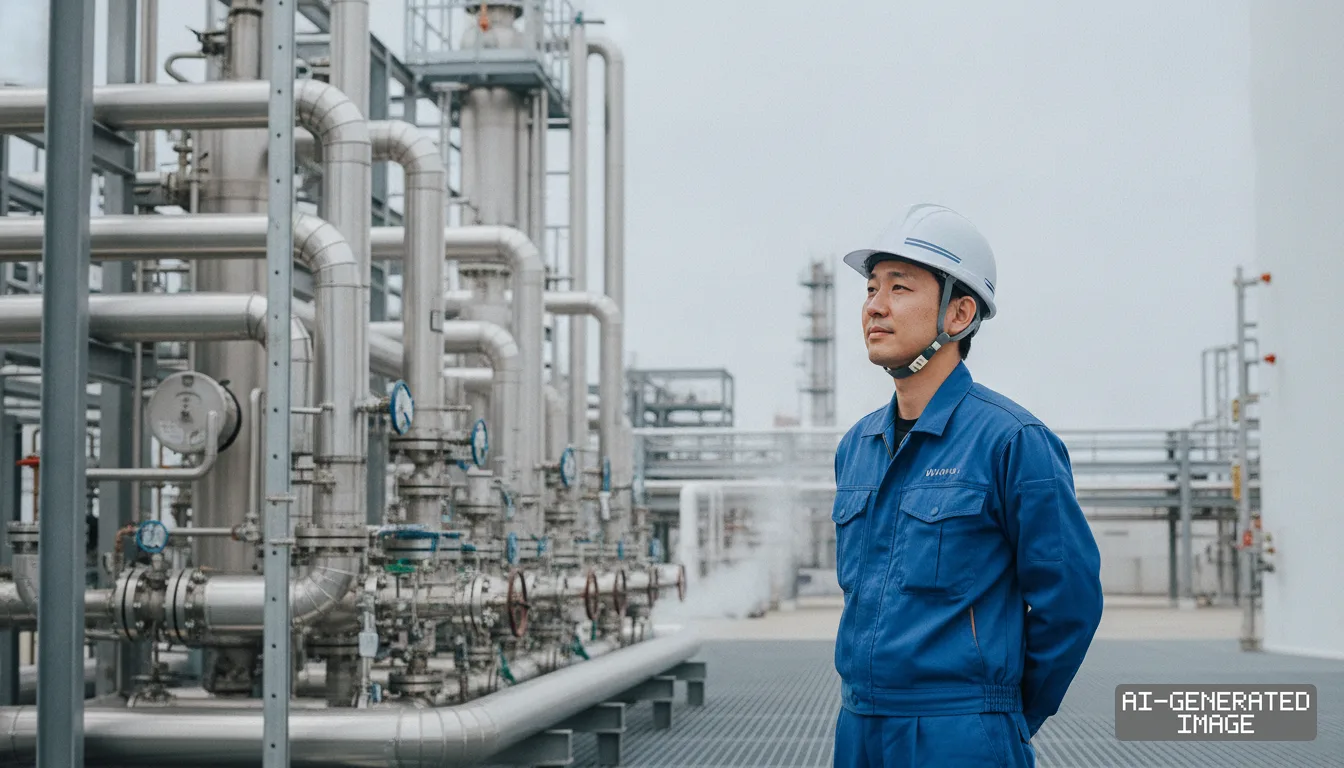
Nippon Shokubai raised its full-year revenue forecast to ¥475 billion ($3.1 billion) on Nov. 9, 2026, citing higher product selling prices and improved operating spreads across its core chemicals business.
The revision represents an 18.8% increase over the previous fiscal year and adds ¥20 billion to its prior sales guidance. Operating profit guidance rose 25.5% to ¥22 billion ($144 million), according to a Tokyo Stock Exchange filing.
First-half revenue rose 16.8% year on year to ¥233.78 billion ($1.53 billion) through September. Operating profit for the six-month period climbed 52.1% to ¥13.71 billion, while net income increased 55.7% to ¥11.85 billion.
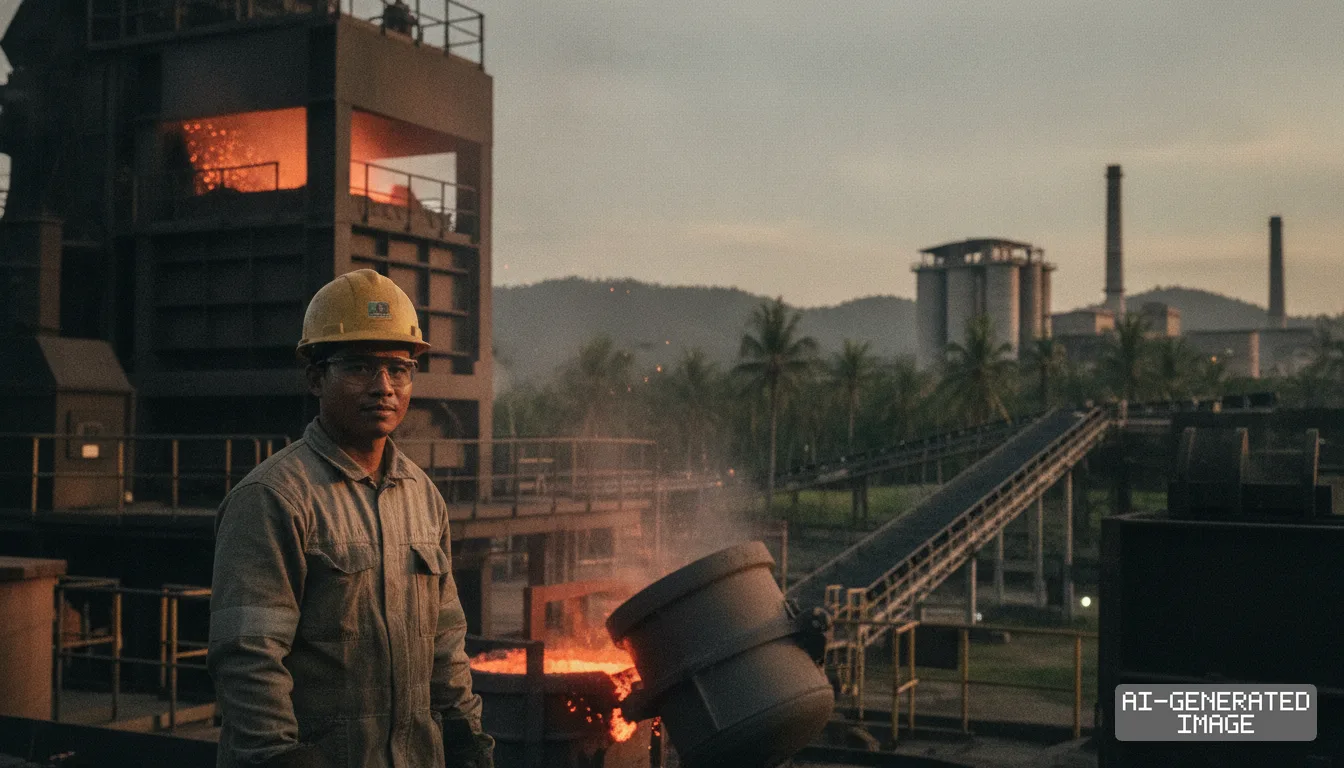
The Osaka-based chemical manufacturer supplies acrylic acid, superabsorbent polymers and specialty electronic chemicals. It maintains manufacturing hubs in Himeji and Kawasaki to feed downstream packaging and consumer material supply chains across East Asia.
The profit expansion stemmed primarily from product price adjustments tracking raw material costs and currency depreciation. A turnaround from previous inventory valuation write-downs to valuation gains also lifted operating margins during the interim period, the company said.
Nippon Shokubai kept its annual pretax profit outlook unchanged at ¥27.5 billion. It also maintained its net income forecast attributable to owners of the parent at ¥20.5 billion, leaving its projected annual dividend at ¥140 per share.
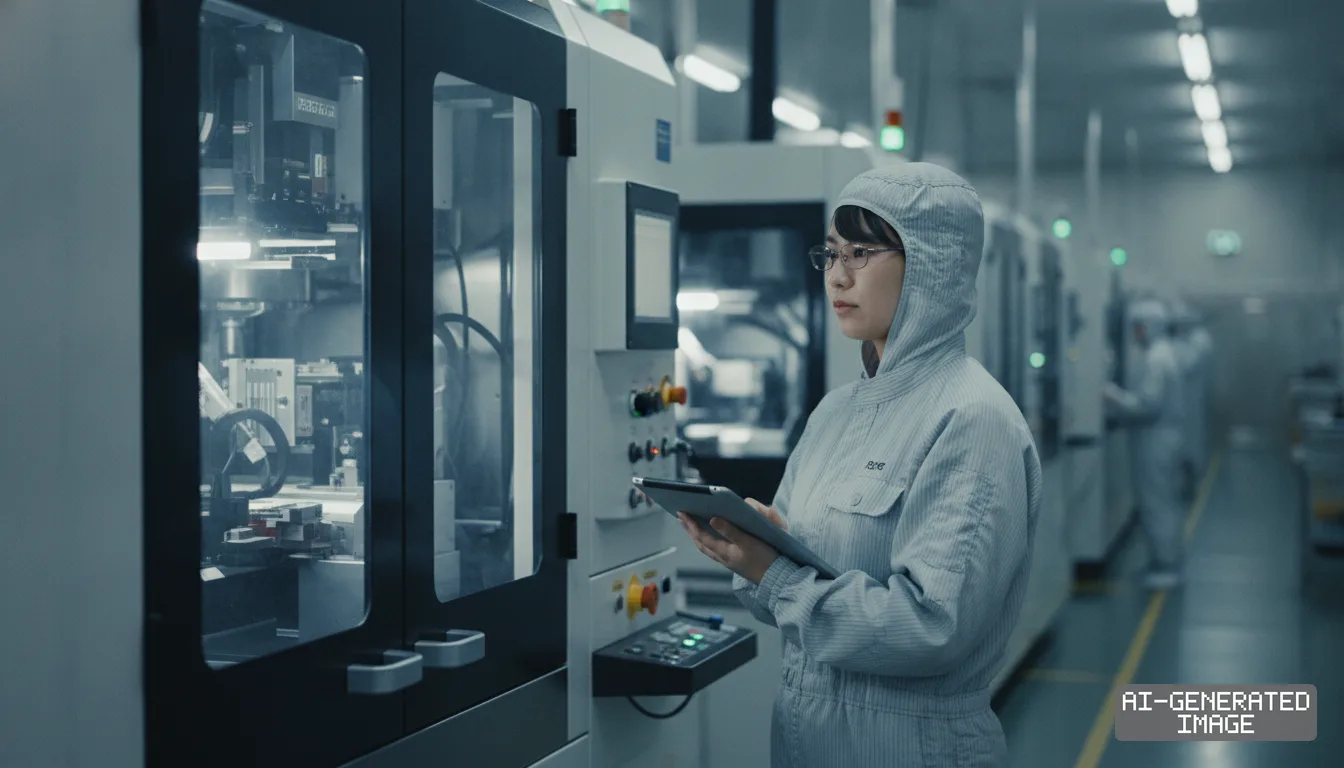
Market attention has shifted toward the company's emerging semiconductor materials business. High-performance computing and artificial intelligence chips require advanced packaging substrates that tolerate elevated temperatures and minimize signal latency.
To address substrate warpage in multi-chip modules, Nippon Shokubai developed the AOMA series of acrylic cyclopolymerization monomers. The material acts as an additive for insulating dielectric resins, improving thermal stability while preventing crack formation in redistribution layers.
Redistribution layers route electrical connections between closely stacked silicon dies and underlying circuit boards. As die sizes expand in artificial intelligence accelerators, thermal expansion differences between silicon and organic substrates create mechanical stress that packaging resins must absorb.
Nippon Shokubai also manufactures SEAHOSTAR spherical silica particles at its Himeji plant. The uniform silica particles serve as low-dielectric fillers inside epoxy mold compounds, reducing electrical transmission loss across high-frequency packaging interfaces.
Japanese chemical formulators hold more than 80% of the global market for semiconductor packaging resins and photosensitive permanent dielectrics. Established domestic peers include Resonac, Sumitomo Bakelite and Nagase & Co.
Substrate fabricators in Taiwan and South Korea rely heavily on Japanese resin formulations for flip-chip ball grid array packages. Any shift in raw chemical supply directly affects substrate availability for high-end graphic processing units and server processors.
To accelerate its electronics portfolio, Nippon Shokubai completed the purchase of GOO Chemical for ¥20 billion ($130 million) on Nov. 2, 2026. The transaction gave Nippon Shokubai 100% of the Kyoto-based formulator's voting equity.
GOO Chemical generated ¥6.925 billion ($45 million) in consolidated revenue and ¥846 million in operating profit for the fiscal year ended March 2026. The acquired firm specializes in photosensitive resist compounds and protective insulating resins for printed circuit boards.
Nippon Shokubai funded the takeover entirely from balance sheet cash, acquiring net assets valued at ¥8.03 billion. The company aims to combine its monomer synthesis capacity with GOO Chemical's formulation laboratories to supply backend packaging subcontractors.
The filing does not state how much packaging resin contributed to the earnings upgrade, and Nippon Shokubai has not published standalone sales for its electronic materials line. Management attributed the revised full-year figures to chemical spread recovery rather than chip substrate volumes.
The company closes its fiscal year on March 31, 2027, when full-year integration costs and revenue contributions from GOO Chemical appear in consolidated earnings.
Impact map
How this development propagates across the region and out to global buyers.
| Event | Korea | China | Japan | Global impact |
|---|---|---|---|---|
| Packaging resin expansion | Substrate makers secure alternative dielectric monomer sources | OSAT packaging houses face tight Japanese supply in high-layer count resins | Nippon Shokubai expands specialty resin footprint alongside Resonac and Sumitomo Bakelite | Advanced packaging supply chain retains over 80% reliance on Japanese chemical formulators |
In this story
- Companies
- Nippon Shokubai
- Tickers
- 4114.T
- Exposed
- GOO ChemicalResonacSumitomo Bakelite
- Impact
- PricingCapexSupply Chain
Related briefings
- Nippon Shokubai Buys GOO Chemical to Secure Packaging Resins Also on GOO Chemical, Nippon Shokubai, Resonac
- Japanese epoxy mold makers reformulate resins to tame warpage in 16-high memory Also on Resonac, Sumitomo Bakelite
- Japan chemical makers expand LiFSI electrolyte salt synthesis for fast-charging EVs Also on Nippon Shokubai, Pricing
- Sumitomo Bakelite expands Asian chip molding compound lines Also on Sumitomo Bakelite
Sources
Reporting
Confidence: medium — how we grade this
The documents behind this briefing are linked above. East Asia Brief produces its English text with AI assistance under human editorial review, and does not translate or republish other outlets' articles. See our methodology and AI policy. Spotted an error? Tell us.
The Morning Brief
What changed in Korean, Chinese and Japanese industry overnight — and what it means for your supply chain. One email, weekday mornings, US time. Free.
The Morning Brief is in preparation. Leave your address and we will write to you once — when the first issue is ready. Nothing before that.