AI enterprise SSD demand splits fab strategies across top NAND makers
High-density server drives surged to 35% of memory bit demand, driving blended flash prices up by high-teens percentages.
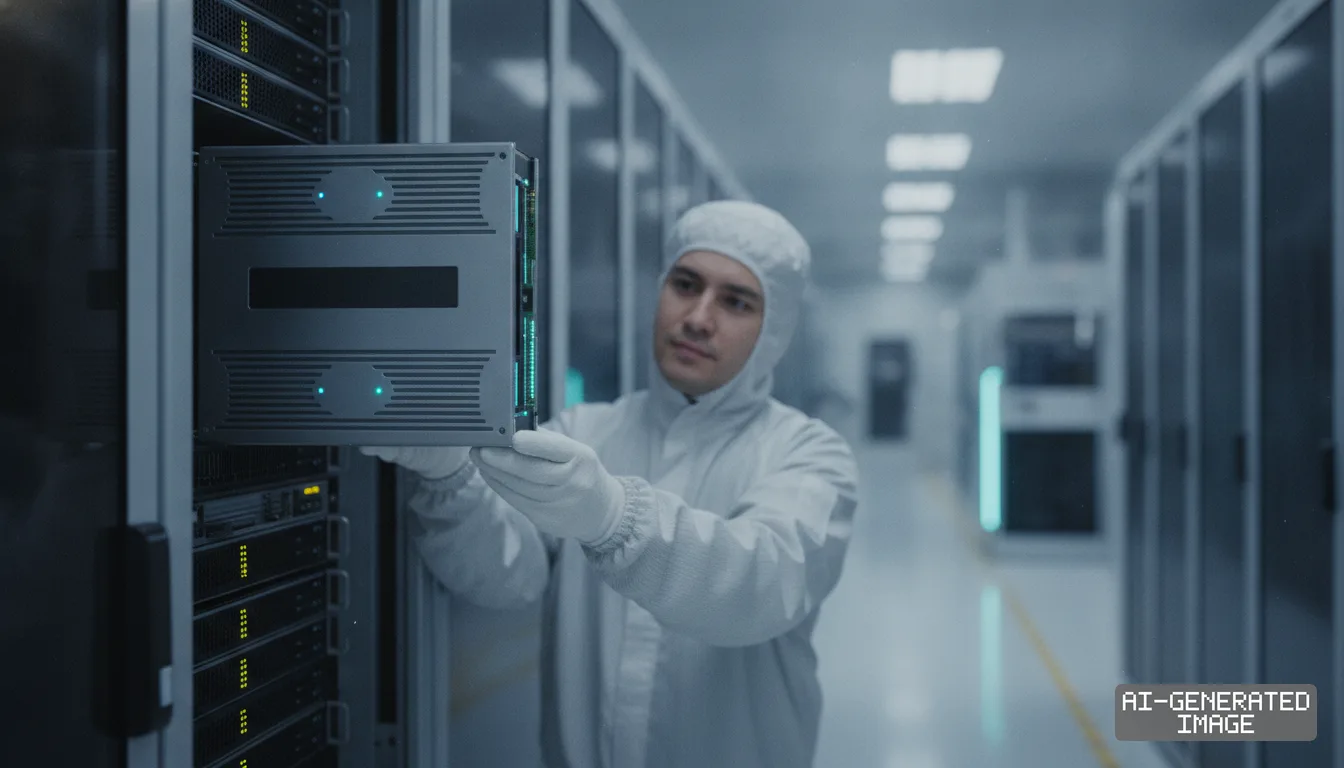
Samsung Electronics, SK hynix and Kioxia Holdings diverged in their NAND flash fab utilization strategies on Nov. 9, 2026, as enterprise solid-state drive orders for artificial intelligence servers split the suppliers.
Enterprise solid-state drives store data models during the inference stage of machine learning, where servers retrieve stored parameters to answer queries. High-density drives replace conventional hard disk arrays inside hyperscale computing centers.
Enterprise storage drives now account for roughly 35% of total industry NAND bit demand, up from less than 20% two years ago. That concentrated demand drove blended flash memory prices up by high-teens percentages last quarter.
Samsung Electronics posted memory revenue of 140.7 trillion won ($102 billion) in the third quarter. The company reported that its NAND average selling prices climbed by a high-teens percentage, lifted by large orders for quad-level cell drives.
Samsung Electronics is accelerating the transition of its Pyeongtaek lines toward ninth-generation V-NAND. Management indicated in its earnings call that it will direct cleanroom space toward premium storage instead of fully reversing older wafer run-rate cuts.
SK hynix recorded consolidated revenue of 104.6155 trillion won and operating profit of 83.3338 trillion won for the third quarter. High-value data center components lifted the company's consolidated operating margin to 80%, setting a corporate record.
The South Korean chipmaker expanded shipments of 321-layer enterprise drives to cloud providers. Strong adoption of high-density storage helped NAND operations contribute approximately 17 trillion won to total quarterly operating income, according to earnings presentations.
SK hynix relies heavily on its California-based subsidiary Solidigm for high-capacity quad-level cell architecture. Solidigm designs 60-terabyte and 120-terabyte drives using floating-gate flash technology originally purchased from Intel in 2021.
SK hynix halted the planned Nasdaq initial public offering of Solidigm on Oct. 23. The chipmaker cited capital market conditions and minority shareholder dilution concerns in its regulatory filing after domestic regulators scrutinized the dual-listing arrangement.
Scrapping the stock market debut closed off external equity financing for Solidigm's proposed factory expansions. SK hynix said in its disclosure that it will fund required cleanroom upgrades directly from its operating cash flow through 2027.
Kioxia Holdings generated revenue of 2.48 trillion yen ($16.2 billion) during its second fiscal quarter ended Sept. 30. That single three-month total exceeded the company's full fiscal 2025 revenue of 2.3376 trillion yen, filings show.
Kioxia posted an operating profit of 1.9883 trillion yen with an operating margin of 80.2%. Blended average selling prices jumped in the mid-20% range while overall bit shipments grew by a low-teens percentage, the manufacturer reported.
Production lead times for high-density enterprise storage are longer than those for consumer components. That manufacturing bottleneck forced Kioxia to push several large enterprise shipment deliveries into early 2027, the company said.
Kioxia projected third-quarter operating profit of 1.995 trillion yen, representing sequential profit growth of 0.3%. The Tokyo-listed manufacturer forecast quarterly revenue of 2.5 trillion yen as server demand remains steady against currency headwinds.
Kioxia announced that its fabrication capacity for calendar 2027 is already completely booked. The manufacturer also reported that customers have already reserved more than half of its planned production allocation for 2028.
The split across the three manufacturers stems from fab configuration choices made during the 2023 downturn. Samsung Electronics and SK hynix idled older planar and low-layer equipment while migrating advanced cleanrooms to artificial intelligence products.
Restarting idled legacy lines produces low-margin mobile and computer flash that currently faces soft retail demand. Consequently, manufacturers are converting wafer capacity into high-layer quad-level cell production lines rather than lifting general production curbs.
Quad-level cell architecture stores four bits in every memory cell, lowering cost per gigabyte by 30% compared to triple-level alternatives. However, writing data across four charge states requires specialized firmware controllers and intricate error correction circuitry.
Solidigm holds an advantage in high-capacity drives due to its unique floating-gate technology. In contrast, Samsung Electronics and Kioxia construct high-layer drives using charge-trap architecture, requiring double-stack or triple-stack wafer bonding to reach comparable storage densities.
Data center operators are shifting capital budgets from graphic processors toward inference storage tiers. Running large language models requires petabytes of read-intensive storage to feed weights into processor clusters without causing processing pipeline stalls.
Server builders face lead times exceeding 26 weeks for certified 60-terabyte enterprise storage units. This delivery lag has prompted cloud infrastructure buyers to sign multi-year capacity agreements directly with flash wafer fabricators.
SK hynix noted during its earnings conference that it has secured long-term purchase commitments covering half of its 2027 output. Hyperscale customers have begun negotiating memory delivery volumes stretching into 2029, the supplier confirmed.
Contract prices for enterprise storage units are projected to rise another 15% during the fourth quarter. Meanwhile, commodity client drives for personal computers show flattening price curves, highlighting the divergent market conditions.
The three chipmakers have not published line-utilization figures for their mature legacy fabs, and official disclosures do not clarify whether general wafer input curbs will remain in place through late 2027.
Kioxia plans to distribute its first-ever dividend of 90 yen per share on Dec. 8, 2026. Shipments of delayed enterprise drives will begin delivering to server assemblers in January 2027, according to regulatory filings.
Impact map
How this development propagates across the region and out to global buyers.
| Event | Korea | China | Japan | Global impact |
|---|---|---|---|---|
| AI inference storage ramp | Samsung and SK hynix retool advanced cleanrooms to QLC, leaving legacy lines curtailed | Hyperscale datacenters face 26-week lead times on imported 60TB QLC drives | Kioxia defers enterprise deliveries into Q1 2027 as 2027 capacity sells out | Enterprise SSD contract prices climb 15% sequentially as inference clusters scale |
In this story
- Companies
- Samsung ElectronicsSK hynixKioxia Holdings
- Tickers
- 005930.KS000660.KS285A.T
- Impact
- Supply ChainCapexPricing
Related briefings
- Kioxia warns NAND price rally will stall as PC demand slows Also on Kioxia Holdings, SK hynix, Samsung Electronics
- China semiconductor exports surge 136% to $45 billion on AI pricing Also on Kioxia Holdings, SK hynix, Samsung Electronics
- Kioxia sheds two-thirds of market value as Chinese NAND rivals surge Also on Kioxia Holdings, SK hynix, Samsung Electronics
- SK hynix locks over half its memory capacity through 2028 Also on Kioxia Holdings, SK hynix, Samsung Electronics
Sources
Reporting
Confidence: medium — how we grade this
The documents behind this briefing are linked above. East Asia Brief produces its English text with AI assistance under human editorial review, and does not translate or republish other outlets' articles. See our methodology and AI policy. Spotted an error? Tell us.
The Morning Brief
What changed in Korean, Chinese and Japanese industry overnight — and what it means for your supply chain. One email, weekday mornings, US time. Free.
The Morning Brief is in preparation. Leave your address and we will write to you once — when the first issue is ready. Nothing before that.