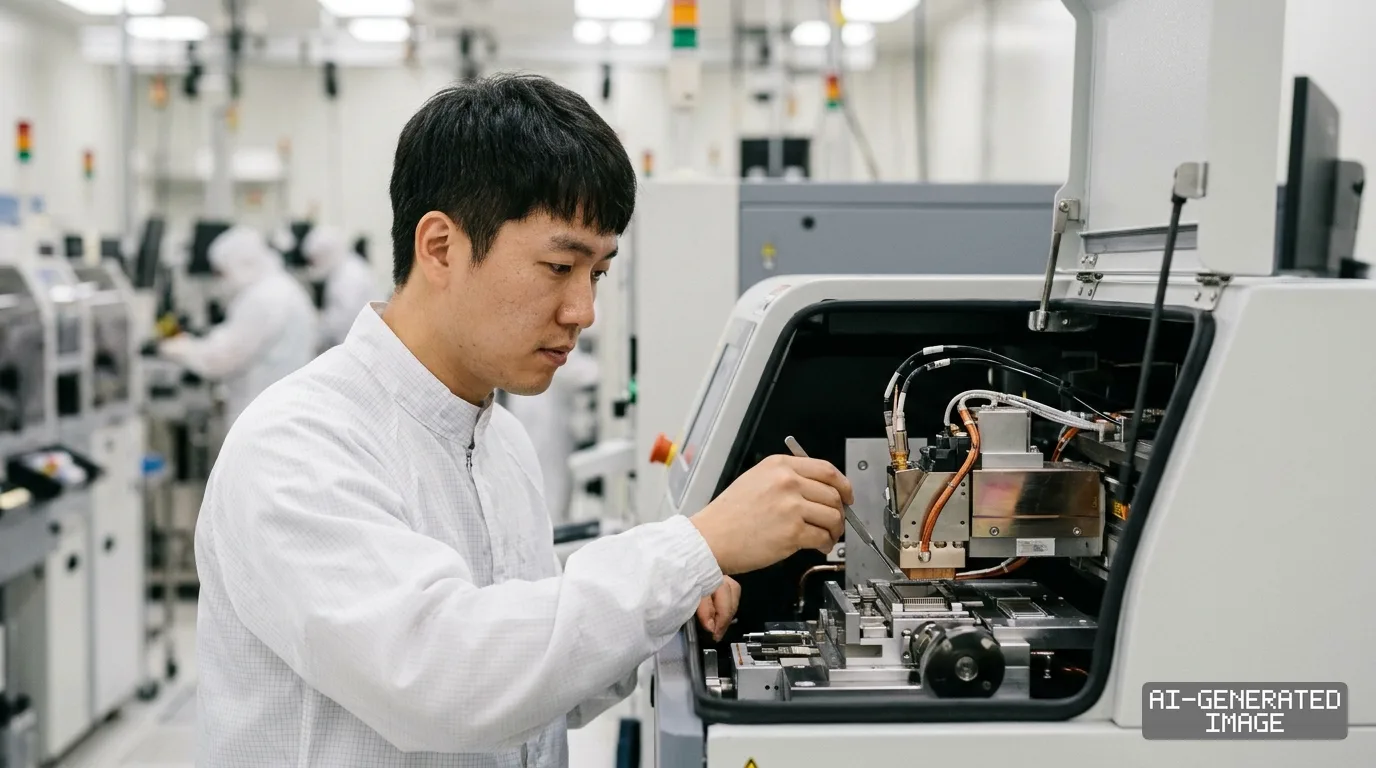
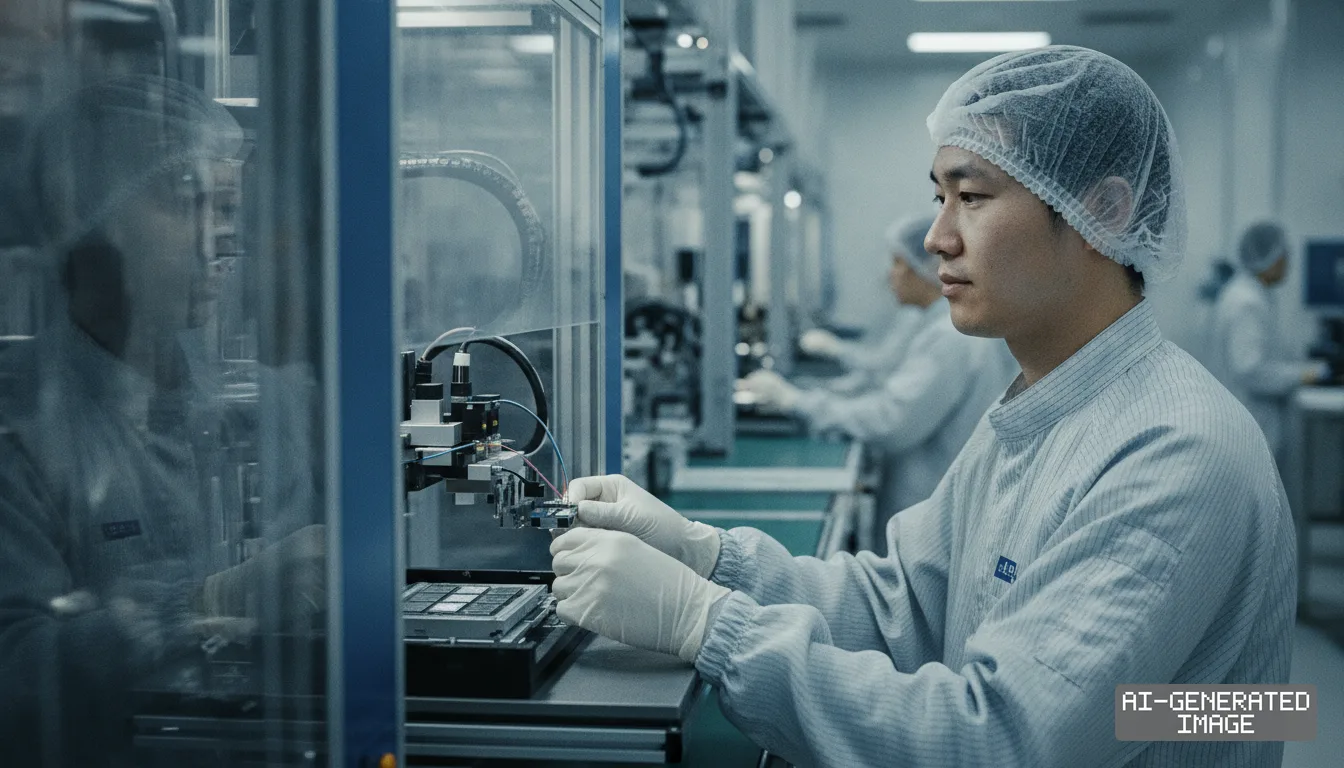
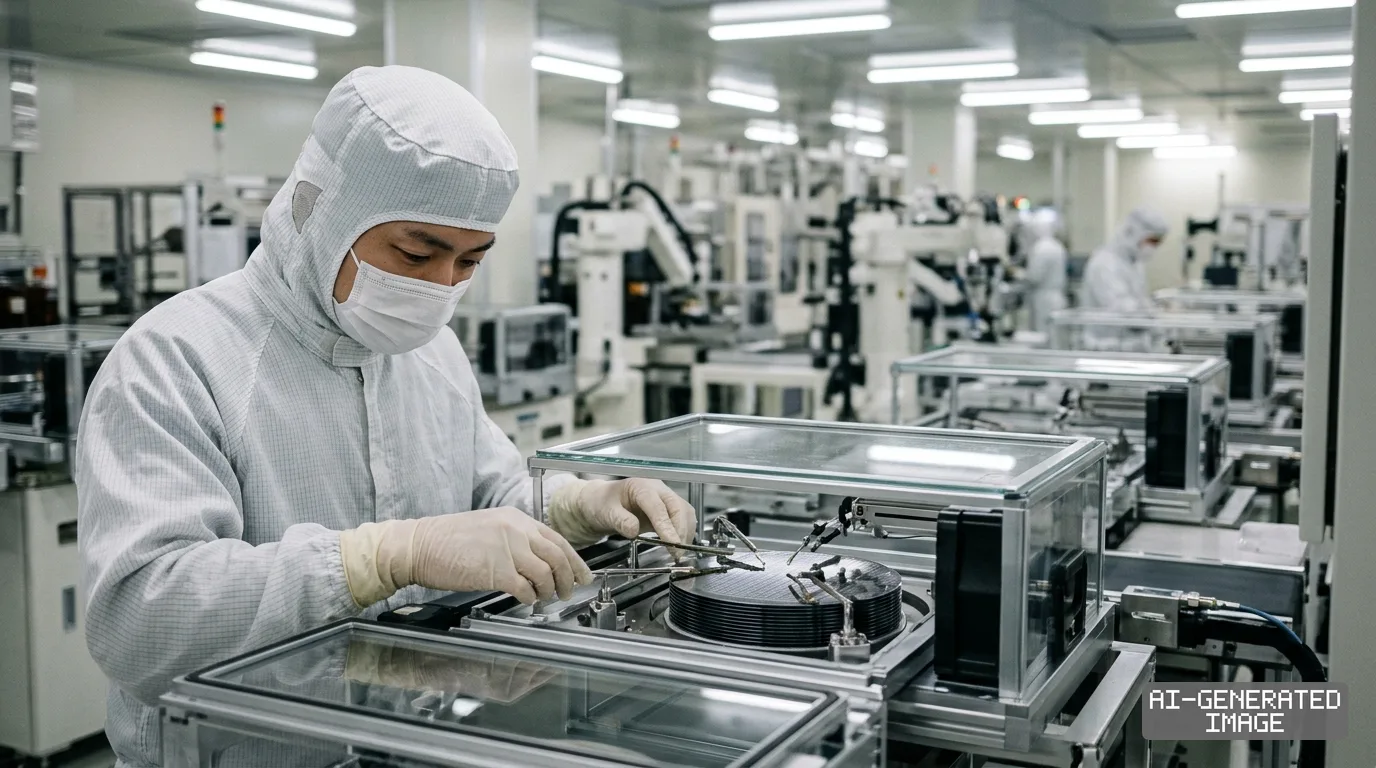
Samsung starts recycling 80% of neon gas at Pyeongtaek fab
The closed-loop system purifies noble gas from excimer laser scrubbers, buffering wafer fabs against import spikes that drove prices up twentyfold in 2022.
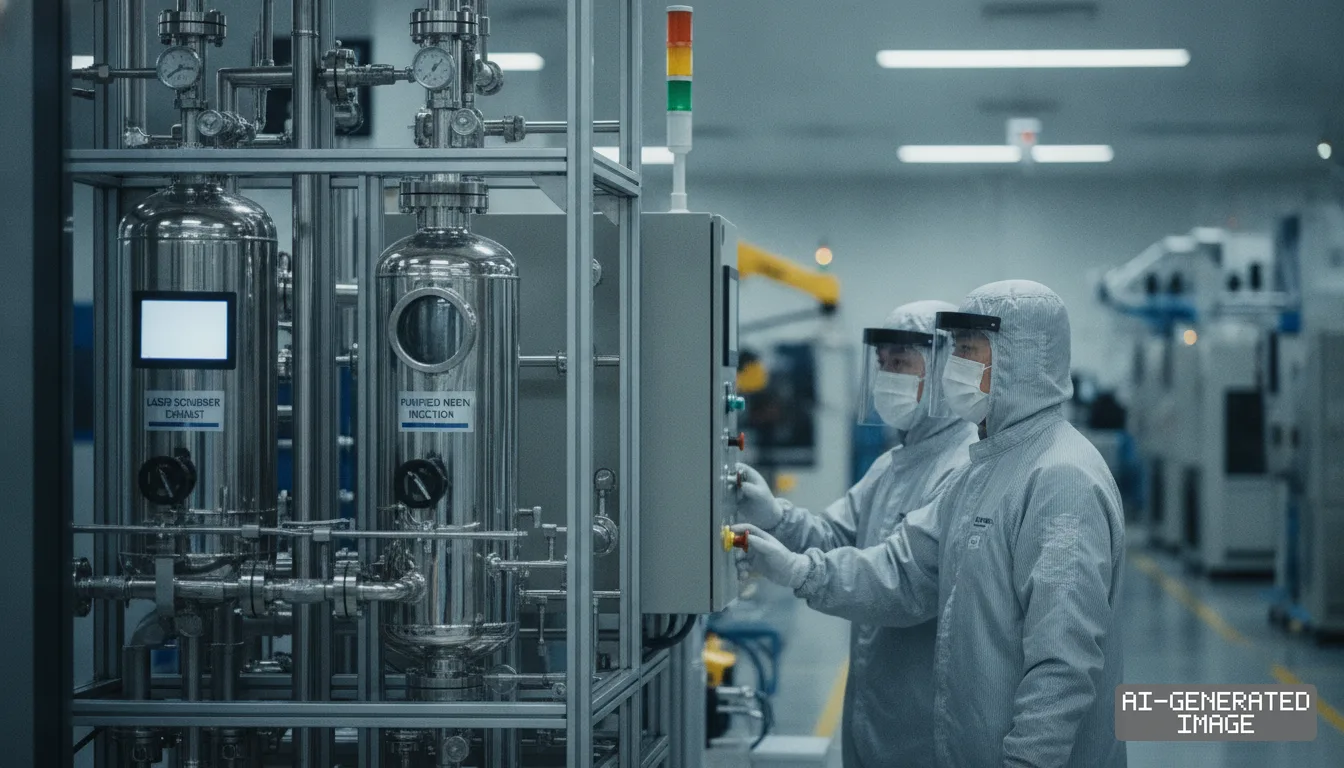
Samsung Electronics commercialized an industrial neon gas recycling system at its Pyeongtaek manufacturing campus on Nov. 6, 2026, aiming to recover more than 80% of the critical lithography material.
The facility captures exhausted noble gas from laser scrubbers before purifying and reinjecting it into production lines. That process protects memory and foundry output from foreign commodity disruptions.
Neon serves as the carrier gas in deep ultraviolet excimer lasers, which etch circuit patterns onto silicon wafers. South Korean chipmakers historically imported almost all of their noble gas supplies.
Import prices surged more than twentyfold during 2022 when fighting halted cryogenic air separation plants in Ukraine. Those facilities had supplied roughly half of the global market for semiconductor-grade neon.
The Pyeongtaek setup targets recovering 80% of process neon, cutting external procurement volume for the complex by four-fifths. Samsung had started developing the recycling hardware in 2022, the company said.
The deployment follows a formal opening ceremony for the recycling facility held at the Pyeongtaek campus on Oct. 16. Engineering teams verified separation yields across live production lines during October.
Equipment specialist TEMC supplied the gas treatment hardware that separates trace contaminants from low-concentration exhaust streams. The supplier purifies collected gas to 99.999% purity before returning it to laser chambers.
TEMC had earlier developed a similar capture system for SK hynix in April 2024. That deployment achieved a 72.7% neon recovery rate and saved SK hynix 40 billion won ($30 million) annually.
SK hynix draws roughly a tenth of its lithography gas through domestic recycling systems. Adding Samsung to the user base expands domestic circular purification capacity to Korea's largest semiconductor manufacturing complex.
High-purity neon is concentrated from crude air separation byproducts generated in blast-furnace steel mills. Neither Samsung nor domestic steelmakers operated industrial neon refining facilities prior to the 2022 supply shock.
South Korea's Ministry of Trade, Industry and Energy designated neon as one of eight priority supply items in March 2024. The ministry set an official deadline of 2028 to achieve complete domestic self-reliance.
State funding subsidizes capture equipment validation to eliminate import exposure on rare noble gases. Officials aim to buffer domestic fabs against potential trade curbs or geopolitical transport bottlenecks in Eurasia.
The Pyeongtaek installation concentrates recovery on lines producing advanced dynamic random-access memory and NAND flash. Laser tools across these cleanrooms consume thousands of gas cylinders each quarter during pattern transfer.
Reclaiming noble gas lowers wafer overhead while reducing Scope 1 greenhouse gas emissions tied to cylinder logistics. Purifying gas on site eliminates long tanker transit routes from China and Eastern Europe.
Samsung plans to extend the capture systems across its other domestic wafer fabrication lines, the company said. That rollout aligns with an internal corporate target to attain a 99.9% waste recycling rate by 2030.
The 2030 mandate applies across five semiconductor complexes in Giheung, Hwaseong, Pyeongtaek, Onyang and Cheonan. Samsung has already certified 30 categories of semiconductor manufacturing scrap as reusable circular resources.
Lithography scrubbers treat corrosive fluorine compounds before exhaust enters collection tanks, preventing residue from contaminating the gas stream. Specialized chemical filters then strip moisture and residual nitrogen before cryogenic distillation begins.
Recycling excimer gas reduces exposure to wild spot-market price swings that previously inflated quarterly packaging and wafer costs. Stable inert gas supplies keep tool chambers pressurized without unexpected downtime during maintenance cycles.
Domestic gas refiners expect Samsung to process thousands of cubic meters of reclaimed neon gas annually under full operation. The closed-loop setup creates a permanent secondary reserve inside the Pyeongtaek fence line.
Trade policy shifts among major mineral exporters continue to raise procurement risks for East Asian chipmakers. Securing internal recycling loops allows manufacturers to lock in material baselines regardless of border controls.
Samsung Electronics has not published procurement contract figures for the hardware. Regulatory filings do not confirm whether the 80% recovery rate applies across all production phases of Pyeongtaek Plant 4.
The Ministry of Trade, Industry and Energy will review progress benchmarks for the eight strategic semiconductor materials on Dec. 15, 2026. That evaluation will set domestic production quotas for industrial gas suppliers.
Impact map
How this development propagates across the region and out to global buyers.
| Event | Korea | China | Japan | Global impact |
|---|---|---|---|---|
| Neon gas recycling commercialization | Samsung and SK hynix cut import reliance, TEMC supplies purification tools | Chinese neon refiners face reduced export volumes to Korean memory fabs | Laser tool makers Nikon and Canon verify recycled neon specs for DUV scanners | Semiconductor supply chains lower price exposure to Eurasian noble gas shocks |
In this story
- Companies
- Samsung Electronics
- Tickers
- 005930.KS
- Exposed
- TEMCSK hynix
- Policy
- Subsidies
- Impact
- Supply ChainCost Structure
Track every Subsidies development →
Related briefings
- Kioxia and Sandisk split roadmaps for 3D NAND hybrid bonding in Japan Also on SK hynix, Samsung Electronics, Subsidies
- Merck opens South Korea molybdenum plant to feed memory fabs Also on SK hynix, Samsung Electronics, Subsidies
- GlobalFoundries signs $2 billion TSMC chip interposer deal Also on SK hynix, Samsung Electronics, Subsidies
- GlobalFoundries signs $2B TSMC packaging deal for AI chips Also on SK hynix, Samsung Electronics, Subsidies
Sources
Primary documents
Reporting
Confidence: high — how we grade this
The documents behind this briefing are linked above. East Asia Brief produces its English text with AI assistance under human editorial review, and does not translate or republish other outlets' articles. See our methodology and AI policy. Spotted an error? Tell us.
The Morning Brief
What changed in Korean, Chinese and Japanese industry overnight — and what it means for your supply chain. One email, weekday mornings, US time. Free.
The Morning Brief is in preparation. Leave your address and we will write to you once — when the first issue is ready. Nothing before that.