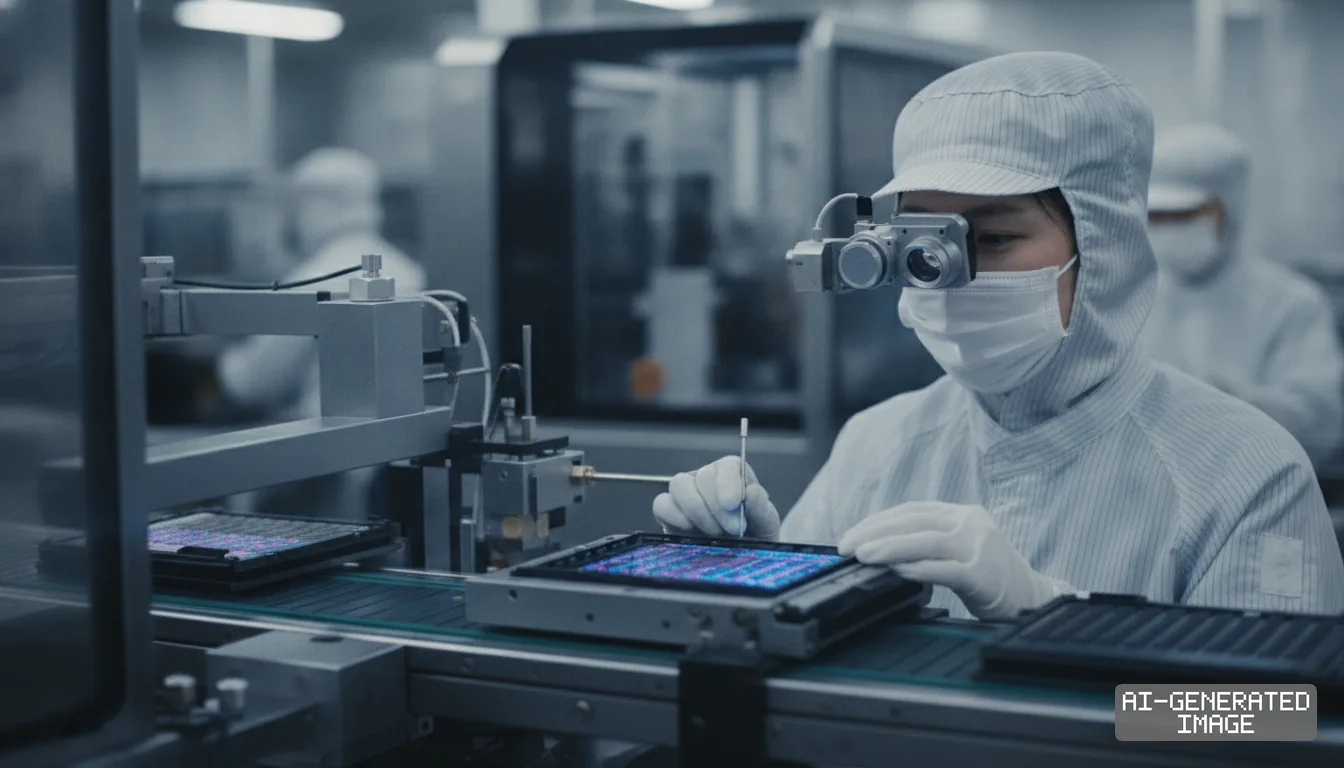
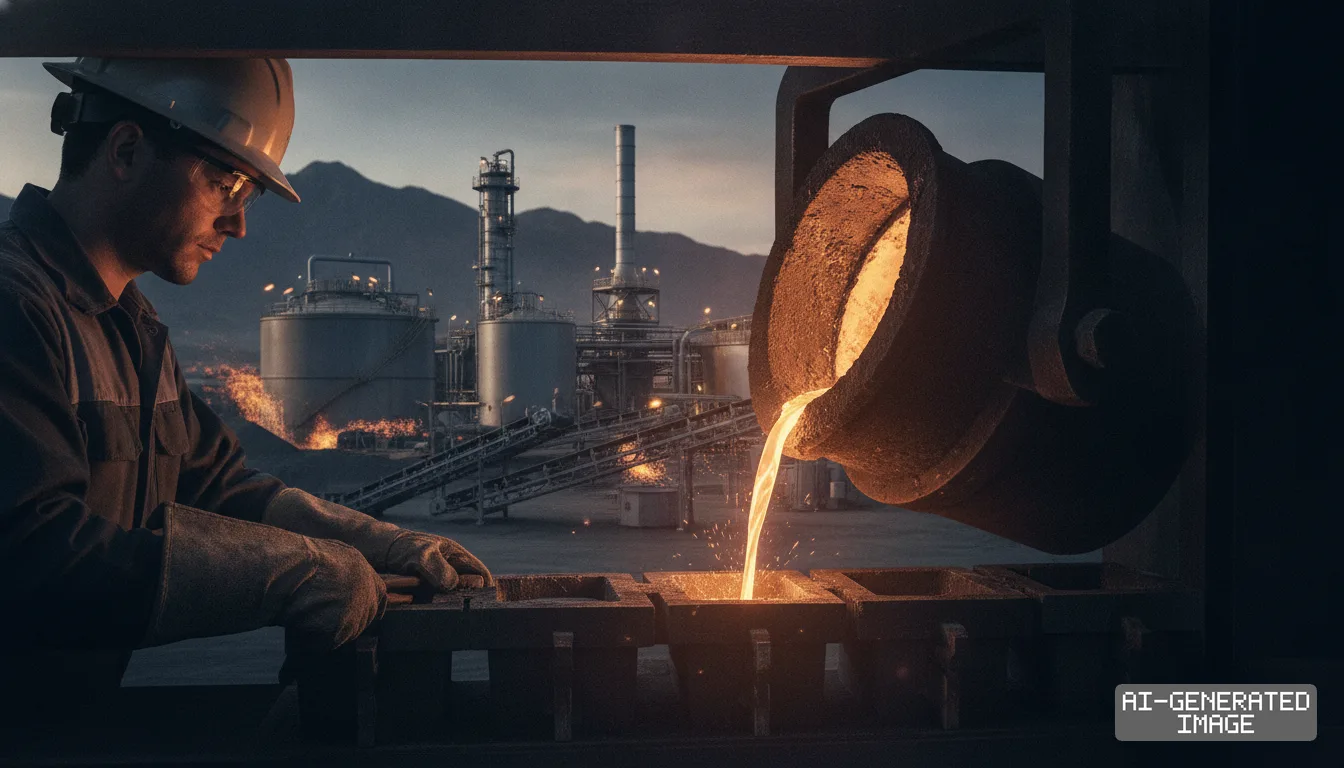
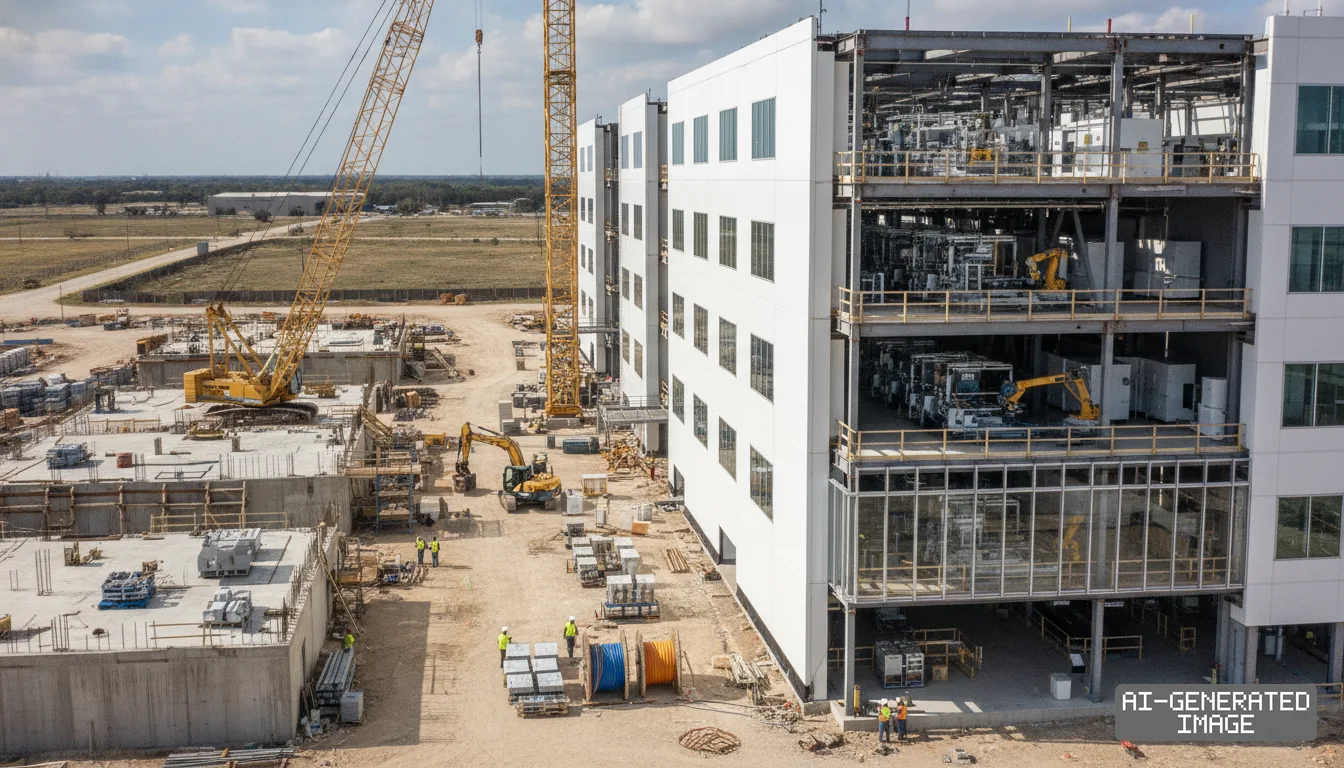
Memory shares tumble after US lawmakers push AI buildout pause
Micron dropped 13% while Samsung slid 7.57% in Seoul as exchange operators halted Kosdaq sell orders following legislative calls to curb data center builds.
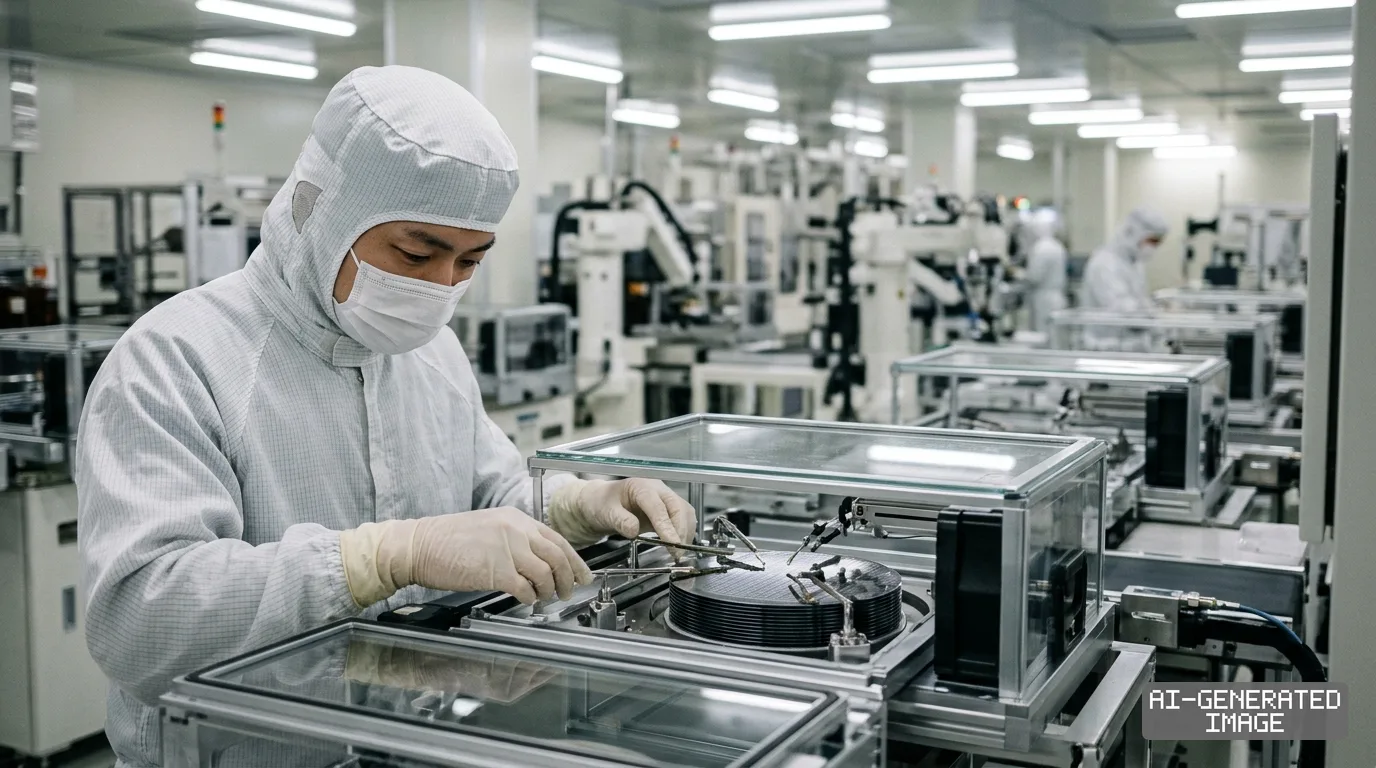
Global memory semiconductor makers faced a sharp market rout on Nov. 5, 2026, as political calls in the United States to pause artificial intelligence infrastructure triggered fears of fab overcapacity.
In New York, Micron Technology fell 7.00% on Nov. 4 before dropping another 13% intraday on Nov. 5. SanDisk dropped 18% during the session, while the Philadelphia Semiconductor Index slipped roughly 10%.
The pressure spread to South Korea, where the benchmark Kospi fell 5.28% to close at 5,383.80 on Nov. 5. Exchange officials halted automated sell orders after the technology-heavy Kosdaq tumbled 5.11%.
Samsung Electronics dropped 7.57% to 201,500 won ($146) during the session. Shares of SK hynix tumbled 9.46% to close at 1,264,000 won ($915), marking its steepest single-day decline in two years.
The market reaction followed a public statement by Representative Yassamin Ansari, an Arizona Democrat, posted on social platform X late on Nov. 4 following U.S. midterm elections.
The top priority on day one for the incoming Congress should be a pause on advanced AI development, tighter regulation of the industry and an outright ban on artificial superintelligence, Ansari said.
The congressional statement compounded local regulatory concerns in Texas, where incoming Governor Gina Hinojosa campaigned on halting approvals for new data centers until state lawmakers establish firmer grid protections.
Texas accounts for roughly 28% of planned U.S. data center capacity. A state moratorium threatens to freeze substation hookups and concrete pouring for dozens of hyperscale campuses.
For memory manufacturers, the threat of permitting moratoria directly challenges multi-billion-dollar fabrication plant investments. Modern memory lines require years of advance capital commitments and run at continuous high volume.
Micron Technology had committed over 70% of its fiscal 2027 memory shipments to long-term supply agreements. A sudden pause in data center construction leaves delivery schedules exposed to deferrals.
SanDisk faces similar exposure in enterprise solid-state drives — high-capacity flash storage used to hold model training data. NAND storage lines operate on narrow margins and absorb demand shocks poorly.
In South Korea, SK hynix has shifted more than 50% of its advanced DRAM production toward high-bandwidth memory, known as HBM — vertically stacked memory that sits alongside AI computing processors.
SK hynix had signed supply agreements covering more than half of its planned 2027 output. Delays in hyperscale data center construction jeopardize the physical intake of those premium modules.
Samsung Electronics has committed dedicated cleanroom space at its Pyeongtaek fab complex to fifth-generation HBM3E chips. The company relies on major cloud service providers for bulk enterprise DRAM orders.
Constructing an advanced memory fabrication facility requires upwards of $15 billion in capital expenditures. Once installed, extreme ultraviolet lithography tools incur massive fixed depreciation costs regardless of whether wafers run.
Memory chipmakers expanded their capital spending aggressively across 2025 and 2026. The companies sought to avoid shortages after cloud computing giants placed record multi-year reservations for AI memory.
Top cloud operators sustained capital expenditures at more than 90% of their operational cash flow. Hyperscalers poured that capital into graphics processors, high-bandwidth memory and power infrastructure.
Political resistance to that rapid physical expansion has gathered momentum across several states. Local residents and municipal leaders have raised objections over surging electricity bills and water consumption.
Modern AI server clusters demand hundreds of megawatts of dedicated grid capacity. Liquid cooling systems cycle millions of gallons of water daily through heat exchangers to dissipate heat.
Independent Senator Bernie Sanders renewed calls on Nov. 5 for a nationwide moratorium on data center construction. Sanders urged federal safeguards to protect power grids and utility rates.
Congressional Progressive Caucus Chair Greg Casar also described recent election outcomes as an AI earthquake. Federal policy must address the economic and environmental consequences of unchecked computing clusters, Casar said.
Industry analysts noted that domestic restrictions could prompt tech giants to shift planned facility investment abroad. Relocating data centers to Europe or Asia, however, introduces multi-quarter construction delays.
Such construction gaps disrupt component procurement schedules across the semiconductor supply chain. Memory vendors cannot readily redirect specialized high-bandwidth memory stacks toward conventional consumer personal computer or smartphone channels.
Spot prices for dynamic random-access memory, or DRAM, react swiftly to downstream inventory accumulation. An infrastructure slowdown threatens to trigger rapid price discounting across standard double data rate chips.
Enterprise solid-state drives face even steeper pricing sensitivity during server procurement pauses. Storage makers had only recently restored NAND flash margins following steep capacity cuts implemented during the 2023 slump.
The sharp decline in Korean equities reflected foreign investor anxiety over fab utilization. Foreign institutional funds recorded heavy net selling across Korean semiconductor names throughout the Nov. 5 trading session.
Congressional leadership has not introduced formal statutory language for an AI moratorium, and the Arizona lawmaker did not release a draft legislative text or name committee co-sponsors.
The incoming 120th Congress convenes on Jan. 3, 2027, when legislative leaders will assign committee gavels and determine whether proposals to restrict AI infrastructure reach the House floor.
Impact map
How this development propagates across the region and out to global buyers.
| Event | Korea | China | Japan | Global impact |
|---|---|---|---|---|
| AI infrastructure pause rhetoric | SK hynix and Samsung face DRAM inventory buildup if hyperscaler capex slows | local server assemblers monitor international NAND spot price softening | Tokyo Electron and Kioxia face pushout of NAND and packaging equipment orders | AI data center memory spot prices face downward pressure on installation delays |
In this story
- Companies
- Samsung ElectronicsSK hynixMicron TechnologySanDisk
- Tickers
- 005930.KS000660.KSMUSNDK
- Impact
- CapexSupply ChainPricing
Related briefings
- Kioxia warns NAND price rally will stall as PC demand slows Also on Sandisk, SK hynix, Samsung Electronics
- Kioxia operating profit hits ¥1.99 trillion on AI SSD demand Also on SanDisk, SK hynix, Samsung Electronics
- Toshiba trims Kioxia stake below 13% in NAND governance shakeup Also on SanDisk, SK hynix, Samsung Electronics
- Kioxia Rejects SK hynix Flash Alliance to Guard SanDisk Ties Also on SanDisk, SK hynix, Pricing
Sources
Reporting
Confidence: medium — how we grade this
The documents behind this briefing are linked above. East Asia Brief produces its English text with AI assistance under human editorial review, and does not translate or republish other outlets' articles. See our methodology and AI policy. Spotted an error? Tell us.
The Morning Brief
What changed in Korean, Chinese and Japanese industry overnight — and what it means for your supply chain. One email, weekday mornings, US time. Free.
The Morning Brief is in preparation. Leave your address and we will write to you once — when the first issue is ready. Nothing before that.