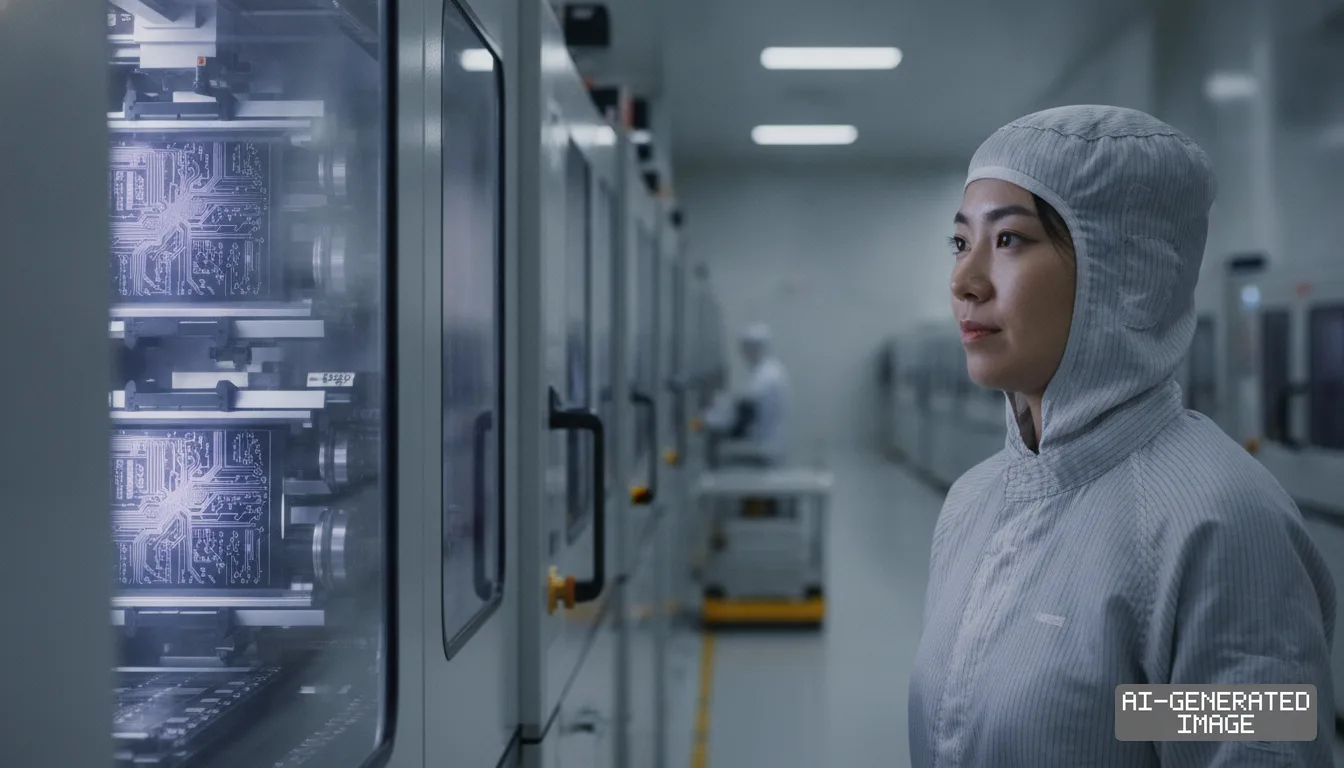
Samsung and SK hynix widen custom HBM supply to cloud hyperscalers
Accelerating ASIC adoption projected to surge 35-fold by 2028 cushions Korean memory suppliers against Nvidia turbulence as demand nears $160B.
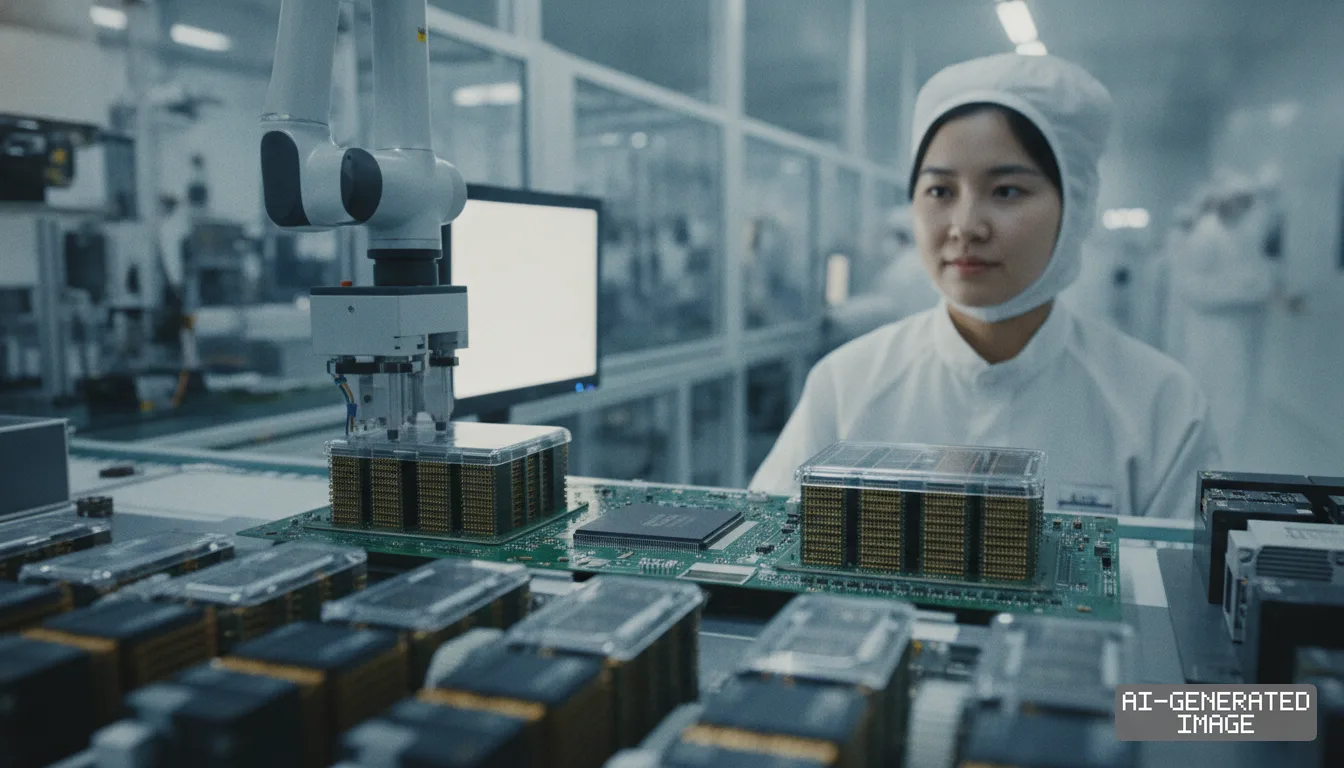
Samsung Electronics and SK hynix deepened custom high-bandwidth memory shipments to cloud hyperscalers on Nov. 15, 2026, buffering their order books against widening leadership turbulence at Nvidia.
The shift toward application-specific integrated circuits, or ASICs, allows the two South Korean chipmakers to diversify shipments beyond standard graphics processing units. Custom processors now represent an expanding share of memory procurement.
Counterpoint Research projects that high-bandwidth memory demand for custom server processors will expand 35-fold between 2024 and 2028. JPMorgan estimates the broader high-bandwidth memory market will reach $160.1 billion in 2027, an increase of 149%.
Customer diversification arrived days after Nvidia filed a Form 8-K with the U.S. Securities and Exchange Commission on Nov. 12. The filing confirmed that Chief Executive Jensen Huang resigned immediately, leaving Chief Financial Officer Colette Kress as interim head.
Nvidia held $279 billion in manufacturing and supply commitments at the close of its second fiscal quarter. Mirae Asset Securities said in a Nov. 12 report that leadership turnover at Nvidia will accelerate alternative processor deployment without reducing aggregate memory demand.
Cloud hyperscalers such as Alphabet, Microsoft and Meta Platforms are accelerating proprietary silicon deployment to reduce operational expenses. Tailored silicon gives cloud operators lower electrical power draw while eliminating merchant chip markups.
Alphabet expanded its custom processor footprint on Nov. 9 by unveiling its TPU 8i Max and TPU 8tx systems. The company confirmed that it now sells hardware access to nearly 100 external clients, including cloud vendor Oracle.
Each Google tensor processing unit incorporates between six and eight high-bandwidth memory stacks. The TPU 8i Max combines two dies into a single package, doubling computational performance and memory density over previous designs.
Samsung Electronics is capturing custom accelerator orders through its manufacturing partnership with Broadcom. The two companies signed a five-year cooperation framework in July 2026 valued at more than $200 billion through 2030.
Under that framework, Samsung Electronics supplies high-bandwidth memory alongside contract wafer fabrication and packaging. Broadcom designs the physical processor architectures used in systems for Alphabet and OpenAI.
Samsung Electronics also secured contracts in August 2026 to supply memory for OpenAI's dedicated inference processor, known as Jalapeño. Advanced Micro Devices selected Samsung Electronics in March 2026 as a preferred supplier for next-generation accelerators.
SK hynix countered by securing an exclusive contract to supply fifth-generation memory for Microsoft's Maia 200 processor. The Maia 200 integrates six stacks of 12-layer memory built by SK hynix, providing 216 gigabytes of capacity.
Microsoft deployed the Maia 200 across commercial data centers in Iowa and Arizona during early 2026. The company announced in October that it plans to deploy more than one million Maia 300 systems beginning in 2027.
The Maia 300 accelerator will incorporate 288 gigabytes of sixth-generation memory to handle complex reasoning tasks. That deployment scale makes Microsoft one of the largest single corporate buyers of advanced memory outside merchant silicon designers.
The expansion of proprietary silicon has bolstered pricing leverage for memory fabricators. Tailored designs require custom base dies, making cloud operators reliant on long-term fabrication pacts rather than quarterly spot purchases.
Multi-year commitments secure production line utilization for South Korean memory facilities through 2027. Dedicated customer allocations also protect operating margins if merchant accelerator orders fluctuate during executive changes at primary customers.
Custom memory architectures require base logic dies produced on advanced foundry nodes. Samsung Electronics uses its internal foundry division, while SK hynix partners with Taiwan Semiconductor Manufacturing Company to produce custom base logic wafers.
Advanced packaging throughput remains the primary operational bottleneck across the semiconductor supply chain. Packaging lines must align microbump pitch and substrate layers precisely to prevent thermal distortion in high-density accelerator modules.
The two South Korean memory makers have not published their exact customer volume splits or unit prices under their nondisclosure pacts. The companies do not disclose separate profit margins for custom memory lines.
Nvidia will report its third-quarter financial results on Nov. 17, 2026, providing its first formal revenue guidance under interim management. Microsoft plans to begin volume testing on its Maia 300 server nodes in the second quarter of 2027.
Samsung Electronics completed qualification testing on its sixth-generation memory line in Pyeongtaek earlier this quarter. SK hynix is installing packaging equipment at its Cheongju advanced packaging facility to meet 2027 delivery commitments.
Impact map
How this development propagates across the region and out to global buyers.
| Event | Korea | China | Japan | Global impact |
|---|---|---|---|---|
| Cloud ASIC expansion | Samsung and SK hynix lock multi-year HBM allocations with hyperscalers | Hyperscalers face domestic ASIC limits under advanced node export rules | Substrate and inspection tool suppliers gain steady multi-year equipment backlogs | AI server clusters diversify hardware architecture away from single merchant GPU dependence |
| Cloud ASIC expansion | Samsung and SK hynix lock multi-year HBM allocations with hyperscalers | Hyperscalers face domestic ASIC limits under advanced node export rules | Substrate and inspection tool suppliers gain steady multi-year equipment backlogs | AI server clusters diversify hardware architecture away from single merchant GPU dependence |
In this story
Related briefings
- LG and Samsung SDI schedule 2027 launch for data center LFP cells Also on Alphabet, Microsoft, Order Book
- Google turns to Samsung and SK hynix HBM as custom TPU fleet grows Also on Alphabet, Broadcom, Nvidia
- Nvidia locks up 37% of global HBM supply for AI accelerators Also on Alphabet, Nvidia, SK hynix
- Fanuc and Google launch AI welding robot to read blueprints Also on Alphabet, Order Book
Sources
Primary documents
Reporting
Confidence: high — how we grade this
The documents behind this briefing are linked above. East Asia Brief produces its English text with AI assistance under human editorial review, and does not translate or republish other outlets' articles. See our methodology and AI policy. Spotted an error? Tell us.
The Morning Brief
What changed in Korean, Chinese and Japanese industry overnight — and what it means for your supply chain. One email, weekday mornings, US time. Free.
The Morning Brief is in preparation. Leave your address and we will write to you once — when the first issue is ready. Nothing before that.