LG and Samsung SDI schedule 2027 launch for data center LFP cells
Both Korean manufacturers plan mid-2027 commercial runs of cylindrical cells to capture backup power demand expanding at 30% annually.
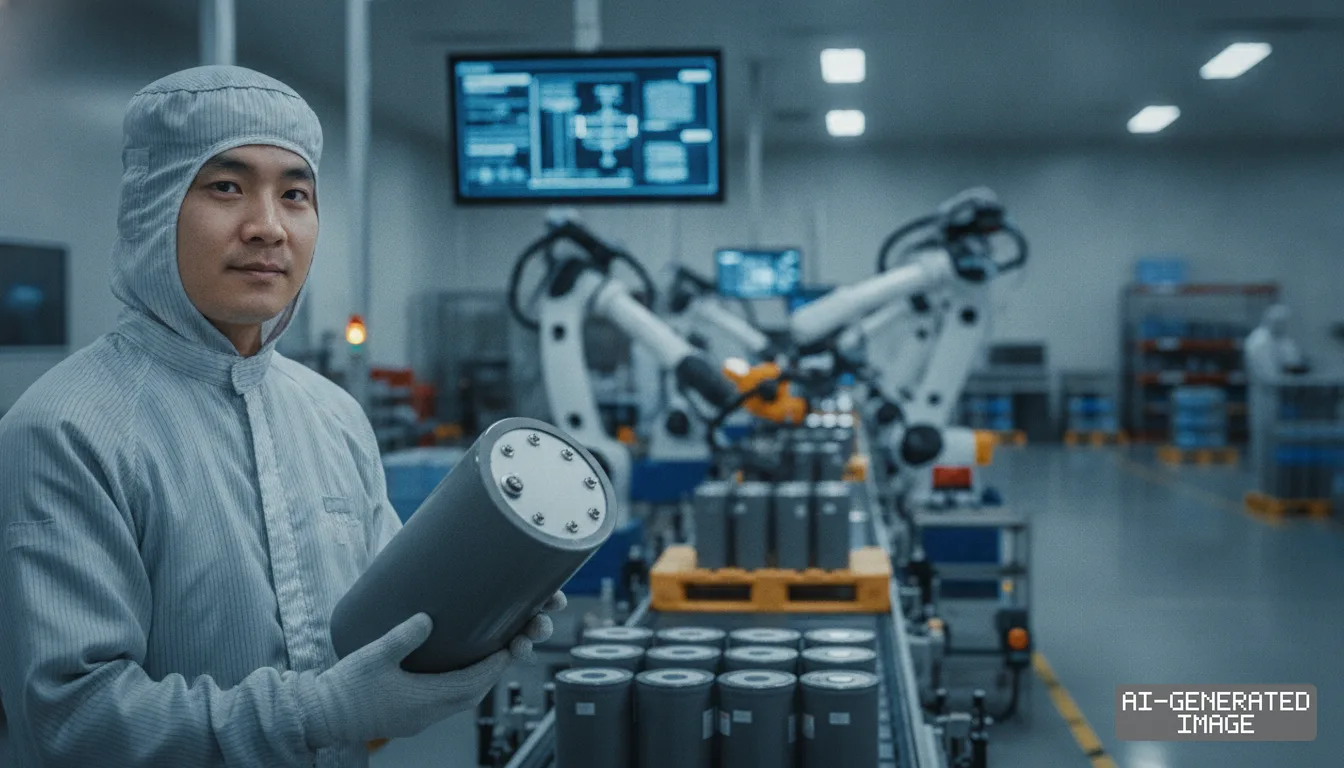
LG Energy Solution and Samsung SDI established parallel schedules on Nov. 10, 2026 to begin commercial mass production of cylindrical iron phosphate batteries for artificial intelligence data centers by mid-2027.
The dual deployment targets server battery backup units, a niche projected by Samsung SDI to expand at a 30% compound annual rate through 2030 as hyperscalers build power-dense computing clusters.
Samsung SDI holds an estimated 40% to 50% share of the data center uninterruptible power supply and backup battery unit market. LG Energy Solution is converting existing domestic production lines to challenge that position.
LG Energy Solution plans to manufacture lithium iron phosphate cells in the 2170 format at its Ochang Energy Plant in Cheongju, South Korea. The site serves as the company's mother factory for new processes.
The company is targeting mass production in the second quarter of 2027, Roh In-hak, Vice President of Small Battery Planning and Management at LG Energy Solution, said during an earnings briefing.
The design incorporates tabless electrode architecture to lower internal resistance and mitigate heat buildup during abrupt discharge cycles. High internal resistance causes rapid thermal spikes when server racks draw emergency current, Roh said.
The iron phosphate cylindrical cells demonstrated superior thermal stability over nickel-cobalt-manganese cells during high-temperature stress tests, Roh said. Customer testing across North America yielded positive feedback on thermal runaway containment.
Samsung SDI is pursuing a matching timeline while broadening its cylindrical and prismatic offerings. The company unveiled a cylindrical lithium iron phosphate cell sample at the Data Centre World Asia exhibition in Singapore on Sept. 29.
Oh Jae-kyun, Executive Vice President of Business Support at Samsung SDI, said the battery maker is expanding form factors from the 18650 standard to 21700 while diversifying active cathode materials to include iron phosphate.
Samsung SDI is preparing its Seremban Plant No. 2 in Malaysia to anchor commercial output targeted for June 2027. The Southeast Asian production base offers Western cloud providers a certified supply chain outside mainland China.
Server architectures separate power protection into rack-mounted backup units and facility-wide uninterruptible power supplies. Backup units sit inches from processors to bridge momentary outages, whereas uninterruptible power supplies protect entire electrical switchgear rooms.
On Nov. 10, the Consumer Technology Association named Samsung SDI an Innovation Award honoree for CES 2027 for its SDI U8A3-UPS system. The utility-scale uninterruptible power supply uses lithium manganese oxide prismatic cells.
The prismatic system delivers 33% greater physical space efficiency than previous hardware generations, allowing data center operators to install fewer cabinets. Samsung SDI said the system satisfied all criteria in UL Solutions indoor fire testing.
The dual South Korean rollout highlights contrasting mechanical approaches to thermal isolation inside high-density facilities. While Chinese battery giants dominate grid storage using massive prismatic blocks, rack-level computing hardware favors small-cell compartmentalization.
Cylindrical cells limit chemical reaction volume within individual steel cans, preventing localized thermal runaway from spreading across packed server drawers. LG Energy Solution uses tabless current collectors to disperse heat evenly along the cell cylinder.
Samsung SDI equips its 21700 cylindrical cells with bottom directional vents that exhaust combustible gases downward away from computing boards. Its prismatic server offerings use integrated gas exhaustion channels to prevent cross-module fire propagation.
Stricter municipal fire codes across North America are forcing cloud operators to upgrade indoor storage chemistry. Standards including NFPA 855 impose strict capacity caps and separation barriers on nickel-rich batteries installed within commercial computing structures.
Chinese manufacturers Contemporary Amperex Technology and BYD produce over 70% of global iron phosphate cells at lower costs. However, escalating United States tariffs and federal supply chain procurement reviews restrict Chinese cells from critical server infrastructure.
North American hyperscalers including Microsoft, Amazon Web Services and Alphabet are revising data center electrical designs to support accelerators drawing over 100 kilowatts per rack. These high-voltage systems require backup units capable of rapid discharge without thermal degradation.
Iron phosphate offers lower volumetric energy density than nickel-based chemistries but provides chemical decomposition thresholds roughly 200 degrees Celsius higher. For data center operators managing multibillion-dollar artificial intelligence clusters, physical safety outweighs raw volumetric capacity.
Commercial sampling and rack integration trials with server system builders will expand through the first quarter of 2027. Samsung SDI will display its certified backup systems at CES 2027 in Las Vegas in January 2027.
Samsung SDI has not published an official regulatory disclosure confirming the capital expenditure allocation or line conversion schedule for its Seremban plant. The two Korean manufacturers operate independently and have signed no joint production agreements.
Both companies maintain targeted delivery timetables of the second quarter of 2027 as server equipment manufacturers finalize vendor qualification lists for next-generation computing facilities.
Impact map
How this development propagates across the region and out to global buyers.
| Event | Korea | China | Japan | Global impact |
|---|---|---|---|---|
| AI server backup LFP production race | LG Energy Solution and Samsung SDI prepare Q2 2027 commercial output of cylindrical LFP cells | CATL and BYD face hyperscaler procurement barriers in US despite 70% share of LFP market | Upstream component suppliers retain cathode precursor purchase orders for Korean cell lines | Cloud operators obtain non-Chinese backup battery options meeting NFPA 855 safety standards |
In this story
- Companies
- LG Energy SolutionSamsung SDI
- Tickers
- 373220.KS006400.KS
- Exposed
- Contemporary Amperex TechnologyBYDMicrosoftAmazon Web ServicesAlphabet
- Policy
- StandardsTariffs
- Impact
- Supply ChainCapexOrder Book
Track every Standards development → Track every Tariffs development →
Related briefings
- Fanuc and Google launch AI welding robot to read blueprints Also on Alphabet, Order Book
- Nvidia locks up 37% of global HBM supply for AI accelerators Also on Alphabet
- FANUC retains hollow-arm robot fleet for factory automation Also on Microsoft, Tariffs, Order Book
- Fanuc holds SCARA line steady as robotics revenue tops 44% of sales Also on Microsoft, Order Book
Sources
Reporting
Confidence: medium — how we grade this
The documents behind this briefing are linked above. East Asia Brief produces its English text with AI assistance under human editorial review, and does not translate or republish other outlets' articles. See our methodology and AI policy. Spotted an error? Tell us.
The Morning Brief
What changed in Korean, Chinese and Japanese industry overnight — and what it means for your supply chain. One email, weekday mornings, US time. Free.
The Morning Brief is in preparation. Leave your address and we will write to you once — when the first issue is ready. Nothing before that.