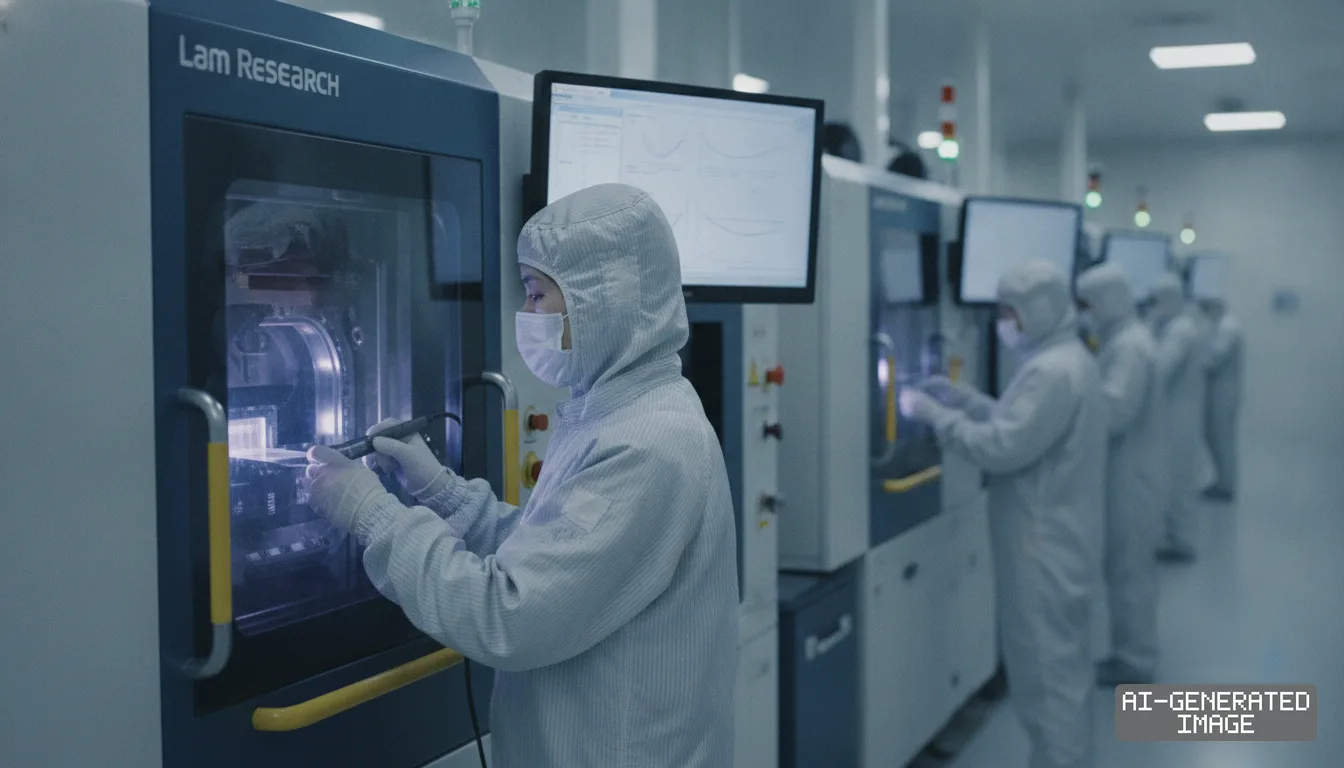
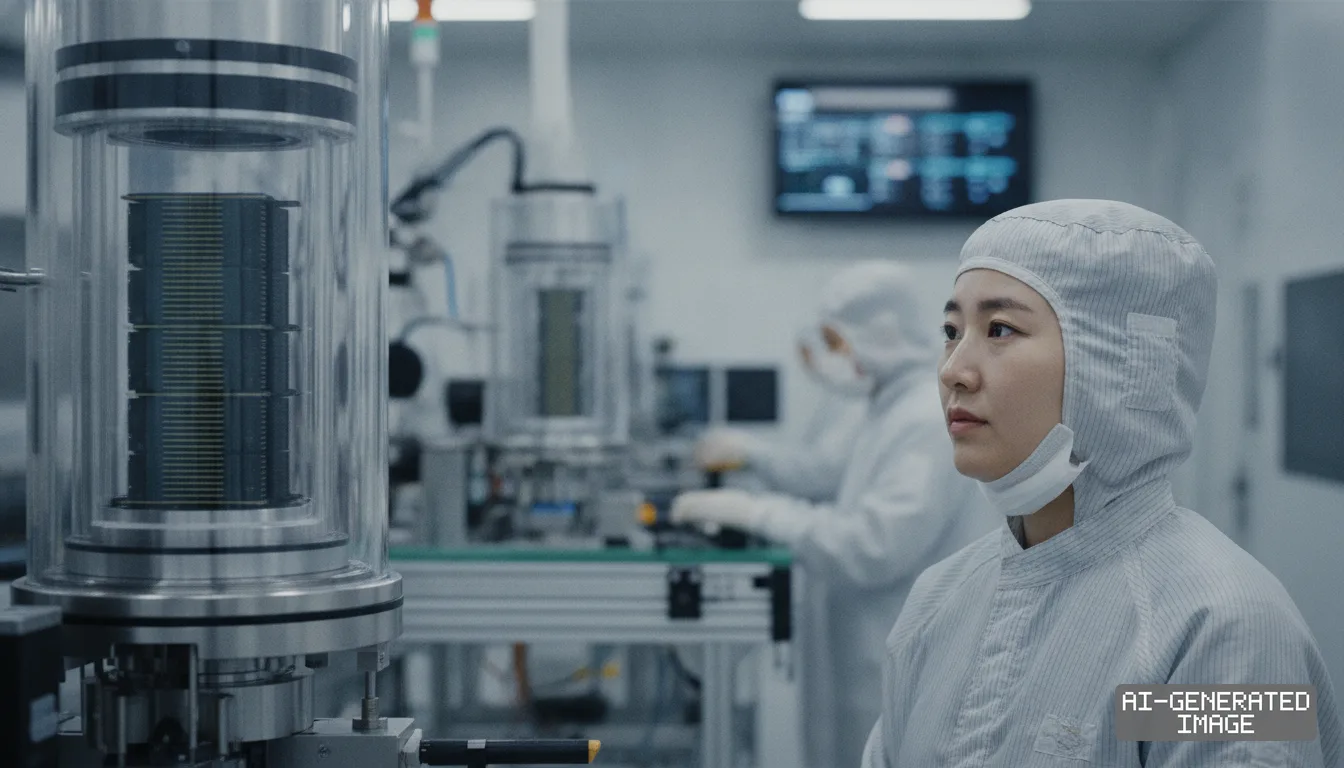
Samsung, SK hynix and Micron draft common fab robot charging rules
The three manufacturers supply over 70% of global DRAM output and seek unified mobile robot hardware for legacy cleanrooms lacking overhead transport rail space.
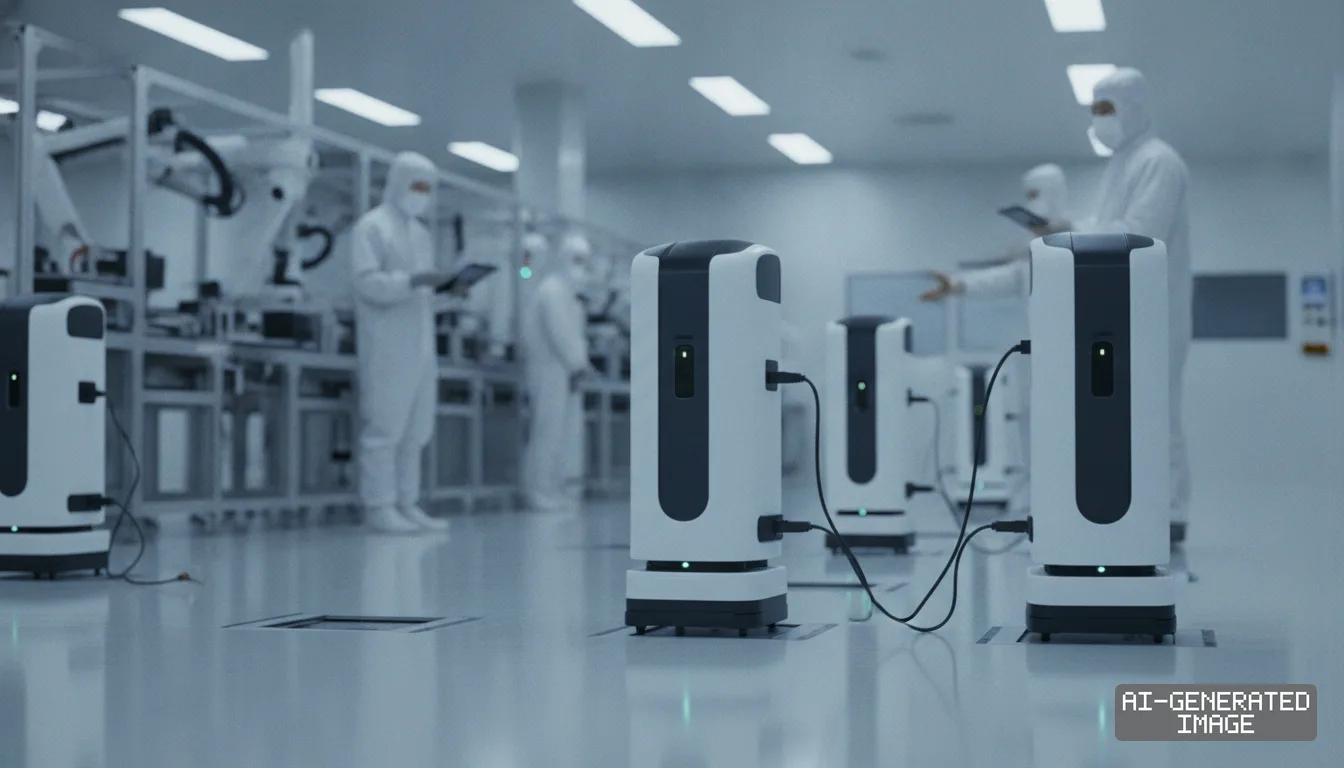
Samsung Electronics, SK hynix and Micron Technology opened technical discussions with industry body SEMI on Nov. 9, 2026, to create unified charging standards for mobile robots in semiconductor cleanrooms.
The three memory makers together supply more than 70% of the world's dynamic random-access memory, giving their joint technical initiative broad influence over commercial factory automation specifications.
The talks focus on standardizing charging systems across legacy wafer fabrication plants where ceiling heights and floor structures prevent the installation of overhead automated transport rails.
Samsung Electronics accounts for approximately 41% of global DRAM output across production campuses in Giheung, Hwaseong and Pyeongtaek, where older facilities require retrofitted material handling systems.
SK hynix commands about 34% of worldwide DRAM output and more than 50% of high-bandwidth memory shipments, maintaining older manufacturing lines at its Cheongju and Icheon complexes.
Micron Technology holds roughly 23% of the global DRAM market, operating front-end fabrication lines across the United States, Japan and Taiwan that face similar automation constraints in aging facilities.
Modern fabrication lines built during the past decade rely primarily on overhead hoist transport, using motorized carriers that travel along ceiling networks to transport wafer pods between process tools.
Older facilities built for 200-millimeter and early 300-millimeter wafers feature lower ceiling clearances and narrower corridors that cannot accommodate additional overhead rail hardware, manufacturing engineers said.
In those legacy facilities, chipmakers deploy autonomous mobile robots, wheeled mobile manipulators and experimental humanoid units across cleanroom aisles to transport wafers and maintenance supplies.
Cleanroom operators currently purchase mobile units from multiple robotics vendors. Each supplier delivers proprietary battery designs, unique docking interfaces and incompatible power supplies, creating operational fragmentation.
Cleanroom floor space commands high operating costs because air filtration systems must maintain strict cleanliness. Allocating dedicated floor footprint for multiple incompatible charging docks raises factory operating overhead, industry specialists said.
Standardizing charging docks allows different robot fleets to share identical power bays. The shared infrastructure reduces physical space requirements and lets factory software redirect any mobile unit to an open charger.
Working-level engineers are drafting technical parameters across four main hardware and software divisions. These include battery cell dimensions, docking electrical contacts, station equipment and wireless communications protocols.
The group is also establishing shared criteria for battery management systems. Unified battery monitoring allows cleanroom safety software to verify battery temperatures, cell health and charging currents in real time.
Semiconductor cleanrooms maintain strict particle limits under international cleanliness standards. Mechanical docking contacts must charge batteries reliably without generating conductive metallic dust or shedding chemical contaminants.
The working group is also evaluating safety protocols to prevent thermal runaway in cleanrooms. Because lithium-ion batteries carry combustion hazards, charging stations require automated heat containment systems that function without disrupting nearby production lines.
Engineers are also creating software interfaces to link robot charging stations with the central manufacturing execution system that manages wafer lot schedules.
Connecting charger status to manufacturing software prevents robots from depleting battery power during critical transport tasks. The interface automatically schedules docking cycles between wafer lot assignments to avoid production stalls.
The effort builds on foundational work established by the Autonomous Fab Working Group, which SEMI Korea launched in May 2024 to address cleanroom equipment automation.
An earlier survey conducted by that working group determined that comprehensive automation of preventive maintenance in semiconductor plants requires an estimated 8.2 years of phased industry integration.
The survey found that 87.3% of participating industry specialists cited wafer processing equipment not originally designed for robotics as the primary barrier to fab automation.
Standardization talks also address building infrastructure interfaces. The technical group is drafting common communication protocols that allow mobile robots to request elevator dispatch and automated door passage between cleanroom zones.
Engineers are evaluating unified optical markings, such as two-dimensional data matrix codes, to help mobile manipulators scan and verify replacement components from automated storage racks.
Samsung Electronics, SK hynix and Micron Technology compete directly for market share in advanced memory components, but common automation interfaces reduce capital expenditure on non-competitive cleanroom infrastructure.
A standardized specification allows robotics manufacturers to produce higher volumes of standardized cleanroom hardware, lowering procurement costs across the semiconductor supply chain.
The companies have not published capital expenditure figures, deployment deadlines, or an official memorandum of understanding, and neither company nor SEMI has released a formal corporate announcement confirming a binding alliance.
Working group participants plan to present draft interface proposals at the upcoming SEMI standardization review meeting scheduled for the first quarter of 2027.
Impact map
How this development propagates across the region and out to global buyers.
| Event | Korea | China | Japan | Global impact |
|---|---|---|---|---|
| Cleanroom robot charging standardization | Samsung and SK hynix standardize retrofit robot bays across legacy 200mm and 300mm fabs | Domestic memory fabs face fragmented robotics supply without SEMI standard access | Micron Hiroshima fab integrates unified dock specs for cleanroom mobile manipulators | Robotics vendors gain unified cleanroom electrical and interface specifications across 70% of memory capacity |
In this story
- Companies
- Samsung ElectronicsSK hynixMicron Technology
- Tickers
- 005930.KS000660.KSMU
- Policy
- Standards
- Impact
- CapexSupply ChainCost Structure
Track every Standards development →
Related briefings
- HANMI Semiconductor posts 50% operating margin on HBM bonder demand Also on Micron Technology, Standards, SK hynix
- SK hynix unveils MARS rack architecture to break HBM limits Also on Micron Technology, SK hynix, Samsung Electronics
- TSMC Urges HBM Makers to Adopt X-Ray Friendly Chip Design for Advanced Packaging Also on Micron Technology, SK hynix, Samsung Electronics
- High-purity hydrogen peroxide supply chains face regional bottlenecks across East Asian fabs [90 characters] Also on Micron Technology, SK hynix, Samsung Electronics
Sources
Primary documents
Reporting
Confidence: high — how we grade this
The documents behind this briefing are linked above. East Asia Brief produces its English text with AI assistance under human editorial review, and does not translate or republish other outlets' articles. See our methodology and AI policy. Spotted an error? Tell us.
The Morning Brief
What changed in Korean, Chinese and Japanese industry overnight — and what it means for your supply chain. One email, weekday mornings, US time. Free.
The Morning Brief is in preparation. Leave your address and we will write to you once — when the first issue is ready. Nothing before that.