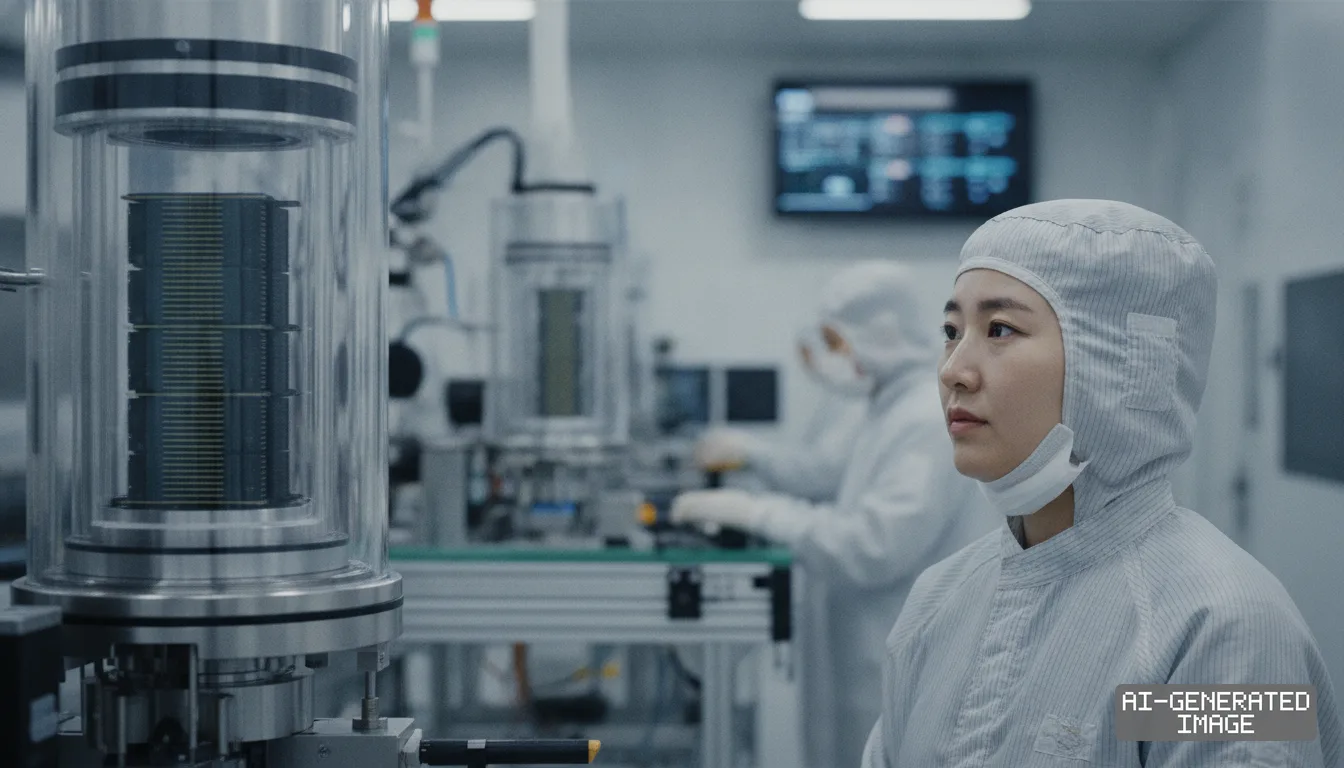
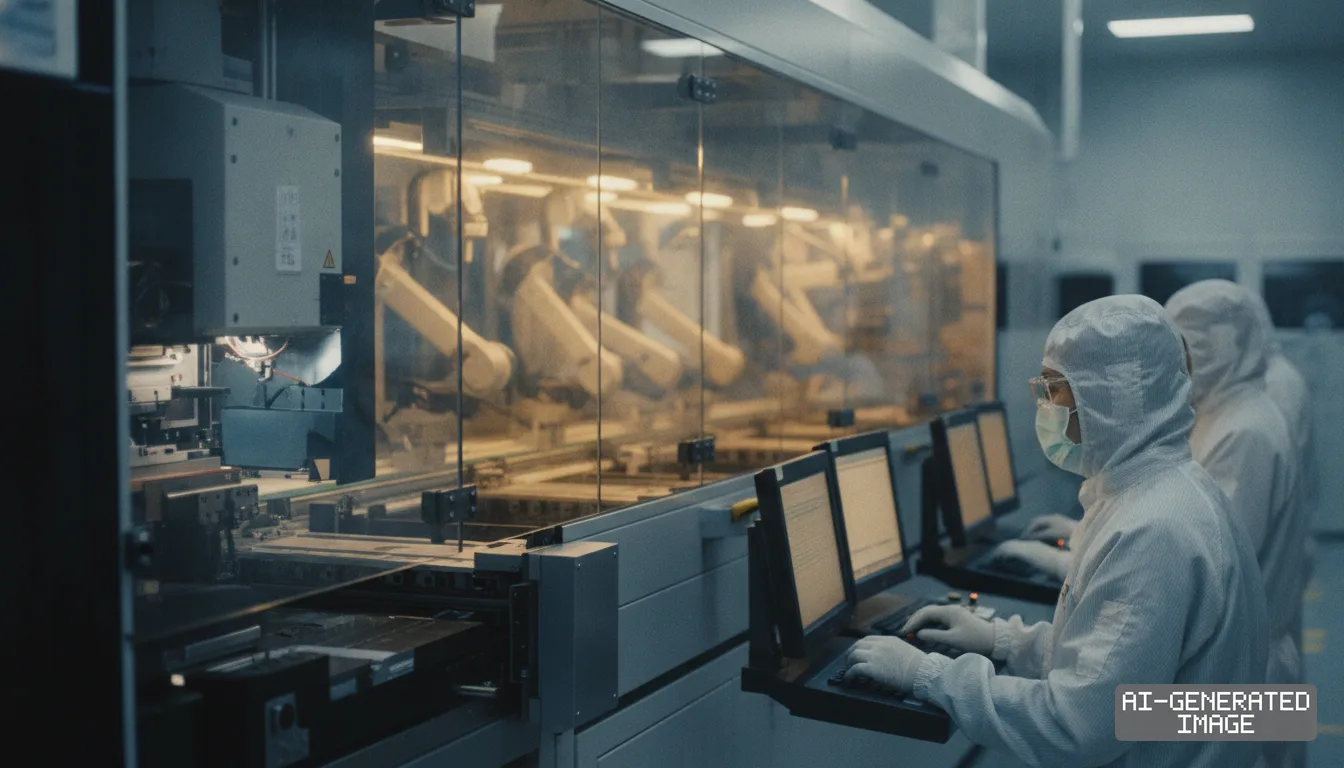
Doosan allocates 550 billion won to expand China CCL production
The Changshu facility will manufacture high-density laminates for artificial intelligence accelerators, absorbing 56.5% of group capex through 2028.
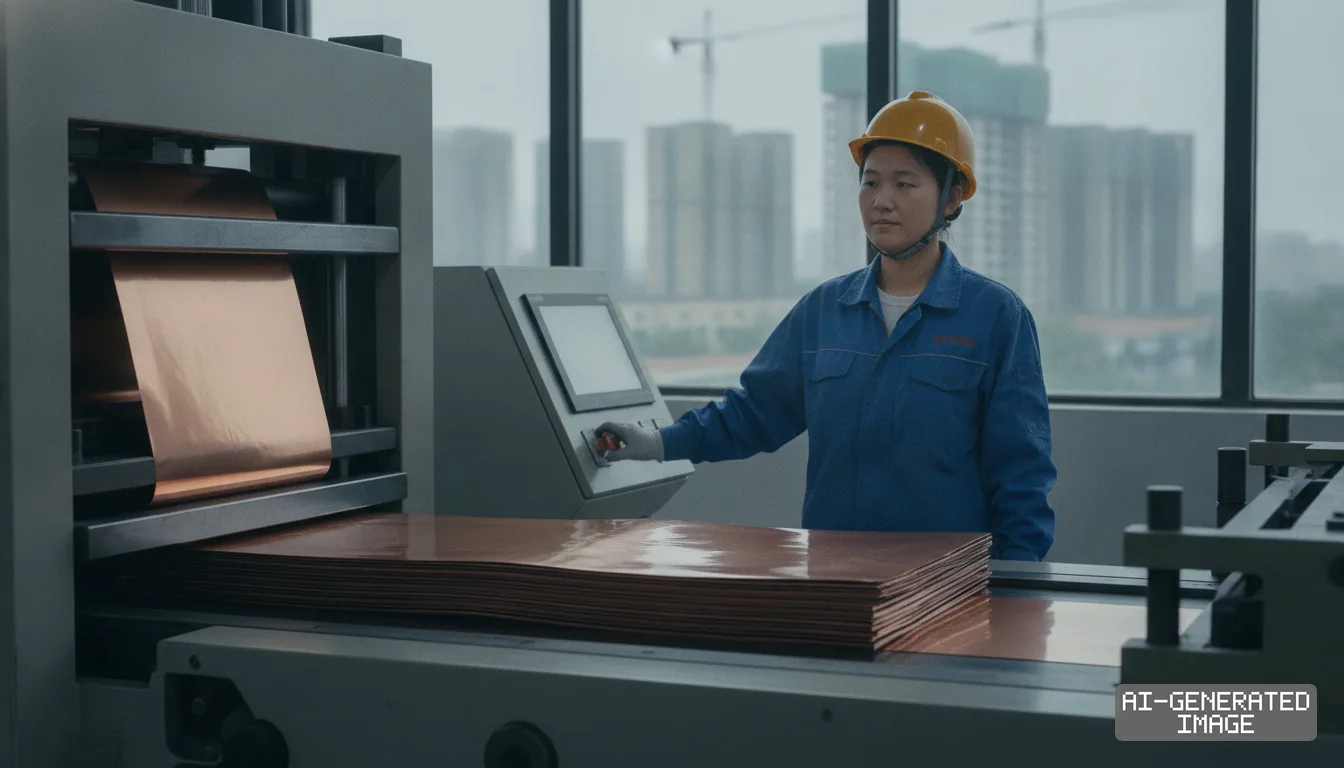
Doosan Corporation finalized plans on Nov. 8 to invest 550 billion won ($397 million) expanding copper-clad laminate production in Changshu, China, targeting high-density materials for artificial intelligence accelerators.
The capital commitment formalizes the overseas manufacturing portion of a broader 968.4 billion won ($698 million) capacity initiative approved by the board of directors in September, company disclosure filings show.
The Chinese expansion accounts for 56.5% of that global capex package. The project adds advanced coating and pressing equipment on an 185,000-square-meter parcel adjacent to the conglomerate’s existing Changshu factory complex, the company said.
Copper-clad laminate (CCL) — copper foil bonded to an insulating core to form the structural base of printed circuit boards — serves as the primary substrate for high-speed AI data processing systems.
The new facility will manufacture high-layer count laminates tailored for AI accelerators and high-capacity network switches. Those components route signals inside hyperscale data centers handling dense computing clusters, according to company specifications.
Doosan has operated its initial Changshu CCL facility since 2012. The expansion draws on the existing site’s skilled workforce, production logistics and utility infrastructure to shorten installation timelines, the company said.
The municipal agreement follows bilateral discussions between Suzhou Mayor Wang Wei and Doosan President Yoo Seung-woo at Suzhou City Hall. Municipal authorities agreed to provide administrative and permitting support for construction and site operations.
Severe capacity constraints prompted the cross-border investment. Domestic factories operated by Doosan’s Electro-Materials division in Jeungpyeong and Gimcheon logged average utilization rates of 109.8% and 102.7% earlier this year, according to regulatory filings.
The electronics division booked annual revenue of 1.9 trillion won ($1.37 billion) last year, up from roughly 1 trillion won in 2024. Rising shipments of high-margin electronic materials drove that topline expansion.
The China project represents the second major milestone in Doosan's three-pronged manufacturing strategy. On Oct. 27, the firm signed an agreement committing 399.2 billion won ($288 million) to build an optical-module CCL facility in Gimje.
That domestic plant will occupy roughly 33,000 square meters inside the Gimje Horizon General Industrial Complex. It will focus on ultra-low-loss substrates required for optical transceivers running at 800 gigabits per second and higher.
Doosan also outlined plans in April to construct a manufacturing plant in Bang Bo, Thailand, with a projected budget of 180 billion won. That plant will handle regional circuit board supply across Southeast Asia.
The combined investments establish a specialized regional manufacturing network across East Asia. South Korea will anchor optical transceiver laminates, China will concentrate on AI accelerators and switches, and Thailand will supply regional server assemblers.
In China, Doosan is also developing a separate 20 billion won manufacturing venture with Chinese board fabricator Victory Giant Technology. That partnership secures direct downstream channels to major printed circuit board production lines.
Global printed circuit board fabricators maintain heavy production concentrations in Jiangsu and Guangdong provinces. Locating high-end laminate output in Changshu cuts delivery lead times to board makers assembling multi-layer boards for cloud hyperscalers.
Modern AI accelerators require multi-layer boards exceeding 30 conductive layers to manage power delivery and signal integrity. Higher layer counts multiply raw laminate consumption per server blade compared with conventional enterprise servers, company engineers said.
Doosan competes against Taiwanese fabricator Elite Material and Japan-based Resonac Holdings in supplying low-loss materials to leading AI accelerator designers. Expanding Chinese volume allows the supplier to defend supply allocations across Asian PCB packaging lines.
On-site construction in Changshu is scheduled to break ground before the end of the fourth quarter. Phased commercial production across the new lines will commence sequentially in the second half of 2028.
The agreement does not state the targeted annual output capacity in square meters, and municipal authorities have not disclosed the specific valuation of local tax incentives or utility subsidies supporting the project.
All three production facilities across South Korea, China and Thailand remain scheduled to complete construction and achieve simultaneous commercial readiness before the close of 2028, the company said.
Impact map
How this development propagates across the region and out to global buyers.
| Event | Korea | China | Japan | Global impact |
|---|---|---|---|---|
| Changshu CCL expansion | Doosan deploys 56.5% of 968.4 billion won global capex to Chinese plant | Changshu secures 185,000-square-meter AI substrate materials line | Resonac faces direct competition in high-layer PCB laminate supplies | AI server supply chains add low-loss material capacity ahead of 2028 |
In this story
- Companies
- Doosan Corporation
- Tickers
- 000150.KS
- Exposed
- Victory Giant Technology
- Impact
- Supply ChainCapexOrder Book
Related briefings
- EcoPro Innovation invests $40 million in Argentine lithium site Also on Order Book
- Iran pitches $300B transport and energy portfolio in Shanghai forum Also on Order Book
- Nvidia aligns TSMC and memory makers to ease 20% packaging shortfall Also on Order Book
- China leads global energy capex with $940 billion grid outlay Also on Order Book
Sources
Reporting
Confidence: medium — how we grade this
The documents behind this briefing are linked above. East Asia Brief produces its English text with AI assistance under human editorial review, and does not translate or republish other outlets' articles. See our methodology and AI policy. Spotted an error? Tell us.
The Morning Brief
What changed in Korean, Chinese and Japanese industry overnight — and what it means for your supply chain. One email, weekday mornings, US time. Free.
The Morning Brief is in preparation. Leave your address and we will write to you once — when the first issue is ready. Nothing before that.