NEPES secures presidential honor after reshoring chip packaging lines
South Korea cited the OSAT vendor for expanding advanced packaging in Cheongju as Seoul prepares to ease domestic reshoring qualification criteria on Nov. 23.
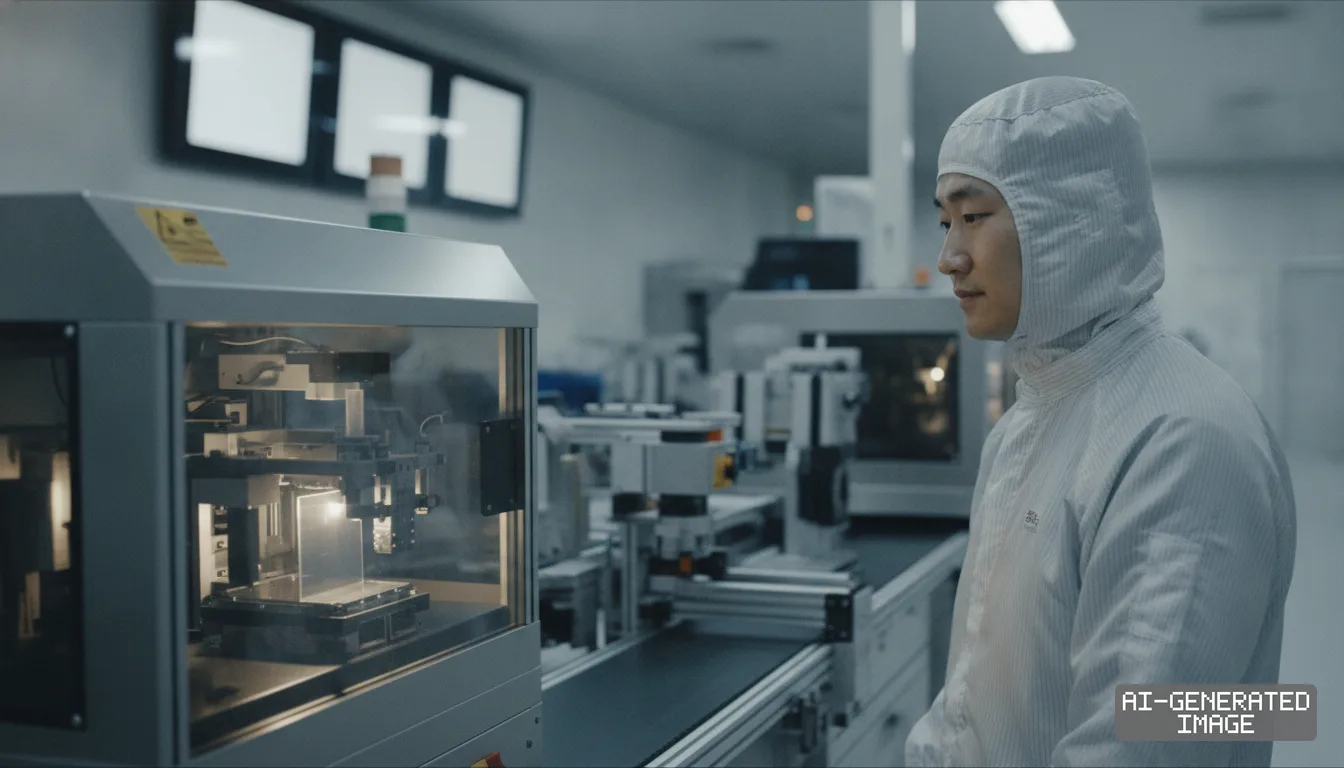
South Korea's Ministry of Trade, Industry and Energy awarded chip packaging specialist NEPES the Presidential Citation on Nov. 4, 2026, for reshoring advanced semiconductor backend operations to its Cheongju campus.
NEPES operates as an outsourced semiconductor assembly and test provider, supplying wafer-level packaging, bumping and testing services for mobile processors and automotive integrated circuits.
NEPES generated 23.8 billion won ($17.5 million) in operating profit following initial line operations, though trade officials did not disclose the total investment figure for the Cheongju expansion.
Chief Executive Officer Lee Chang-woo accepted the award during the Forum for Reshoring Contributors at the Grand InterContinental Seoul Parnas hotel, held in conjunction with the Invest Korea Summit 2026.
More than 150 representatives from manufacturing corporations, provincial authorities and state trade bodies attended the two-day gathering to assess reshoring incentives and regional industrial development.
The award marks a follow-up to June 12, 2025, when the ministry formally designated NEPES as a core supply chain enterprise eligible for state reshoring assistance.
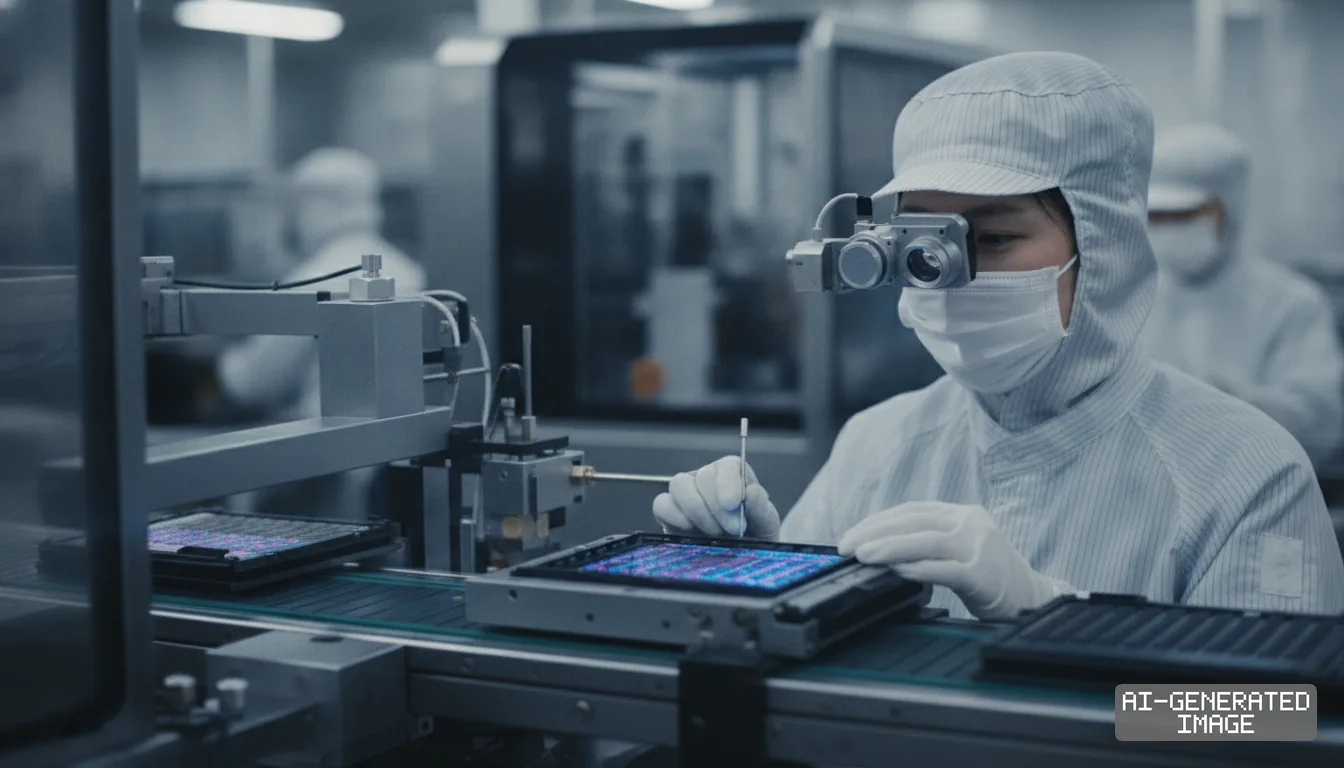
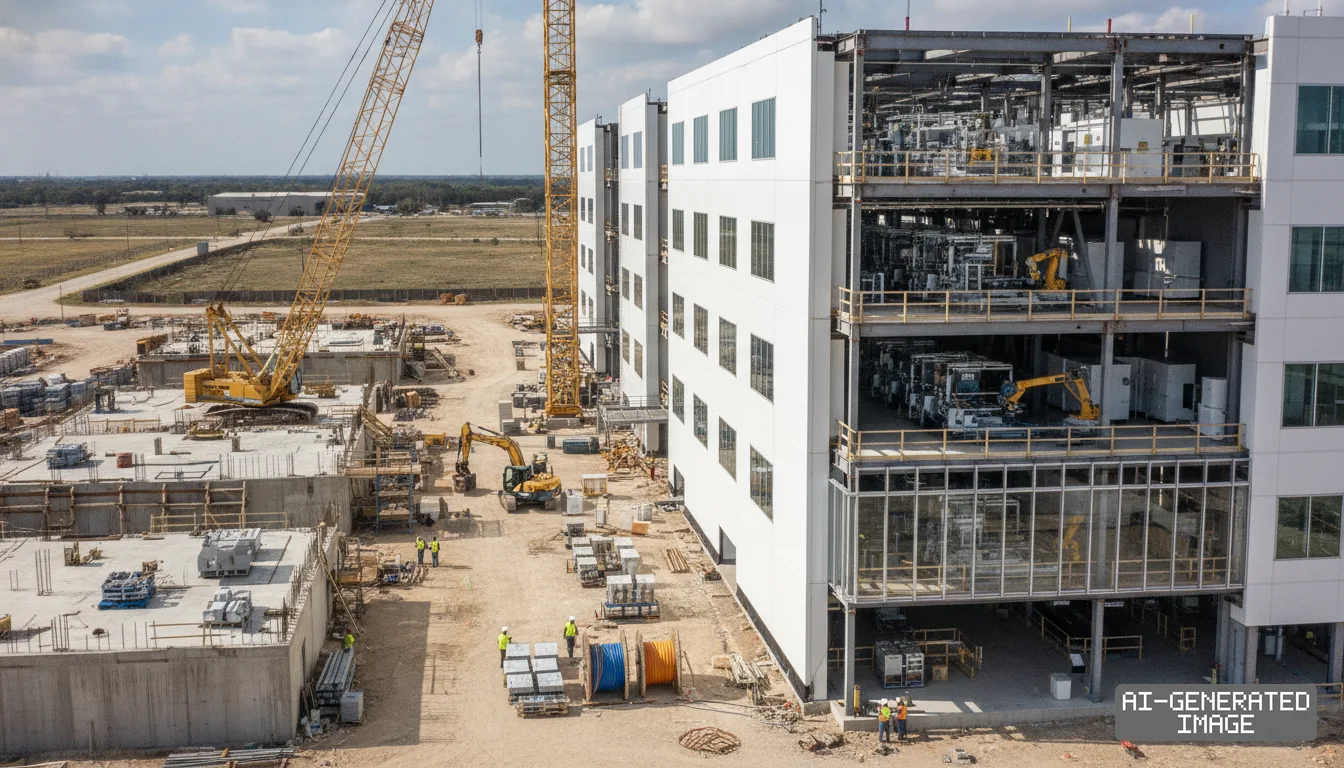
NEPES built the new backend facilities across previously idle land at its Cheongju site in North Chungcheong province, adding cleanroom space and advanced processing tools.
The expansion focuses on copper pillar bumping — a technique using miniature conductive posts instead of conventional bonding wires to connect silicon dies to substrates.
These microscopic copper connections shorten electrical pathways, reducing heat buildup and power leakage in high-frequency artificial intelligence accelerators and automotive silicon.
The company also deployed fan-out wafer-level packaging, an advanced packaging format that redistributes input-output terminals beyond the die surface without requiring a printed circuit board.
Taiwan's ASE Technology Holding and US-headquartered Amkor Technology control more than 70% of the world's outsourced packaging volume, leaving South Korean fabless designers heavily reliant on foreign supply routes.
Domestic chip companies have historically shipped raw wafers overseas for specialized packaging before importing finished components back for board assembly, adding weeks to cycle times.
Providing bumping, packaging and final testing under a single domestic roof establishes a turnkey channel that eliminates cross-border freight steps and protects proprietary layout designs.
Integrated device makers including Samsung Electronics and domestic fabless developers source backend services locally to support mobile application processors, power management silicon and sensor modules.
The ceremony also recognized municipal efforts, granting the Prime Minister's Citation to Busan Metropolitan City for establishing an annual investment promotion fund reserved for reshoring companies.
Ten project managers from industrial parks and trade promotion agencies received citations from the Minister of Trade, Industry and Energy for coordinating regional facility permits.
The awards coincide with a broader shift in government reshoring strategy toward establishing domestic "mother factories" — flagship plants housing core intellectual property and prototype fabrication lines.
Under the revamped guidelines, manufacturers investing in domestic strategic sectors will no longer be forced to liquidate or downsize overseas operations to qualify for state subsidies.
Corporate relocation decisions now prioritize supply chain resilience and proprietary engineering over cheap factory wages, Director General for Investment Policy Lee Han-cheol said during the forum.
Speakers at the forum highlighted manufacturing automation, urging reshoring operators to integrate artificial intelligence software to offset higher domestic operational overhead and labor expenses.
A revised enforcement decree under the Act on Support for Reshoring of Overseas Enterprises takes effect on Nov. 23, 2026, loosening eligibility rules based on product similarity.
The trade ministry plans to restructure its state subsidy framework in 2027 to raise cash grant ceilings for advanced semiconductor and critical material investments.
The ministry announcement did not provide monthly wafer throughput numbers for the new lines, and NEPES has not published an official investor filing confirming the expansion budget.
Trade officials and regional governments will hold private consultation sessions with prospective reshoring applicants throughout November to structure incentive packages under the relaxed criteria.
Impact map
How this development propagates across the region and out to global buyers.
| Event | Korea | China | Japan | Global impact |
|---|---|---|---|---|
| Packaging reshoring citation | NEPES expands 12-inch bumping capacity, easing local fabless OSAT bottleneck | Domestic packaging lines face higher competition for regional fabless contracts | Equipment vendors see steady demand for wafer-level packaging tools | AI chip designers gain non-Taiwan packaging alternative for power management silicon |
In this story
- Companies
- NEPES
- Tickers
- 033640.KQ
- Exposed
- ASE Technology HoldingAmkor TechnologySamsung Electronics
- Policy
- Subsidies
- Impact
- Supply ChainCapex
Track every Subsidies development →
Related briefings
- South Korea funds advanced chip packaging and backside power pilot lines Also on Nepes, Samsung Electronics, Subsidies
- Silicon interposer scaling drives foundry and OSAT shifts in 3.5D chiplets Also on ASE Technology Holding, Amkor Technology, Samsung Electronics
- Intel pits EMIB-T packaging against TSMC to win AI chip orders Also on ASE Technology Holding, Amkor Technology, Samsung Electronics
- Foundry 2.0 Revenue Climbs 25% Also on ASE Technology Holding, Amkor Technology, Subsidies
Sources
Primary documents
Reporting
Confidence: high — how we grade this
The documents behind this briefing are linked above. East Asia Brief produces its English text with AI assistance under human editorial review, and does not translate or republish other outlets' articles. See our methodology and AI policy. Spotted an error? Tell us.
The Morning Brief
What changed in Korean, Chinese and Japanese industry overnight — and what it means for your supply chain. One email, weekday mornings, US time. Free.
The Morning Brief is in preparation. Leave your address and we will write to you once — when the first issue is ready. Nothing before that.