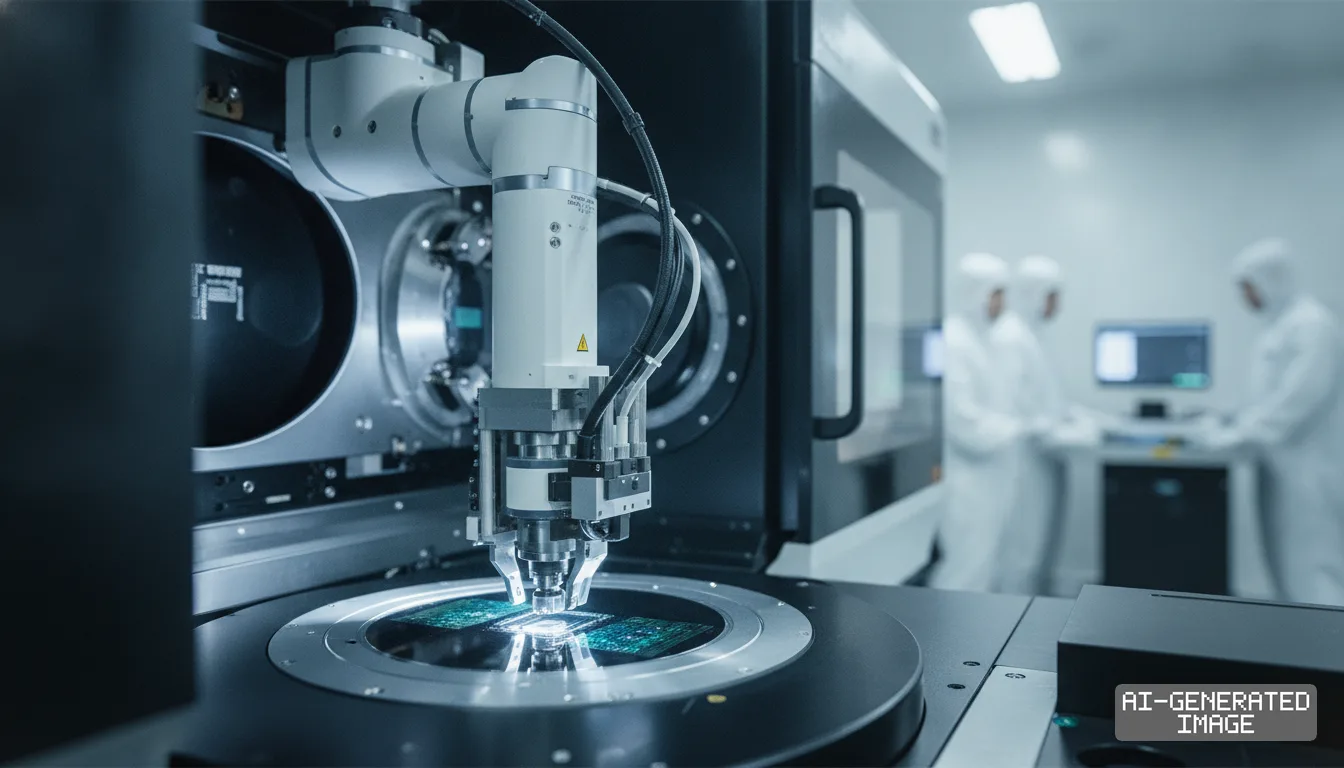
Korea's top retail traders buy PSK Holdings as memory shares slip
Bourse flow data showed top-performing retail accounts made the advanced packaging supplier their largest net buy while institutional desks remained sidelined.
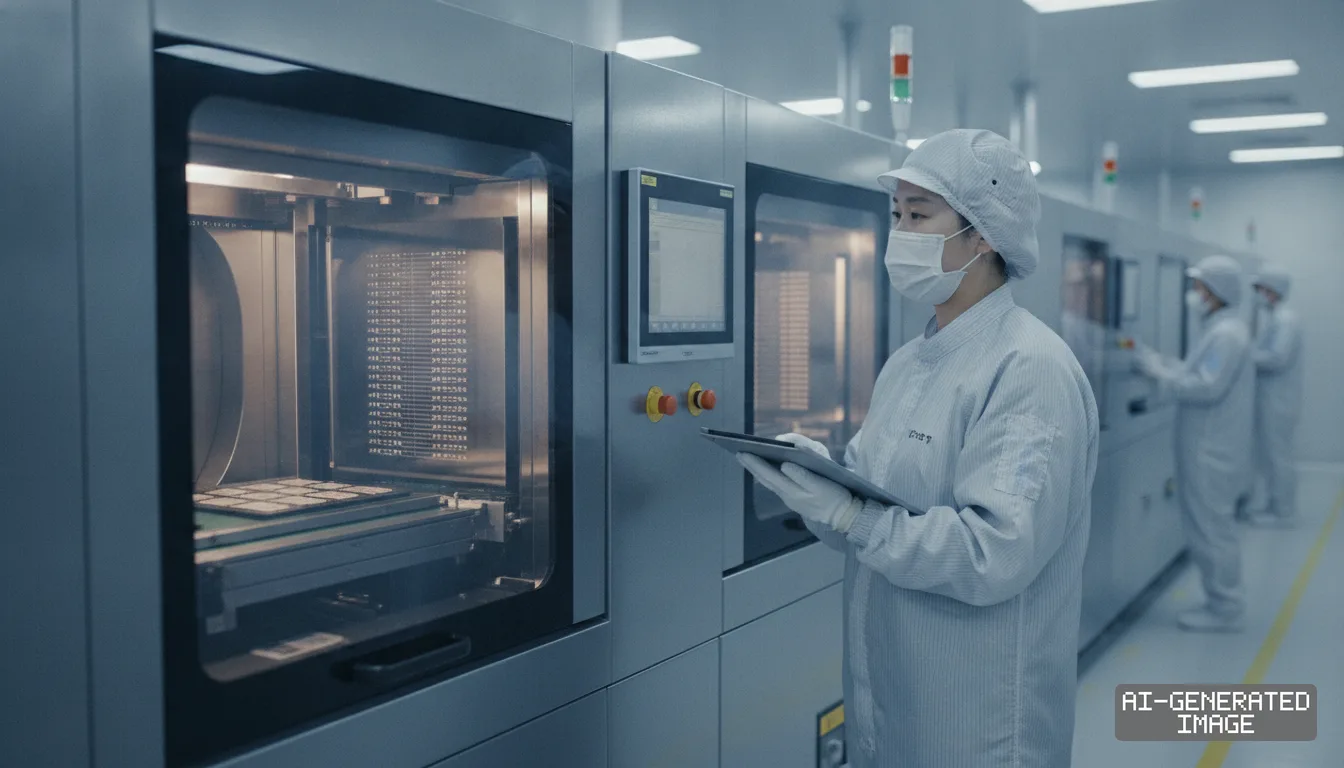
High-return retail accounts in South Korea sold shares of memory chipmakers to buy advanced packaging equipment vendor PSK Holdings on Nov. 26, 2026.
Trading desk flow metrics compiled by Mirae Asset Securities showed its top 1% returning clients placed PSK Holdings as their largest intraday net purchase. Shares of PSK Holdings traded down 2.2% at 115,700 won during the session.
PSK Holdings booked 158.3 billion won ($114 million) in cumulative revenue and 58.0 billion won in operating profit through September 2026, according to its Nov. 13 regulatory filing. Those totals fell from 207.8 billion won in revenue and 73.4 billion won in operating profit recorded during the same nine-month period in 2025.
The same trading desk cohort placed SK hynix as its most heavily sold stock that morning, despite the chipmaker climbing 3.3% to 1,064,000 won. Samsung Electronics ranked as the second-largest net sale among those retail accounts.
Broad market records show institutional asset managers did not join the retail reallocation. Clearing records published by the Korea Exchange showed domestic institutional accounts sold a net 77,876 PSK Holdings shares across that trading week.
Foreign investors purchased a net 6,726 shares over the same five-day stretch. The trade tallies indicate the turnover reflected private momentum trades rather than institutional index rebalancing.
The rotation highlights how capital flows distinguish front-end wafer capacity from back-end packaging bottlenecks. Conventional memory lines face cyclical pricing pressure, but high-bandwidth memory packaging lines continue to face tool shortages.
PSK Holdings manufactures fluxless reflow tools, which heat microscopic metal solder bumps to temperatures between 150°C and 300°C. The heating step creates structural and electrical connections between stacked DRAM dies without leaving chemical residue.
Its flagship Geneva reflow machine generates roughly 62% of company equipment revenue. The tool uses formic acid vapor instead of liquid chemical flux to prevent metal oxidation during high-density bonding.
Packaging demand for high-bandwidth memory and Chip-on-Wafer-on-Substrate processes has lengthened delivery timetables. Equipment lead times at the Seongnam-based company widened to seven months this year from three to five months in 2025.
Hana Securities raised its target price on PSK Holdings to 255,000 won on Nov. 11, 2026. The brokerage pointed to capital expenditure programs at outsourced semiconductor assembly and test companies across Taiwan.
Taiwanese assembly contractor ASE Technology Holding accounts for the largest share of foreign reflow orders. PSK Holdings accumulated purchase commitments for more than 300 reflow systems from Asian packaging houses earlier this year.
Those tool orders carry an estimated aggregate value of up to 600 billion won ($432 million). Machines command an average selling price between 1.5 billion won and 2.0 billion won each, depending on platform specifications.
PSK Holdings also sells reflow systems and Ecolite descum tools to SK hynix and Samsung Electronics. Descum systems strip microscopic photoresist scum after lithography steps to shape vertical interconnects in high-bandwidth memory stacks.
Heavy packaging commitments overseas forced the toolmaker to turn down domestic equipment delivery requests earlier this year. Factory managers chose to assign production capacity to high-margin reflow tools over descum platforms.
Memory producers face periodic softening in general dynamic random-access memory contract pricing. Advanced packaging equipment builders retain backlogs because thermal compression and reflow tools remain physical bottlenecks for artificial intelligence processors.
The trading desk summary did not disclose the total won value transacted by the top-tier retail accounts. Regulatory disclosure filings do not require securities firms to publish nominal trading totals for proprietary customer classifications.
PSK Holdings concludes its current fiscal financial year on Dec. 31, 2026. Audited full-year operational figures and annual earnings are scheduled for publication on the electronic corporate disclosure board in February 2027.
Impact map
How this development propagates across the region and out to global buyers.
| Event | Korea | China | Japan | Global impact |
|---|---|---|---|---|
| Advanced packaging tool rotation | PSK Holdings backlogs 300 reflow tools while domestic institutions net sold 77,876 shares | Domestic packaging lines face extended delivery lead times for high-end reflow tools | Tokyo Electron and local chemical suppliers see sustained demand for advanced fluxless chemistries | Packaging houses ASE and OSAT contractors absorb up to 600 billion won in backend reflow tools |
In this story
- Companies
- PSK HoldingsSK hynixSamsung Electronics
- Tickers
- 031980.KQ000660.KS005930.KS
- Exposed
- ASE Technology Holding
- Impact
- Order BookCapexSupply Chain
Related briefings
- PSK Holdings operating profit hits 58 billion won on HBM orders Also on PSK Holdings, ASE Technology Holding, SK hynix
- Korea chip tool makers hold price targets despite KOSPI drop Also on PSK Holdings, SK hynix, Samsung Electronics
- Nvidia aligns TSMC and memory makers to ease 20% packaging shortfall Also on ASE Technology Holding, SK hynix, Samsung Electronics
- EO Technics takes 20% of laser wafer dicing from Japan's Disco Also on ASE Technology Holding, SK hynix, Samsung Electronics
Sources
Reporting
Confidence: high — how we grade this
The documents behind this briefing are linked above. East Asia Brief produces its English text with AI assistance under human editorial review, and does not translate or republish other outlets' articles. See our methodology and AI policy. Spotted an error? Tell us.
The Morning Brief
What changed in Korean, Chinese and Japanese industry overnight — and what it means for your supply chain. One email, weekday mornings, US time. Free.
The Morning Brief is in preparation. Leave your address and we will write to you once — when the first issue is ready. Nothing before that.