China issues chip equipment quality rules to lift fab yields
Code SJ/T 12425-2026 introduces unified cleanroom and machining benchmarks to reduce defect rates in advanced logic lines where local tools hold under 30%.
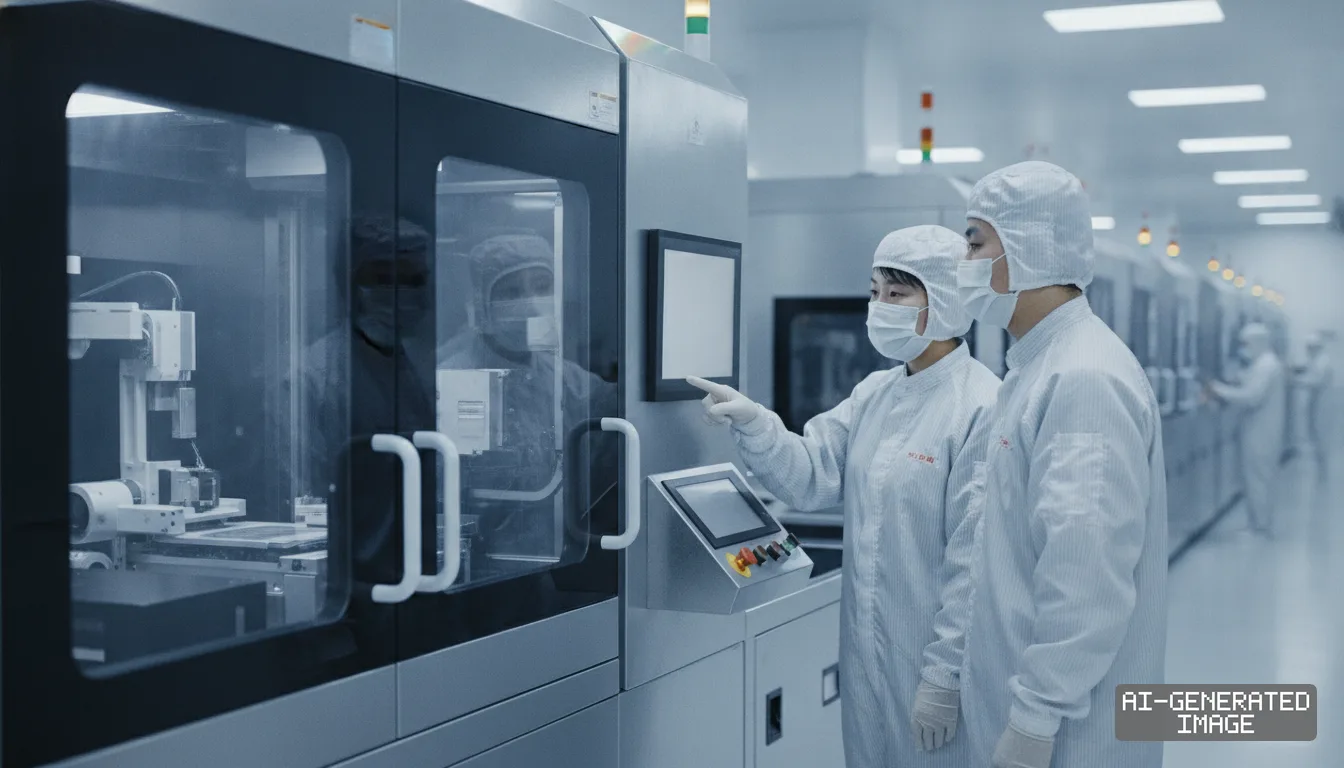
China's Ministry of Industry and Information Technology released the country's first dedicated semiconductor equipment quality standard on Nov. 26, 2026, codifying baseline manufacturing rules for domestic toolmakers and parts suppliers.
Domestic equipment accounts for only 20% to 30% of tooling in Chinese advanced logic fabs. The new framework seeks to raise that share by eliminating defect risks that drag on production yields.
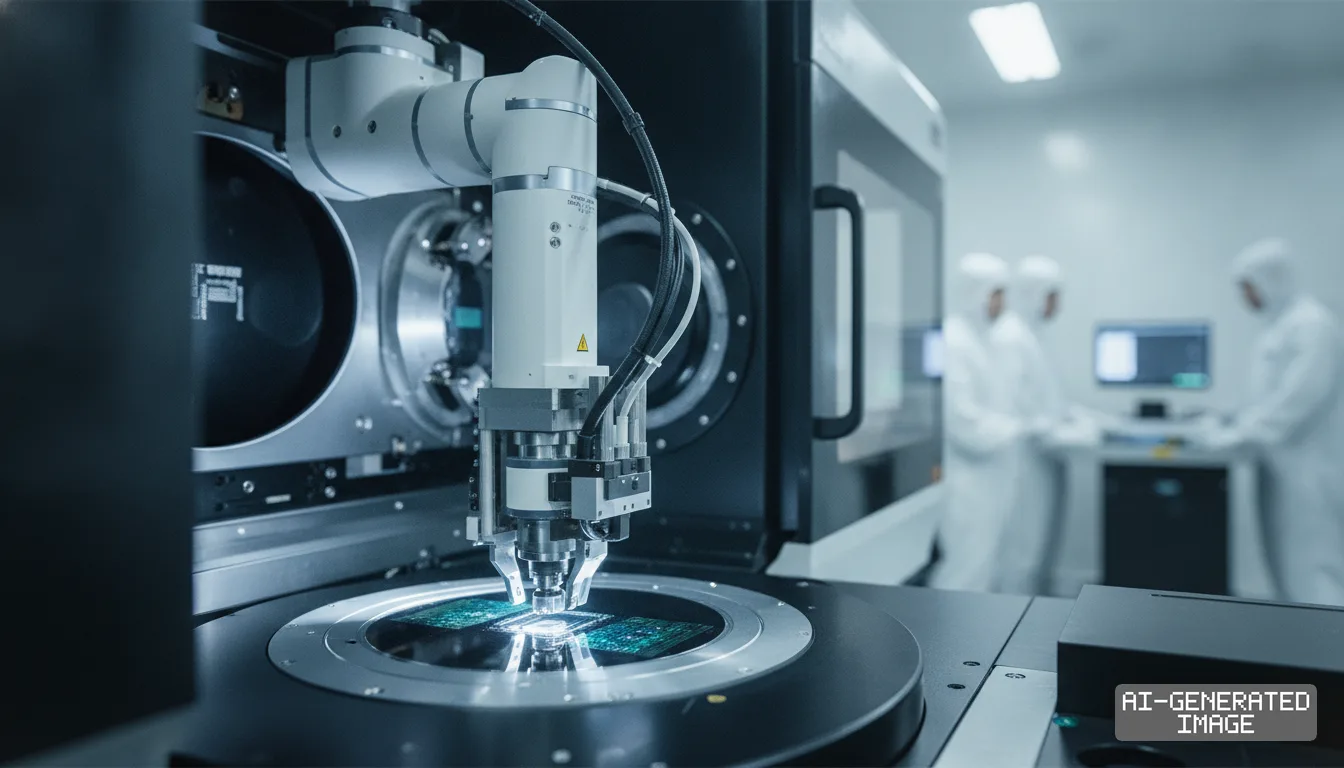
The voluntary code, designated SJ/T 12425-2026, covers the entire production lifecycle of chipmaking tools and components. It establishes unified benchmarks for precision machining, cleanroom protocols and batch-level component traceability.
Toolmaker NAURA Technology Group led the drafting working group under the guidance of the ministry's electronic information division. The three-year effort brought together more than 50 industry experts from 40 supply-chain companies.
NAURA accounts for more than 50% of domestically sourced tool purchases at memory producer ChangXin Memory Technologies. The Beijing-based toolmaker also delivers roughly one-third of domestic equipment orders at Yangtze Memory Technologies Corp.
Etch specialist Advanced Micro-Fabrication Equipment Inc. China and thin-film deposition supplier Piotech also shaped the requirements. Both vendors face mounting pressure to replace imported sub-assemblies with domestically machined alternatives.
Foundry operators Semiconductor Manufacturing International Corporation and Hua Hong Semiconductor helped establish operational criteria. SMIC operates eight wafer fabrication plants across China and requires tight component tolerances to keep continuous manufacturing lines operational.
Precision parts specialist Fortune Precision Equipment and motion controller supplier Inovance Technology represented the component tier. Siasun Robot & Automation contributed testing parameters for automated wafer-transfer mechanisms used in high-vacuum chambers.
Chinese toolmakers previously relied on general industrial manufacturing benchmarks such as ISO 9001 and GB/T 19001. Those standards proved inadequate for semiconductor machinery that must run 24 hours a day under extreme vacuum conditions.
Semiconductor manufacturing equipment requires nanometer-level precision across thousands of mechanical components, NAURA Chairman Zhao Jinrong said. Generic quality frameworks could not address the contamination risks inherent in complex front-end wafer processing, Zhao said.
The new standard adopts a zero-defect principle for critical machinery. It requires equipment builders to conduct formal safety reviews during design releases and maintain continuous reliability testing across assembly lines.
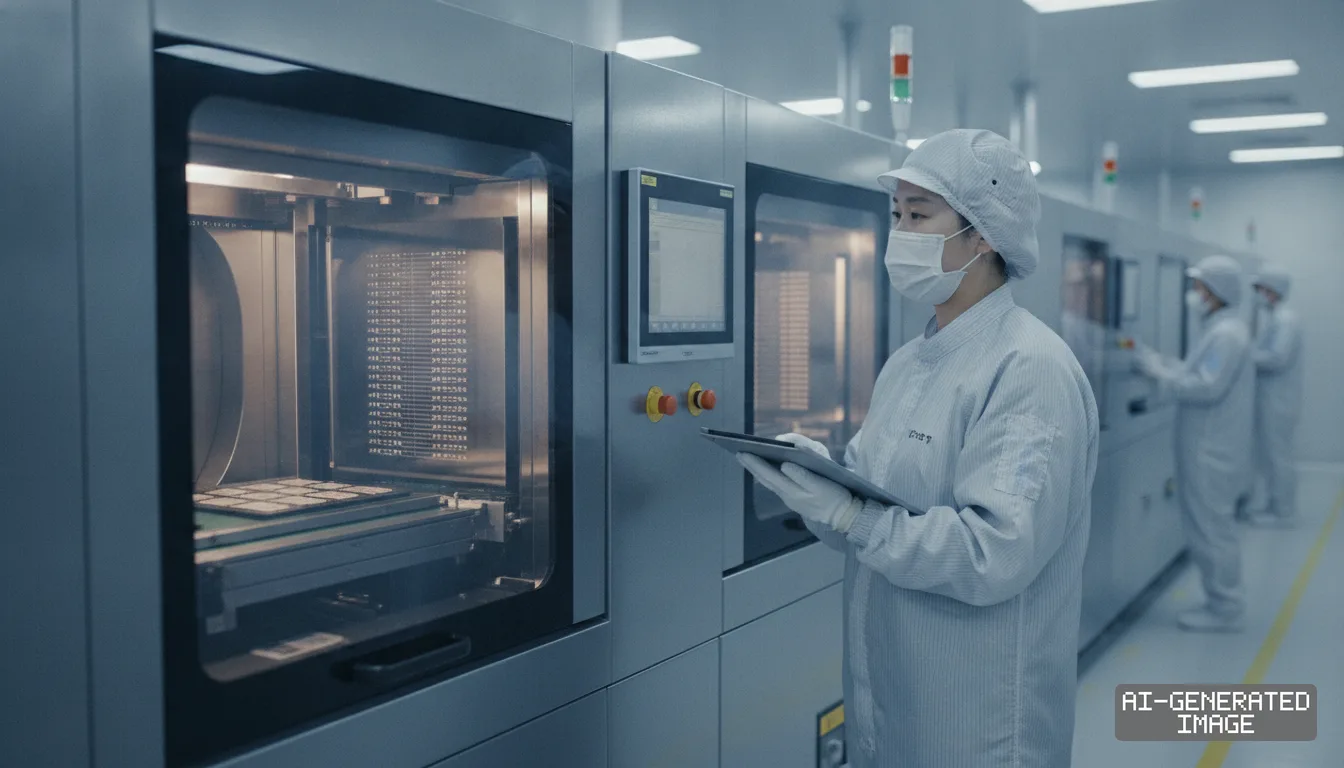
Toolmakers must enforce contamination controls across the entire production and shipping chain. In-line particle counters and continuous airborne monitoring are now recommended for component machining centers rather than just wafer fabs.
The framework introduces component-level serial tracking to accelerate failure analysis. When a tool malfunctions on a 300-millimeter wafer line, engineers must be able to trace the sub-assembly back to its original supplier batch.
Second-party supplier audits are formalized under the code, requiring toolmakers to inspect subcontractor cleanrooms directly. The guideline also incorporates export control compliance into internal procurement audits to minimize cross-border sanctions risks.
Toolmakers have historically faced resistance from domestic foundries when substituting foreign parts. Fab operators preferred proven components from Japan and the United States because unproven domestic components risked ruining multi-million-dollar production batches.
The standard provides a shared technical language that eliminates bilateral qualification friction, China Electronics Standardization Institute Director Liu Xiangang said. Fabs can now verify domestic equipment against a uniform technical rubric, Liu said.
Third-party testing laboratories and metrology vendors expect commercial demand to expand under the framework. Component suppliers must now conduct scanning electron microscopy and focused ion beam analyses before delivering parts to tool builders.
The standard takes effect on May 1, 2027, according to the ministry notice. Equipment manufacturers have five months to realign internal procurement manuals and audit supplier facilities against the benchmark.
The ministry has not published whether compliance with the voluntary standard will become mandatory to qualify for state semiconductor subsidies or Big Fund equity disbursements.
The National Technical Committee on Semiconductor Equipment and Materials Standardization will oversee industry implementation. SAC/TC 203 will coordinate initial compliance verification pilots across manufacturing clusters in Beijing, Shanghai and Wuhan.
Impact map
How this development propagates across the region and out to global buyers.
| Event | Korea | China | Japan | Global impact |
|---|---|---|---|---|
| Semiconductor equipment quality standard SJ/T 12425-2026 | Samsung Electronics and SK hynix face yield advances from domestically equipped Chinese memory lines | NAURA and AMEC gain unified qualification criteria across domestic 300-millimeter fabs | Tokyo Electron and Canon face accelerated component substitution at Chinese customer sites | Tool export compliance requirements add formal audit steps to international component flows |
In this story
- Companies
- NAURA Technology GroupSemiconductor Manufacturing International CorporationAdvanced Micro-Fabrication Equipment Inc. China
- Tickers
- 002371.SZ0981.HK688012.SS
- Exposed
- ChangXin Memory TechnologiesYangtze Memory Technologies CorpHua Hong SemiconductorPiotechFortune Precision Equipment
- Policy
- Standards
- Impact
- Supply ChainComplianceCost Structure
Track every Standards development →
Related briefings
- YMTC targets 70% domestic equipment for fourth Wuhan 3D NAND fab Also on Advanced Micro-Fabrication Equipment Inc. China, Piotech, Naura Technology Group
- Naura and SMEE Accelerate Domestic Tool Shipments to Chinese Fabs Also on Advanced Micro-Fabrication Equipment Inc. China, Naura Technology Group, Semiconductor Manufacturing International Corporation
- China semiconductor index surges record 17.6% on state fund pledge Also on Piotech, Hua Hong Semiconductor
- China DRAM Makers Advance Proprietary Vertical Stacking to Counter HBM Export Curbs Also on Piotech, Naura Technology Group, ChangXin Memory Technologies
Sources
Primary documents
Reporting
Confidence: high — how we grade this
The documents behind this briefing are linked above. East Asia Brief produces its English text with AI assistance under human editorial review, and does not translate or republish other outlets' articles. See our methodology and AI policy. Spotted an error? Tell us.
The Morning Brief
What changed in Korean, Chinese and Japanese industry overnight — and what it means for your supply chain. One email, weekday mornings, US time. Free.
The Morning Brief is in preparation. Leave your address and we will write to you once — when the first issue is ready. Nothing before that.