Dongjin Semichem divests China display unit for $134 million
The South Korean supplier deconsolidated nine mainland plants to redirect capital toward advanced extreme ultraviolet photoresists and overseas semiconductor material facilities.
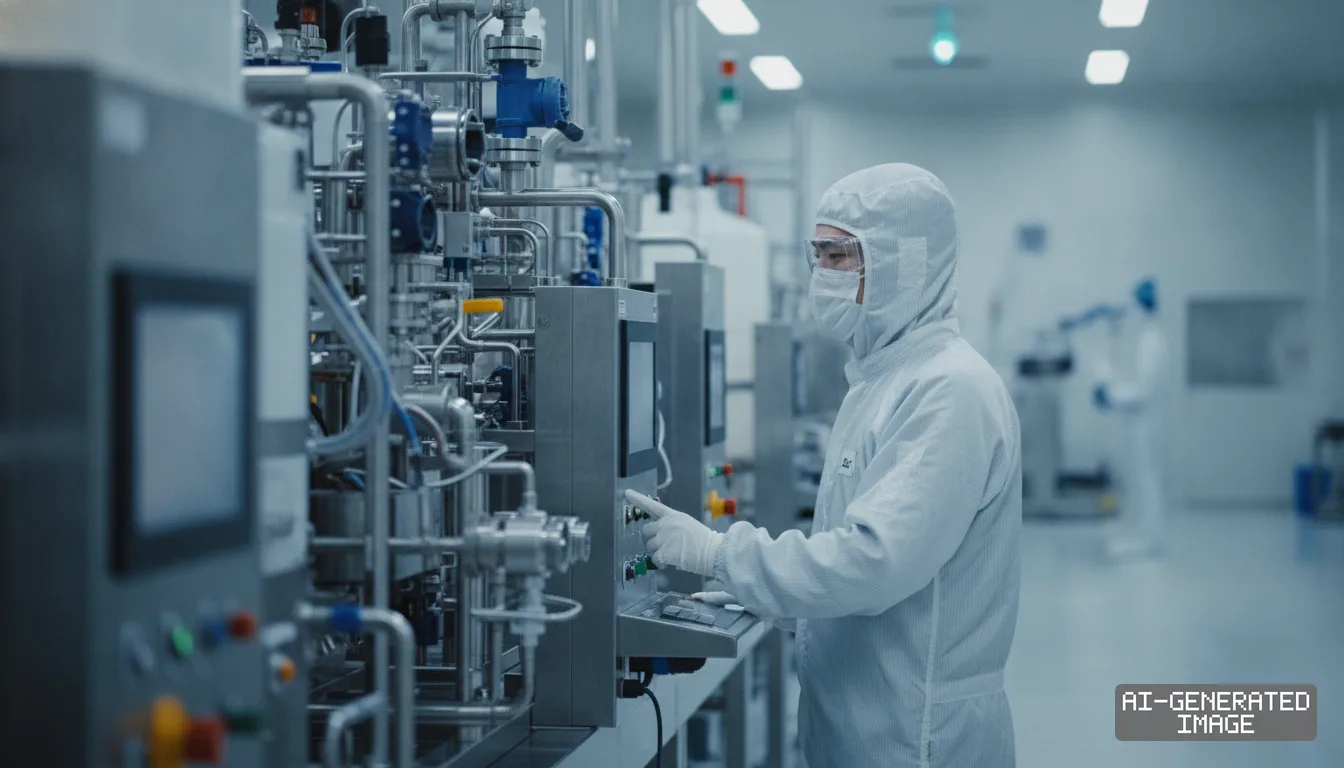
Dongjin Semichem reported Nov. 3, 2026, in its preliminary earnings filing that it completed divesting a 70% stake in its Chinese display unit for $134.1 million to fund semiconductor photoresists.
The transaction removes nine operating subsidiaries across China from consolidated financial statements, according to the regulatory disclosure. Dongjin Semichem transferred those manufacturing operations into a Shanghai-based holding company before selling the controlling equity to an industrial consortium.
The divestment lifted third-quarter net profit by 387.2% year-on-year to 112.92 billion won ($82.1 million), the company said in the filing. Proceeds will fund domestic photoresist manufacturing and advanced lithography facilities, reallocating capital away from commoditized display chemicals.
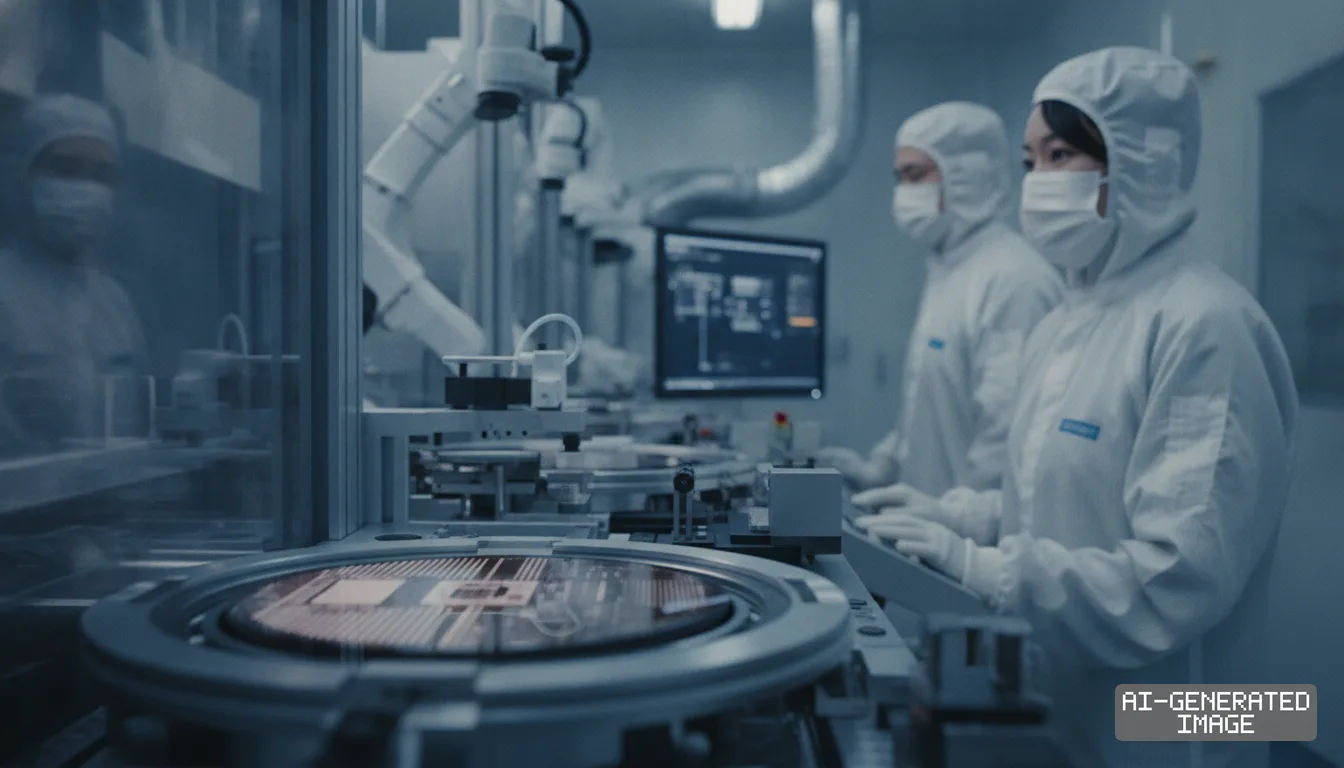
Photoresists are light-sensitive chemical formulations used to print microscopic circuit patterns onto silicon wafers during photolithography. South Korean chemical makers have accelerated capital reallocation as Chinese domestic panel makers increasingly localize standard display thinners and etchants.
South Korean specialty chemical producers face declining margins across mainland panel manufacturing clusters. Chinese display makers such as BOE Technology Group and TCL CSOT have aggressively expanded domestic procurement, prioritizing local suppliers for standard process wet chemicals.
Local suppliers in China have increased domestic market share in basic electronic materials, including strippers and thinners. That domestic shift compressed operating margins on commoditized display products, prompting South Korean chemical producers to trim peripheral assets.
Dongjin Semichem and its Hong Kong arm, Dongjin Global Holdings, established the Shanghai special-purpose vehicle in June by contributing their operating equity. The corporate restructuring consolidated regional production plants into a single entity prior to the stake sale.
Dongjin Semichem retained a 30% minority interest in the Shanghai holding entity, according to the filing. The company and Dongjin Global Holdings will determine at a later date whether to retain or divest the remaining equity.
The company originally agreed in August 2025 to sell the equity to investment funds managed by Qingdao Dongjia Industrial Investment Group. Dongjin Semichem amended the agreement in February, substituting Hefei Xin Dongjin New Materials Technology Co. as the acquiring entity.
Hefei Xin Dongjin operates as an investment consortium established by Chuxin Gongchuang Holding Group and Hanbo High-Tech Materials. The revised purchase agreement preserved the original transaction value of 195.5 billion won ($134.1 million), the company said.
The transaction formally closed on July 31, removing nine operating units from consolidated reporting. The deconsolidated businesses include manufacturing and distribution facilities in Beijing, Chengdu, Chongqing, Erdos, Fuzhou, Hefei, Qidong, Sichuan and Wuhan, the filing confirmed.
Dongjin Semichem redirected proceeds into high-margin semiconductor photolithography formulations. The chemical group supplies advanced formulations across memory and logic nodes, seeking to widen its domestic market share against foreign chemical conglomerates.
South Korean chipmakers accelerated domestic chemical adoption after Japan restricted exports of extreme ultraviolet photoresist and high-purity hydrogen fluoride in 2019. The export curbs prompted government-backed localization initiatives to shield domestic memory and foundry lines from external supply shocks.
Dongjin Semichem became the first domestic chemical producer to commercialize extreme ultraviolet photoresists, passing qualification testing on Samsung Electronics manufacturing lines. The supplier provides lithography solutions for advanced foundry production, where sub-7-nanometer patterning requires short-wavelength extreme ultraviolet light sources.
The chemical supplier also maintains an extensive market share in thick krypton fluoride photoresists used in 3D NAND flash memory production. Memory makers require specialized thick resist layers to etch high-aspect-ratio vertical channel holes through hundreds of stacked memory cells.
The strategic shift directly influences upstream fine chemical suppliers. Samyang NC Chem produces photoresist polymers and photo acid generators that represent between 70% and 80% of photoresist raw material costs, drawing roughly 67% of total revenue from lithography materials.
Dongjin Semichem has also conducted joint development programs with SK hynix to evaluate domestic photoresist formulations. The memory producer aims to diversify sourcing for high-density storage and advanced memory packaging across its domestic fabrication sites.
Japanese specialty chemical manufacturers maintain dominant control over advanced semiconductor lithography chemicals. Tokyo Ohka Kogyo, JSR and Shin-Etsu Chemical control more than 70% of global advanced photoresist supply, maintaining strong relationships with leading semiconductor foundries worldwide.
Tokyo Ohka Kogyo responded to Korean localization initiatives by investing 20 billion yen ($130 million) in a domestic photoresist manufacturing facility in South Korea. The overseas production base allows the Japanese material leader to supply Samsung Electronics directly from local lines.
Dongjin Semichem has matched client geographic diversification by deploying capital into North American manufacturing infrastructure. The company completed a chemical facility in Killeen, Texas, receiving federal approval in September to operate as a foreign-trade zone supplying semiconductor-grade thinners.
The divestment process remains partially incomplete as one regional operation remains under negotiation. Dongjin Semichem has conducted separate talks to divest its remaining 70% stake in Huizhou Dongjin for a target valuation of $39.9 million, according to the filing notes.
The preliminary filing does not disclose the standalone disposal gain from the Shanghai entity or the final closing date for the Huizhou sale. Regulatory disclosures also omit the exact timing for any future sale of the remaining 30% stake.
Dongjin Semichem will submit its fully audited third-quarter financial report to the Financial Supervisory Service on Nov. 14. Regulatory review of the Huizhou asset divestment continues through the fourth quarter.
Impact map
How this development propagates across the region and out to global buyers.
| Event | Korea | China | Japan | Global impact |
|---|---|---|---|---|
| Display divestment and photoresist pivot | Dongjin Semichem redirects $134.1M to advance EUV photoresists for Samsung and SK hynix | Hefei Xin Dongjin takes 70% of nine display material units to expand local panel supply | Tokyo Ohka Kogyo defends domestic market share with a 20 billion yen plant in South Korea | Semiconductor supply chains accelerate localization of advanced lithography chemicals |
| Display divestment and photoresist pivot | Dongjin Semichem redirects | — | — | — |
| Display divestment and photoresist pivot | Dongjin Semichem redirects $134.1M to advance EUV photoresists for Samsung and SK hynix | Hefei Xin Dongjin takes 70% of nine display material units to expand local panel supply | Tokyo Ohka Kogyo defends domestic market share with a 20 billion yen plant in South Korea | Semiconductor supply chains accelerate localization of advanced lithography chemicals |
In this story
- Companies
- Dongjin Semichem
- Tickers
- 005290.KQ
- Exposed
- Samsung ElectronicsSK hynixTokyo Ohka KogyoSamyang NC ChemHanbo High-Tech Materials
- Impact
- CapexSupply ChainPricing
Related briefings
- TOK completes $76M chip chemical plant in Pyeongtaek, Korea Also on Tokyo Ohka Kogyo, SK hynix, Samsung Electronics
- Japanese photoresist makers validate metal oxide resist lines for High-NA EUV chipmaking Also on Tokyo Ohka Kogyo, Samsung Electronics
- Japan METI backs $10 billion US chip project with toolmakers Also on Tokyo Ohka Kogyo
- Korea chip exports reach $56.4B as AI hardware demand surges Also on SK hynix, Samsung Electronics, Pricing
Sources
Reporting
Confidence: medium — how we grade this
The documents behind this briefing are linked above. East Asia Brief produces its English text with AI assistance under human editorial review, and does not translate or republish other outlets' articles. See our methodology and AI policy. Spotted an error? Tell us.
The Morning Brief
What changed in Korean, Chinese and Japanese industry overnight — and what it means for your supply chain. One email, weekday mornings, US time. Free.
The Morning Brief is in preparation. Leave your address and we will write to you once — when the first issue is ready. Nothing before that.