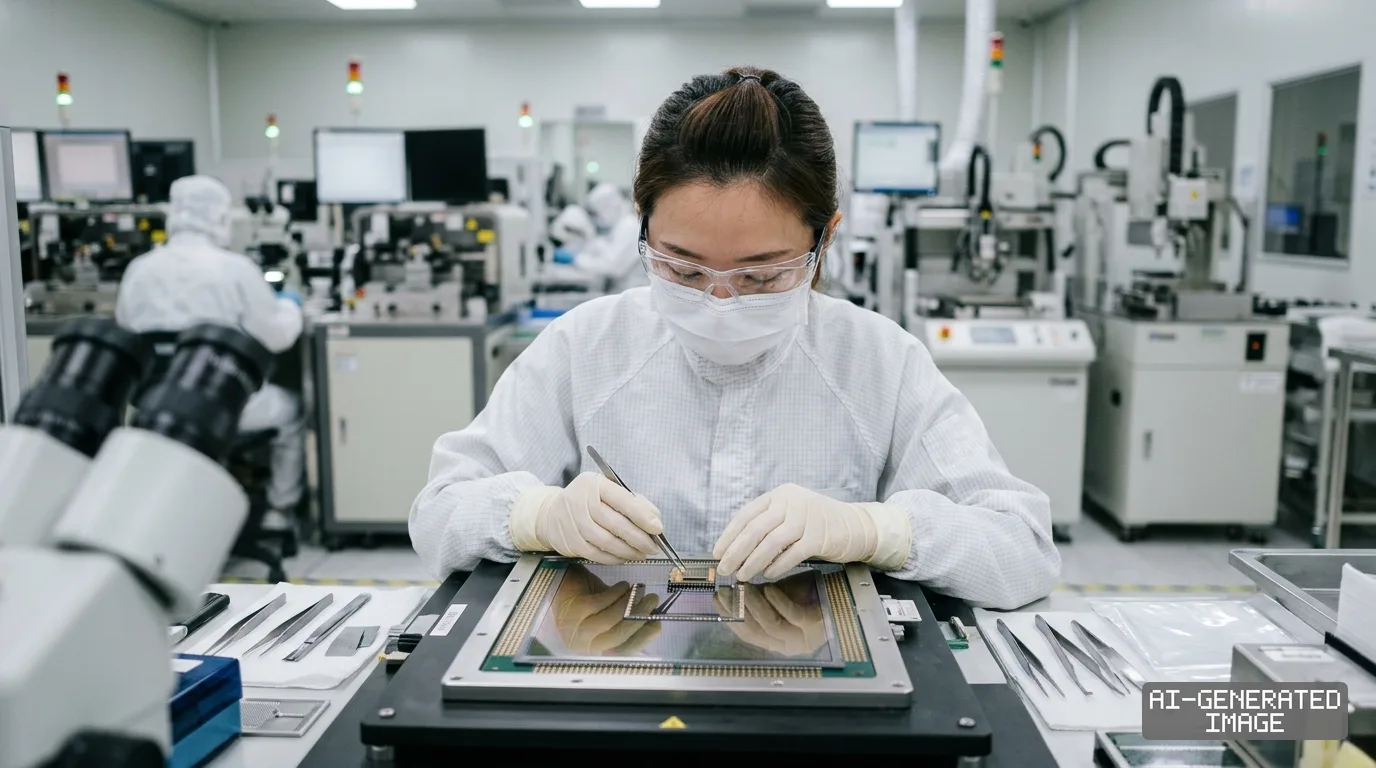
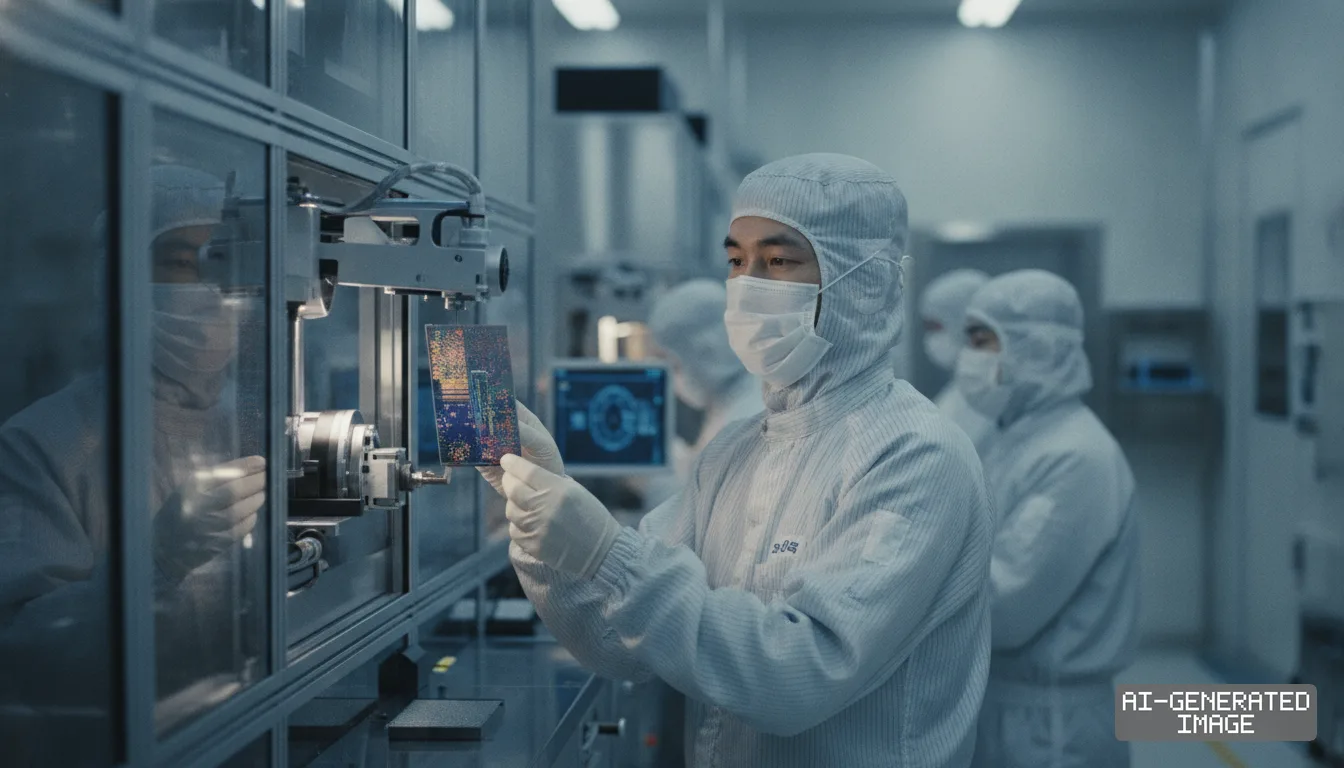
Korea chip exports reach $56.4B as AI hardware demand surges
Shipments grew 259% to drive total South Korean monthly exports to $115.3 billion, putting full-year trade on track to pass $1 trillion.
South Korea's Ministry of Trade, Industry and Energy reported Nov. 1, 2026 that national semiconductor exports surged 259.4% year-over-year in October to reach $56.44 billion.
The chip total accounted for 49.0% of the country's overall outbound deliveries. That intake pushed aggregate monthly exports to $115.28 billion, marking an increase of 93.7% from a year earlier.
October recorded the second-highest monthly export performance in South Korean trade history, trailing only September's $121.1 billion. The national trade surplus reached $42.5 billion as imports climbed 36.0% to $72.78 billion.
Shipments of computers and peripheral devices surged 496.6% year-over-year to $5.85 billion. The ministry attributed the increase to intense procurement of enterprise solid-state drives used in artificial intelligence data center clusters.
The sharp growth reflects sustained orders for high-bandwidth memory and high-capacity storage modules from overseas server operators. Global cloud infrastructure providers continued to expand capital spending on advanced computing hardware during the third quarter.
SK hynix posted confirmed third-quarter revenue of 104.62 trillion won ($75 billion) on Oct. 27, crossing the 100-trillion-won mark for the first time. The figure represents a 327.9% increase from the prior year.
Operating profit at SK hynix surged 632.1% year-over-year to 83.33 trillion won, the company said in its earnings release. The performance generated an operating profit margin of 79.7% across the July-September period.
The chipmaker said long-term supply agreements with 14 global technology clients have committed its dynamic random-access memory and high-bandwidth memory capacity through 2029. Management projected structural supply shortages to persist through 2030.
SK hynix expanded shipments of fourth-generation high-bandwidth memory while server double data rate five DRAM deliveries rose over 40%, the company said. Tight market conditions also lifted average selling prices for commodity NAND flash memory.
To support capital expenditure, SK hynix signed a 2 trillion won ($1.45 billion) export supply chain guarantee facility on Oct. 19. The program partners the memory manufacturer with the ministry and the Korea Trade Insurance Corporation.
Commercial lenders will provide financing under the facility to support equipment procurement for the Trinity fabrication plant. The facility is under development at the Yongin semiconductor cluster in Gyeonggi Province.
Cumulative South Korean outbound shipments surpassed $930 billion across the first 10 months of 2026, setting a record pace. The volume stands as the highest cumulative total ever recorded by the ministry for that timeframe.
The trade ministry projected that full-year national exports will pass $1 trillion before the end of November if current shipment momentum holds. Reaching that volume would mark the first trillion-dollar trade year in South Korean history.
The ministry report carries preliminary customs clearance figures through Oct. 31, and the Korea Customs Service has not published finalized monthly trade statistics. The government document does not disclose Samsung Electronics' specific October high-bandwidth memory export volume.
Commercial foundries and component suppliers in East Asia remain closely tied to these delivery schedules. Advanced packaging facilities in South Korea and regional materials suppliers continue to allocate manufacturing slots against long-term multi-year customer commitments.
Impact map
How this development propagates across the region and out to global buyers.
| Event | Korea | China | Japan | Global impact |
|---|---|---|---|---|
| AI memory export surge | SK hynix captures high-margin HBM demand, fab capex backed by 2 trillion won facility | domestic memory makers face widened density gap in enterprise AI accelerators | Tokyo Electron and materials vendors book steady orders for high-stack packaging | hyperscaler data center buildouts absorb premium server memory through 2029 |
| AI memory export surge | SK hynix captures high-margin HBM demand, fab capex backed by 2 trillion won facility | domestic memory makers face widened density gap in enterprise AI accelerators | Tokyo Electron and materials vendors book steady orders for high-stack packaging | hyperscaler data center buildouts absorb premium server memory through 2029 |
In this story
- Companies
- SK hynix
- Tickers
- 000660.KS
- Exposed
- Samsung Electronics
- Policy
- Subsidies
- Impact
- Supply ChainCapexPricing
Track every Subsidies development →
Related briefings
- Solidigm weighs $45B US NAND plant as AI SSD demand surges Also on SK hynix, Samsung Electronics, Pricing
- China semiconductor exports surge 136% to $45 billion on AI pricing Also on SK hynix, Samsung Electronics, Pricing
- Micron Cuts DRAM Lead of SK hynix to One Point on HBM Demand Also on SK hynix, Samsung Electronics, Pricing
- TOK completes $76M chip chemical plant in Pyeongtaek, Korea Also on SK hynix, Samsung Electronics, Pricing
Sources
Primary documents
Reporting
Confidence: high — how we grade this
The documents behind this briefing are linked above. East Asia Brief produces its English text with AI assistance under human editorial review, and does not translate or republish other outlets' articles. See our methodology and AI policy. Spotted an error? Tell us.
The Morning Brief
What changed in Korean, Chinese and Japanese industry overnight — and what it means for your supply chain. One email, weekday mornings, US time. Free.
The Morning Brief is in preparation. Leave your address and we will write to you once — when the first issue is ready. Nothing before that.