TOK completes $76M chip chemical plant in Pyeongtaek, Korea
The Japanese supplier built the high-purity chemical facility to serve Samsung and SK hynix directly, with commercial operations scheduled to begin in the first half of 2027.
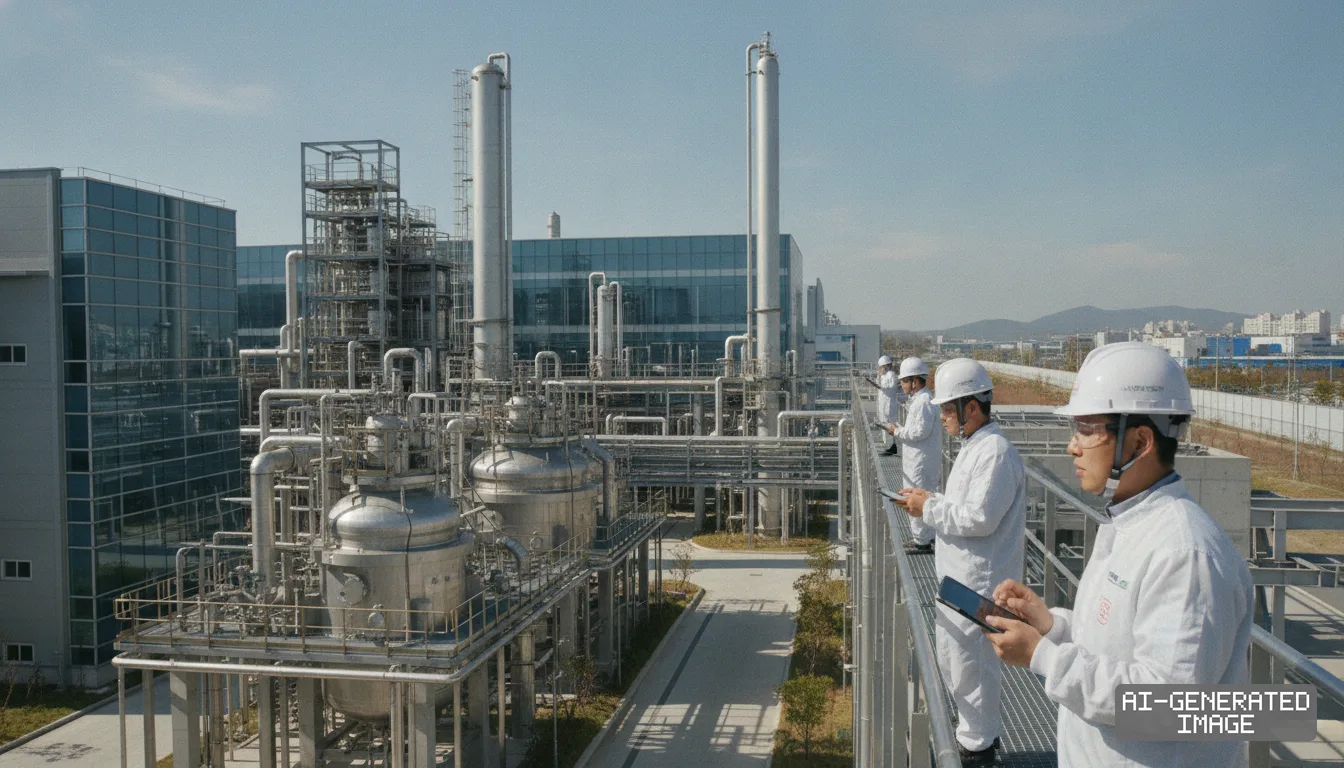
Tokyo Ohka Kogyo completed construction of its 101 billion won ($76 million) semiconductor chemical plant in Pyeongtaek, South Korea, on Sept. 15, 2026, confirming site completion filings on Sept. 17.
The facility marks the Japanese materials supplier's second manufacturing site in South Korea. The complex occupies 55,560 square meters in the Poseung district of the Gyeonggi Free Economic Zone, the company said.
Tokyo Ohka Kogyo carried out the investment through its Korean operating arm, TOK Advanced Materials. The budget includes 70.6 billion won ($53 million) in foreign direct investment, according to the regional economic zone authority.
The completed Phase 1 structure covers roughly 6,300 square meters of total floor area. It includes a high-purity chemical production building, hazardous materials storage warehouses and ancillary support facilities, TOK said in a regulatory disclosure.
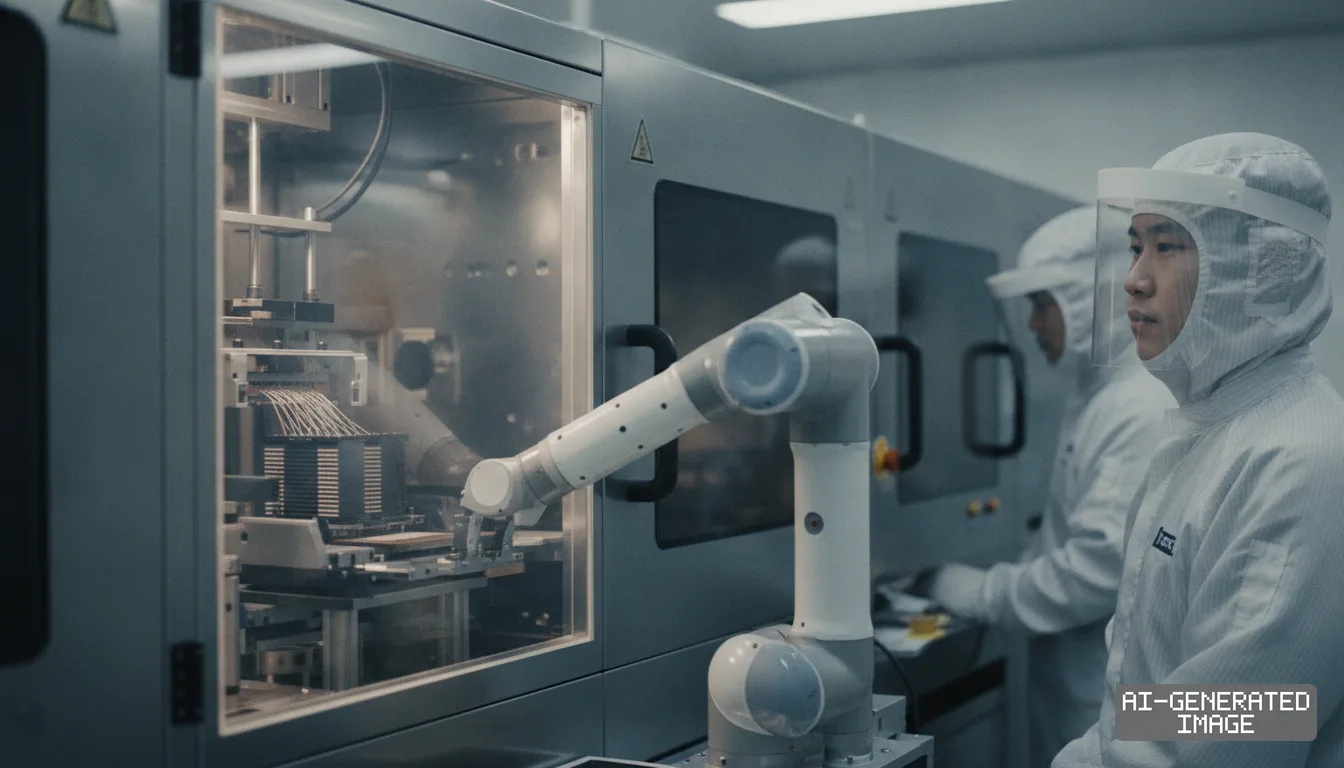
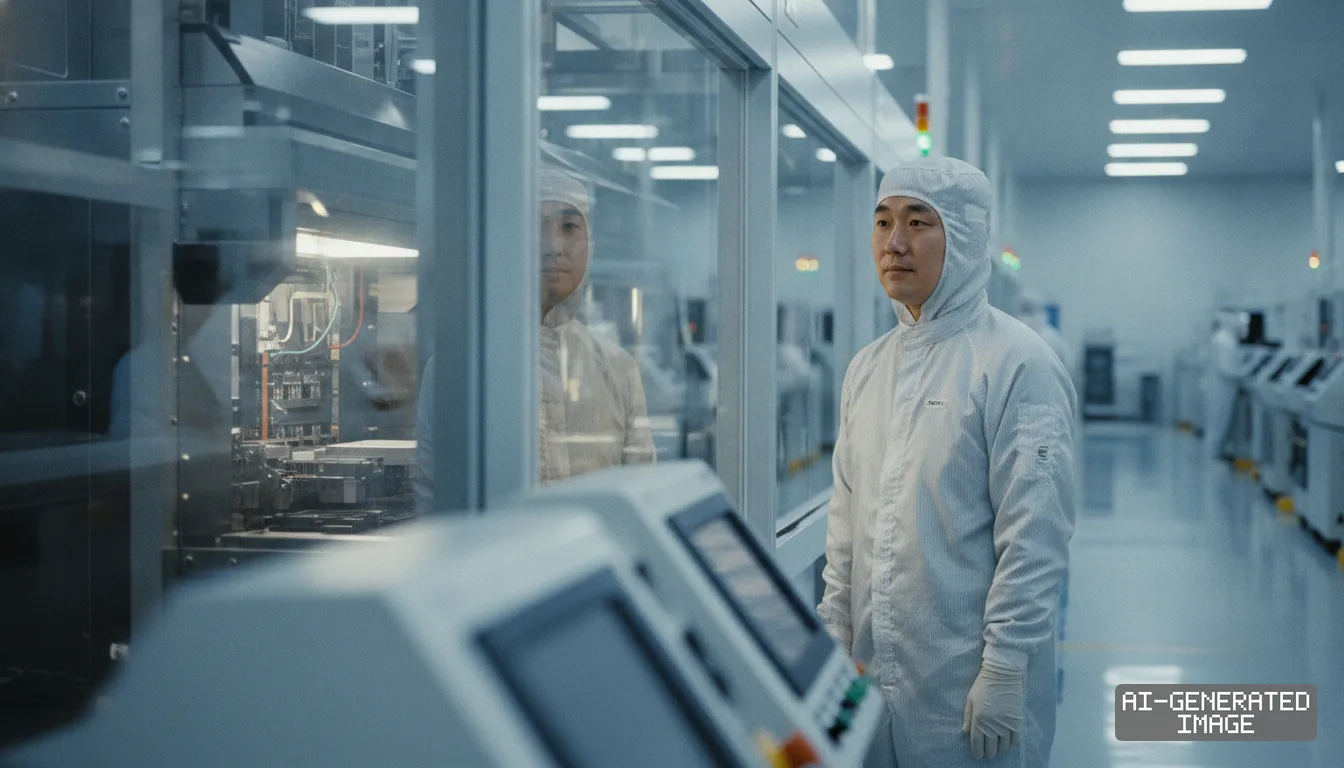
Cleanrooms inside the production unit meet particle-free specifications required for sub-2-nanometer wafer processing. The lines will synthesize and purify high-purity process chemicals essential for semiconductor manufacturing, the company said.
Commercial operations at the Pyeongtaek site are scheduled to begin in the first half of 2027. The project will create approximately 70 engineering and manufacturing jobs, according to the Gyeonggi Free Economic Zone Authority.
TOK uses a local-production model to supply semiconductor chemical materials from plants situated near client fabrication lines. Operating nearby eliminates long maritime shipping routes and limits batch degradation during transit, the company said.
The Pyeongtaek facility is positioned near Samsung Electronics' primary memory and foundry manufacturing campus. The site also provides highway access to SK hynix memory production complexes in Icheon and Cheongju, regional officials said.
South Korea generates a significant portion of TOK's global semiconductor chemical and lithography revenue. Korean customer shipments generated 12.5% of the company's consolidated net sales during fiscal 2022, according to corporate financial reports.
The capital outlay falls under the company's medium-term business strategy, designated tok Medium-Term Plan 2027. The framework directs capital toward resilient regional supply chains across major global chipmaking hubs, the company said.
Under that multiyear program, TOK earmarked over 60 billion yen ($450 million) for worldwide facility additions. The capital program targets growing customer wafer starts across South Korea, Taiwan, Japan and the United States, according to investor filings.
TOK established TOK Advanced Materials in Incheon in 2012 as an initial base for domestic photoresist development. The Incheon site previously handled all Korean production and technical support for advanced lithography materials, the company said.
The company also expanded its Incheon campus in late 2023 with a dedicated semiconductor material inspection building. That facility was built to accelerate batch quality verification for domestic chipmakers before delivery, according to corporate disclosures.
The Pyeongtaek project developed from a memorandum of understanding signed in April 2023. Gyeonggi Free Economic Zone Authority officials met TOK leadership at the company's Kawasaki headquarters in Japan to finalize terms, the agency said.
TOK approved the land acquisition in Pyeongtaek on Feb. 13, 2024. The subsidiary broke ground on the Poseung parcel on Aug. 20, 2025, taking 13 months to finish Phase 1 construction, according to public records.
The initial phase produces high-purity chemical agents rather than light-sensitive photoresists. TOK plans to build photoresist synthesis lines at the Pyeongtaek parcel in subsequent development phases, the economic authority said.
Photoresists are light-sensitive polymeric solutions applied to silicon wafers to transfer circuit layouts during optical lithography. The materials are critical for extreme ultraviolet lithography used in advanced logic chips and high-bandwidth memory, engineers said.
Korean device manufacturers have sought diversified domestic sourcing for photoresists and specialty chemicals since 2019 Japanese trade curbs. Establishing domestic production reduces vulnerability to border trade friction and shipping disruptions, industry officials said.
Provincial authorities designated the Poseung zone as an industrial gateway linking chemical suppliers with major semiconductor clusters. The regional master plan integrates manufacturing campuses across Pyeongtaek, Yongin, Icheon, Hwaseong and Anseong, the agency said.
Gyeonggi Free Economic Zone Authority Commissioner Kim Neung-sik attended the completion ceremony on Sept. 15 alongside Pyeongtaek Mayor Choi Won-yong. TOK President Noriaki Taneichi and TOK Advanced Materials President Kim Ki-tae joined the event, the agency said.
The official announcements do not state whether the Pyeongtaek complex will manufacture photomask materials like blank masks. TOK also has not published an equipment installation schedule or breaking date for the planned photoresist lines.
Process equipment hookup and cleanroom certification will run through the remainder of 2026. Commercial product shipments from the Phase 1 line will begin arriving at customer cleanrooms before the end of June 2027, the company said.
Impact map
How this development propagates across the region and out to global buyers.
| Event | Korea | China | Japan | Global impact |
|---|---|---|---|---|
| TOK Pyeongtaek chemical plant completion | Samsung and SK hynix gain local high-purity chemical supply by H1 2027 | No exposure, facility dedicated to South Korean wafer fab corridors | TOK deploys 12 billion yen to anchor 12.5% revenue exposure in South Korea | Cuts international chemical shipping lead times for advanced memory and logic |
In this story
- Companies
- Tokyo Ohka KogyoTOK Advanced Materials
- Tickers
- 4186.T
- Exposed
- Samsung ElectronicsSK hynix
- Policy
- Economic SecuritySubsidies
- Impact
- Supply ChainCapexPricing
Track every Economic Security development → Track every Subsidies development →
Related briefings
- Japanese photoresist makers validate metal oxide resist lines for High-NA EUV chipmaking Also on Tokyo Ohka Kogyo, Samsung Electronics
- Kioxia Rejects SK hynix Flash Alliance to Guard SanDisk Ties Also on SK hynix, Samsung Electronics, Pricing
- CXMT beats SK hynix and Micron in DRAM margin at 87.59% gross rate Also on SK hynix, Samsung Electronics, Pricing
- Korea presses US for equal chip tariff terms as Lutnick warns of import levies Also on SK hynix, Samsung Electronics, Pricing
Sources
Primary documents
Reporting
Confidence: high — how we grade this
The documents behind this briefing are linked above. East Asia Brief produces its English text with AI assistance under human editorial review, and does not translate or republish other outlets' articles. See our methodology and AI policy. Spotted an error? Tell us.
The Morning Brief
What changed in Korean, Chinese and Japanese industry overnight — and what it means for your supply chain. One email, weekday mornings, US time. Free.
The first issue goes out shortly. Sign up now and you will not miss it.