Air Products commits record capital to South Korea chip fabs
The industrial gas supplier filed plans with Seoul on Sept. 4 to build dedicated Pyeongtaek facilities for Samsung Electronics, cementing lines for neon, hydrogen and nitrogen.
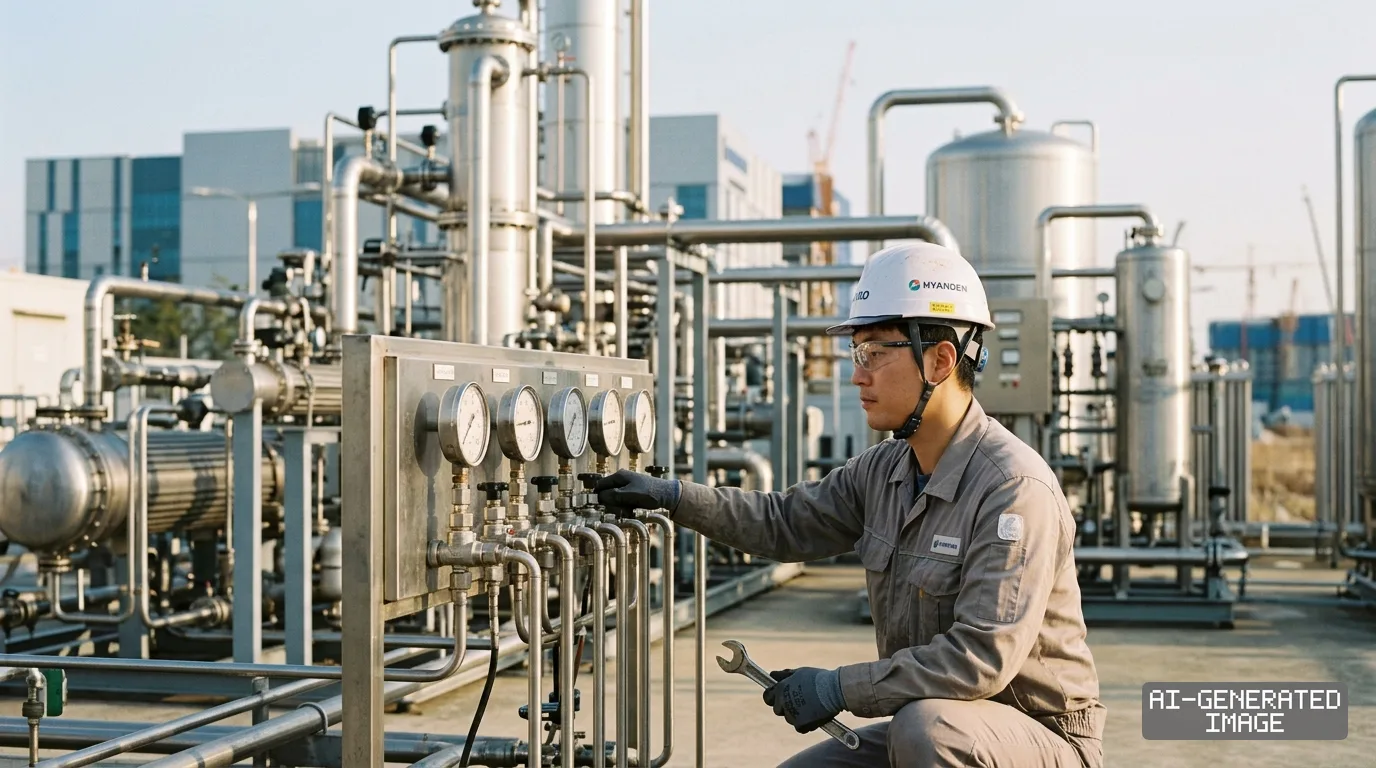
Air Products confirmed its largest-ever investment in South Korea on Sept. 4, filing plans with the government to build dedicated industrial gas facilities for Samsung Electronics in Pyeongtaek.
The Lehigh Valley-based supplier submitted its project during an investment declaration ceremony in Washington. Trade Minister Kim Jung-kwan announced the filing alongside commitments from three other American technology and energy corporations.
The combined foreign direct investment totaled $2.0 billion (2.8 trillion won), the Ministry of Trade, Industry and Energy said. The ministry did not disclose the specific capital figure for Air Products, citing commercial confidentiality.
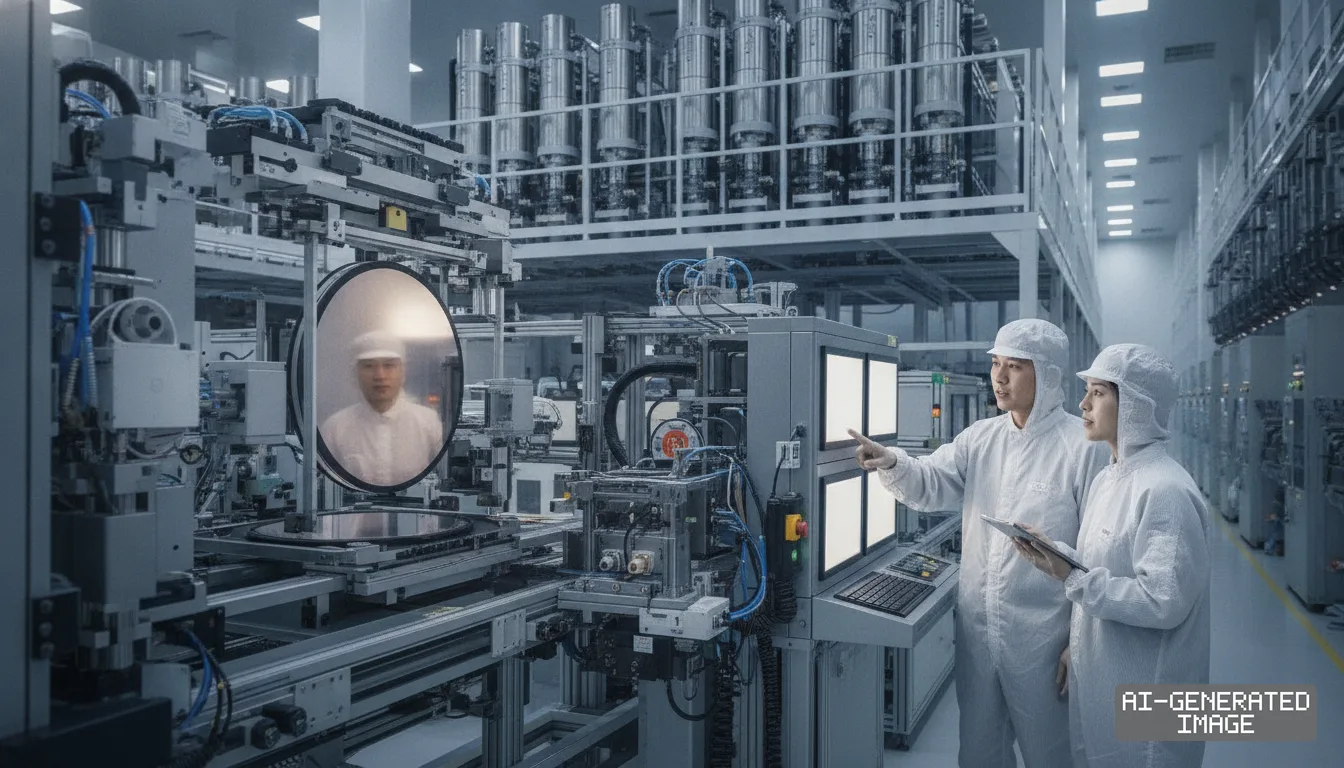
Under the filing, Air Products will construct ultra-high-purity gas production units in Pyeongtaek, Gyeonggi Province. The project includes new domestic infrastructure to separate and purify semiconductor rare gases, including neon, krypton and xenon.
The government filing formalizes an off-take agreement secured earlier this year. Air Products announced on April 29 that Samsung had chosen the company to supply industrial gases for a next-generation semiconductor fabrication plant.
The supplier will build, own and operate multiple production units and bulk distribution networks on site. The facilities will come onstream in phases between 2028 and 2030, the company said.
Once complete, the expansion will establish Pyeongtaek as Air Products' single largest operating site worldwide supporting the electronics sector. The industrial gas supplier has operated in South Korea for more than five decades.
Air Products will supply nitrogen, oxygen, argon and hydrogen directly through dedicated pipeline corridors. Pipelined gas delivery protects production lines against atmospheric contamination and eliminates transport bottlenecks associated with tanker trucks.
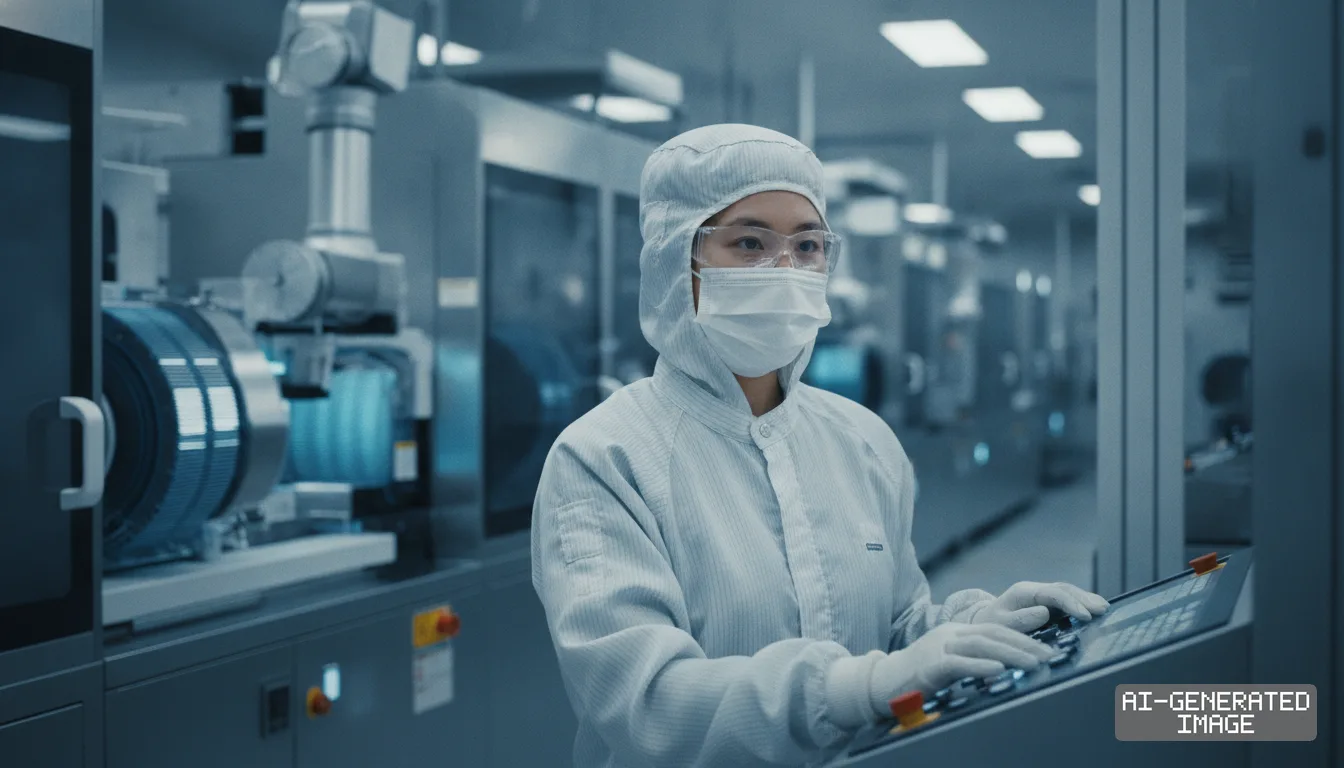
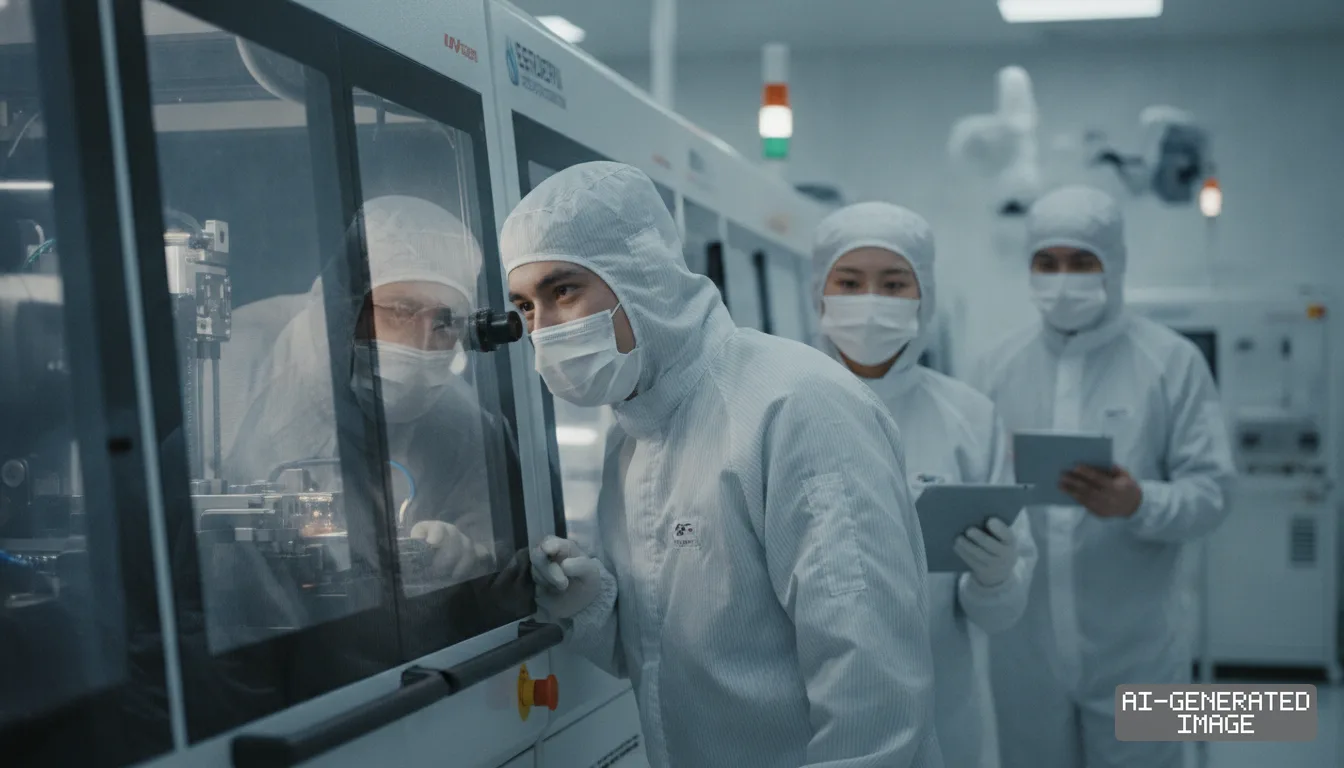
Semiconductor fabs require continuous flows of ultra-high-purity gases to maintain cleanroom environments. Nitrogen purges wafer chambers to prevent oxidation, while high-purity hydrogen serves as a reducing agent in advanced extreme ultraviolet lithography scanners.
Argon serves as an inert shielding agent in silicon crystallization and high-temperature wafer annealing. Extreme purity levels exceeding 99.999% are mandatory to prevent microscopic defects on advanced silicon wafers.
Rare gases fulfill specialized tasks during front-end wafer fabrication. Neon powers the excimer lasers used in deep ultraviolet lithography, while krypton and xenon enable high-aspect-ratio plasma etching for vertical memory cells in 3D NAND flash.
Domestic extraction facilities for rare gases protect domestic chipmakers against international logistics disruptions. South Korea pushed to localize noble gas refinement after global price shocks exposed supply vulnerabilities in 2022.
The confirmed expansion marks an operational shift from plans to exit the market. Air Products previously explored a divestment of its wholly owned subsidiary, Air Products Korea, which advisers valued at roughly 5.0 trillion won.
Sale manager Citigroup Global Markets halted the auction on Oct. 7, 2024, notifying prospective private equity bidders that the transaction was canceled. The process stalled after Samsung temporarily paused construction on its P5 line.
Activist hedge fund Mantle Ridge had also pressured Air Products management in late 2024 to curb speculative capital projects. The South Korean contract ensures direct returns tied to long-term commercial purchase commitments.
On-site industrial gas supply agreements in the semiconductor industry run for 15 to 20 years. Fabs cannot halt gas intake without ruining wafer batches, providing predictable cash flow for suppliers with established pipeline connections.
Samsung is expanding its Pyeongtaek fabrication lines to meet rising demand for advanced high-bandwidth memory. Producing multi-layer memory stacks requires higher chemical purity and larger gas volumes per finished wafer than legacy production processes.
Rival memory maker SK hynix is also expanding production capacity in Cheongju and Yongin. The simultaneous domestic fab projects have heightened competition among global gas producers to secure long-term utility supply corridors.
Three other American companies joined the Sept. 4 investment declaration in Washington. Semiconductor equipment specialist Axcelis Technologies committed capital to expand its ion implanter manufacturing and research operations in Pyeongtaek.
Corning pledged capital to upgrade its specialty display and glass substrate manufacturing lines in Asan. Energy developer Pacifico Energy registered investment for a 3.2-gigawatt offshore wind project in waters off Jindo.
The investment filings follow bilateral discussions regarding United States trade policy on advanced semiconductors. Trade Minister Kim told reporters in Washington that South Korea secured most-favored-nation treatment on sectoral semiconductor tariffs in October 2025.
The tariff provision ensures Korean chip exports receive terms equal to competing manufacturing jurisdictions. Seoul sought parity with conditions extended to Taiwan, where foundries secured tariff quotas linked to fab construction programs in the United States.
The Pyeongtaek project strengthens the company's position as a dedicated supplier to memory fabricators, Air Products Korea President SR Kim said when announcing the commercial agreement earlier this year.
Engineering work for the on-site gas separation plants is proceeding under local permits in Pyeongtaek. The first supply lines are scheduled to begin commercial gas deliveries to Samsung's new fab in 2028.
Impact map
How this development propagates across the region and out to global buyers.
| Event | Korea | China | Japan | Global impact |
|---|---|---|---|---|
| Industrial gas expansion | memory fab supply secured | no direct impact | equipment competition | rare gas supply stability |
In this story
- Companies
- Air ProductsSamsung Electronics
- Tickers
- APD005930.KS
- Exposed
- Axcelis TechnologiesCorningPacifico EnergySK hynix
- Policy
- SubsidiesTariffs
- Impact
- CapexSupply ChainOrder Book
Track every Subsidies development → Track every Tariffs development →
Related briefings
- US chip suppliers commit $2 billion to South Korea semiconductor supply chain Also on Air Products, Pacifico Energy, Axcelis Technologies
- Pacifico Energy commits $1 billion to South Korea offshore wind projects Also on Air Products, Pacifico Energy, Axcelis Technologies
- Axcelis Invests $35 Million in South Korea Equipment Plant Also on Axcelis Technologies, SK hynix, Samsung Electronics
- TSMC Arizona Fab Delivers 100 Million Chips for Apple Devices Also on Corning, Order Book, Subsidies
Sources
Reporting
Confidence: medium — how we grade this
The documents behind this briefing are linked above. East Asia Brief produces its English text with AI assistance under human editorial review, and does not translate or republish other outlets' articles. See our methodology and AI policy. Spotted an error? Tell us.
The Morning Brief
What changed in Korean, Chinese and Japanese industry overnight — and what it means for your supply chain. One email, weekday mornings, US time. Free.
The Morning Brief is in preparation. Leave your address and we will write to you once — when the first issue is ready. Nothing before that.