Pacifico Energy commits $1 billion to South Korea offshore wind projects
The 2.79-gigawatt investment off Jindo County will supply zero-carbon power to advanced manufacturing facilities and artificial intelligence data centers.
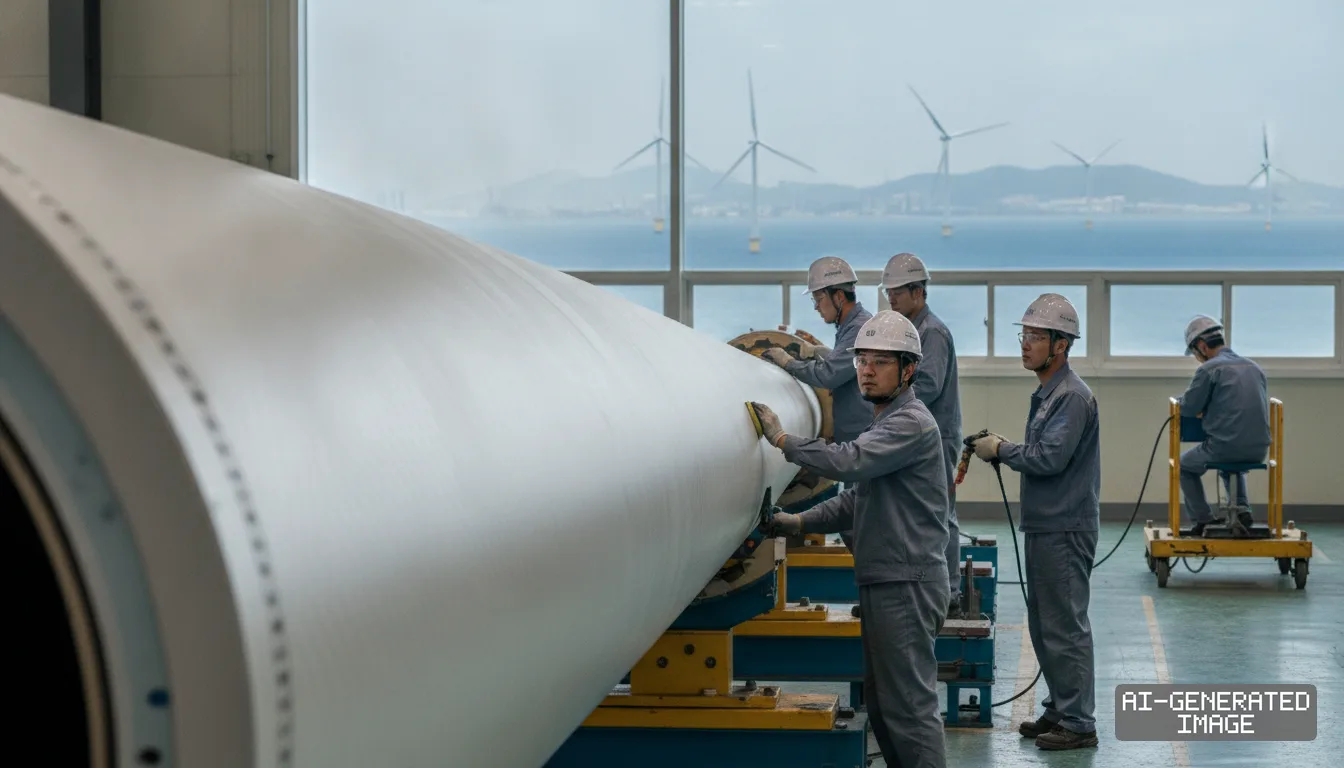
Pacifico Energy committed more than $1 billion to two offshore wind projects in South Korea on Sept. 4, targeting power supplies for regional semiconductor clusters and corporate clean energy mandates.
The renewable infrastructure developer filed the foreign direct investment declaration with South Korea's Ministry of Trade, Industry and Energy on Sept. 3 during an investor roundtable in Washington.
South Korean Trade Minister Kim Jung-kwan and Pacifico Energy Korea Country Manager Choi Seung-ho attended the ceremony at the Willard InterContinental Hotel.
The investment exceeds 1.2 trillion won ($1 billion or €861 million), according to corporate filings released Sept. 4. The capital will fund two offshore generation assets off the coast of Jindo County in South Jeolla Province.
The allocation covers the 990-megawatt Manho Offshore Wind project and the 1.8-gigawatt Jindo Baram Offshore Wind project. Together, the two assets represent 2.79 gigawatts of generation capacity.
Both assets form the second and third phases of the broader 3.2-gigawatt Jindo offshore wind cluster. Pacifico Energy is developing the cluster as one of the largest offshore wind complexes in the Asia-Pacific region.
The commitment follows an initial investment declaration for the first phase, the 420-megawatt Myeongnyang project, submitted to the trade ministry on June 26, 2024. Myeongnyang has obtained its electricity business license and completed a draft environmental impact assessment.
South Korea's government designated Pacifico Energy as the sole developer for the 2.13-gigawatt Jindo Offshore Wind Integrated Cluster Phase 2 on Aug. 20. Electricity business license applications for the Manho and Jindo Baram sites are under ministry review.
The complex will channel electricity toward advanced manufacturing zones planned for South Jeolla Province and the adjacent city of Gwangju. Target off-takers include planned semiconductor fabrication facilities and artificial intelligence data centers.
Global chipmakers operating in South Korea face pressure to meet clean energy targets under the RE100 initiative. The private corporate standard requires participating manufacturers to cover 100% of their electricity consumption with renewable power.
Domestic semiconductor producers have cited localized power deficits as a constraint on constructing advanced fabrication lines. The central government has introduced industrial incentives to encourage high-load factories to build near southern power generation hubs rather than the Seoul capital area.
Semiconductor exporters also need verified low-carbon power supplies to comply with corporate carbon accounting rules from international technology buyers. Offshore wind provides the primary utility-scale renewable alternative in South Korea because mountainous terrain restricts onshore solar deployment.
Pacifico Energy previously developed corporate-tied clean power assets in the United States. The company developed the 7.65-gigawatt Gigawatt Ranch complex, which Amazon acquired to supply power to hyperscale data centers.
To secure equipment and marine services, Pacifico Energy Korea signed cooperation agreements on July 8 with three regional manufacturers in the Gwangyang Bay industrial zone.
EEW KHPC agreed to manufacture and supply offshore foundation structures, including pin piles, from its production base in South Jeolla Province. The company specializes in heavy offshore pipe fabrication.
CS Energy agreed to produce primary structural subcomponents for the foundations. Marine contractor KMC Shipping will provide installation logistics, heavy maritime transport and dedicated service vessels.
The trade ministry packaged Pacifico Energy's filing within a wider $2 billion investment commitment signed Sept. 3 by four US corporations.
The other participants included Air Products, semiconductor equipment manufacturer Axcelis Technologies and materials maker Corning. All four projects focus on high-technology manufacturing supply chains.
Foreign clean energy developers in South Korea have routinely encountered permitting bottlenecks across multiple jurisdictions. Wind projects require maritime zoning approvals, defense radar evaluations and negotiated compensation pacts with local fishing cooperatives.
The direct participation of the trade ministry aims to compress administrative review cycles for critical power infrastructure. Central officials view private foreign capital as a tool to bridge capital expenditure gaps in regional grid development.
Transmission links from the Jindo projects will tie into the national high-voltage network operated by Korea Electric Power Corporation. Allocation of grid interconnection slots will determine the commercial operation schedule for the cluster.
The trade ministry's electricity regulatory commission is scheduled to complete its review of the electricity business licenses for the Manho and Jindo Baram projects before the end of 2026.
Impact map
How this development propagates across the region and out to global buyers.
| Event | Korea | China | Japan | Global impact |
|---|---|---|---|---|
| Offshore wind capital | power for semiconductor fabs | regional competition | supply chain alignment | clean corporate energy procurement |
In this story
- Companies
- Pacifico EnergyKorea Electric Power Corporation
- Tickers
- 015760.KS
- Exposed
- AmazonAir ProductsAxcelis TechnologiesCorning
- Policy
- SubsidiesEconomic Security
- Impact
- CapexSupply ChainOrder Book
Track every Subsidies development → Track every Economic Security development →
Related briefings
- Air Products commits record capital to South Korea chip fabs Also on Pacifico Energy, Air Products, Axcelis Technologies
- US chip suppliers commit $2 billion to South Korea semiconductor supply chain Also on Pacifico Energy, Air Products, Axcelis Technologies
- TSMC signals advanced packaging backup if Intel ramp delays hit AI chips Also on Amazon, Order Book
- TSMC Arizona Fab Delivers 100 Million Chips for Apple Devices Also on Corning, Order Book, Subsidies
Sources
Primary documents
Reporting
Confidence: high — how we grade this
The documents behind this briefing are linked above. East Asia Brief produces its English text with AI assistance under human editorial review, and does not translate or republish other outlets' articles. See our methodology and AI policy. Spotted an error? Tell us.
The Morning Brief
What changed in Korean, Chinese and Japanese industry overnight — and what it means for your supply chain. One email, weekday mornings, US time. Free.
The Morning Brief is in preparation. Leave your address and we will write to you once — when the first issue is ready. Nothing before that.