METI Pools Factory Machine Data to Train Physical AI Models
Tokyo coordinates with DMG Mori and Komatsu to assign unified IDs across 1,600 tools, targeting 100 terabytes of shop data to contest US and Chinese software dominance.
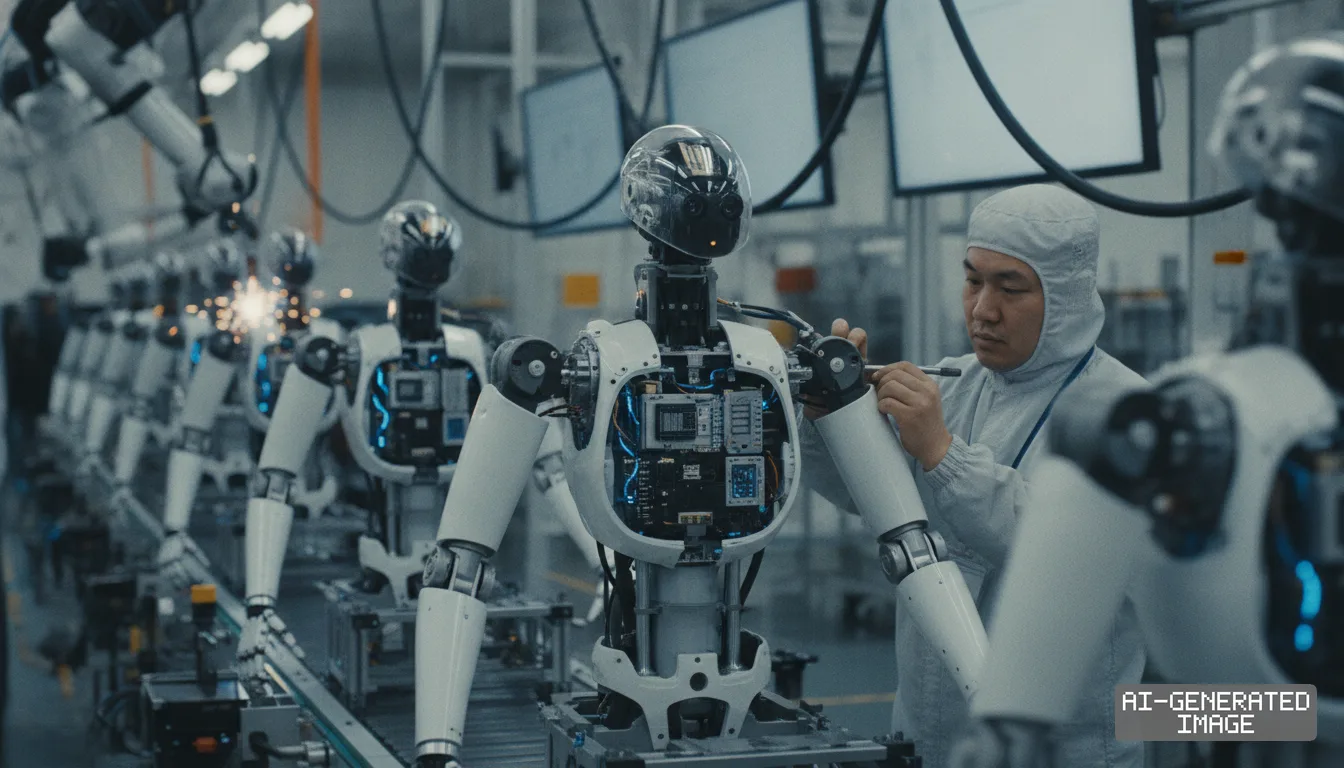
Japan's Ministry of Economy, Trade and Industry began coordinating with machine-tool builders on Sept. 20, 2026, to assign unified digital identifications across factory equipment. The common identifiers allow companies to share operational telemetry across corporate boundaries.
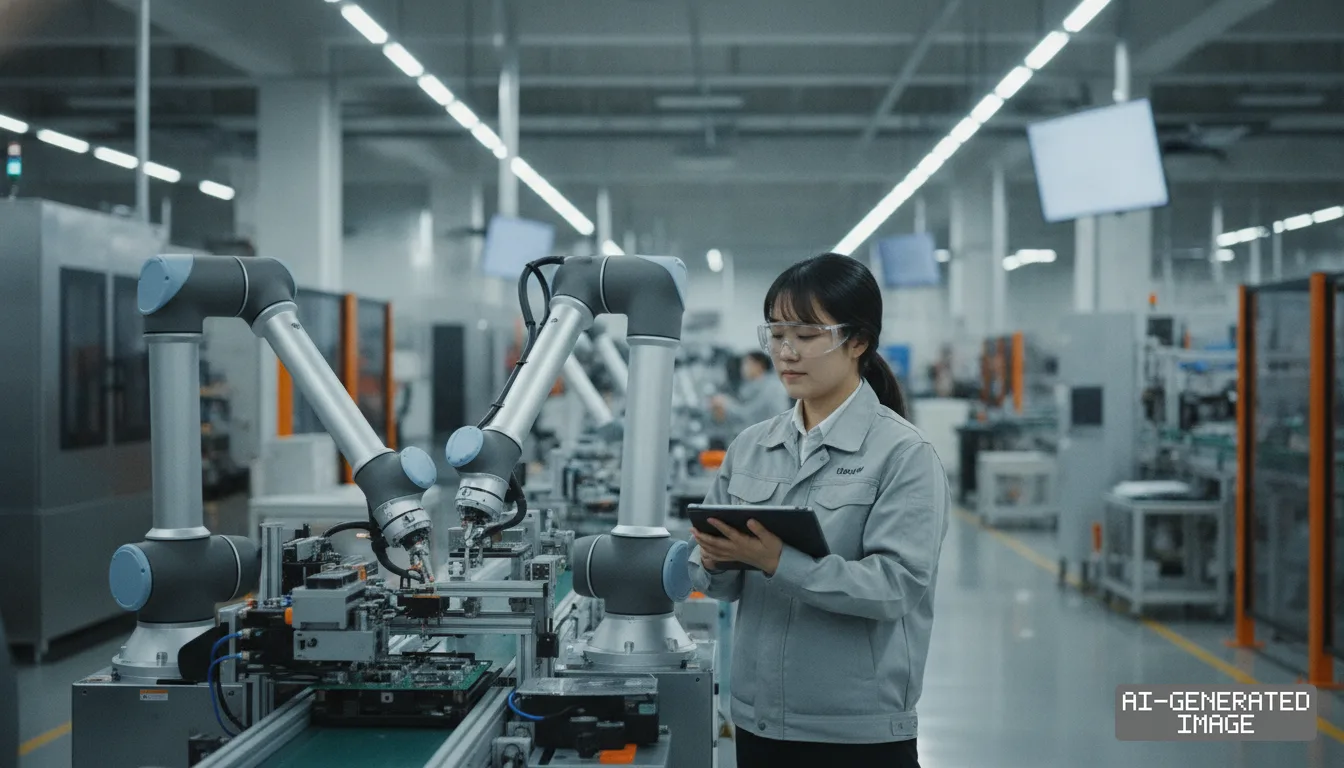
The initiative aims to link 1,600 industrial machines across roughly 100 suppliers during fiscal 2026. Participating plants will pool 100 terabytes of physical operating logs over two years to train autonomous manufacturing algorithms.
Tokyo wants domestic hardware leaders to build a unified physical artificial intelligence dataset. The program underpins Japan's target to capture over 30% of the ¥20 trillion ($135 billion) global AI robotics market by 2040.
Japan produces roughly 70% of the world's industrial robot mechanisms. However, domestic machinery builders risk losing value capture to American and Chinese software developers that dominate cloud-based foundation models.
The project operates under the Manufacturing AX Hub, an initiative established in July 2026 by the National Institute of Advanced Industrial Science and Technology. The public institute acts as a neutral clearinghouse that strips corporate secrets before aggregation.
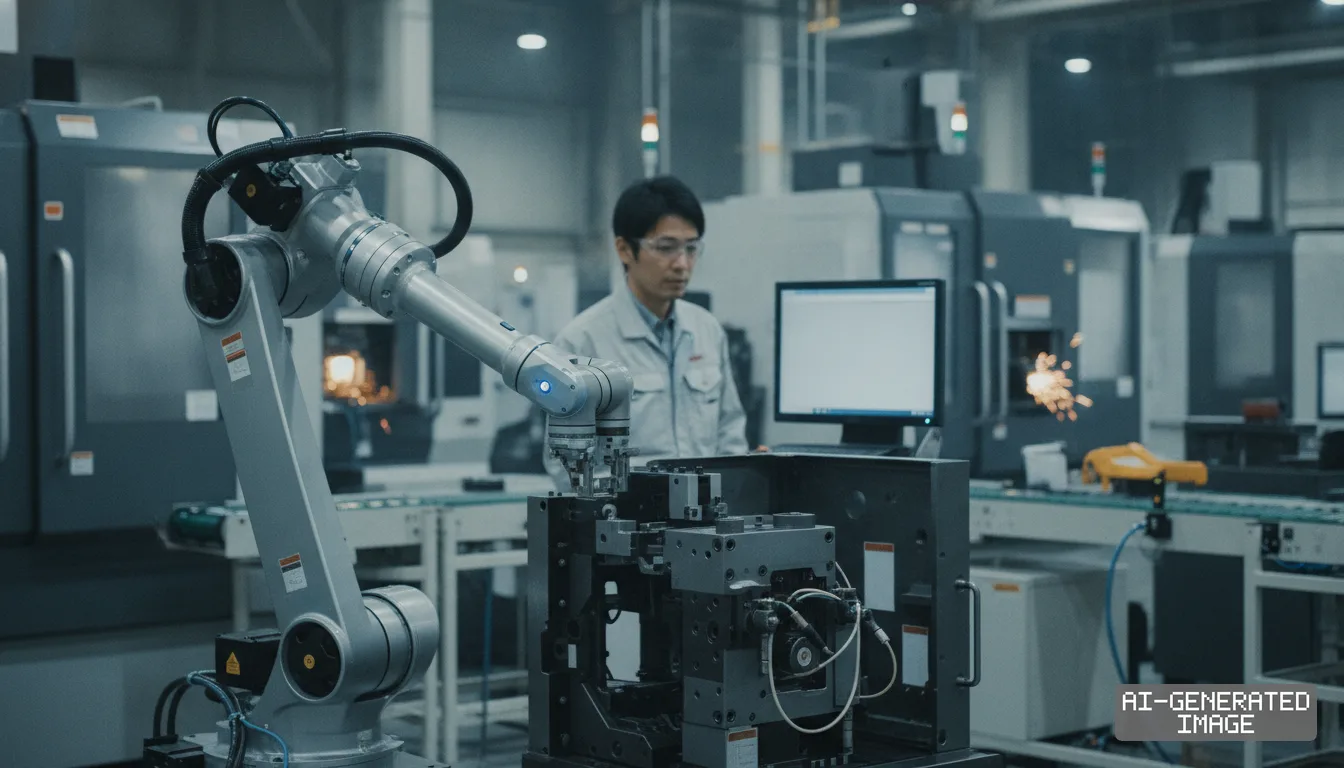
DMG Mori leads the machining consortium alongside software venture WALC and the state institute. The group pulls current, temperature and hydraulic pressure data from 1,000 machining centers via the CELOS Xchange cloud network.
Sensors sample machine status at frequencies up to one kilohertz. That granularity allows models to detect tool deflection, thermal expansion and microscopic chatter before finished parts fail quality inspections.
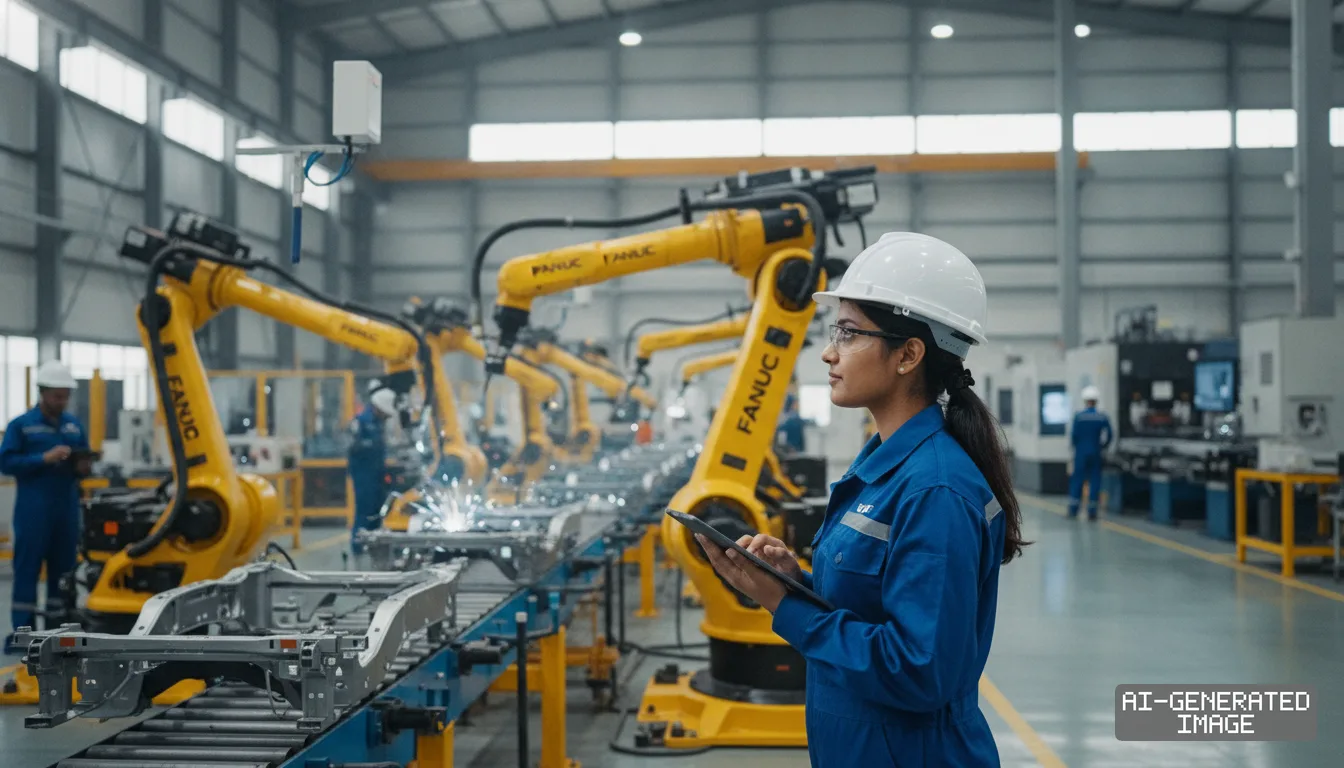
Komatsu anchors a second track focused on heavy assembly and production flow. The equipment builder connects its KOM-MICS platform, which operates across 2,000 vendor machines, to train autonomous scheduling software.
Scheduling algorithms balance tool wear, energy costs and delivery deadlines across multi-tier supplier networks. Komatsu shares dispatch records with the institute to optimize job routing across disparate vendor facilities.
A parallel private alliance led by Kanazawa software firm ALM begins joint development on Oct. 1, 2026. That four-year venture brings together 20 manufacturers to commercialize autonomous cutting machines.
Kyocera provides cutting logs from technical ceramics processing. Ceramics exhibit extreme hardness, making tool path configuration dependent on senior craftspeople whose retirement creates acute labor shortages.
Kobe Steel provides heavy casting and forging data from its machinery division. Large cast components generate irregular cutting resistance, requiring real-time motor torque adjustments that current numerical controllers cannot automate.
Nidec Machine Tool designs the physical machine chassis optimized for algorithmic tool control. Microsoft Japan supplies the cloud computing architecture to run the neural network training runs.
Japan faces a severe contraction in certified precision machinists. By converting manual machine offsets into digital weights, tool builders hope to automate multi-axis milling without human supervision.
Standardizing shop telemetry gives Japanese machine builders an edge that pure software firms cannot easily replicate. Raw physical data requires access to factory floors that foreign tech platforms do not operate.
Individual machine tools already feature serial numbers and proprietary protocols. The ministry framework introduces an overarching registry that maps tool performance across disparate computer numerical control architectures.
Data normalization removes competitive part designs while preserving physics variables like rotational inertia and feed-rate friction. Suppliers can contribute telemetry without revealing confidential component blueprints to rivals.
METI provides computing subsidies through the Generative AI Accelerator Challenge, known as GENIAC. The program guarantees high-performance graphics processor access to model builders handling heavy multi-modal factory streams.
Japanese policymakers treat physical AI as a critical export asset. Prime Minister Sanae Takaichi pledged public and private investments across strategic technology sectors to protect the domestic industrial base.
The trade ministry has not published formal rules governing model intellectual property or data usage royalties for independent third-party developers. Officials have also not settled liability allocations when an autonomous model causes spindle collisions.
The private consortium led by ALM and Kyocera formally begins corporate operations on Oct. 1, 2026. AIST plans to demonstrate initial production scheduling models with Komatsu by March 2027.
Impact map
How this development propagates across the region and out to global buyers.
| Event | Korea | China | Japan | Global impact |
|---|---|---|---|---|
| Japan factory machine ID and physical AI data pool | Precision CNC tool makers face widening autonomous software gap from Japanese hardware integration | Low-cost machine builders face competitive barrier in high-end autonomous machining algorithms | DMG Mori, Komatsu and tooling suppliers secure protected pipeline for manufacturing foundation models | Industrial equipment buyers face accelerated shift toward subscription-linked autonomous machine tools |
In this story
- Companies
- DMG MoriKomatsuKyoceraKobe SteelNidec
- Tickers
- 6141.T6301.T6971.T5406.T6594.T
- Exposed
- Microsoft
- Policy
- Economic SecuritySubsidies
- Impact
- Supply ChainOrder BookCost Structure
Track every Economic Security development → Track every Subsidies development →
Related briefings
- Nabtesco adapts cycloidal gearboxes for heavy logistics robots Also on Nidec, Order Book, Cost Structure
- Japan Tightens Laser Micromachining Screening Under Revised Dual-Use Export Rules Also on DMG Mori, Order Book
- AMD raises AI accelerator prices 10% on TSMC foundry costs Also on Microsoft, Cost Structure
- Kyocera opens 68 billion yen Nagasaki plant for AI chip packaging Also on Kyocera
Sources
Primary documents
Reporting
Confidence: high — how we grade this
The documents behind this briefing are linked above. East Asia Brief produces its English text with AI assistance under human editorial review, and does not translate or republish other outlets' articles. See our methodology and AI policy. Spotted an error? Tell us.
The Morning Brief
What changed in Korean, Chinese and Japanese industry overnight — and what it means for your supply chain. One email, weekday mornings, US time. Free.
The Morning Brief is in preparation. Leave your address and we will write to you once — when the first issue is ready. Nothing before that.