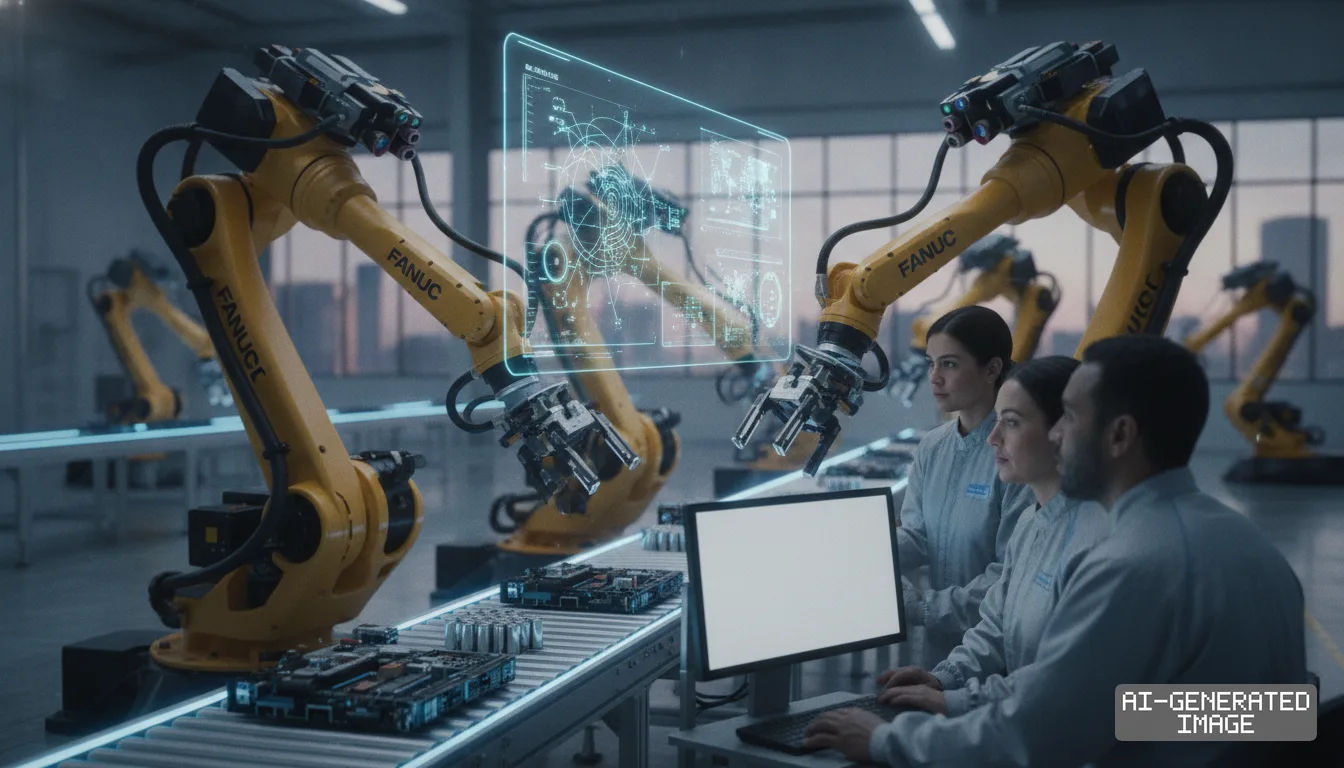
FANUC India links industrial robots to Niral Networks private 5G
The partnership validates an on-premises wireless architecture achieving 5.6-millisecond latency and 700 Mbps throughput across 300 automation integrators in Bangalore.
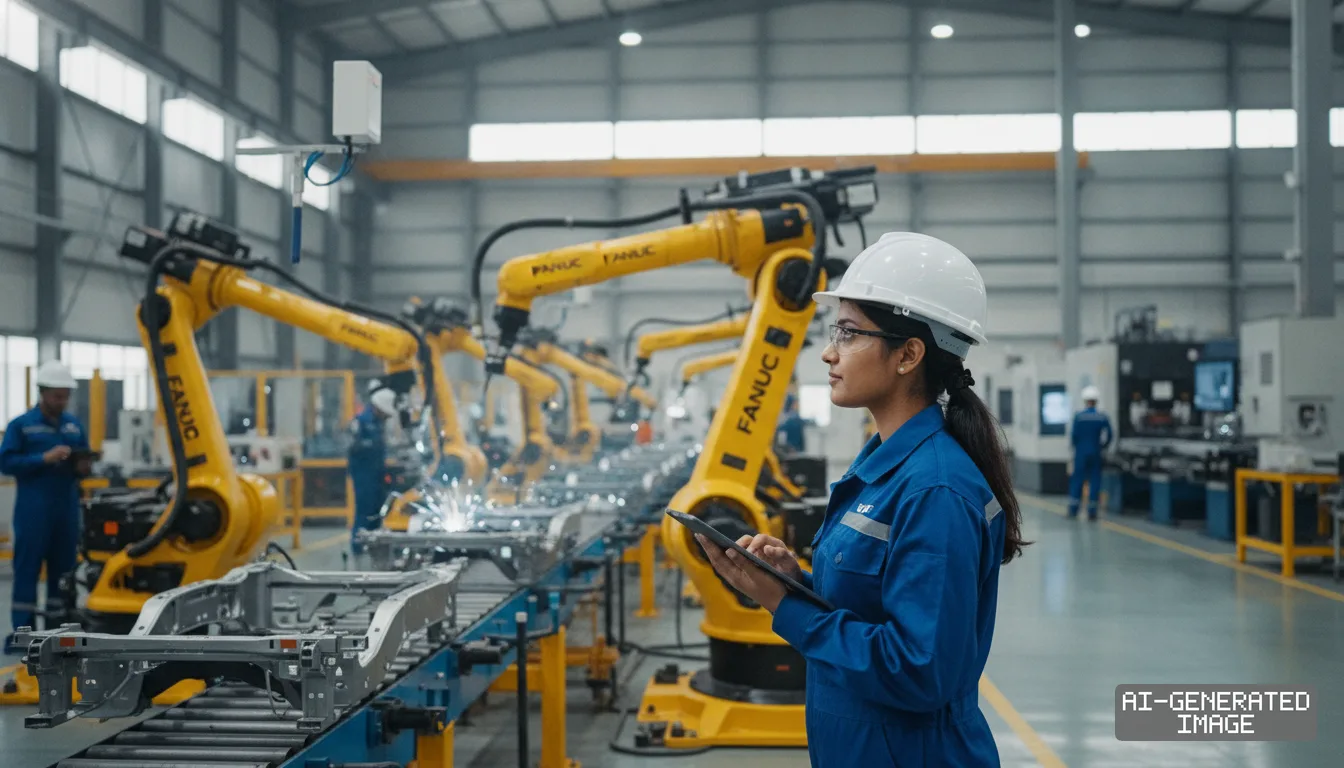
Niral Networks expanded its industrial robotics alliance with FANUC India on Sept. 18, 2026, deploying dedicated private 5G infrastructure to run automated shop-floor machinery without physical factory cabling.
FANUC India, the regional subsidiary of Japan's FANUC Corporation, supplies computer numerical control systems and industrial robots to automotive plants and machine tool builders across South Asia.
Validation testing at the Bangalore facility recorded end-to-end latency of roughly 5.6 milliseconds and throughput exceeding 700 megabits per second, maintaining 100% network uptime over an eight-hour continuous stress trial.
The trial marks the first verified deployment combining Indian private cellular software with Japanese robotic controllers on live manufacturing equipment without altering the robot's underlying operating software.
Industrial robot arms typically depend on heavy copper umbilical cords that run along articulated joints. Mechanical flex causes internal conductor fatigue, requiring routine replacement to avoid sudden production halts.
Wireless fidelity alternatives have struggled on automotive shop floors because electrical noise from resistance welders and heavy motors causes packet drops that trigger emergency mechanical brakes.
The private cellular architecture replaces physical local-area network drops with localized fifth-generation radio transmission. A customer premises equipment terminal mounted beside the robot controller handles all upstream communications.
Niral Networks developed its NiralOS 5G Core to process Ethernet packet data units natively. The protocol framework encapsulates PROFINET and EtherCAT control traffic without requiring intermediate translation hardware.
Deterministic packet scheduling ensures motion instructions reach multi-axis actuators within strict millisecond deadlines. That consistency prevents servo motor synchronization errors during high-speed pick-and-place or arc-welding operations.
The formal collaboration follows an engineering exhibition held Sept. 10 and 11, 2026 at FANUC's technology center in Bommasandra, Bangalore. The event drew over 300 industrial system integrators and prospective clients.
FANUC designated Niral Networks an approved ecosystem vendor during its Robot Accessory Partner Meet 2026. The status allows local integrators to bundle cellular equipment into turnkey automation proposals.
The companies previously demonstrated untethered arm movements at the NASSCOM Future Forge exhibition on Aug. 25, 2026. That presentation proved remote programmable logic controllers could dispatch machine routines over wireless links.
Automotive assembly lines represent the immediate commercial target for wireless robotic cells. Vehicle body shops frequently run 70 to 80 articulated robots connected by more than 5 kilometers of data cabling.
Model redesigns historically force plant engineers to spend weeks rerouting floor trays and testing harness continuity. Eliminating physical cables allows factory teams to reposition robotic pedestals within hours.
Bajaj Auto, one of India's largest two-wheeler manufacturers, participated in initial joint evaluations examining shop-floor connectivity limits. The company evaluated cellular replacement of rigid floor cabling across high-density robotic clusters.
India's Department of Telecommunications established guidelines allowing non-telecom enterprises to obtain direct spectrum permits for private networks. That regulatory shift allows factory operators to run closed cellular systems independently.
On-premises core deployments isolate sensitive manufacturing telemetry within factory security perimeters. Defense suppliers and precision electronics assemblers avoid routing intellectual property across external public mobile operator networks.
Japanese automation suppliers view India as an essential growth market as multinational manufacturers add secondary manufacturing locations outside China. Robot density in Indian factories remains well below global averages.
FANUC competes against European automation giants such as ABB and Kuka, alongside Japanese peers Yaskawa Electric and Kawasaki Heavy Industries. Rival manufacturers have begun their own private cellular automation pilots.
A competitive edge hinges on ecosystem readiness among regional engineering partners. India hosts thousands of small automation workshops that design custom fixtures and safety cages for tier-two automotive suppliers.
Providing system integrators with standardized wireless interfaces reduces on-site integration labor. Pre-validated communications modules lower engineering overhead for plants commissioning automated work cells across western and southern manufacturing clusters.
Electronics manufacturing services expanding under Indian production-linked incentive programs demand rapid line reconfigurations. Modular surface-mount assembly and automated inspection cells benefit from wireless control units that shift between production batches.
Commercial distribution of the joint cellular automation package will expand through regional integrator networks during the fourth quarter of 2026, following partner reviews scheduled for late October.
The notice does not state the commercial contract value, and FANUC Corporation has not published a Tokyo Stock Exchange disclosure detailing hardware sales commitments or software royalty arrangements.
Niral Networks and FANUC India initiated exploratory technical talks in 2024, completing bench simulations and joint whitepapers before validating hardware on production machinery in Karnataka.
Impact map
How this development propagates across the region and out to global buyers.
| Event | Korea | China | Japan | Global impact |
|---|---|---|---|---|
| Industrial private 5G integration | domestic robot makers test local 5G to counter Japanese expansion in India | rival robot exporters face higher entry barriers in subsidized Indian auto plants | FANUC establishes wireless edge standard for South Asian manufacturing lines | automotive assemblers cut changeover downtime by removing 5 km of factory cabling per line |
In this story
- Companies
- FANUCNiral Networks
- Tickers
- 6954.T
- Exposed
- Bajaj AutoABBYaskawa Electric
- Policy
- Industrial SubsidiesTelecommunications Regulation
- Impact
- Supply ChainCapexCost Structure
Track every Industrial Subsidies development →
Related briefings
- Estun buys humanoid robot maker Codroid for 487 million yuan Also on Industrial Subsidies, ABB, Fanuc
- China servo motor makers squeeze foreign rivals on cost and delivery Also on Industrial Subsidies, Yaskawa Electric, Cost Structure
- ABB targets end-of-line palletizing with heavy-payload PoWa cobots Also on ABB, FANUC, Yaskawa Electric
- Fanuc and Google launch AI welding robot to read blueprints Also on ABB, Fanuc, Yaskawa Electric
Sources
Reporting
Confidence: medium — how we grade this
The documents behind this briefing are linked above. East Asia Brief produces its English text with AI assistance under human editorial review, and does not translate or republish other outlets' articles. See our methodology and AI policy. Spotted an error? Tell us.
The Morning Brief
What changed in Korean, Chinese and Japanese industry overnight — and what it means for your supply chain. One email, weekday mornings, US time. Free.
The first issue goes out shortly. Sign up now and you will not miss it.