Japan's AIRoA unveils domestic general-purpose robot roadmap for AI
A 20.5 billion yen state project aims to replace Chinese hardware with domestic dual-arm manipulators and compile one million hours of physical AI training data.
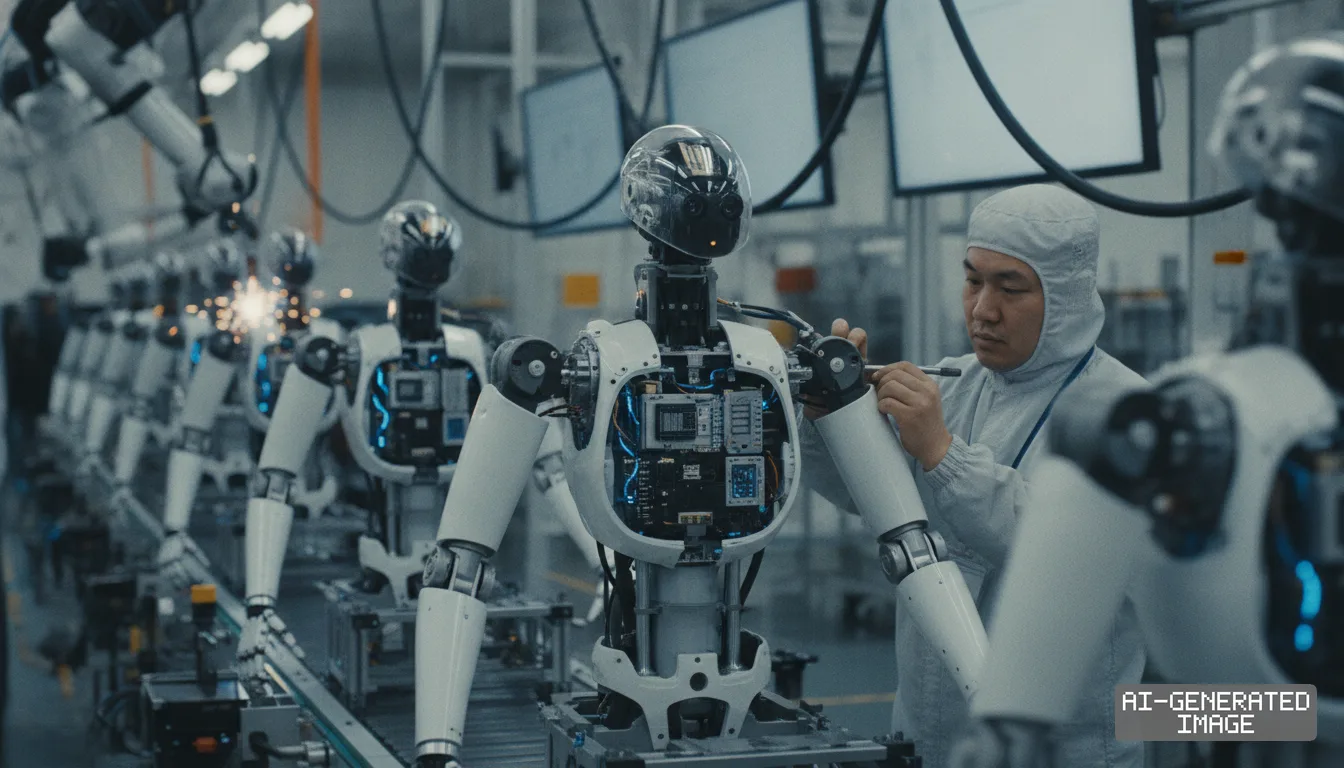
Japan's AI Robot Association released technical specifications on Sept. 20, 2026, for a standardized domestic general-purpose work robot fleet designed to feed generative physical artificial intelligence foundation models.
The program is backed by a 20.5 billion yen ($140 million) contract from the New Energy and Industrial Technology Development Organization, a state research agency under Japan's trade ministry.
The four-year budget finances the deployment of more than 100 domestic dual-arm mobile robots to collect one million hours of physical task data across retail, logistics and manufacturing sites.
Seven Japanese robotics developers presented operational prototypes following a six-month sprint, according to the association's evaluation records. The cohort includes precision motion manufacturer THK and industrial robot builder Nachi-Fujikoshi.
Five venture-backed teams and consortia also qualified: service robotics firm ugo, motor developer Keigan, open-source arm developer Enactic, humanoid startup HatsuMuv and a system integration group led by EmplifAI.
Tokyo aims to establish sovereign hardware supply chains and unified data standards, curbing rising dependence on Chinese robotic platforms that currently dominate lower-cost physical artificial intelligence training programs worldwide.
Japanese research institutes and corporate laboratories have increasingly imported Chinese dual-arm hardware because domestic equivalents were either commercially unavailable or cost substantially more, association chairman Tetsuya Ogata said.
Relying on foreign equipment creates severe geopolitical vulnerabilities and exposure to sudden component export controls, Ogata, who also serves as a professor at Waseda University, said in Tokyo.
The technical push targets physical artificial intelligence, an emerging sector where embodied foundation models learn manipulation policies directly from visual inputs, wrist forces and joint positions rather than digital text alone.
Fragmented data structures represent the biggest bottleneck for physical models, the association reported. Incompatible motor encoders, varying degrees of freedom and divergent logging tools prevent neural networks from sharing operational skills across fleets.
To overcome software fragmentation, the association established open data protocols and bilateral teleoperation pipelines. The setup records human manipulation demonstrations with microsecond sensor synchronization across arms, grippers and depth cameras.
The seven competing prototypes reflect varied engineering approaches to factory and commercial chores. Service robotics specialist ugo unveiled ugo Nova, a semi-humanoid robot pairing dual compliant arms with an omnidirectional mobile base.
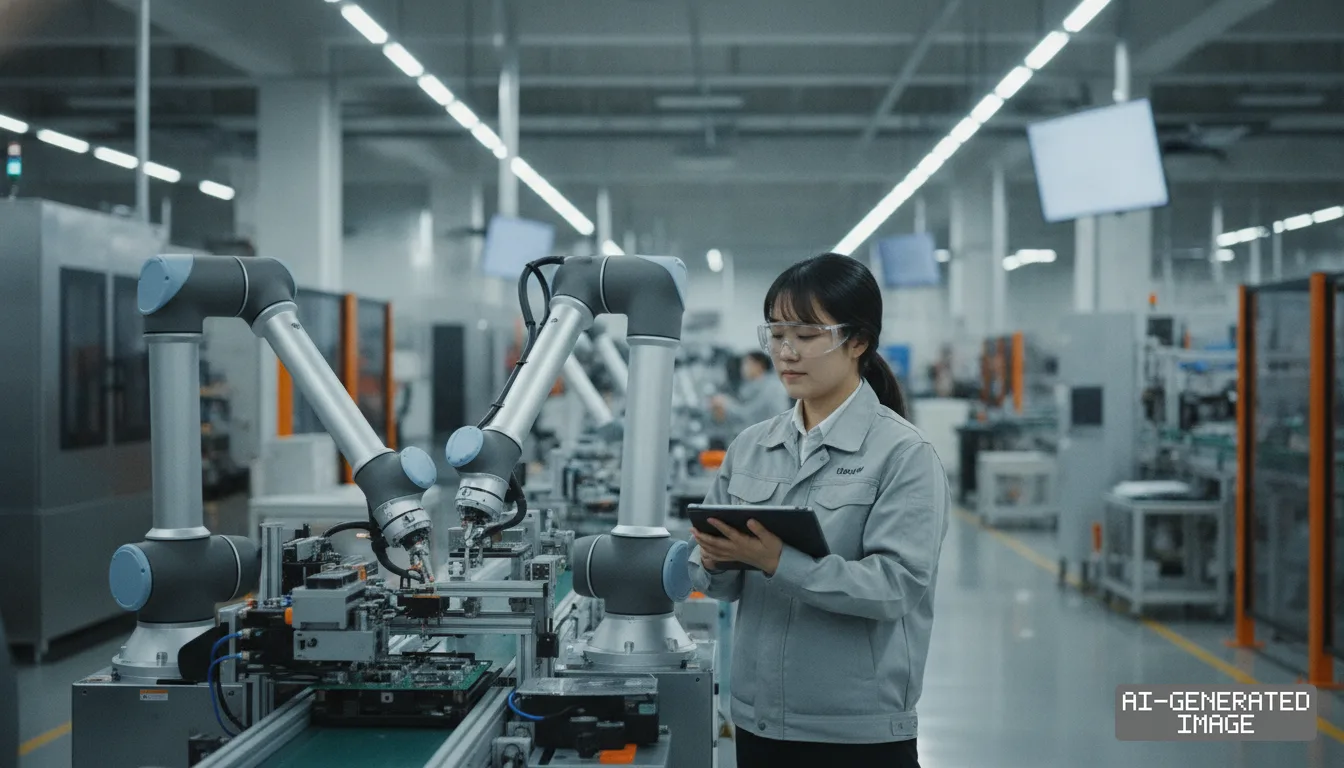
Precision component supplier THK applied its cross-roller bearings and linear guides to build modular manipulators, prioritizing rigid positional accuracy during repetitive assembly tasks in cleanroom electronics facilities.
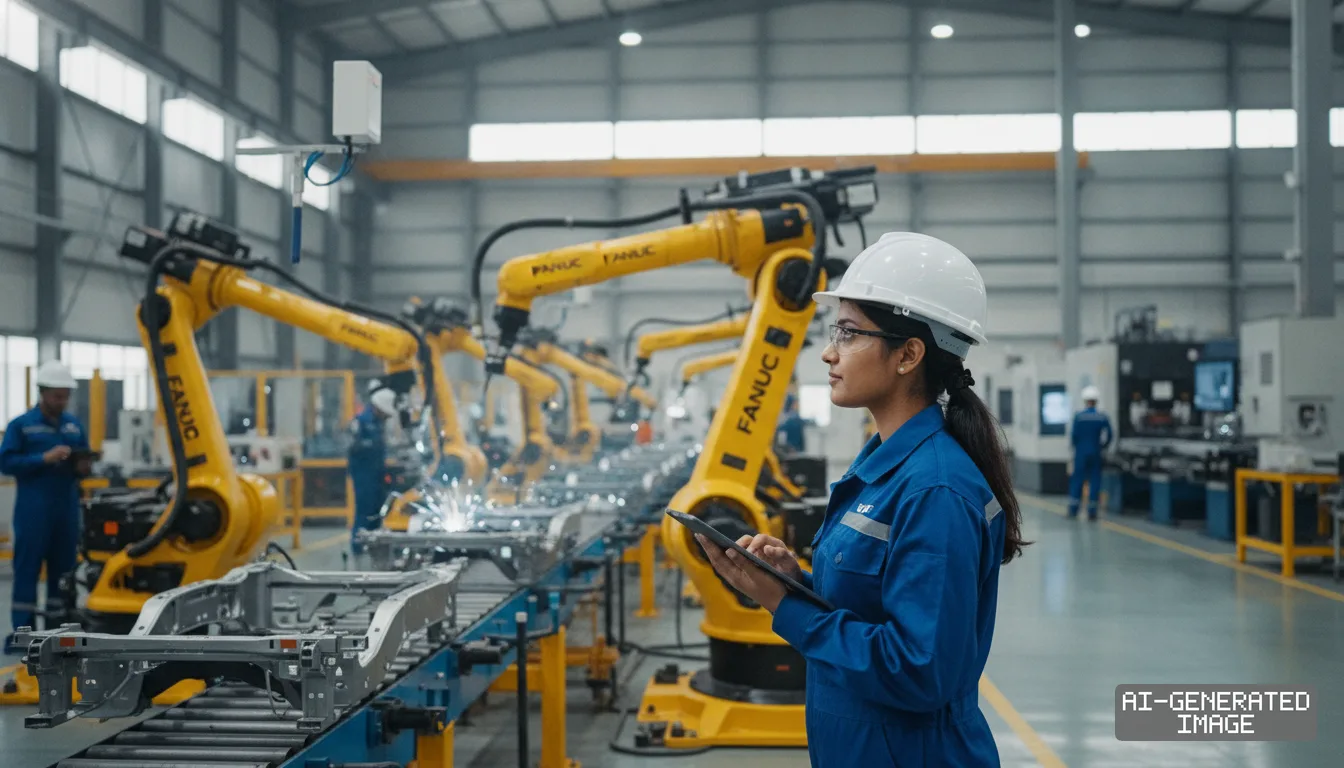
Industrial machine manufacturer Nachi-Fujikoshi produced compact articulated arms engineered for continuous 24-hour factory operations, eliminating thermal drift during sustained high-torque gripping and metal part transfers.
Software venture EmplifAI presented a consolidated platform incorporating control middleware from Asratec and hardware from TASKO, while Enactic delivered its OpenArm platform, an open-source system designed to compress fabrication costs.
Hardware startup HatsuMuv demonstrated high-degree-of-freedom robotic hands capable of subtle object manipulation, while Keigan integrated its direct-drive brushless motors into modular mobile bases for agile warehouse transport.
The association designated three primary proving grounds for the machine fleet: retail store restocking, logistics parcel handling and automotive component kitting, sectors where Japan faces acute labor shortages.
Data gathered by the robots will train large Vision-Language-Action models, matching equivalent physical artificial intelligence programs launched by American competitors such as Nvidia and startup Physical Intelligence.
Evaluation committees will review prototype test benchmarks in October 2026 to select candidate platforms for Phase 2, a six-month refinement cycle concluding in March 2027.
Units that pass the March 2027 evaluations will enter mass manufacturing planning, with the association adopting the winning platforms as standard data collection units between July 2027 and 2029.
The association has not disclosed the specific monetary subsidies granted to each of the seven corporate builders, nor has it published the exact quantitative scorecards used for Phase 2 qualification.
University of Tokyo professor Yutaka Matsuo and researchers from the National Institute of Advanced Industrial Science and Technology oversee core software architecture under the national research contract terms.
Impact map
How this development propagates across the region and out to global buyers.
| Event | Korea | China | Japan | Global impact |
|---|---|---|---|---|
| Japan domestic robot standardization | Doosan Robotics and Rainbow Robotics face stronger Japanese standard in dual-arm manipulators | AgileX and Unitree face exclusion from Japanese state-funded data collection labs | THK and Nachi-Fujikoshi gain guaranteed orders across planned 100-plus robot fleet | Physical AI training data shifts toward standardized bilateral teleoperation formats |
In this story
- Companies
- THKNachi-Fujikoshi
- Tickers
- 6481.T6474.T
- Exposed
- ugo
- Policy
- Industrial PolicySubsidies
- Impact
- Supply ChainCapexCompliance
Track every Industrial Policy development → Track every Subsidies development →
Related briefings
- Sojitz and NRS agree to build Tata fab chemical supply chain in India Also on Industrial Policy, Compliance
- China and South Africa advance battery mineral refining pact Also on Industrial Policy, Compliance
- East Asia fab water rules diverge as Taiwan mandates reuse while Korea and Japan rely on state grids and local pacts Also on Industrial Policy, Compliance
- BYD confirms solid-state battery car test for 2027 rollout Also on Industrial Policy
Sources
Primary documents
Reporting
Confidence: high — how we grade this
The documents behind this briefing are linked above. East Asia Brief produces its English text with AI assistance under human editorial review, and does not translate or republish other outlets' articles. See our methodology and AI policy. Spotted an error? Tell us.
The Morning Brief
What changed in Korean, Chinese and Japanese industry overnight — and what it means for your supply chain. One email, weekday mornings, US time. Free.
The Morning Brief is in preparation. Leave your address and we will write to you once — when the first issue is ready. Nothing before that.