
Japan Tightens Laser Micromachining Screening Under Revised Dual-Use Export Rules
The Ministry of Economy, Trade and Industry updated technical thresholds for pulse duration and beam wavelength, altering compliance reviews for tool shipments to overseas assembly contractors.
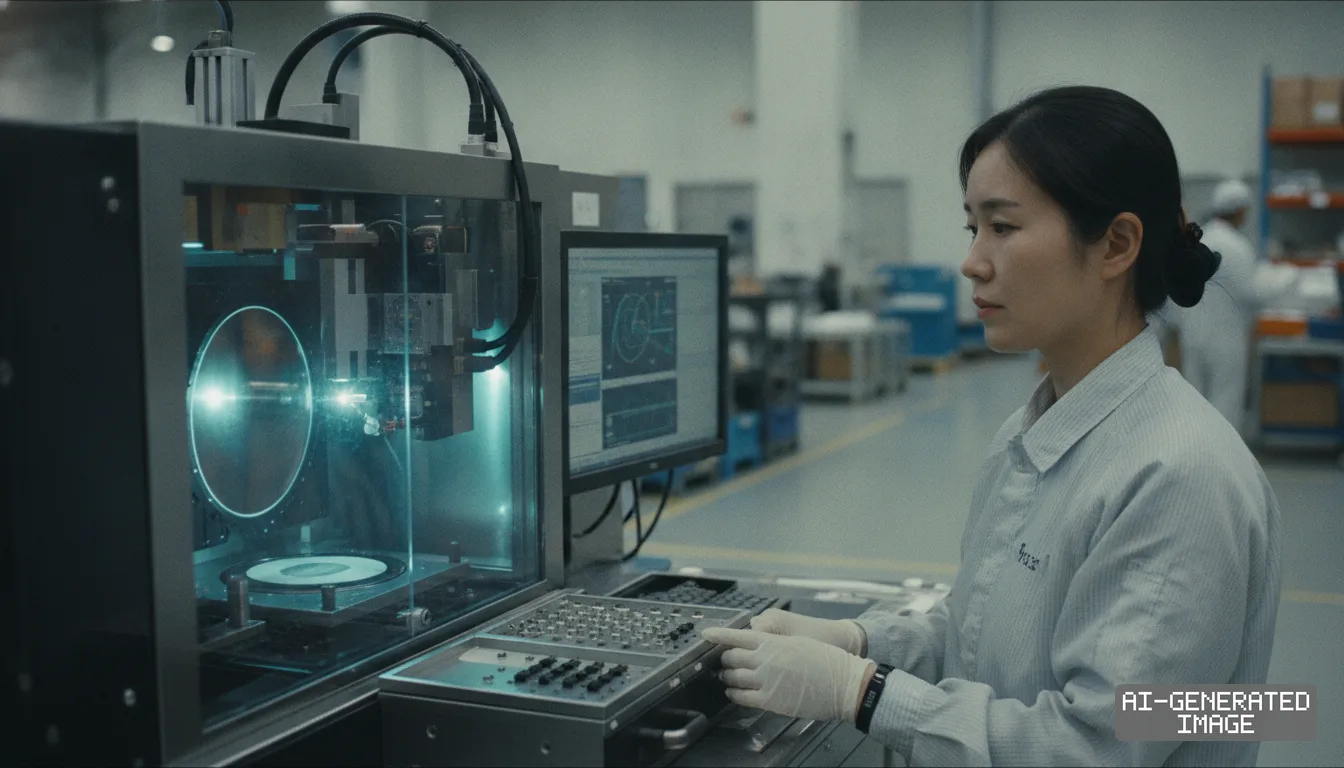
Japan's Ministry of Economy, Trade and Industry has clarified technical screening thresholds for precision laser micromachining systems and related beam-delivery sub-assemblies under the nation's export control framework, formalizing distinct review criteria for pulse duration, output wavelength, and multi-axis positioning accuracy. The administrative guidance aligns regulatory enforcement under the Foreign Exchange and Foreign Trade Act with international dual-use non-proliferation standards, removing ambiguities that previously complicated classification assessments for advanced electronics manufacturing tools. The clarification directly alters export verification procedures for Japanese precision toolmakers shipping ultrashort-pulse laser systems to third-country assembly and testing facilities.
The statutory framework governing these shipments rests on the Export Trade Control Order and the Ministerial Order Specifying Goods and Technologies. Under Japanese export law, standalone laser oscillators, optical amplifiers, and specialized crystals are classified under Category 6, which covers sensors and lasers pursuant to Appended Table 1, Item 10. Integrated laser-based material processing systems and machine tools utilizing photon beams fall under Category 2, which covers material processing equipment pursuant to Appended Table 1, Item 2. The updated guidance establishes explicit line-item boundaries between commercial micromachining tools used in semiconductor wafer dicing and dual-use equipment capable of structural modification in nuclear, aerospace, or military microelectronics applications.
The regulatory adjustment focuses on systems capable of processing advanced materials through non-thermal ablation, where pulse durations drop into the picosecond and femtosecond ranges. Under the revised technical interpretation, industrial tools combining laser pulse widths below specified thresholds with ultraviolet or deep-ultraviolet wavelengths and positioning accuracy tighter than standard tolerances require individual export licensing rather than general bulk authorization. Exporters must now document not only the base specifications of the laser source but also the integrated optical head, dynamic beam shaping capabilities, and coordinate positioning repeatability on each destination filing.
For Japanese equipment manufacturers, the revised screening rules require immediate internal classification reviews, known domestically as gaihi hantei. Companies such as Disco Corporation, Hamamatsu Photonics, DMG Mori, and Keyence produce precision cutting, grooving, and diagnostic systems widely deployed in commercial semiconductor packaging lines across East Asia. While standard mechanical dicing saws and long-pulse infrared scribing equipment remain under conventional clearance tracks, ultrashort-pulse laser stealth dicing systems and high-precision laser ablation tools must undergo rigorous end-user verification to prove they cannot be repurposed for classified metallurgy or high-yield defense manufacturing.
The practical impact falls heavily on cross-border supply chains serving outsourced semiconductor assembly and test contractors in Taiwan, South Korea, and Southeast Asian hubs. Contract packaging facilities routinely upgrade laser micromachining suites to handle thin-wafer separation, silicon carbide power substrates, and heterogeneous chiplet interposers. Under the updated review protocol, equipment vendors must collect detailed end-use statements confirming that the purchased machinery will not be diverted into dual-use research institutes or restricted semiconductor fabrication facilities. Compliance legal teams report that the heightened documentation requirements add two to four weeks to pre-shipment administrative lead times for custom-configured tools.
The clarification also tightens the intersection between List Control parameters and METI's expanding Catch-All regulatory net. Under Catch-All rules, even if an integrated micromachining tool falls marginally below the strict technical thresholds of Category 2 or Category 6, exporters must still submit an individual license application if METI issues an "informed" notice or if the exporter identifies an objective risk of military application by the recipient. Trade compliance officers must now cross-reference customer facility rosters against updated foreign end-user lists before booking freight forwarders for precision optical machinery.
Japanese precision tooling exporters have begun updating their automated export management systems to track combined laser-tool specification matrices across global subsidiaries. METI's Trade Control Department has scheduled industry compliance workshops through the Center for Information on Security Trade Control to audit filing consistency before full enforcement benchmarks take effect across regional customs checkpoints.
Impact map
How this development propagates across the region and out to global buyers.
| Event | Korea | China | Japan | Global impact |
|---|---|---|---|---|
| Laser micromachining control update | OSAT tool screening | precision tool vetting | exporter compliance | assembly lead times |
In this story
- Companies
- Disco CorporationHamamatsu PhotonicsDMG Mori
- Tickers
- 6146.T6965.T6141.T
- Exposed
- Taiwan Semiconductor Manufacturing Co
- Policy
- Export ControlsEconomic Security
- Impact
- ComplianceSupply ChainOrder Book
Track every Export Controls development → Track every Economic Security development →
Related briefings
- METI Pools Factory Machine Data to Train Physical AI Models Also on DMG Mori, Order Book
- East Asian SiC wafer makers shift to laser slicing to cut 8-inch ingot processing loss Also on DISCO Corporation
- TSMC captures 72.5% foundry share as gap with Samsung widens Also on Taiwan Semiconductor Manufacturing Co., Export Controls
- TSMC revenue rises 53% on AI demand to record NT$514 billion Also on Taiwan Semiconductor Manufacturing Co., Export Controls
Sources
Primary documents
Reporting
Confidence: high — how we grade this
The documents behind this briefing are linked above. East Asia Brief produces its English text with AI assistance under human editorial review, and does not translate or republish other outlets' articles. See our methodology and AI policy. Spotted an error? Tell us.
The Morning Brief
What changed in Korean, Chinese and Japanese industry overnight — and what it means for your supply chain. One email, weekday mornings, US time. Free.
The Morning Brief is in preparation. Leave your address and we will write to you once — when the first issue is ready. Nothing before that.