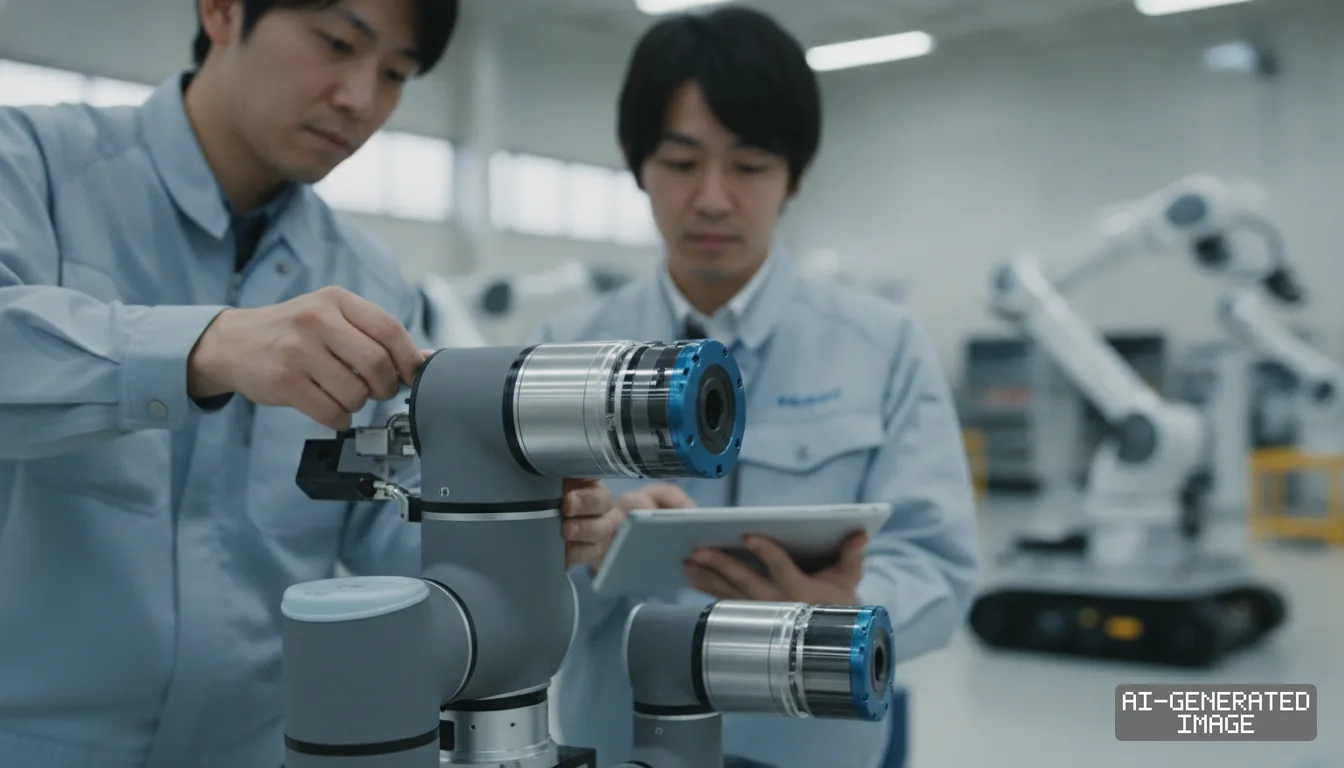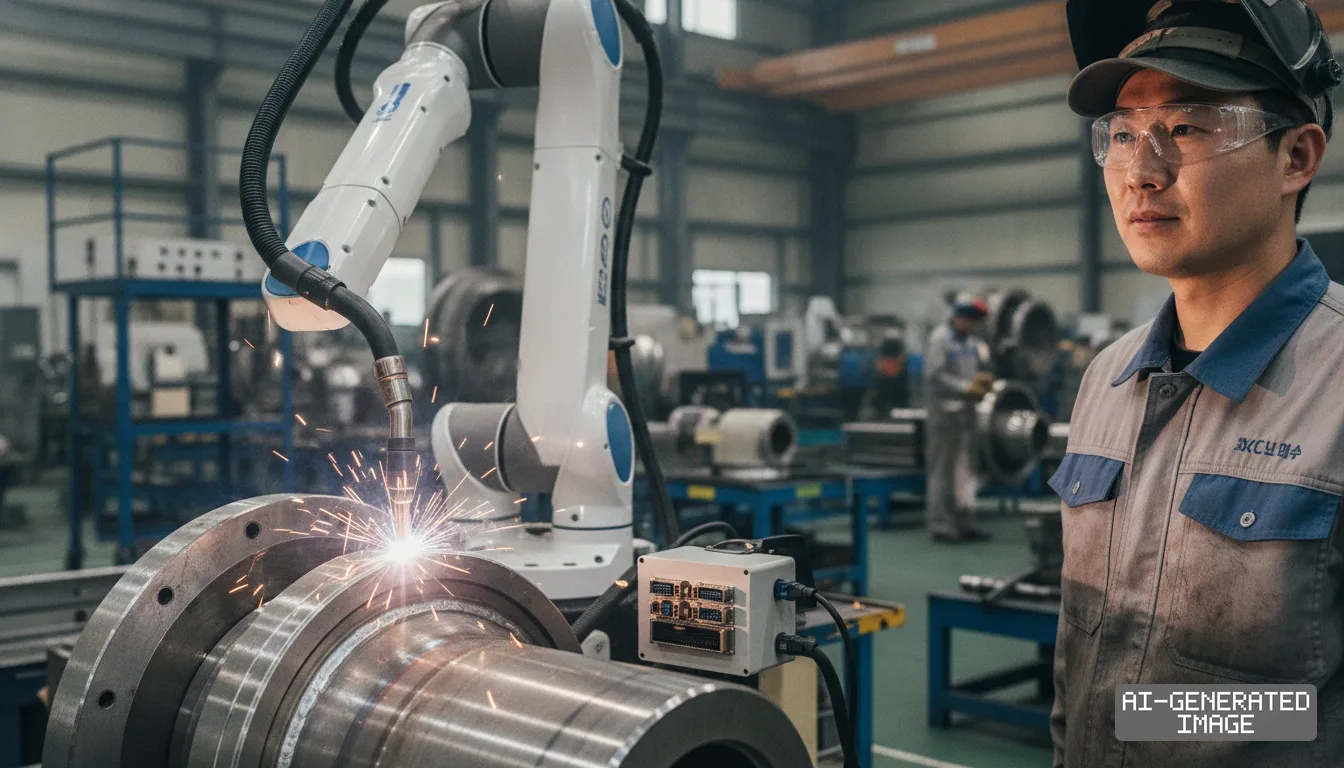
Nabtesco adapts cycloidal gearboxes for heavy logistics robots
Japanese precision reducer leader shifts industrial robot joint drives into heavy-payload autonomous mobile platforms and pallet movers.
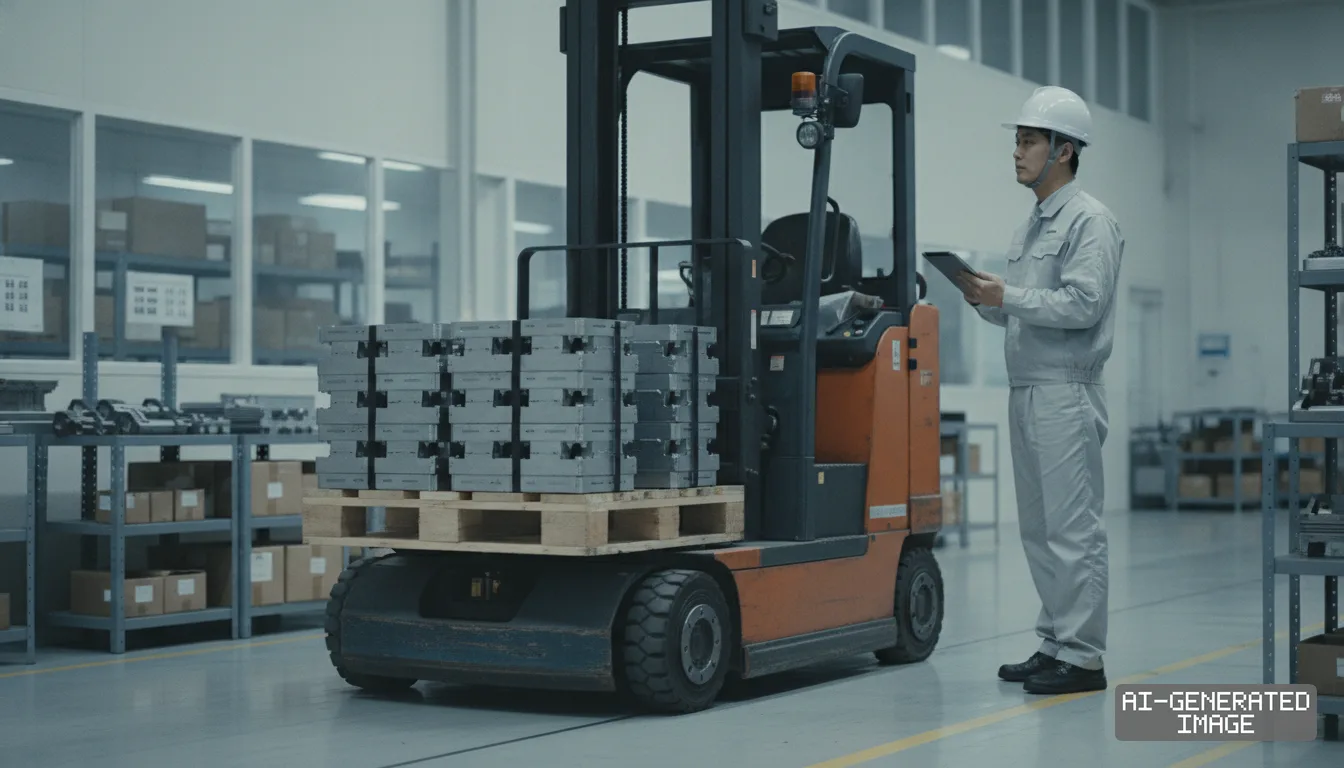
Nabtesco Corporation has commenced commercial shipments of specialized high-torque cycloidal reduction gears engineered for heavy-payload autonomous mobile robots and automated guided forklifts, transferring precision drive technology originally built for articulated industrial robot arms into intralogistics machinery.
The Tokyo-based precision component manufacturer, which holds approximately 60 percent of the global market for high-precision reduction gears used in industrial robot joints, is expanding its product portfolio beyond traditional multi-axis factory automation arms. The new drive units modify Nabtesco’s proprietary RV-series cycloidal design to serve autonomous mobile platforms capable of transporting payloads between 1,000 and 3,000 kilograms inside fulfillment warehouses, distribution hubs, and automotive manufacturing facilities.
Warehouse automation integrators are increasingly replacing standard planetary gearboxes with cycloidal mechanisms in heavy-duty automated guided vehicles (AGVs) and autonomous mobile robots (AMRs). Standard planetary gear drives frequently experience tooth deflection, mechanical backlash degradation, and premature gear failure when subjected to high-impact shock loads, emergency braking sequences, and continuous 24-hour duty cycles under multi-ton pallet loads.
Cycloidal speed reducers utilize rolling pin-and-gear contact rather than conventional tooth-to-tooth meshing, distributing mechanical stress across multiple contact points simultaneously. This kinematic structure allows the component to withstand momentary shock loads of up to five times its rated output torque without catastrophic mechanical failure, while maintaining positional backlash under one arc-minute over extended operating lifecycles.
The engineering shift directly impacts mechanical procurement strategies for major intralogistics system integrators, including Daifuku, Murata Machinery, Toyota Industries Corporation, and European material handling equipment manufacturers such as KION Group and Jungheinrich. As fulfillment operations scale up vertical storage density and pallet-level transport automation, equipment builders require drive assemblies that combine high radial load-bearing capacity with ultra-short axial lengths to fit directly inside motorized wheel hubs.
Nabtesco has integrated heavy-duty angular contact ball bearings directly into the casing of the reduction gear unit. This integrated architecture allows the gear assembly to support the full vertical and radial weight of the vehicle and its cargo directly on the gearbox housing, removing the need for external support bearings and secondary axle shafts. The configuration reduces the total mechanical footprint inside the vehicle chassis by roughly 20 to 30 percent compared to conventional modular motor-gearbox-axle assemblies.
The expansion comes as industrial robot installations in automotive spot welding and electronics assembly experience cyclical maturation, prompting precision component manufacturers across East Asia to open new revenue streams in autonomous material handling. Nabtesco is producing the logistics-grade cycloidal reducers primarily at its Tsu Plant in Mie Prefecture, with secondary machining and assembly capacity allocated across its Hamamatsu facilities.
The move sharpens competition among East Asian motion control and precision gearing suppliers. In Japan, Sumitomo Heavy Industries offers its Fine Cyclo series for industrial automation, while Nidec Drive Technology manufactures planetary and cycloidal drive units for mobile automated equipment. In China, precision gear manufacturers such as Zhejiang Shuanghuan Driveline and Leaderdrive are also attempting to move upmarket from light-payload warehouse robots into heavy industrial AGV drive systems.
For automation system designers, the primary trade-off in deploying cycloidal gear units remains initial procurement cost. Cycloidal reduction gears command a higher unit cost than standard planetary gearboxes due to tight machining tolerances required for the cycloidal disc profiles, eccentric shafts, and needle roller bearings. Integrators adopt the technology primarily in high-throughput distribution environments where gearbox replacement downtime and maintenance labor costs outweigh initial component price differentials.
Nabtesco has structured its logistics drive lineup to accept standard industrial servomotors and brushless direct-current (BLDC) motors from major drive suppliers, including Yaskawa Electric, Mitsubishi Electric, and Keyence. The modular input flange design allows equipment manufacturers to integrate the gearboxes across both 48-volt battery-powered warehouse platforms and high-voltage factory floor transport systems without retooling internal chassis geometry.
Shipment allocations for the heavy-payload logistics series are integrated into Nabtesco’s master production schedule through the second half of fiscal year 2026, with customer verification trials continuing across European and North American intralogistics integration programs.
Impact map
How this development propagates across the region and out to global buyers.
| Event | Korea | China | Japan | Global impact |
|---|---|---|---|---|
| Heavy logistics gear deployment | AMR builders review drives | gear rivals scale up | precision output expands | AGV reliability rises |
In this story
- Companies
- Nabtesco Corporation
- Tickers
- 6268.T
- Exposed
- DaifukuToyota IndustriesSumitomo Heavy IndustriesNidecYaskawa Electric
- Policy
- Economic Security
- Impact
- Supply ChainOrder BookCost Structure
Track every Economic Security development →
Related briefings
- China RV reducer makers expand heavy-duty robot market share as national testing standards take hold Also on Nabtesco Corporation, Sumitomo Heavy Industries, Cost Structure
- METI Pools Factory Machine Data to Train Physical AI Models Also on Nidec, Cost Structure, Order Book
- Japanese makers deploy thermal-shielded automated forklifts for cold storage Also on Toyota Industries, Cost Structure
- SFA targets 95% unmanned logistics as chip gear sales double Also on Daifuku, Order Book
Sources
This briefing carries no sources block. It was written from our desks’ working knowledge of the sector rather than from documents retrieved for this piece. Read it as orientation and check any figure you intend to act on — how we source briefings.
This briefing carries no linked sources: it was written from our desks' working knowledge of the sector rather than from documents retrieved for this piece. East Asia Brief publishes no citation it cannot link. Our English text is produced with AI assistance under human editorial review. See our methodology and AI policy. Spotted an error? Tell us.
The Morning Brief
What changed in Korean, Chinese and Japanese industry overnight — and what it means for your supply chain. One email, weekday mornings, US time. Free.
The Morning Brief is in preparation. Leave your address and we will write to you once — when the first issue is ready. Nothing before that.