Trump threatens 300% tariff on foreign factories exporting to US
The ultimatum targets Asian vehicle and electronics plants in Mexico and Southeast Asia that ship finished goods to American consumers.
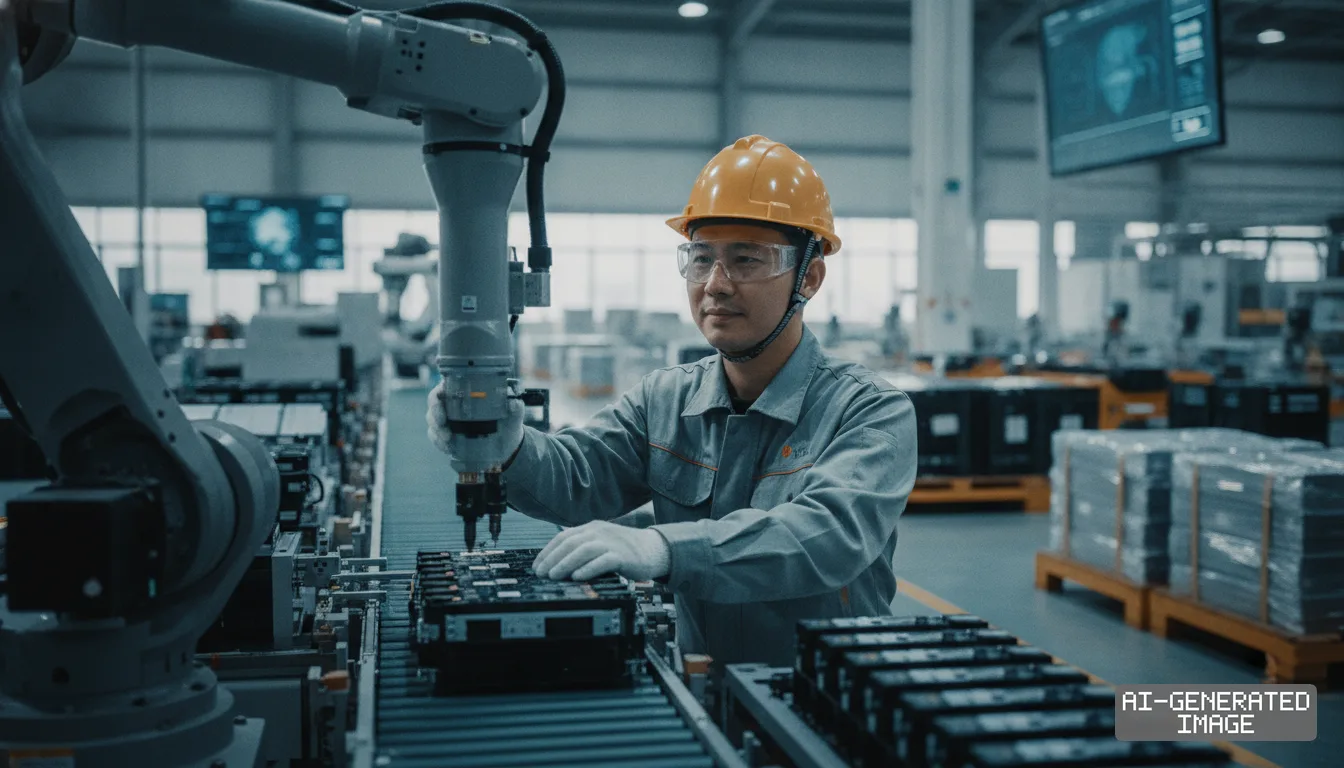
President Donald Trump threatened Nov. 6 to impose punitive tariffs of up to 300% on foreign factories that export goods to the United States instead of building domestic assembly capacity.
The verbal ultimatum targets multinational manufacturers across South Korea, Japan and China that use export hubs in Mexico and Southeast Asia to supply American buyers.
Trump claimed tariff avoidance drove 99% of foreign capital allocations behind roughly 3,000 manufacturing facilities currently under construction across the United States.
Removing tariff barriers would prompt foreign firms to abandon American construction sites and ship finished goods from South Korea, Japan, China and the Philippines, Trump said.
Trump outlined a tiered tariff schedule spanning 50%, 100%, 150%, 250% and 300% for companies maintaining offshore production lines aimed at the United States.
The warning repeated remarks delivered Oct. 3 at an Ohio campaign appearance, where Trump demanded foreign corporations relocate manufacturing operations to American soil within 18 months.
The White House published no formal executive order or presidential proclamation authorizing tariff adjustments under Section 232 or Section 301 alongside the remarks, official records show.
The only presidential action signed Nov. 5 established the Oval Office National Monument, leaving the punitive duties as verbal pressure rather than codified trade policy, regulatory filings confirm.
The rhetoric lands directly on Asian conglomerates that spent decades building low-cost export bastions in Mexico to capitalize on the United States-Mexico-Canada Agreement.
The regional trade pact requires a 75% regional value content threshold for passenger vehicles to enter the United States duty-free, drawing billions in Asian capital to Mexican industrial corridors.
Kia operates an assembly complex in Pesquería, Mexico, with an annual capacity of 400,000 vehicles, directing roughly 60% of total shipments toward North American dealerships, corporate production data show.
The automaker exports approximately 120,000 Mexican-assembled vehicles to the United States each year, exposing a core revenue line to prohibitive border surcharges under Trump's proposed framework.
Hyundai Motor faces identical structural exposure across its regional parts network, which feeds vehicle assembly plants in Alabama and Georgia while relying on Mexican stamping and component suppliers.
Hyundai Motor Group began initial operations at its $7.6 billion Metaplant in Bryan County, Georgia, which holds an annual production capacity of 300,000 electric and hybrid vehicles.
South Korean electronics makers face parallel supply chain friction across their border factories, where finished goods move directly into American retail distribution networks without domestic final assembly.
Samsung Electronics operates display and appliance complexes in Tijuana and Querétaro, Mexico, supplying more than 15 million flat screens and home appliances annually to the North American market.
LG Electronics manufactures vehicle electronics and refrigeration equipment across facilities in Reynosa and Monterrey, Mexico, generating more than $3 billion in annual cross-border commercial shipments to American distributors.
Japanese manufacturers face corresponding vulnerabilities across Mexico and Southeast Asia, where Japanese automakers spent four decades developing dense, export-focused production clusters for light trucks and passenger sedans.
Honda Motor maintains an assembly facility in Celaya, Mexico, with an annual capacity of 200,000 passenger vehicles, exporting roughly 80% of finished volume to the United States.
Japanese and South Korean electronic component makers also route printed circuit boards and sensors through Vietnam, Malaysia and Thailand, where American supply chains source low-cost subassemblies.
Chinese component makers operating throughout Southeast Asia also sit in the crosshairs of Trump's tariff threat, facing mounting scrutiny over third-country transshipment of advanced electronic components.
Manufacturing compensation in northern Mexico averages less than $6 an hour, compared with starting factory wages exceeding $28 an hour across unionized and non-union automotive plants throughout the American South.
Duplicate tooling, automated assembly lines and greenfield industrial real estate require multi-billion-dollar investments that smaller tier-two and tier-three suppliers cannot finance without direct federal subsidies.
South Korean battery producers LG Energy Solution and SK On have committed tens of billions of dollars to American cell plants, but their upstream cathode and mineral refining lines remain concentrated abroad.
Trump said Nov. 6 that the White House would unveil several executive actions on trade within the next one to two weeks.
The White House has not published an executive order or Federal Register notice identifying specific tariff lines, statutory authorities or formal implementation dates for the 300% levy.
South Korea's Ministry of Trade, Industry and Energy has not received formal bilateral notification or negotiating schedules regarding the proposed penalty rate, ministry officials said.
Existing bilateral reciprocal trade mechanisms and free trade agreement exemptions remain legally binding at American customs ports until the federal government issues formal administrative proclamations.
Impact map
How this development propagates across the region and out to global buyers.
| Event | Korea | China | Japan | Global impact |
|---|---|---|---|---|
| Trump 300% offshore plant tariff threat | Kia risks tariffs on 120,000 annual vehicle exports from Mexico, while Samsung and LG face border levies on Mexican electronics | Exporters face direct exclusion and heightened scrutiny on Southeast Asian component rerouting | Honda risks punitive duties on 80% of output from its 200,000-vehicle Celaya assembly hub | Transnational manufacturing networks face multi-billion-dollar reshoring costs and North American supply disruptions |
In this story
- Companies
- KiaHyundai MotorSamsung ElectronicsLG ElectronicsHonda Motor
- Tickers
- 000270.KS005380.KS005930.KS066570.KS7267.T
- Exposed
- LG Energy SolutionSK On
- Policy
- Tariffs
- Impact
- Supply ChainCapexCost Structure
Track every Tariffs development →
Related briefings
- Korea Links Commercial Electric Van Grants to Battery Recyclability Also on Kia, Hyundai Motor, SK On
- LG taps Samsung Foundry for appliance AI chips under Korean state project Also on LG Electronics, Hyundai Motor, Samsung Electronics
- Hyundai tests used EV battery storage on South Korea's grid Also on Kia, Hyundai Motor, LG Energy Solution
- Hyundai, LG Energy launch used battery storage pilot for EVs Also on Kia, Hyundai Motor, LG Energy Solution
Sources
Primary documents
Reporting
Confidence: high — how we grade this
The documents behind this briefing are linked above. East Asia Brief produces its English text with AI assistance under human editorial review, and does not translate or republish other outlets' articles. See our methodology and AI policy. Spotted an error? Tell us.
The Morning Brief
What changed in Korean, Chinese and Japanese industry overnight — and what it means for your supply chain. One email, weekday mornings, US time. Free.
The Morning Brief is in preparation. Leave your address and we will write to you once — when the first issue is ready. Nothing before that.