Korea Links Commercial Electric Van Grants to Battery Recyclability
South Korea refines 2027 commercial vehicle subsidy rules, docking grants by up to 40 percent for packs lacking verified mineral recovery pathways.
South Korea’s Ministry of Environment has established new regulatory tiers for 2027 commercial electric van and light truck purchase subsidies, directly linking state and municipal grant eligibility to battery pack dismantling efficiency and raw mineral recovery value.
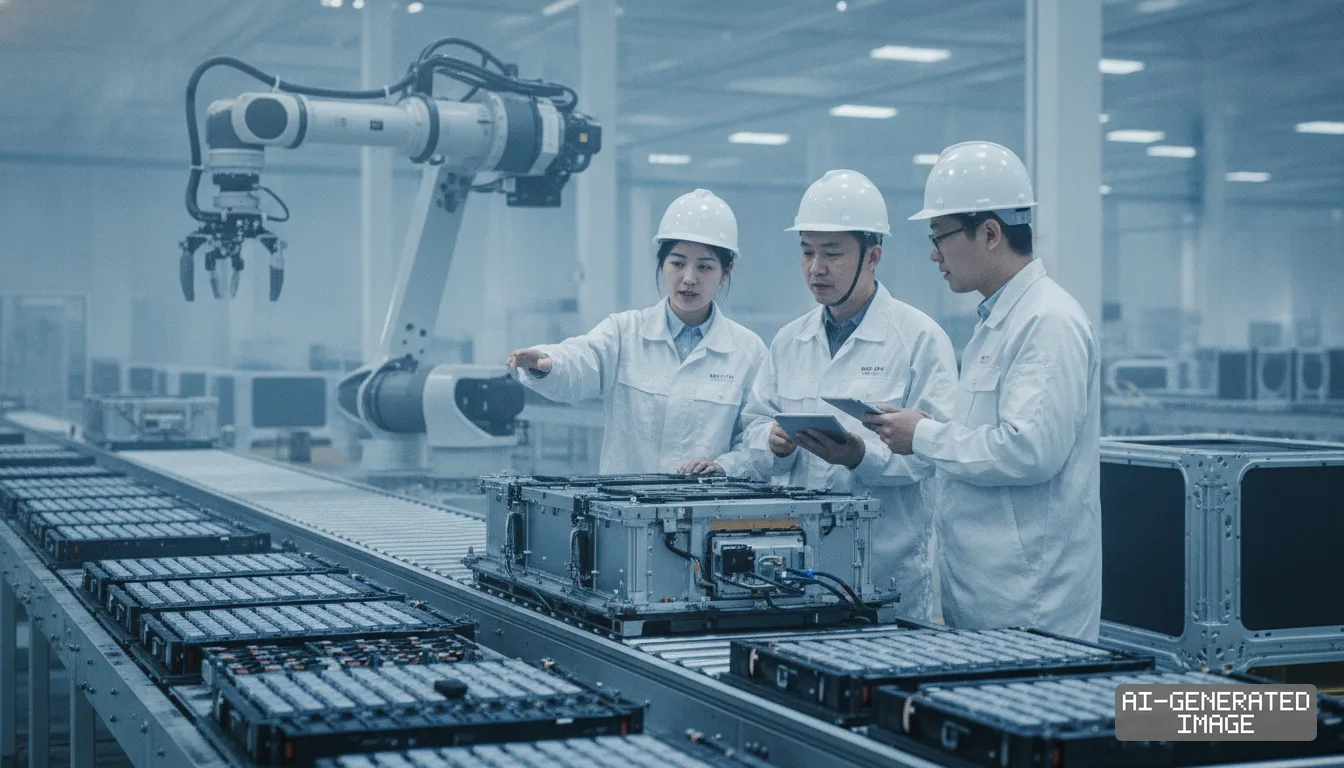
The revised administrative guidelines expand the statutory Battery Environmental Coefficient, a multiplier that scales vehicle purchase grants from a baseline factor of 1.0 down to 0.6 based on the financial and technical recyclability of installed traction batteries. Under the updated framework, small commercial electric vans and light utility trucks that fail to meet mineral recovery thresholds and modular teardown benchmarks will face direct reductions of up to 40 percent in baseline national performance subsidies. The policy targets commercial cargo vehicles, which have accounted for a rapid expansion in domestic zero-emission vehicle registrations but have historically relied on pack designs that are difficult and costly to recycle after retirement.
The regulatory mechanism measures the recoverable economic value of critical minerals per kilogram of battery weight, evaluating concentrations of lithium, nickel, cobalt, manganese, and aluminum against standard industrial processing baselines. Battery systems that yield low recoverable metal value per kilogram receive lower environmental coefficient multipliers, regardless of initial vehicle retail pricing or raw range metrics. The Ministry of Environment has also introduced specific architectural criteria for pack enclosures, penalizing structural cell-to-pack formats that use permanent adhesives that prevent rapid cell separation and module sorting during end-of-life recovery operations.
The commercial vehicle measure aligns with the inter-ministerial Act on the Management and Industrial Fostering of Used Batteries passed earlier this year, which establishes a nationwide Battery Life Cycle Tracking System and mandatory pre-removal performance evaluations across South Korea by 2027. Under this broader statutory architecture jointly administered by the Ministry of Economy and Finance, the Ministry of Trade, Industry and Energy, and the Ministry of Environment, all traction batteries registered in South Korea must carry digital lifecycle records tracking manufacturing chemistry, state of health, and certified material content.
The subsidy revision directly reshapes procurement economics across South Korea’s light commercial vehicle market, creating sharp valuation divides between battery chemistries. Domestic cell manufacturers LG Energy Solution, Samsung SDI, and SK On have concentrated production on high-nickel ternary chemistries such as nickel-cobalt-manganese (NCM), which carry higher residual scrap values and mature domestic hydrometallurgical recycling channels, thereby securing the maximum 1.0 coefficient. In contrast, commercial electric cargo vans equipped with imported lithium iron phosphate (LFP) packs face lower coefficient grades due to lower per-kilogram metal recovery values and the absence of high-yield domestic LFP refining infrastructure.
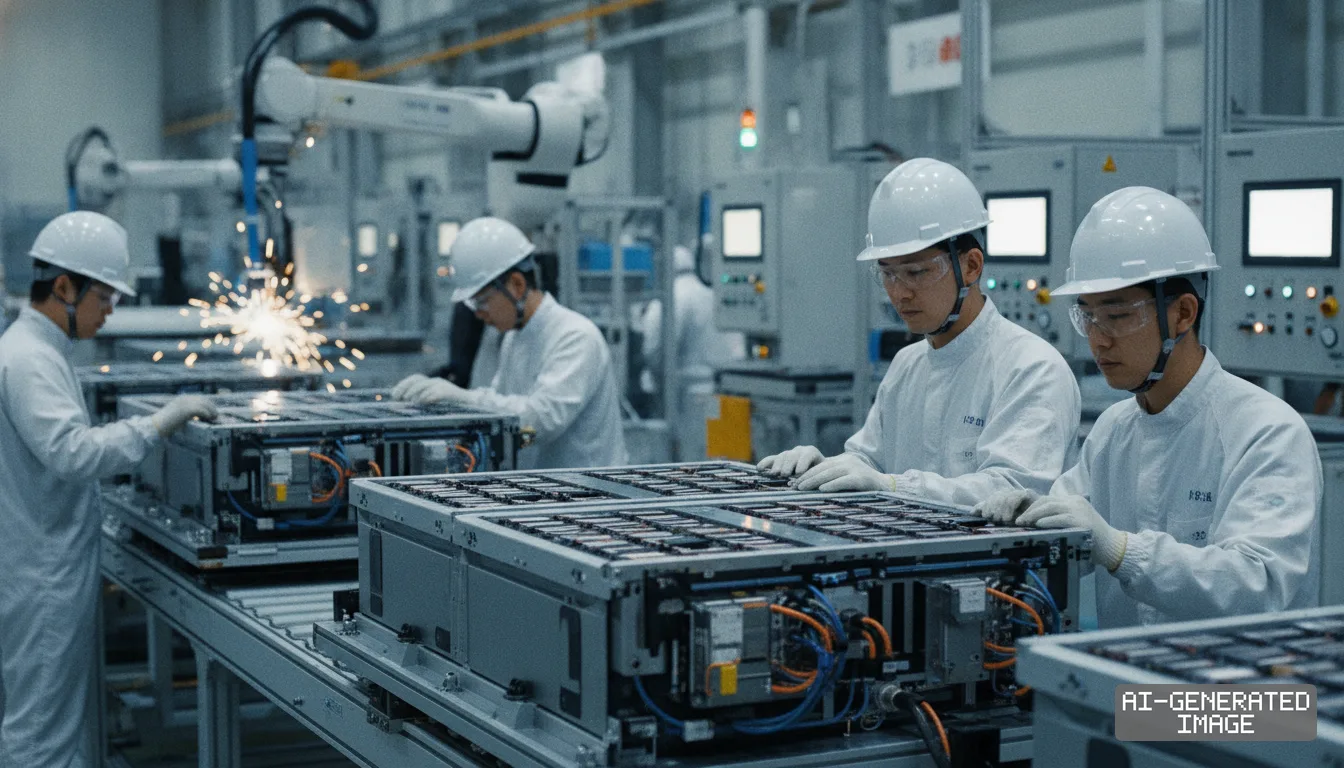
For automotive manufacturers and commercial vehicle importers, compliance requires submitting detailed pack assembly blueprints, bill-of-materials certifications, and dismantling time audits to the state-run Korea Environment Corporation before vehicle models receive municipal subsidy allocation quotas. Automakers including Hyundai Motor Company, Kia Corporation, KG Mobility, and distributors of imported commercial light trucks must demonstrate that battery packs can be extracted and disassembled into individual sub-modules using standardized mechanical tooling within defined labor-hour limits.
For commercial fleet operators, freight logistics companies, and urban delivery carriers, the subsidy structure shifts total-cost-of-ownership models ahead of 2027 procurement cycles. National purchase grants for small electric cargo vans have reached up to 10 million won ($7,300) to 15 million won ($11,000) per unit, with regional municipal top-ups often matching national outlays. A 40 percent reduction in the environmental multiplier lowers combined subsidies by several million won per vehicle, eliminating the upfront price advantage previously held by budget commercial electric vans utilizing uncertified or non-dismantlable pack designs.
Fleet logistics companies operating under municipal low-emission transport mandates must balance initial capital expenditures against vehicle depreciation and battery scrap trade-in value. Fleet managers who previously procured entry-level electric vans to satisfy delivery route electrification targets face higher net acquisition costs if those models do not achieve top recyclability tiering. The policy also requires commercial fleet owners claiming subsidies to adhere to mandatory battery registration protocols, ensuring that decommissioned battery packs are routed exclusively to registered recyclers or second-life remanufacturers approved by the government.
The Ministry of Environment plans to operate the Recycled Material Certification System alongside the recyclability index starting in 2027, requiring battery manufacturers to verify minimum quotas of secondary critical minerals in new commercial vehicle packs to qualify for maximum state incentives. Public consultation on the technical disassembly evaluation criteria and specific mineral recovery calculation formulas runs through the fourth quarter of 2026, ahead of the formal gazetting of the 2027 unified electric vehicle purchase subsidy operational directive.
Impact map
How this development propagates across the region and out to global buyers.
| Event | Korea | China | Japan | Global impact |
|---|---|---|---|---|
| Korea EV Van Subsidy Recyclability Rule | commercial fleet purchase costs shift | LFP van price advantage cut | battery supply chain compliance aligned | critical mineral recovery standards set |
In this story
- Companies
- Hyundai MotorKiaLG Energy SolutionSamsung SDISK OnKG Mobility
- Tickers
- 005380.KS000270.KS373220.KS006400.KS096770.KS003620.KS
- Policy
- SubsidiesEconomic Security
- Impact
- PricingSupply ChainComplianceCost Structure
Track every Subsidies development → Track every Economic Security development →
Related briefings
- Korea Cuts EV Subsidies on Low Energy Density Cells, Squeezing LFP Imports Also on KG Mobility, SK on, LG Energy Solution
- Hyundai, LG Energy launch used battery storage pilot for EVs Also on Kia, Hyundai Motor, LG Energy Solution
- Hyundai tests used EV battery storage on South Korea's grid Also on Kia, Hyundai Motor, LG Energy Solution
- Korea Urges USTR to Strictly Honor 15% Bilateral Tariff Cap Also on Kia, Hyundai Motor, Pricing
Sources
Primary documents
Reporting
Confidence: high — how we grade this
The documents behind this briefing are linked above. East Asia Brief produces its English text with AI assistance under human editorial review, and does not translate or republish other outlets' articles. See our methodology and AI policy. Spotted an error? Tell us.
The Morning Brief
What changed in Korean, Chinese and Japanese industry overnight — and what it means for your supply chain. One email, weekday mornings, US time. Free.
The Morning Brief is in preparation. Leave your address and we will write to you once — when the first issue is ready. Nothing before that.