US and China extend tariff freeze on maritime trade to January 2027
The two-month suspension delays Section 301 port fees on cranes and pauses Beijing's 24% retaliatory duty ahead of bilateral negotiations.
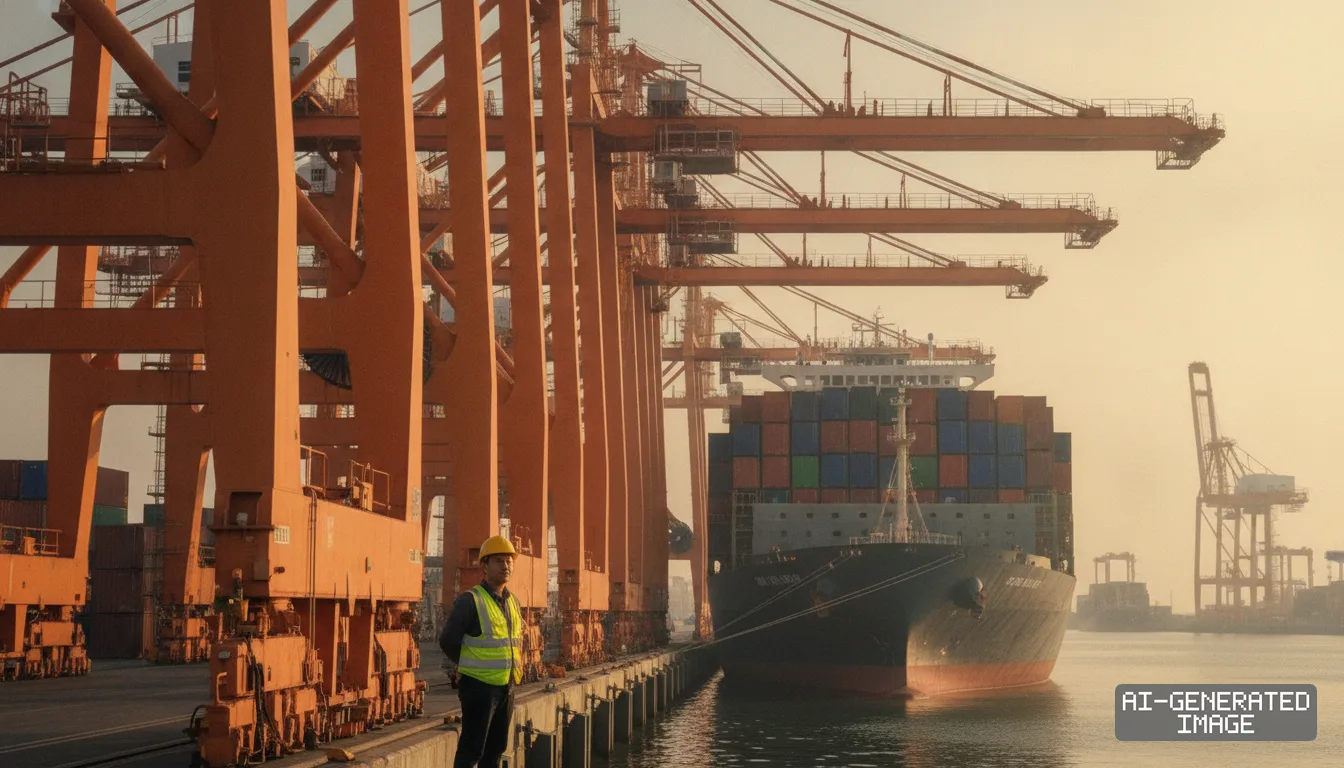
The Office of the United States Trade Representative formalized a two-month suspension of maritime Section 301 actions against Chinese vessels and port cranes on Nov. 10.
China's Customs Tariff Commission matched the action by extending its suspension of a 24% additional duty on US imports, leaving a baseline 10% rate in place.
The suspended measures cover trade across several core industrial categories, including proposed 100% duties on ship-to-shore cranes that account for over 70% of commercial installations at US ports.
The synchronized announcements implement an administrative extension agreed during bilateral consultations in Washington in late September, postponing an enforcement deadline originally set for Nov. 10.
The extension maintains regulatory relief through Jan. 10, 2027, rejecting widespread speculation among market participants that negotiators had secured a full-year truce spanning all of 2027.
Under the modification notice filed in the Federal Register, the United States will defer fee collections on Chinese vessel operators until 11:59 p.m. Eastern Time on Jan. 9, 2027.
The deferred measures also halt proposed tariffs of up to 100% on container handling equipment manufactured by Chinese engineering groups, according to the trade agency filing.
The Section 301 investigation originated from an April 2024 petition filed by five American labor unions, alleging unfair practices in China's commercial shipbuilding and logistics sectors.
The trade representative subsequently proposed vessel fees and equipment duties in April 2025 before ordering temporary suspensions during senior-level bilateral negotiations in Washington.
Shanghai Zhenhua Heavy Industries, which manufactures roughly 70% of the world's ship-to-shore cranes, holds the primary commercial exposure to the tariff deferral.
The state-backed equipment builder generates approximately 14% of its annual container crane revenue from port terminals along the US Atlantic and Pacific coasts.
A snap implementation of the 100% duty would have doubled installation costs for American port operators with active terminal upgrade contracts, the federal docket shows.
Chinese shipping giant COSCO SHIPPING Holdings gained identical relief from proposed net-tonnage port service fees that were slated to take effect across major American maritime gateways.
The carrier books roughly 18% of its global transpacific container liftings on routes touching US container terminals in California, Washington and New York.
China countered Washington's port measures with administrative decrees of its own, published simultaneously through three ministerial agencies on Nov. 9.
China's Ministry of Commerce and the General Administration of Customs issued Announcement No. 58 and Order No. 4, extending relief on critical mineral shipments.
The notices suspend export licensing restrictions on five rare earth elements and permanent magnets through Jan. 10, 2027, preserving outbound supply lines for overseas industrial buyers.
Neodymium-iron-boron permanent magnets represent an essential input for electric vehicle drive motors, wind turbine generators and precision industrial automation equipment across Western manufacturing bases.
China's Ministry of Transport also paused its retaliatory port fee assessments on American-flagged and American-operated vessels entering mainland maritime harbors, according to the ministry notice.
The transport ministry likewise halted supply chain investigations into foreign shipping operators that do business with American maritime logistics and shipbuilding providers.
China's retained 10% tariff continues to apply to approximately $13 billion in annual American industrial equipment and agricultural exports, the State Council tariff schedule indicates.
South Korean and Japanese shipbuilders and logistics providers operate without direct exposure to the fee suspension, though both cohorts depend on transpacific container rates dictated by Chinese competitors.
The administrative freeze prevents immediate disruption ahead of the Asia-Pacific Economic Cooperation summit scheduled for Nov. 18 and Nov. 19 in Shenzhen.
Negotiators used the two-month window to clear procedural obstacles before top leadership meets on the sidelines of the regional gathering, trade officials said.
The official notices do not state whether negotiators plan to extend the truce through the rest of 2027, and neither government published an agreement committing to a full-year freeze.
Government records show no new trade treaties or presidential agreements were signed on Nov. 10, confirming the actions remain technical continuations of the September framework.
For supply chain managers, the revised calendar concentrates trade risk into the opening days of 2027 rather than eliminating tariff exposure over the medium term.
The bilateral truce expires at 11:59 p.m. Eastern Time on Jan. 9, 2027 in Washington and at 13:01 on Jan. 10 in Beijing.
Impact map
How this development propagates across the region and out to global buyers.
| Event | Korea | China | Japan | Global impact |
|---|---|---|---|---|
| Section 301 and tariff suspension extension | HD Hyundai and Hanwha Ocean see stable transpacific freight rates, no direct port fee exposure | ZPMC shields 14% of crane revenue from 100% tariffs; COSCO avoids US port tonnage fees | Mitsui O.S.K. Lines maintains transpacific schedules without retaliatory Chinese harbor fees | US port terminals avoid doubling crane installation costs on active capital upgrade projects |
In this story
- Companies
- Shanghai Zhenhua Heavy IndustriesCOSCO SHIPPING Holdings
- Tickers
- 600320.SS601919.SS
- Policy
- TariffsExport Controls
- Impact
- Supply ChainPricingCompliance
Track every Tariffs development → Track every Export Controls development →
Related briefings
- China curbs dredger component exports under dual-use control Also on Shanghai Zhenhua Heavy Industries, Export Controls, Compliance
- China opens zero-tariff market access for Seychelles goods Also on COSCO Shipping Holdings, Tariffs, Compliance
- CSSC Reallocates Yard Drydocks to Accelerate Large Containership Output Also on Cosco Shipping Holdings
- Bessent presses China on $17B farm purchase pledge in trade talks Also on Tariffs, Export Controls, Compliance
Sources
Primary documents
Reporting
Confidence: high — how we grade this
The documents behind this briefing are linked above. East Asia Brief produces its English text with AI assistance under human editorial review, and does not translate or republish other outlets' articles. See our methodology and AI policy. Spotted an error? Tell us.
The Morning Brief
What changed in Korean, Chinese and Japanese industry overnight — and what it means for your supply chain. One email, weekday mornings, US time. Free.
The Morning Brief is in preparation. Leave your address and we will write to you once — when the first issue is ready. Nothing before that.