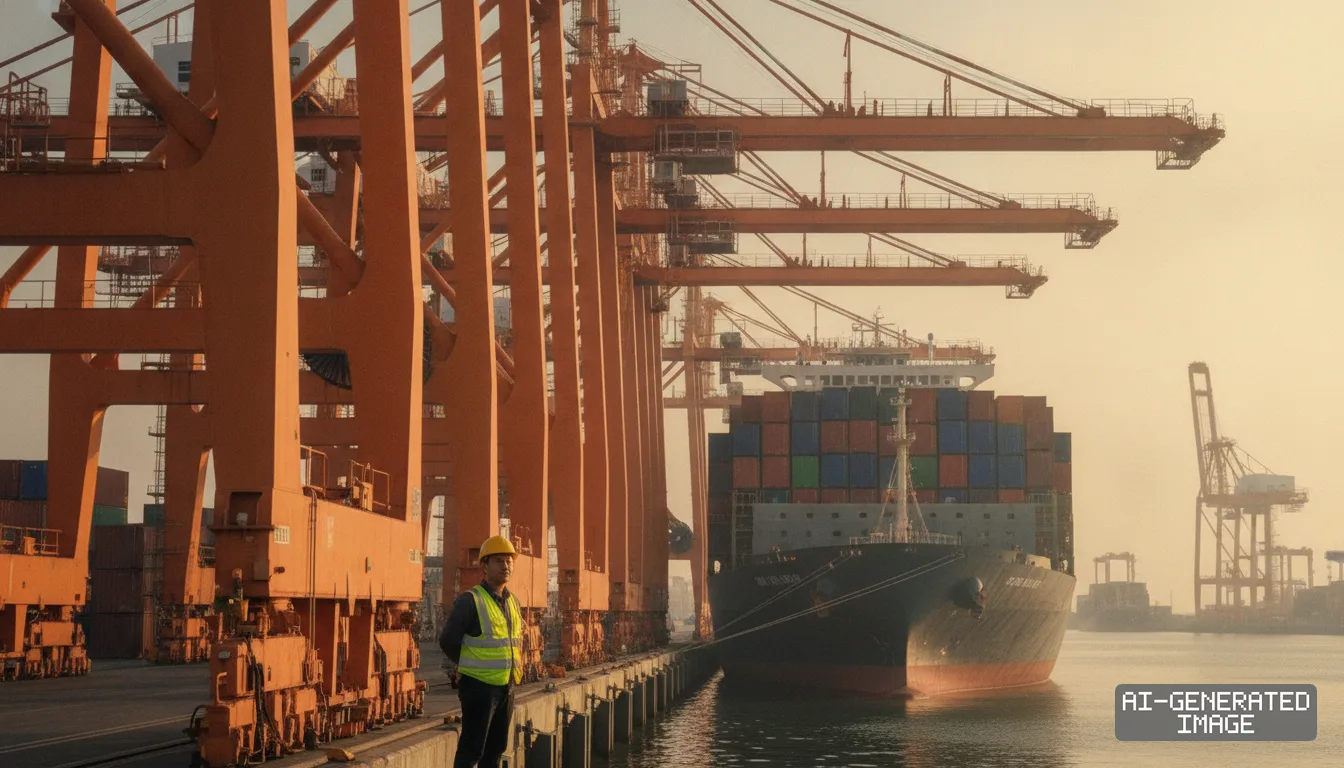
Congress scrutinizes Nvidia AI chip sales to secondary hubs
Three House committee leaders sought an executive briefing after an affiliate of Singapore-based Megaspeed bought $4.8 billion in gear.
Members of the U.S. Congress initiated legislative scrutiny on Nov. 6, 2026, targeting Nvidia's advanced artificial intelligence chip exports to secondary transfer hubs across Southeast Asia and the Middle East.
The effort combines draft legislation to lock export limits with a formal demand from three House committee chairmen for an executive briefing. Lawmakers want to halt unauthorized technology diversion into Chinese data networks.
Trade records show an affiliate of Singapore-based Megaspeed purchased $4.8 billion of Nvidia-powered equipment between June 2024 and February 2026. The purchase represented an unusually large hardware transfer for a regional cloud operator.
U.S. intelligence agencies identified Megaspeed executive Alice Huang as an intelligence asset passing information to Beijing, according to government assessments. Lawmakers raised concerns over her direct interactions with Nvidia Chief Executive Jensen Huang.
House Foreign Affairs Committee Chairman Brian Mast sent the inquiry letter alongside Select Committee on China Chairman John Moolenaar. House Permanent Select Committee on Intelligence Chairman Rick Crawford also signed the joint document.
The three chairmen asked Huang to provide an accounting of his contacts with Megaspeed executives. They also demanded details on Nvidia's internal security protocols designed to prevent foreign adversary espionage.
Nvidia remains exposed to policy shifts across Asian trade routes. China and Hong Kong generated $7.88 billion, or 8.2% of Nvidia's $96.2 billion in total revenue during the fiscal quarter ended July 26.
Approximately 600,000 Nvidia H200 accelerator chips remain stored in Hong Kong awaiting regulatory clearance. Shipments of the H200 processor to Chinese buyers account for less than 1% of Nvidia's data center revenue.
A cybersecurity research review recently detected 32 export-controlled Nvidia B300 graphics processing units operating within China Telecom facilities. The finding intensified congressional concern over diversion paths through third-party intermediaries.
Nvidia said customer meetings represent ordinary executive responsibilities. Regional cloud partners receive standard commercial specifications rather than trade secrets, and internal company reviews found no evidence of export control violations, the company said.
Megaspeed retained outside legal counsel to conduct an internal review of its hardware distribution. The company said it complies with applicable trade laws and cooperates with American regulatory inquiries.
Chinese Foreign Ministry spokesman Guo Jiakun dismissed the espionage accusations, calling them baseless smears. Beijing maintains that American export controls distort international commerce and disrupt global technology supply chains.
On Capitol Hill, Senators Elizabeth Warren and Jim Banks are negotiating the AI Oversight Act. The bill restricts licensed semiconductor exports to China to silicon architectures that are at least two generations behind cutting-edge products.
The proposed legislation locks export control parameters in place for 18 months. That window prevents regulatory agencies from easing technical compute thresholds without explicit congressional approval.
Warren and Banks also coordinated language for the Chip Security Act. The measure directs the U.S. Department of Commerce to verify the physical location of advanced data center processors after overseas delivery.
Under the draft security provisions, chipmakers must incorporate continuous signal telemetry to track processor coordinates. Enforcement officials would also receive statutory authority to conduct unannounced on-site hardware audits at foreign facilities.
Federal scrutiny intensified after Commerce Department inspectors visited a Malaysian data center in late 2024. Officials discovered advanced Nvidia server equipment stored in original shipping packaging rather than deployed in operational racks.
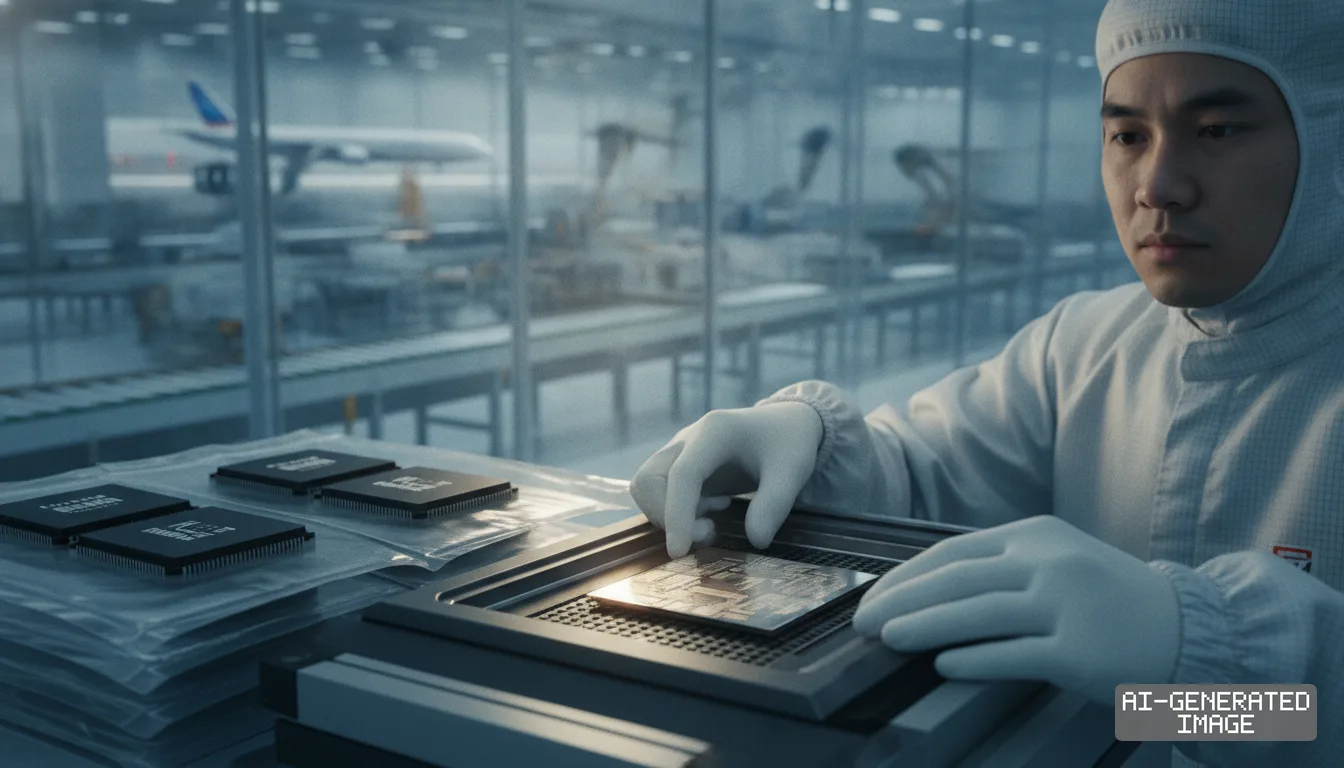
Tighter transshipment rules directly touch East Asian testing and advanced packaging centers. Contract manufacturers in Taiwan and Southeast Asia assemble Nvidia accelerated server boards, which then flow through regional distribution channels to international clients.
Packaging facilities run tight production schedules for high-bandwidth memory integration. Additional licensing checks at transshipment ports threaten to extend transit times for server racks moving between Asian assembly nodes and Middle Eastern facilities.
Congressional staff members focused on cloud capacity leasing as a primary route for diversion. Chinese enterprises barred from buying physical chips lease compute capacity from overseas data hubs that operate unrestricted hardware.
Huang has until Nov. 11 to confirm attendance for the closed-door briefing scheduled for Nov. 18 in Washington. Congressional leaders plan to attach the bipartisan export bills to defense authorization legislation before Jan. 3, 2027.
The committees have not confirmed whether formal subpoenas have been prepared to compel executive attendance. Nvidia has not published a disclosure regarding the congressional inquiry on its investor relations portal.
The House Foreign Affairs Committee confirmed the inquiry letter was delivered to Nvidia headquarters in Santa Clara, California. The 119th Congress convenes its opening legislative session in January.
Impact map
How this development propagates across the region and out to global buyers.
| Event | Korea | China | Japan | Global impact |
|---|---|---|---|---|
| Congressional scrutiny on AI chip diversion | Memory makers track packaging schedules as export licensing expands verification requirements | Data center operators face stricter hardware caps under two-generation lag rule | Equipment makers monitor semiconductor assembly flows through Southeast Asian hubs | Enterprise cloud buyers face longer delivery intervals and mandatory telemetry compliance |
In this story
- Companies
- Nvidia
- Tickers
- NVDA
- Exposed
- MegaspeedChina Telecom
- Policy
- Export Controls
- Impact
- Supply ChainComplianceOrder Book
Track every Export Controls development →
Related briefings
- China Telecom network hosts 32 barred Nvidia B300 chips in leak Also on China Telecom, Nvidia, Export Controls
- Nvidia defends $7.9B China sales as Jensen Huang resists wider curbs Also on Nvidia, Export Controls, Compliance
- Moonshot AI taps European cloud for 8,000 Blackwell chips Also on Nvidia, Export Controls, Compliance
- Nvidia halts H200 chip lines, shifting TSMC output to Rubin Also on Nvidia, Export Controls, Compliance
Sources
Primary documents
Reporting
Confidence: high — how we grade this
The documents behind this briefing are linked above. East Asia Brief produces its English text with AI assistance under human editorial review, and does not translate or republish other outlets' articles. See our methodology and AI policy. Spotted an error? Tell us.
The Morning Brief
What changed in Korean, Chinese and Japanese industry overnight — and what it means for your supply chain. One email, weekday mornings, US time. Free.
The Morning Brief is in preparation. Leave your address and we will write to you once — when the first issue is ready. Nothing before that.