Japan keeps South Korea on Group A strategic trade whitelist
The ministerial decision keeps 27 partner nations under general bulk licences after South Korea bought 82% of its advanced photoresists from Japan last year.
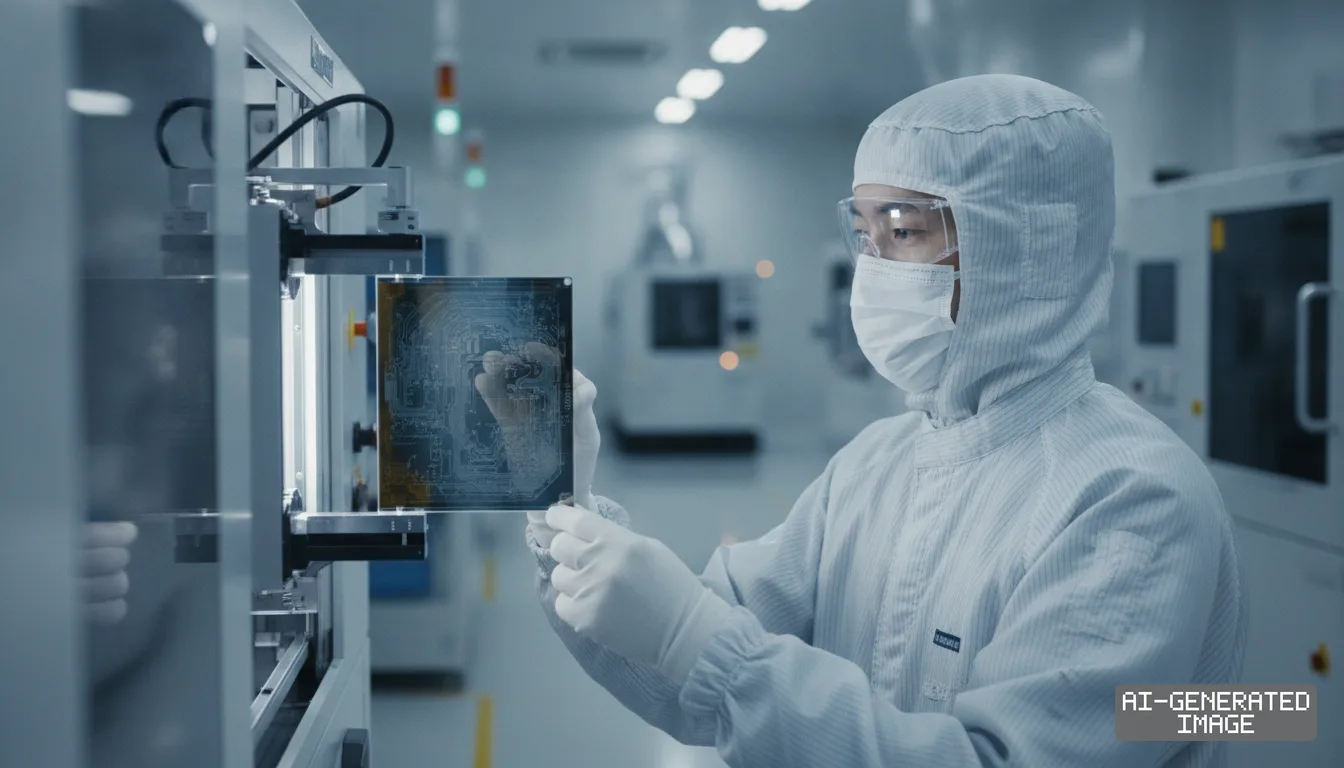
Japan's Ministry of Economy, Trade and Industry maintained South Korea's fast-track export status on Nov. 21, 2026, leaving cross-border deliveries of semiconductor materials under general bulk licenses.
The ministerial review preserved South Korea's standing among 27 partner jurisdictions listed on Group A of Appended Table 3 in the Export Trade Control Order. That cohort covers the core destinations exempted from individual screening for non-listed dual-use cargoes.
Trade between the two neighbors relies heavily on streamlined clearance. South Korea sourced 82% of its advanced semiconductor photoresists from Japanese suppliers last year, according to trade agency data.
Tokyo dismantled the remaining procedural hurdles to normal trade in 2023. A Cabinet decision on June 27, 2023, restored Seoul to Group A, taking effect July 21 of that year.
That restoration ended four years of administrative friction that began on July 1, 2019. Japan had subjected three chemical materials—hydrogen fluoride, photoresists and fluorinated polyimides—to individual contract licenses before dropping the rules on March 23, 2023.
South Korean memory producers continue to rely on Japanese specialty suppliers for high-volume fab inputs. Samsung Electronics and SK hynix source advanced photoresists from JSR, Tokyo Ohka Kogyo and Shin-Etsu Chemical for extreme ultraviolet lithography lines.
Samsung Electronics operates memory fabs that process more than 600,000 silicon wafers per month in Pyeongtaek and Hwaseong. Roughly 15% of that wafer volume relies on chemical inputs imported directly from Japanese production hubs.
Tokyo Ohka Kogyo ships advanced resists from its plants in Kanagawa Prefecture, booking South Korean buyers for 28% of its global semiconductor materials sales. Disruption to bulk permits would force every container to undergo separate ministerial reviews lasting up to 90 days.
Japanese trade officials have focused their enforcement machinery on multilateral diversion risks rather than bilateral trade measures. Tokyo's review confirmed that established bulk authorizations remain valid for verified end-users across the Korean semiconductor and display manufacturing sectors.
The ministry introduced heightened supply-chain traceability checks in early 2025. Japanese exporters must verify that advanced dual-use inputs sent to Group A nations do not leak toward embargoed third parties through intermediate fabrication stages.
South Korea enacted corresponding compliance updates on Sept. 1, 2026. The Ministry of Trade, Industry and Energy added advanced artificial intelligence chips and lithography tools to its national control schedules, incorporating 80 items approved across four multilateral export regimes.
Those updates mirrored export schedules operated by the Wassenaar Arrangement, the Australia Group, the Nuclear Suppliers Group and the Missile Technology Control Regime. Both Tokyo and Seoul coordinate technical specifications under those shared international frameworks.
Japanese authorities are preparing targeted environmental trade controls that take effect Nov. 22, 2026. METI Notice No. 13 introduces export permits for long-chain perfluorocarboxylic acids (LC-PFCAs) under the international Stockholm Convention on Persistent Organic Pollutants.
That environmental order applies universally to all overseas destinations. Japanese officials confirmed that the POPs measure does not alter preferential trade corridors for industrial semiconductor precursors or specialty electronic reagents.
The ministry has not published any ministerial ordinance or draft amendment revoking South Korea's Group A designation. The Trade and Economic Security Bureau confirmed that no administrative action targeting Korean fabs is under formal review.
A bilateral director-level trade security dialogue convenes in Seoul on Dec. 15, 2026. Officials from both ministries plan to examine third-country transit records and synchronize corporate internal compliance requirements for advanced chipmaking equipment.
Impact map
How this development propagates across the region and out to global buyers.
| Event | Korea | China | Japan | Global impact |
|---|---|---|---|---|
| Japan export control registry review | Samsung and SK hynix preserve general bulk licensing for 82% of imported photoresist inputs | No secondary leakage allowed under tightened third-country diversion screening | Tokyo Ohka Kogyo and Shin-Etsu retain expedited shipping for 28% of chemical sales | Advanced memory supply chains avoid delivery delays of up to 90 days |
In this story
- Companies
- Samsung ElectronicsSK hynixTokyo Ohka KogyoJSRShin-Etsu Chemical
- Tickers
- 005930.KS000660.KS4186.T4063.T
- Policy
- Export Controls
- Impact
- ComplianceSupply Chain
Track every Export Controls development →
Related briefings
- Dongjin Semichem operating profit jumps 51% on photoresist surge Also on JSR, Tokyo Ohka Kogyo, Shin-Etsu Chemical
- Tokyo Ohka Kogyo opens 23 billion yen EUV photoresist plant Also on JSR, Tokyo Ohka Kogyo, Shin-Etsu Chemical
- Mitsui Chemicals buys chip materials maker JSR for $11.6 billion Also on JSR, Tokyo Ohka Kogyo, Samsung Electronics
- SK hynix Convenes Japan Chip Suppliers on Next HBM Roadmap Also on JSR, Shin-Etsu Chemical, SK hynix
Sources
Primary documents
Confidence: high — how we grade this
The documents behind this briefing are linked above. East Asia Brief produces its English text with AI assistance under human editorial review, and does not translate or republish other outlets' articles. See our methodology and AI policy. Spotted an error? Tell us.
The Morning Brief
What changed in Korean, Chinese and Japanese industry overnight — and what it means for your supply chain. One email, weekday mornings, US time. Free.
The Morning Brief is in preparation. Leave your address and we will write to you once — when the first issue is ready. Nothing before that.