Japanese carmakers unify parts specs across 70,000 wire designs
JAMA and auto parts suppliers will align engineering rules across 14 vehicle assemblers and 400 component makers to counter Chinese pricing and automate domestic assembly.
The Japan Automobile Manufacturers Association and the Japan Auto Parts Industries Association launched a joint supply-chain standardisation initiative Nov. 19, 2026, targeting material specifications across steel, resins and wiring.
The two trade groups represent all 14 vehicle assemblers and roughly 400 primary parts makers in Japan. The project marks the first collective effort by Japanese automakers to harmonize core component standards.
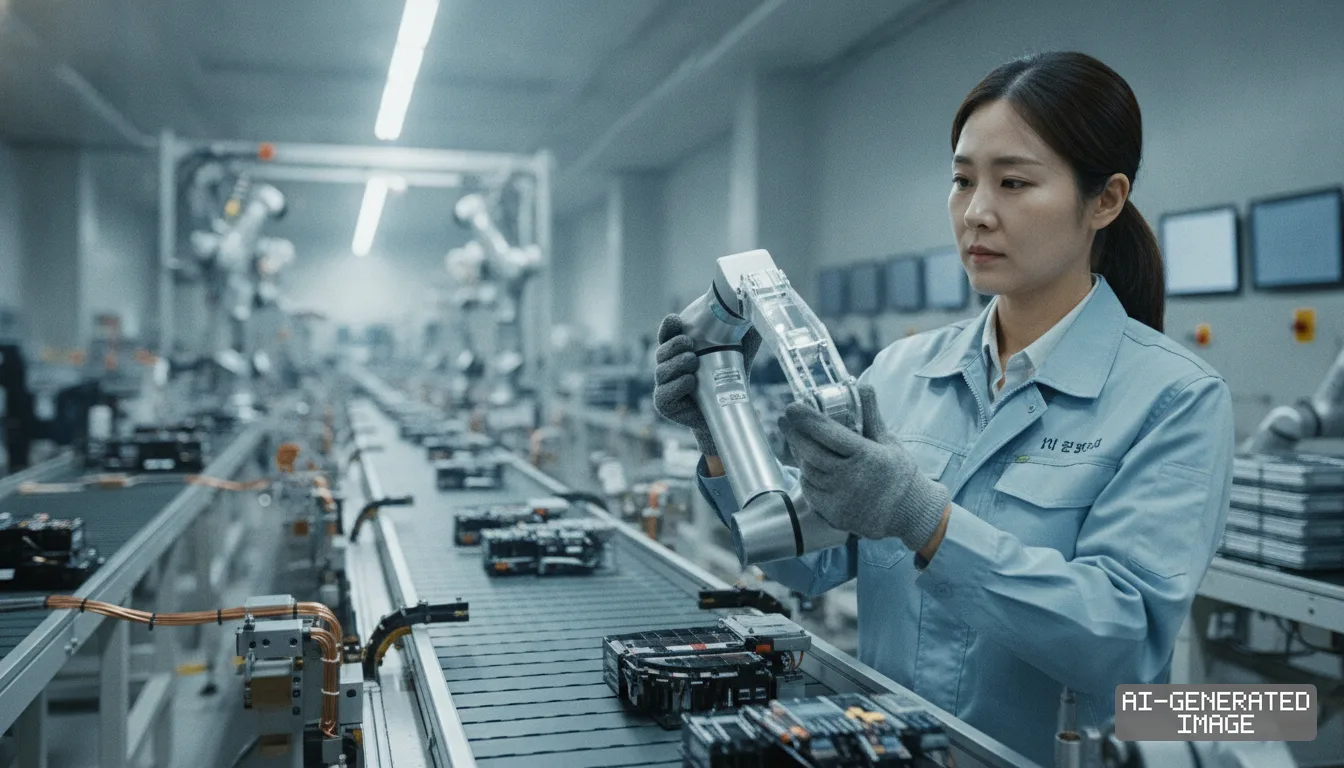
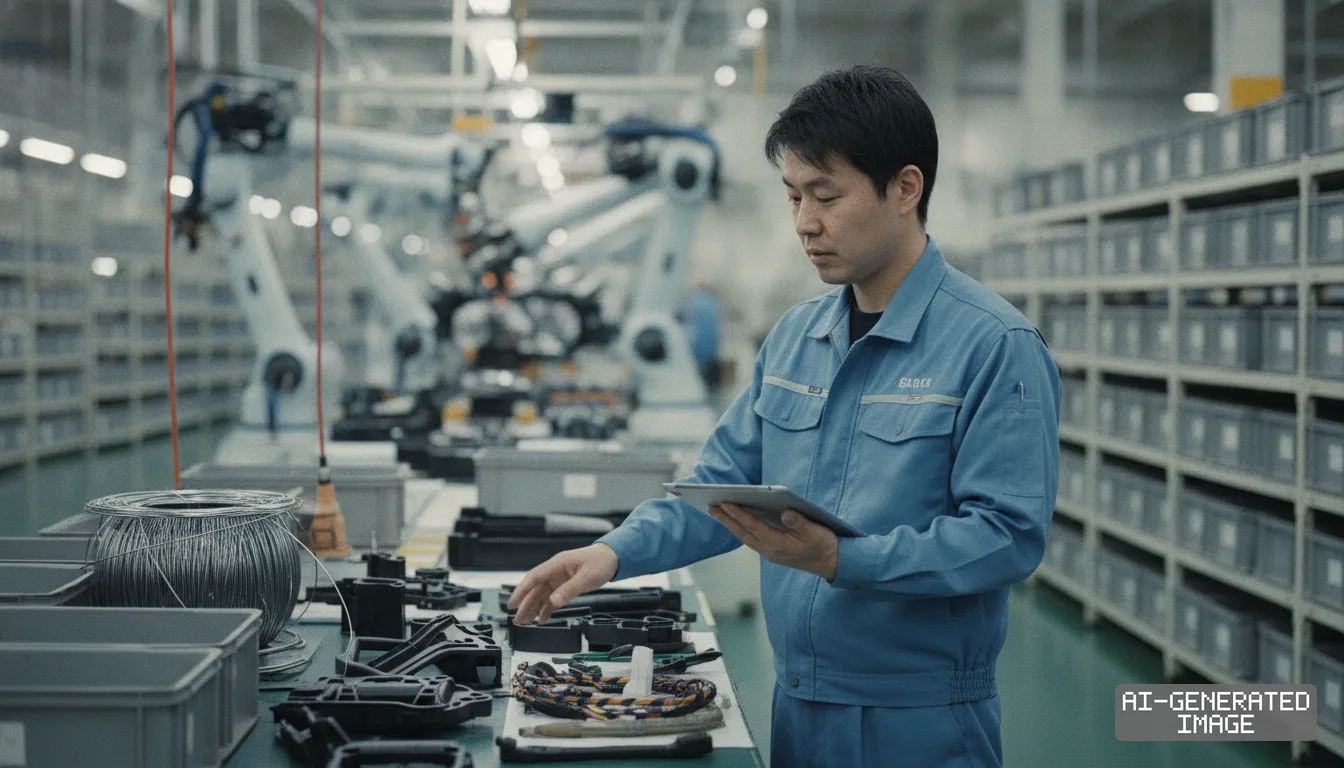
The groups plan to consolidate roughly 70,000 wire harness variations currently circulating across domestic car plants. Automakers will replace unique manufacturer requirements with unified engineering rules to enable automated assembly.
Rising development expenses and expanding vehicle software requirements have narrowed operating margins for Japanese suppliers. Carmakers aim to eliminate duplicated quality tests and small-lot custom orders that inflate manufacturing overhead.
Keisuke Homma, who heads the procurement committee at Toyota Motor and chairs the joint task force, outlined the plan in Tokyo. Shifting demographics and regional trading blocs require structural reform, Homma said.
Chinese electric vehicle makers maintain an estimated 20% to 30% cost advantage on hardware platforms through vertical integration. Standardized parts allow Japanese suppliers to consolidate volume and match competing production costs, Homma said.
The initiative divides initial work into three material categories. Task teams led by individual automakers focus on automotive sheet steel, exterior and interior resins, and low-voltage electrical wiring harnesses.
Yasuhiro Shibuya, who leads procurement engineering at Mazda Motor, directs the steel division. The group will eliminate low-volume bespoke steel grades and align automaker evaluation standards directly with Japan Iron and Steel Federation benchmarks.
Japanese mills currently produce dozens of specialized steel thicknesses and chemical blends tailored to single assembly lines. Consolidating structural sheet grades lets mills run longer production batches and lowers holding inventory for tier-one stampers.
High-strength steel accounts for roughly 50% to 60% of a modern vehicle body weight. Reducing custom chemical formulations allows domestic mills like Nippon Steel and JFE Steel to concentrate slab output on core commercial grades.
Subaru procurement manager Seigo Shimizu leads the plastics task force. The team focuses on standardizing evaluation methods for recycled resins, where differing proprietary odor and impact tests have prevented suppliers from pooling circular materials.
Toyoda Gosei practical lead Yusuke Komahashi joined the resin working group. Toyoda Gosei books about 65% of its automotive revenue in polymer components, where unified testing will eliminate redundant tooling across customer accounts.
Recycled polypropylene and engineering plastics carry varying melt flows and mechanical properties. A single national verification standard allows compounders to sell standardized recycled pellets to multiple assemblers without repetitive factory audits.
Toyota production engineer Koji Nomura leads the wire harness team alongside Nobuhito Shimizu of Yazaki Corporation. Yazaki holds roughly 30% of the global wire harness market and relies on manual labor for custom bundles.
Trimming 70,000 wiring configurations into modular cross-company standards allows harness manufacturers to automate terminal crimping and routing. Automated lines reduce reliance on overseas assembly plants facing rising wage inflation.
Sumitomo Electric Industries, which controls about 25% of the worldwide wiring harness sector alongside Yazaki, also stands to gain from automated connector designs. Standardized cross-sections reduce changeover downtime on assembly lines.
The physical material drive complements broader data-sharing architectures initiated under government supervision. The Ministry of Economy, Trade and Industry established the Ouranos industrial data infrastructure to link corporate databases while preserving trade secrets.
Fourteen Japanese automakers operate the Automotive and Battery Traceability Center Association under that framework. The entity provides secure digital ledgers for corporate carbon footprint tracking and raw material provenance reporting.
European Union battery regulations mandate verified carbon footprint declarations and digital product passports for electric vehicles sold in the bloc. The unified Japanese digital architecture allows domestic part makers to verify emissions data across corporate tiers.
Interoperability trials between the Japanese data platform and Europe’s Catena-X automotive network verified cross-border data exchanges without exposing proprietary supplier pricing. That mechanism lets exporters meet European supply-chain due diligence rules.
Japanese suppliers previously faced multiple proprietary digital tracking portals from different domestic vehicle assemblers. Combining digital reporting under Ouranos while unifying physical material testing under JAMA reduces administrative overhead for smaller suppliers.
JAMA scheduled the rollout of the unified engineering and procurement guidelines across member procurement divisions ahead of the 2027 automotive planning cycle.
The briefing summary does not state the targeted cost-reduction percentage per vehicle, and JAMA has not published an itemized timeline for eliminating the specific wire-harness SKUs.
Automakers will present preliminary implementation milestones during the Japan Mobility Show in Tokyo in autumn 2027, according to the association.
Impact map
How this development propagates across the region and out to global buyers.
| Event | Korea | China | Japan | Global impact |
|---|---|---|---|---|
| Unified auto material specs | Hyundai Motor faces more price-competitive Japanese small and midsize platforms | BYD and Geely maintain cost leads as Japanese assemblers streamline procurement | Yazaki and Toyoda Gosei cut custom tooling costs across domestic assembly lines | Component suppliers face harmonised technical criteria across Japanese OEM platforms |
In this story
- Companies
- Toyota MotorYazaki CorporationToyoda GoseiSumitomo Electric Industries
- Tickers
- 7203.T7282.T5802.T
- Exposed
- Mazda MotorSubaru
- Policy
- Standards
- Impact
- Supply ChainCost StructureCompliance
Track every Standards development →
Related briefings
- Philippines seeks zero Japan tariffs on farm and tobacco goods Also on Mazda Motor, Subaru, Toyota Motor
- Japan certifies $2.4 billion in battery subsidies to lock in solid-state cell capacity Also on Mazda Motor, Toyota Motor
- UK and Japan ink offshore wind compact for £9 billion pipeline Also on Sumitomo Electric Industries, Standards
- China curbs Japan dual-use exports citing military buildup Also on Subaru, Compliance, Cost Structure
Sources
Primary documents
Reporting
Confidence: high — how we grade this
The documents behind this briefing are linked above. East Asia Brief produces its English text with AI assistance under human editorial review, and does not translate or republish other outlets' articles. See our methodology and AI policy. Spotted an error? Tell us.
The Morning Brief
What changed in Korean, Chinese and Japanese industry overnight — and what it means for your supply chain. One email, weekday mornings, US time. Free.
The Morning Brief is in preparation. Leave your address and we will write to you once — when the first issue is ready. Nothing before that.