China waives tariffs on 8,949 Cameroon lines to secure bauxite
The zero-tariff decree covers 100% of non-quota goods from Cameroon, granting Chinese smelters preferential access to roughly one billion metric tons of bauxite reserves.
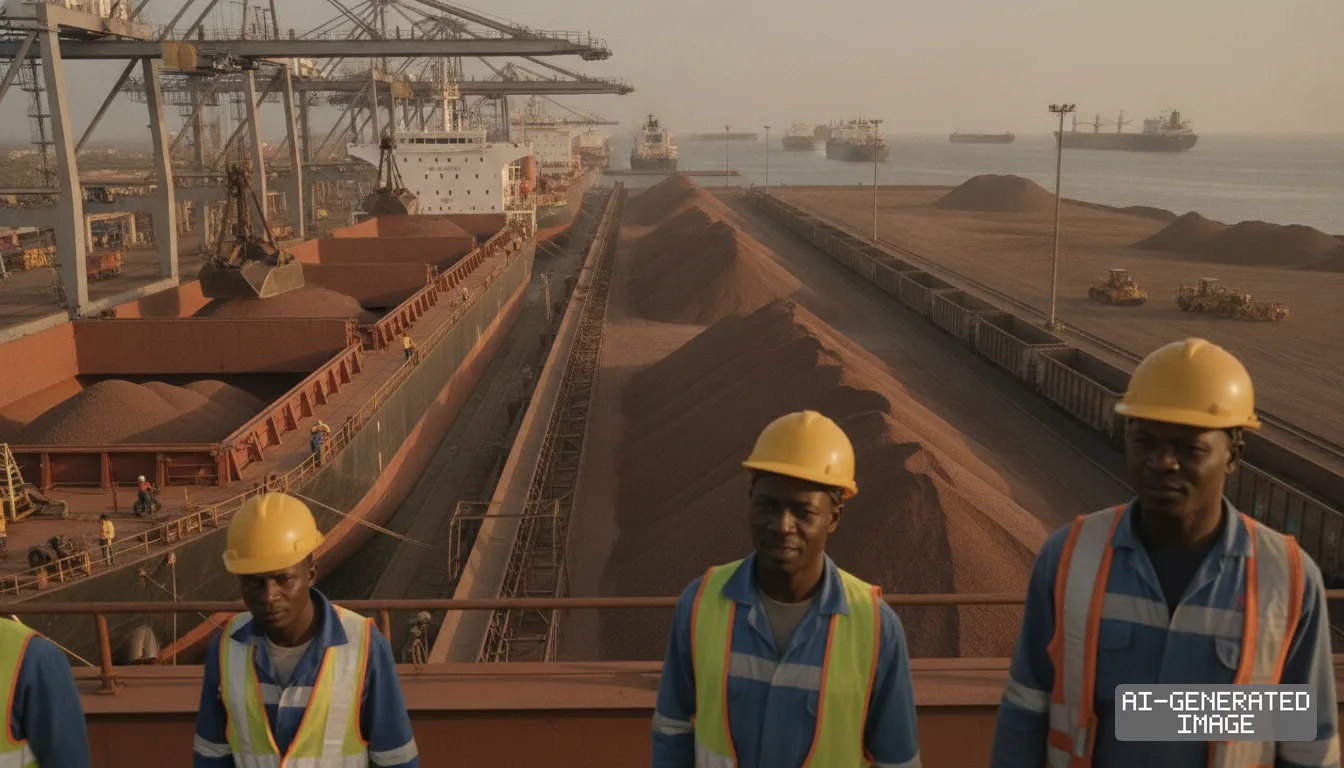
China's Customs Tariff Commission monitored expanded duty-free cargo inflows from Cameroon on Nov. 21, 2026, executing preferential zero-tariff terms across 8,949 product categories to anchor central African raw material corridors.
The commission serves as the cabinet agency that sets Beijing's import duties and trade schedules. Cameroon holds roughly one billion metric tons of undeveloped bauxite reserves, representing the largest unexploited aluminum ore deposit in Central Africa.
The tariff exemption removes customs duties on 8,949 lines, covering 100% of Cameroon's non-quota merchandise exports to China. For tariff-rate quota agricultural commodities, the zero rate applies strictly to shipments within statutory import volume limits.
Beijing enacted the preferential treatment under State Council Announcement No. 5 of 2026. The measure expanded unilateral duty-free market access beyond least-developed economies to 20 non-LDC African trading partners, including Cameroon.
The preferential schedule operates alongside origin verification rules published by the General Administration of Customs of China. Those rules require imported cargoes to obtain authenticated origin certificates proving processing within Cameroonian borders before clearing Chinese ports duty-free.
Bilateral trade data registered initial clearance under the mechanism earlier this month. Cameroon's Ministry of Finance cleared its first preferential commercial export, dispatching a 17-metric-ton consignment of green coffee through the duty-free channel.
The tariff framework targets heavy mineral extraction where Chinese state contractors finance processing infrastructure. China Harbour Engineering Corp. holds contracts building the deep-water port complex at Kribi, which handles bulk mineral carriers exceeding 100,000 deadweight tons.
Canyon Resources develops the Minim-Martap bauxite deposit through its operating subsidiary Camalco. Minim-Martap holds 99.1 million metric tons of proven high-grade bauxite reserves grading 51.6% alumina content, supplying feedstock directly to coastal Chinese refiners.
Camalco signed a $2 billion mining convention targeting an annual extraction volume of 5 million metric tons of bauxite. The ore moves by rail from Ngaoundere to maritime transshipment hubs at Kribi.
Transport bottlenecks continue to constrain heavy haulage across the corridor. Camalco finalized an interim coastal charter with domestic shipper Gulfcam to haul bauxite by barge from Douala to deep-water berths at Kribi.
The logistics arrangement allows ore carriers to bypass shallow river channels at Douala port. Direct loading onto Capesize vessels reduces sea freight expenses by an estimated $4 per ton, company logistics filings show.
Chinese smelters require overseas bauxite — the sedimentary rock refined into alumina to smelt aluminum — as domestic reserves in Henan and Shanxi decline. China imports roughly 70% of its annual bauxite consumption.
Sinosteel holds a separate 20-year concession for the Lobé iron ore deposit, located 40 kilometers from Kribi. The Lobé deposit contains 632.8 million metric tons of iron ore resources, tied to a 10-million-ton annual beneficiation plant.
Zero tariffs give Chinese state processors preferential margins over European buyers. French and German refiners import Cameroonian raw materials under standard Most Favored Nation tariffs averaging 4.5% to 6.5% on semi-processed aluminum intermediates.
Cameroonian trade groups plan to capture local beneficiation rather than shipping unrefined ore. Domestic mining laws require resource concession holders to construct processing facilities within Cameroon to yield alumina before export.
The bilateral agreement leaves secondary processing thresholds unresolved. The Customs Tariff Commission has not published product-specific origin percentages for bauxite refined into alumina within the Douala and Kribi industrial zones.
Preferential trade terms remain under review through technical working panels. Finance Minister Louis Paul Motaze met Chinese foreign affairs officials in Yaoundé to establish standardized quarantine protocols for horticultural goods.
The zero-tariff decree runs under Announcement No. 5 of 2026 until April 30, 2028. Both governments plan to transition the temporary unilateral terms into a permanent China-Africa Economic Partnership agreement before the two-year order expires.
Trade volumes through Kribi will test whether preferential tariffs can offset inland rail transit costs. Cameroon's state railway Camrail operates single-track lines between northern mining plateaus and coastal terminals.
The Customs Tariff Commission has published no new tariff decree dated Nov. 21, 2026, leaving China's April 28 announcement as the legal basis for Cameroon's duty-free entry.
The State Council will conduct its mid-term compliance review of the African preferential tariff framework in Beijing on Oct. 15, 2027.
Impact map
How this development propagates across the region and out to global buyers.
| Event | Korea | China | Japan | Global impact |
|---|---|---|---|---|
| Cameroon zero-tariff trade access | domestic aluminum processors face tighter global bauxite spot supplies as Chinese refiners secure direct African corridors | smelters secure long-term non-Guinean bauxite feeds, eliminating import duties across 8,949 tariff lines | trading houses face higher bid premiums on uncommitted West African bauxite cargoes destined for Asian ports | Capesize Atlantic dry bulk rates gain support on emerging Kribi bauxite and iron ore export volumes |
In this story
- Companies
- China Harbour EngineeringCanyon ResourcesSinosteel
- Exposed
- CamalcoGulfcam
- Policy
- Tariffs
- Impact
- Supply ChainPricing
Track every Tariffs development →
Related briefings
- China-Nigeria trade hits $17.4B after zero-tariff policy launch Also on China Harbour Engineering, Tariffs, Pricing
- USTR accelerates Section 301 probe to hit year-end target Also on Tariffs, Pricing
- South Africa taps China zero-tariff window as exports reach $5.3B Also on Tariffs, Pricing
- China Solar Cell Exports Surge to $3.34B Ahead of Pending US Duties Also on Tariffs, Pricing
Sources
Primary documents
Reporting
Confidence: high — how we grade this
The documents behind this briefing are linked above. East Asia Brief produces its English text with AI assistance under human editorial review, and does not translate or republish other outlets' articles. See our methodology and AI policy. Spotted an error? Tell us.
The Morning Brief
What changed in Korean, Chinese and Japanese industry overnight — and what it means for your supply chain. One email, weekday mornings, US time. Free.
The Morning Brief is in preparation. Leave your address and we will write to you once — when the first issue is ready. Nothing before that.