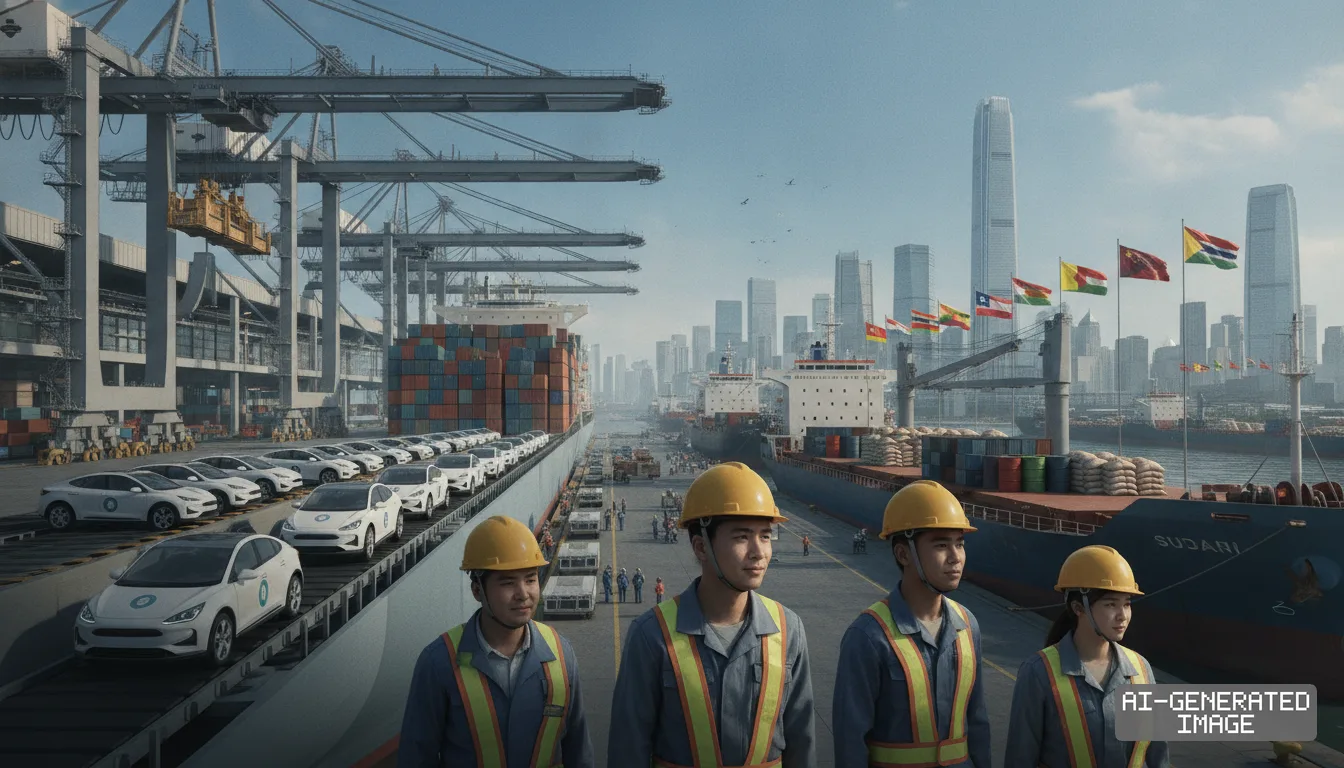
Indonesia demands China drop nickel tariffs as trade deficit widens
Jakarta seeks cathode plant funding and tariff relief after its bilateral shortfall widened 48.6% to $21.2 billion through September.
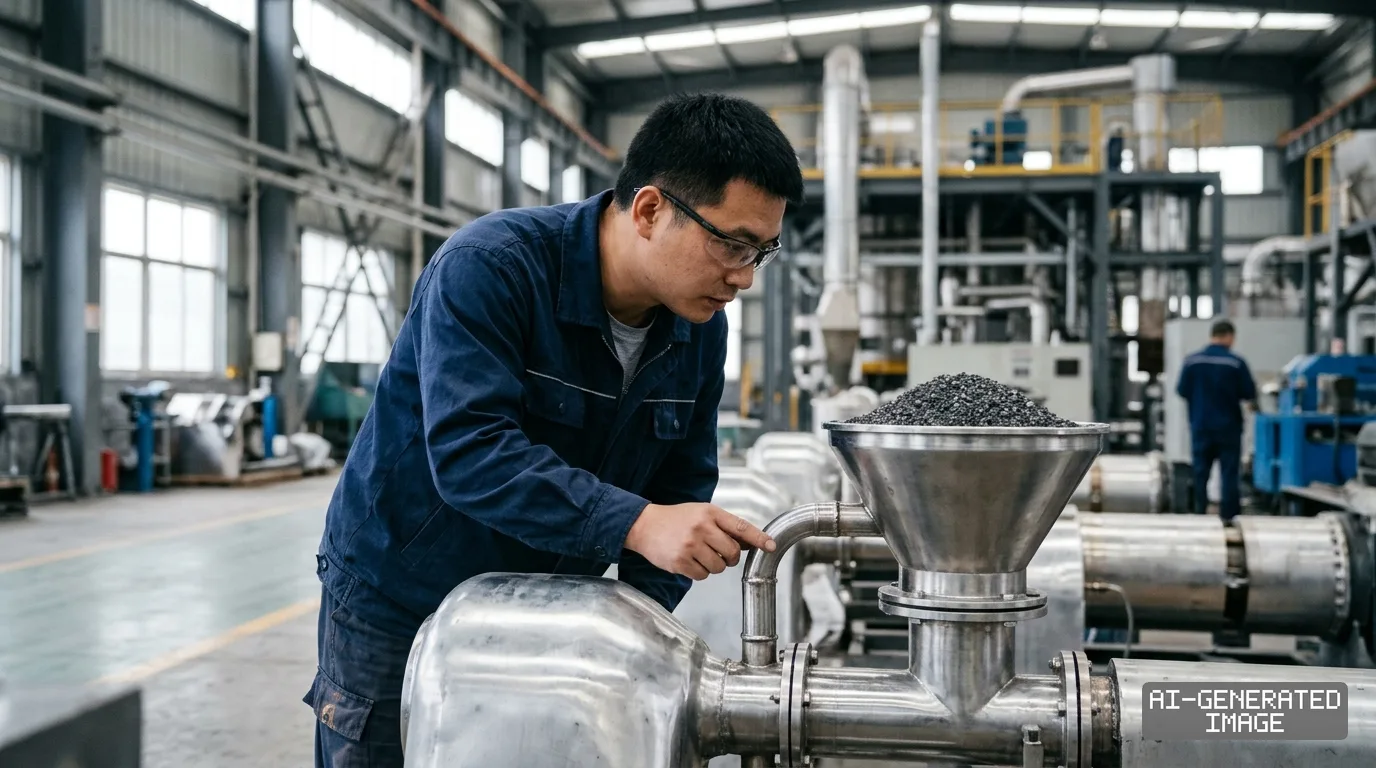
Indonesia asked China on Nov. 12, 2026 to eliminate import tariffs on processed nickel and fund local battery cathode plants to redress a widening bilateral trade deficit.
Indonesia recorded a $21.2 billion trade deficit with China across the first nine months of 2026, according to Statistics Indonesia. That shortfall widened 48.6% from $14.27 billion reported during the same period in 2025.
Surging shipments of Chinese machinery, consumer electronics and completed vehicles drove the deficit higher, Statistics Indonesia said. Indonesian commodity exports failed to balance the inflow despite record export volumes of mineral fuel and metal products.
China takes 98% of Indonesia's ferronickel shipments, a ferroalloy category that generated $16.3 billion in 2025 export earnings. Indonesia remains the world's largest supplier of mined nickel, controlling more than half of global mine production.
Coordinating Economic Minister Airlangga Hartarto said Jakarta will pursue a bilateral comprehensive economic partnership agreement with Beijing under a strict two-year negotiating deadline. Bilateral trade reached $167 billion in 2025 across all sectors, Hartarto said.
Existing regional agreements eliminate duties on 80% of bilateral tariff lines through the ASEAN-China Free Trade Area and the Regional Comprehensive Economic Partnership. Those agreements left critical non-tariff barriers and import licensing restrictions unresolved, Hartarto said.
Director General for Asia-Pacific and Africa Santo Darmosumarto said the two nations will formalize the negotiating mandate during a bilateral summit next week. President Prabowo Subianto will meet Chinese President Xi Jinping in Shenzhen on Nov. 18, Darmosumarto said.
Indonesian trade delegates will condition bilateral tariff relief on Chinese firms financing high-value processing infrastructure. Jakarta wants Chinese refiners to build cathode precursor lines rather than exporting raw ferronickel or intermediate battery slurries back to Chinese ports.
Tsingshan Holding Group operates industrial smelting complexes across Central Sulawesi and North Maluku that produce roughly half of Indonesia's nickel pig iron. The Chinese conglomerate faces demands to invest in chemical plants that produce refined battery-grade nickel sulfate.
Zhejiang Huayou Cobalt owns majority stakes in three high-pressure acid leach facilities in Indonesia that produce mixed hydroxide precipitate, a battery precursor intermediate. Chinese companies control 80% of Indonesian chemical-grade nickel capacity, according to Benchmark Mineral Intelligence data.
Downstream battery investors including CNGR Advanced Material and GEM also face tighter domestic rules on project ownership. The Indonesian government plans to mandate higher equity participation for state companies in all new mineral conversion projects.
Slumping nickel prices pressured smelter cash flows throughout 2026 as global supply outpaced electric vehicle demand. Nickel Industries and partner Chinese refiners coordinated output reductions in October 2026, cutting rotary kiln furnace runs to 75% of capacity across several Sulawesi operations.
Indonesia's Ministry of Energy and Mineral Resources lowered 2026 national nickel mining quotas to roughly 260 million metric tons from 379 million metric tons in 2025. That quota reduction increased raw ore feedstock costs for non-integrated processing facilities.
The government will channel all exports of ferroalloys, coal and palm oil through its centralized NADI regulatory portal starting Jan. 1, 2027. State investment vehicle PT Danantara Sumberdaya Indonesia will review shipment contracts and inspect declared prices before granting export permits.
Danantara operates as a specialized unit of Indonesia's sovereign wealth fund, which oversees $900 billion in state enterprise assets. Government Regulation PP 24/2026 authorizes the entity to collect export margins and act as an exclusive trading intermediary for national resource output.
Prabowo and Xi will open formal negotiations on the Indonesia-China Comprehensive Economic Partnership Agreement on Nov. 18, 2026 in Shenzhen. Bilateral working groups will begin technical tariff scheduling sessions in Jakarta in January 2027.
The ministry notices do not state which specific tariff codes China agreed to review, nor has the government published the required minimum local equity percentage for new foreign battery chemical ventures.
Chinese Commerce Minister Wang Wentao said in an official ministry statement that Beijing seeks stable and transparent mineral policies to protect its existing infrastructure investments across Indonesia.
Impact map
How this development propagates across the region and out to global buyers.
| Event | Korea | China | Japan | Global impact |
|---|---|---|---|---|
| Indonesia-China CEPA negotiations | LG Energy Solution shielded from capital mandates following earlier Halmahera withdrawal | Tsingshan and Huayou face local equity dilution and capital demands for cathode processing | Sumitomo Metal Mining faces margin pressure if Indonesian MHP prices rise under state controls | Battery cell makers face tighter pricing floors on 80% of refined nickel chemical supply |
In this story
- Companies
- Tsingshan Holding GroupZhejiang Huayou Cobalt
- Tickers
- 603799.SS
- Exposed
- Nickel IndustriesCNGR Advanced MaterialGEM Co.
- Policy
- TariffsLocal Content Rules
- Impact
- Supply ChainPricingCapex
Track every Tariffs development → Track every Local Content Rules development →
Related briefings
- Japanese trading houses secure Indonesian HPAL nickel to bypass tolling bottlenecks Also on Tsingshan Holding Group, Zhejiang Huayou Cobalt
- China halts sulfuric acid exports, squeezing nickel plants Also on GEM Co.
- POSCO Future M accelerates LFP cathode output for utility grids Also on CNGR Advanced Material, Local Content Rules
- Pino raises $133 million to expand Pohang cathode facility Also on CNGR Advanced Material, Local Content Rules
Sources
Reporting
Confidence: medium — how we grade this
The documents behind this briefing are linked above. East Asia Brief produces its English text with AI assistance under human editorial review, and does not translate or republish other outlets' articles. See our methodology and AI policy. Spotted an error? Tell us.
The Morning Brief
What changed in Korean, Chinese and Japanese industry overnight — and what it means for your supply chain. One email, weekday mornings, US time. Free.
The Morning Brief is in preparation. Leave your address and we will write to you once — when the first issue is ready. Nothing before that.