China halts sulfuric acid exports, squeezing nickel plants
Ministry records confirm no statutory decree was issued Sept. 28, prolonging informal customs curbs that cut 4.65 million tons of acid from global battery and metal refining.
China's Ministry of Commerce kept industrial sulfuric acid off its statutory export control catalogue on Sept. 28, prolonging an informal customs embargo that has halted shipments to overseas nickel processors since May 1.
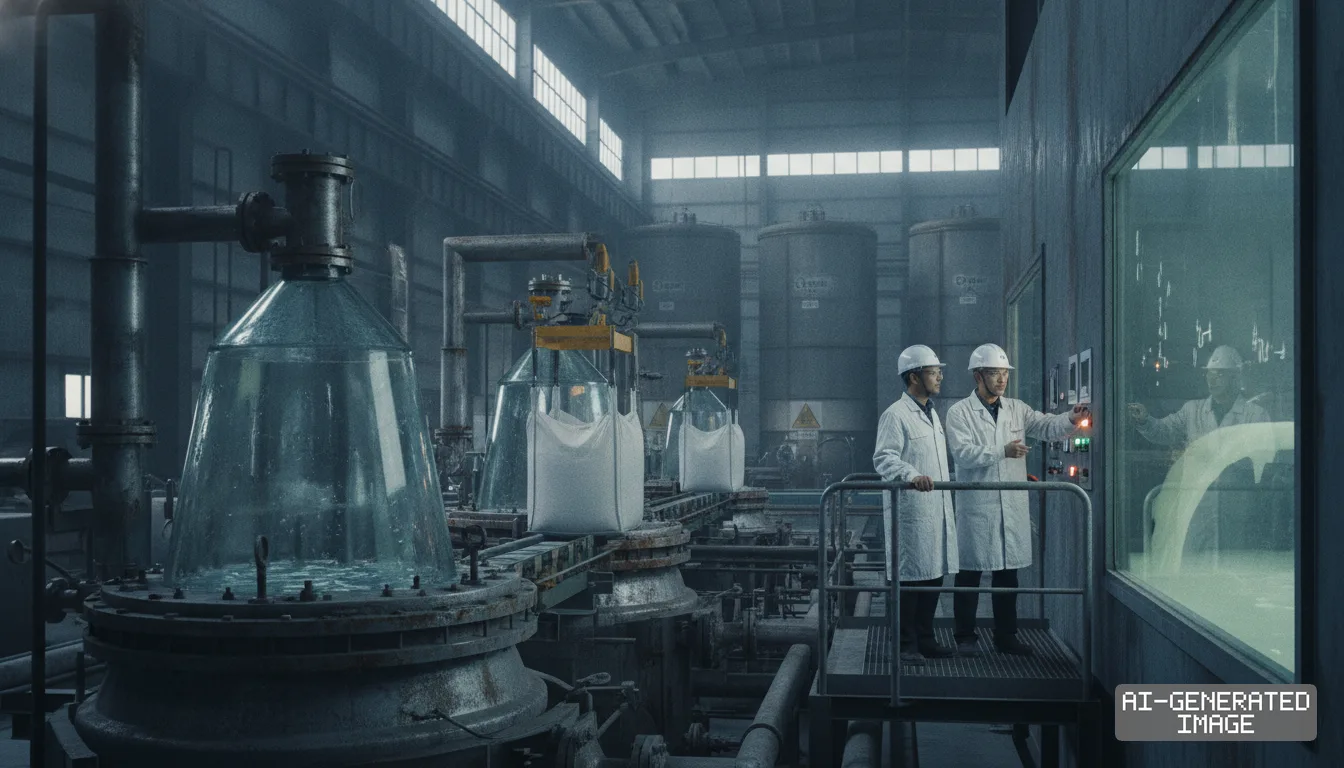
Sulfuric acid serves as an essential leaching agent across battery-grade mineral refining. China exported 4.65 million metric tons of the chemical in 2025, accounting for more than 40% of global seaborne export trade.
Indonesia drew 61.6% of its foreign sulfuric acid from Chinese smelters in 2025, receiving 670,000 metric tons. High-pressure acid leaching facilities require 10 to 12 tons of acid for every ton of nickel extracted.
Market participants had anticipated a formal export restriction announcement from Beijing on Sept. 28. Ministry of Commerce documents published through that date confirmed no statutory decree was issued, leaving informal administrative controls intact.
The ministry's latest chemical notice appeared Sept. 22 as Announcement No. 40 of 2026. That document added two piperidine derivatives to drug-precursor export control lists for shipments to North America, leaving industrial acids unregulated by statute.
Chinese customs authorities enforce the export freeze through verbal window guidance issued to producers in mid-April. Smelters were instructed to suspend foreign deliveries of merchant and by-product acid starting May 1.
Beijing introduced the border restriction to safeguard domestic agricultural supplies, market analysts said. Regulators directed smelters to prioritize acid feedstock for domestic phosphate fertilizer production to stabilize farming costs during planting cycles.
A parallel shipping bottleneck in the Middle East compounded the feedstock squeeze. Commercial navigation disruptions through the Strait of Hormuz stranded more than 600,000 metric tons of sulfur, pushing spot prices above $1,100 per ton.
The double disruption directly hit Indonesian hydrometallurgical operations producing mixed hydroxide precipitate for electric vehicles. PT QMB New Energy Materials, a Morowali venture operated by GEM Co., requires 1.5 million metric tons of acid annually.
Three partner facilities at the same Morowali industrial complex consume another 1.8 million metric tons each year. PT ESG New Energy Material requires 653,000 tons, PT Meiming New Energy Material consumes 620,000 tons, and PT Green Eco Nickel uses 530,000 tons.
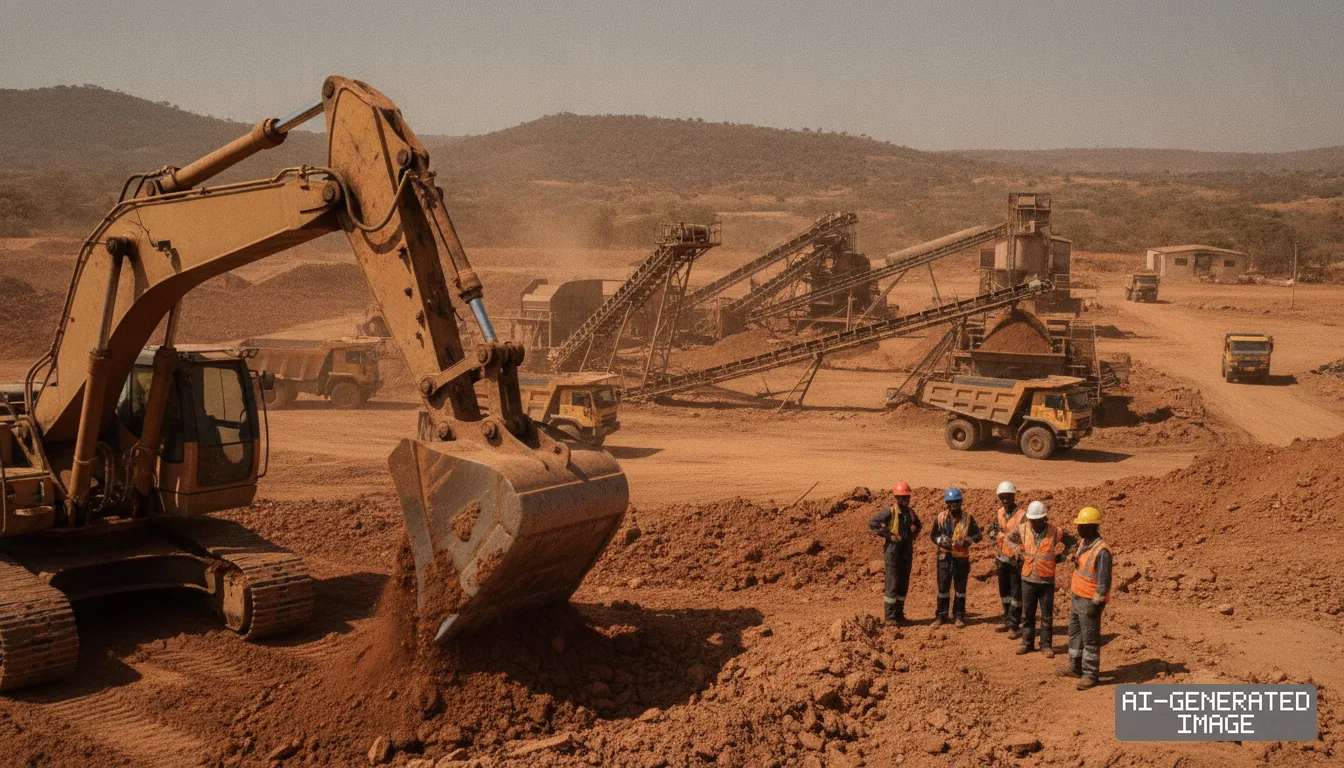
Falling Indonesian ore grades aggravated reagent consumption across operating lines. Laterite ores containing less than 1.5% nickel demand higher chemical volumes per ton of recovered metal, compounding plant cost inflation that operating adjustments cannot offset.
Reagent cost spikes pushed Indonesian high-pressure acid leaching producers from the bottom of the global cost curve to the top. Multiple processing units curtailed throughput by up to 50%, industry consultants said.
The Indonesian government worsened the supply crunch by trimming mining quotas. Jakarta set the 2026 nickel ore quota at 270 million wet metric tons, trailing projected industry demand of 345 million tons.
Tightening feedstock balances altered global metal forecasts. The International Nickel Study Group revised its 2026 market projection from an initial surplus of 283,000 metric tons to a deficit of 32,000 tons, citing processing bottlenecks.
The Chinese export halt created parallel strains for South American copper producers. Chile imported 4 million metric tons of sulfuric acid in 2025, relying on Chinese chemical plants for 37.1% of those foreign supplies.
Chilean solvent extraction and electrowinning operations consume acid to leach oxide ores and tailing deposits. Dwindling Chinese cargoes forced South American buyers to seek replacement shipments from South Korea and Japan at elevated freight rates.
Asian alternatives offer narrow room to compensate for Chinese shortfalls. Indonesian imports of sulfuric acid from South Korea and Japan fell 40% and 65% respectively last year, leaving regional merchant supply tightly committed.
Logistical hurdles also restrict prompt seaborne reallocation. Transporting concentrated sulfuric acid requires dedicated chemical tankers lined with acid-resistant alloys, and specialized tanker capacity remains heavily chartered on fixed regional routes.
Inside China, merchant acid prices fluctuated sharply following the trade halt. Domestic spot acid peaked above 1,850 yuan ($264) per metric ton in June before settling to 1,387.5 yuan by early September after smelter overhauls ended.
Customs authorities have restricted exemptions to electronic-grade sulfuric acid used in semiconductor fabrication. Electronic-grade acid accounts for less than 2% of total Chinese sulfuric acid production and requires specialized ministry clearance for export.
Downstream battery cathode manufacturers in South Korea and Japan face cost transmission across supply contracts. Precursor plants paying higher premiums for Southeast Asian nickel precipitate must absorb the increases or pass them to cell makers.
International trading houses holding supply contracts signed before May face mounting legal disputes. Buyers cannot enforce contractual terms because Chinese customs offices withhold clearance stamps without issuing formal written ban orders.
The Ministry of Commerce has not published statutory licensing criteria or an administrative timeline for lifting the export restrictions on metallurgical by-product acid.
The General Administration of Customs has not released port-level clearance rules for overseas joint ventures operating with Chinese capital.
The unwritten export suspension on industrial and by-product acid is scheduled to run through Dec. 31, according to commercial directives delivered to domestic smelters.
Indonesian nickel refining consortiums plan to review joint chemical procurement options at an industry meeting in Singapore on Oct. 15.
Impact map
How this development propagates across the region and out to global buyers.
| Event | Korea | China | Japan | Global impact |
|---|---|---|---|---|
| Sulfuric acid export suspension | Cathode makers pay higher premiums on Indonesian MHP feedstocks | Smelters redirect merchant acid to domestic fertilizer production | Smelters absorb surging ocean freight for substitute merchant cargoes | Battery-grade nickel deficit widens to 32,000 metric tons in 2026 |
| Sulfuric acid export suspension | Cathode makers pay higher premiums on Indonesian MHP feedstocks | Smelters redirect merchant acid to domestic fertilizer production | Smelters absorb surging ocean freight for substitute merchant cargoes | Battery-grade nickel deficit widens to 32,000 metric tons in 2026 |
In this story
- Companies
- GEM Co.
- Tickers
- 002340.SZ
- Exposed
- PT QMB New Energy MaterialsPT ESG New Energy MaterialPT Meiming New Energy MaterialPT Green Eco Nickel
- Policy
- Export Controls
- Impact
- Supply ChainCost StructureCompliance
Track every Export Controls development →
Related briefings
- Malaysia overtakes China in US drone market as tariffs bite Also on Export Controls, Compliance, Cost Structure
- Aerospace suppliers test rare-earth-free turbine coatings Also on Export Controls, Compliance, Cost Structure
- China bars dual-use exports to Japan citing military end-use Also on Export Controls, Compliance, Cost Structure
- Japan confronts rare earth magnet squeeze under China curbs in August Also on Export Controls, Compliance, Cost Structure
Sources
Primary documents
Reporting
Confidence: high — how we grade this
The documents behind this briefing are linked above. East Asia Brief produces its English text with AI assistance under human editorial review, and does not translate or republish other outlets' articles. See our methodology and AI policy. Spotted an error? Tell us.
The Morning Brief
What changed in Korean, Chinese and Japanese industry overnight — and what it means for your supply chain. One email, weekday mornings, US time. Free.
The Morning Brief is in preparation. Leave your address and we will write to you once — when the first issue is ready. Nothing before that.