POSCO Future M accelerates LFP cathode output for utility grids
The supplier shifts capital from slow EV programs to energy storage networks, backed by Samsung SDI's 6.05 trillion won cathode commitment.
POSCO Future M moved on Nov. 11, 2026, to accelerate commercial shipments of lithium iron phosphate cathode materials, responding to surge orders from Korean battery manufacturers supplying North American energy storage grids.
The strategic retooling shifts capital away from sluggish electric vehicle programs toward utility power storage. Utility developers require cheaper, nonflammable cells rather than high-density nickel chemistries to back up solar arrays and regional power networks.
The volume realignment carries massive financial weight across South Korea's battery supply chain. Samsung SDI incorporated 6.05 trillion won ($4.4 billion) of lithium iron phosphate cathode materials into its procurement framework on Oct. 6.
That regulatory filing adjusted an earlier 40-trillion-won ternary supply deal to 21.25 trillion won, absorbing steep drops in underlying lithium commodity prices. Total cathode volumes supplied under the amended contract increased by roughly 45% through 2032.
SK On finalized a separate binding supply contract on Sept. 22 valued at 1.1 trillion won ($800 million). That agreement commits shipments over three years starting in 2027, with an option to extend deliveries for two additional years.
Material from the SK On contract will feed battery cell manufacturing lines at its factory in Georgia. Those cells are destined for grid-scale energy storage systems installed by American municipal utilities and private renewable power developers.
LG Energy Solution signed a preliminary memorandum on Oct. 30 covering 720,000 metric tons of cathode and anode materials through 2033. The pact introduces iron-based chemistries alongside conventional nickel products and domestically sourced synthetic graphite.
POSCO Future M and LG Energy Solution intend to sign a definitive, legally binding contract before Dec. 31. The prospective order cements POSCO Future M as a primary supplier across all three major South Korean battery cell manufacturers.
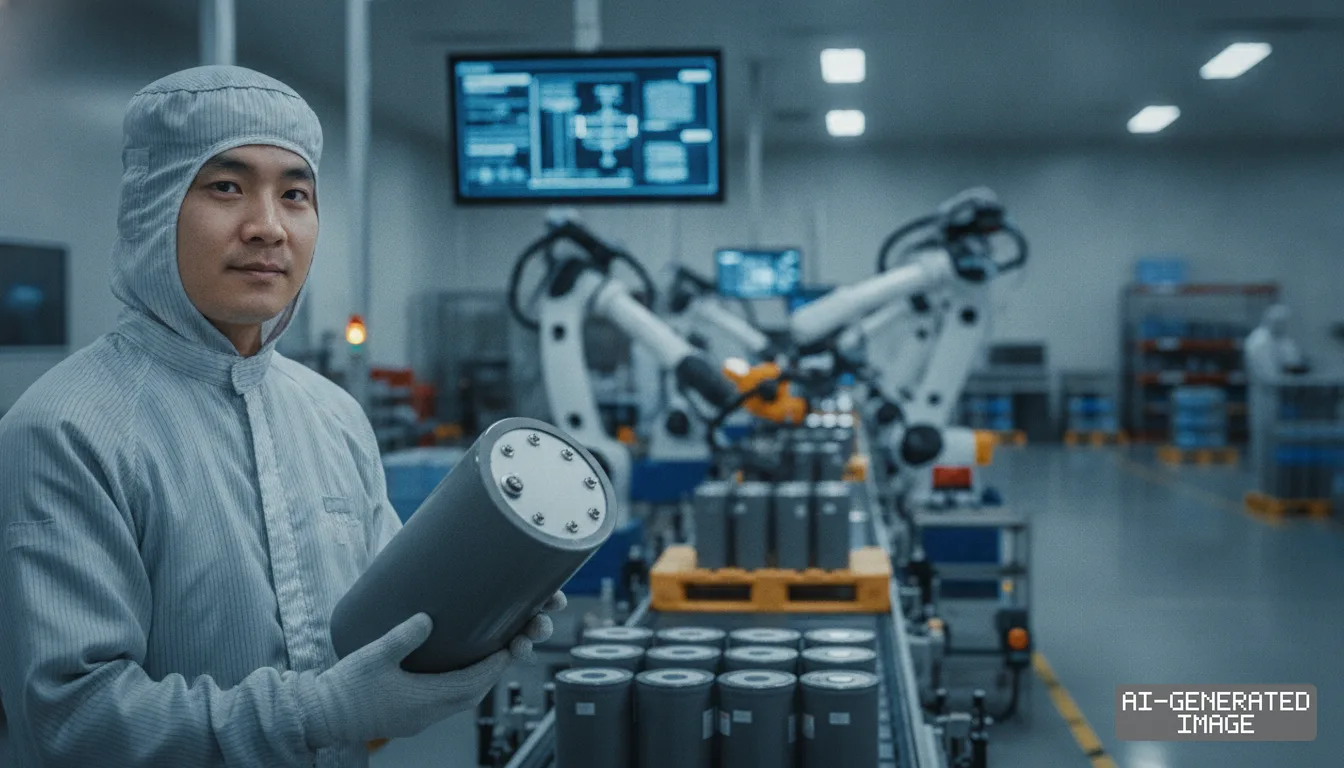
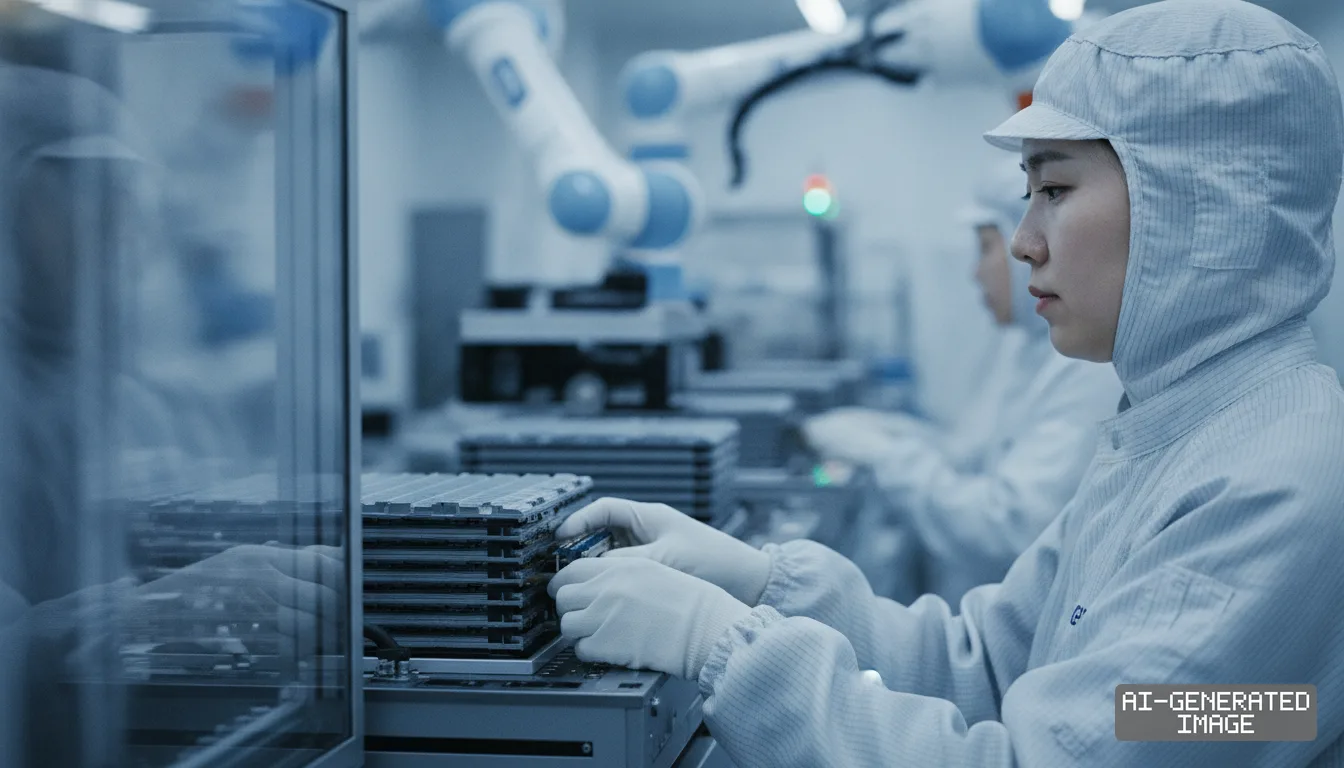
To fulfill prompt commercial obligations, POSCO Future M converted portions of its existing high-nickel cathode lines at Pohang. The adapted lines allow the company to bypass multiyear greenfield construction cycles and supply qualified materials by late 2026.
Initial qualification runs on the converted Pohang equipment began in August following an agreement to supply 190,000 metric tons. Samsung SDI doubled those planned volumes when negotiating the finalized 6-trillion-won contract two months later.
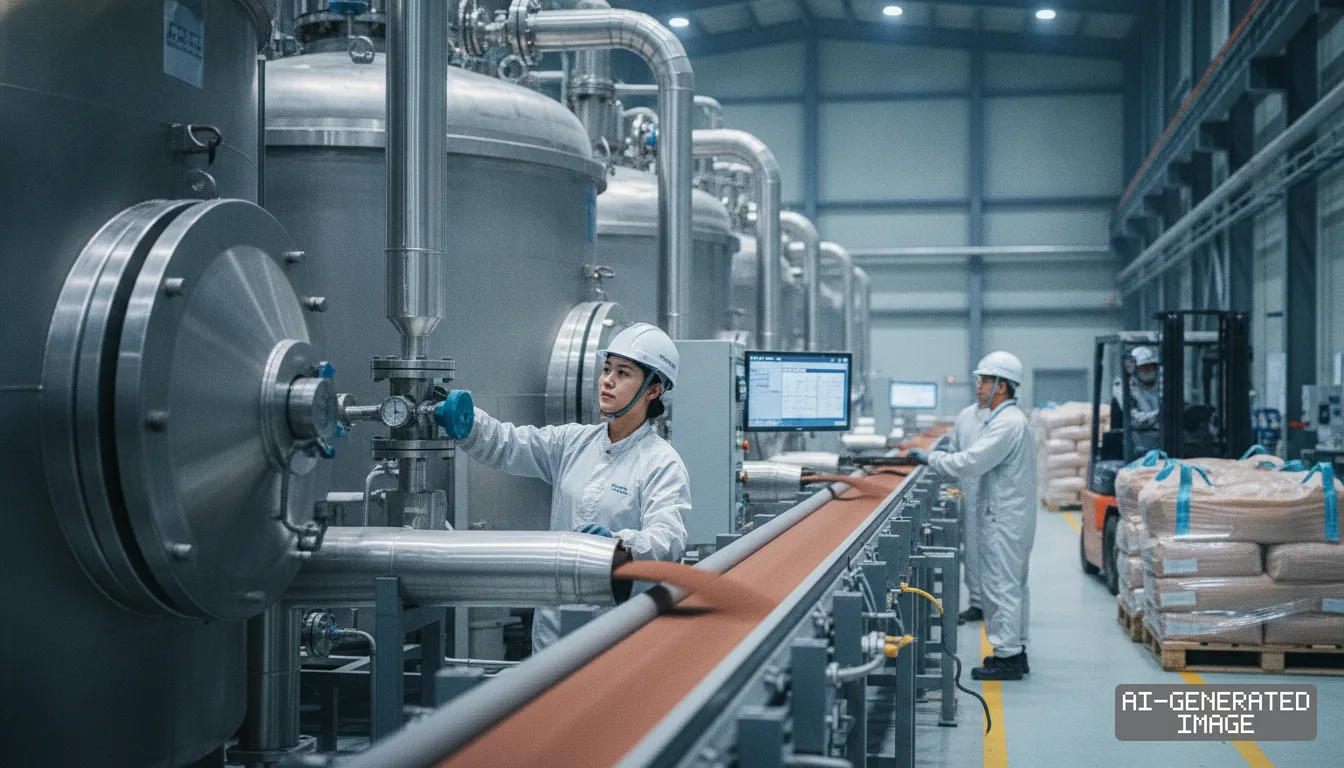
In parallel, POSCO Future M broke ground May 28 on a dedicated 50,000-ton lithium iron phosphate manufacturing facility in Pohang. The factory is scheduled to finish construction and begin commercial mass production in late 2027.
That greenfield project operates under CNP New Materials Technology, a joint venture established with Chinese precursor specialist CNGR and its Korean unit FINO. The municipal government of Pohang signed an initial 500-billion-won investment protocol for the site.
Lithium iron phosphate — often abbreviated as LFP — uses iron and phosphorus instead of costly nickel and cobalt. The chemistry delivers roughly 20% lower raw material costs and eliminates thermal runaway risks that cause battery fires.
The trade-off comes in lower energy density, which reduces driving range in passenger electric vehicles. Stationary power storage systems face no weight or space constraints, making low manufacturing cost and long cycle life the dominant purchasing criteria.
Demand for stationary battery storage has surged as artificial intelligence data centers strain American electrical grids. Grid operators install multi-megawatt battery systems to store surplus daytime solar electricity and dispatch power during evening peaks.
South Korean cell producers are racing to replace Chinese competitors in North America to comply with trade rules. The United States Foreign Entity of Concern guidelines restrict tax credits for battery systems containing Chinese-processed critical minerals.
By sourcing cathode active material from South Korean factories, battery makers ensure their energy storage containers qualify for clean energy incentives. Chinese cathode producers face an effective exclusion from direct supply into federally backed American storage projects.
POSCO Future M plans to feed its Pohang kilns with lithium carbonate extracted from POSCO Group brine operations in Argentina. Upstream resource integration shields the cathode production process from Chinese supply chain dependencies that trigger regulatory disqualification.
The company is also qualifying high-voltage mid-nickel and lithium-manganese-rich formulations to complement its iron-based portfolio. Management aims to offer distinct chemical compositions covering entry-level storage containers, commercial trucks and premium passenger cars.
Commercial deliveries from the converted Pohang lines remain on schedule to begin by late December. Volume shipments under the SK On and Samsung SDI contracts will expand steadily through 2027 as new cell assembly lines reach full utilization.
POSCO Future M has not filed a regulatory disclosure confirming an accelerated capital expenditure schedule or new customer sample evaluations initiated on Nov. 11. Company records confirm baseline sample certification began in August from converted high-nickel lines.
Impact map
How this development propagates across the region and out to global buyers.
| Event | Korea | China | Japan | Global impact |
|---|---|---|---|---|
| LFP cathode shift | POSCO Future M converts Pohang line to LFP, locking in contracts with Samsung SDI, SK On and LGES | CNGR captures overseas precursor revenue via Pohang CNP joint venture while Chinese cathode makers face US exclusion | Cell builders face heightened competition in North American utility grid tenders against Korean LFP supply | Utility battery container pricing eases roughly 20% on non-Chinese LFP cathode volume expansion |
In this story
- Companies
- POSCO Future MSamsung SDISK OnLG Energy Solution
- Tickers
- 003670.KS006400.KS373220.KS
- Exposed
- CNGR Advanced Material
- Policy
- Local Content RulesSubsidies
- Impact
- Supply ChainOrder BookCapex
Track every Local Content Rules development → Track every Subsidies development →
Related briefings
- Pino raises $133 million to expand Pohang cathode facility Also on CNGR Advanced Material, POSCO Future M, Local Content Rules
- POSCO Future M plans domestic LFP precursor supply by 2029 Also on CNGR Advanced Material, POSCO Future M, SK On
- Korean cathode makers pivot to LMR to halt Chinese LFP gains in EVs Also on CNGR Advanced Material, POSCO Future M, LG Energy Solution
- L&F signs $774 million LFP contract with LG Energy Solution Also on POSCO Future M, Local Content Rules, SK On
Sources
Primary documents
Reporting
Confidence: high — how we grade this
The documents behind this briefing are linked above. East Asia Brief produces its English text with AI assistance under human editorial review, and does not translate or republish other outlets' articles. See our methodology and AI policy. Spotted an error? Tell us.
The Morning Brief
What changed in Korean, Chinese and Japanese industry overnight — and what it means for your supply chain. One email, weekday mornings, US time. Free.
The Morning Brief is in preparation. Leave your address and we will write to you once — when the first issue is ready. Nothing before that.