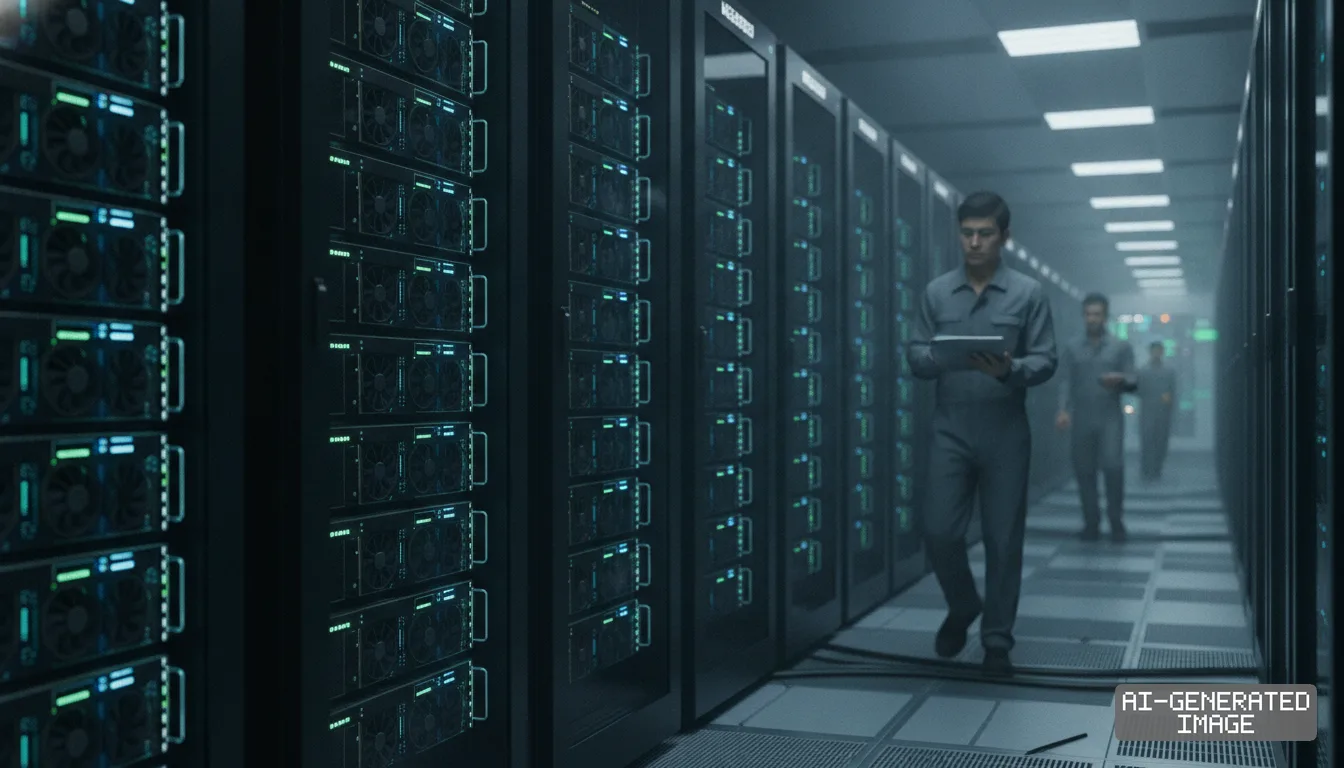
US expands AI chip licensing to data centers across seven nations
Draft Commerce Department rules require individual permits for Nvidia Blackwell exports to hubs including Singapore and Malaysia.
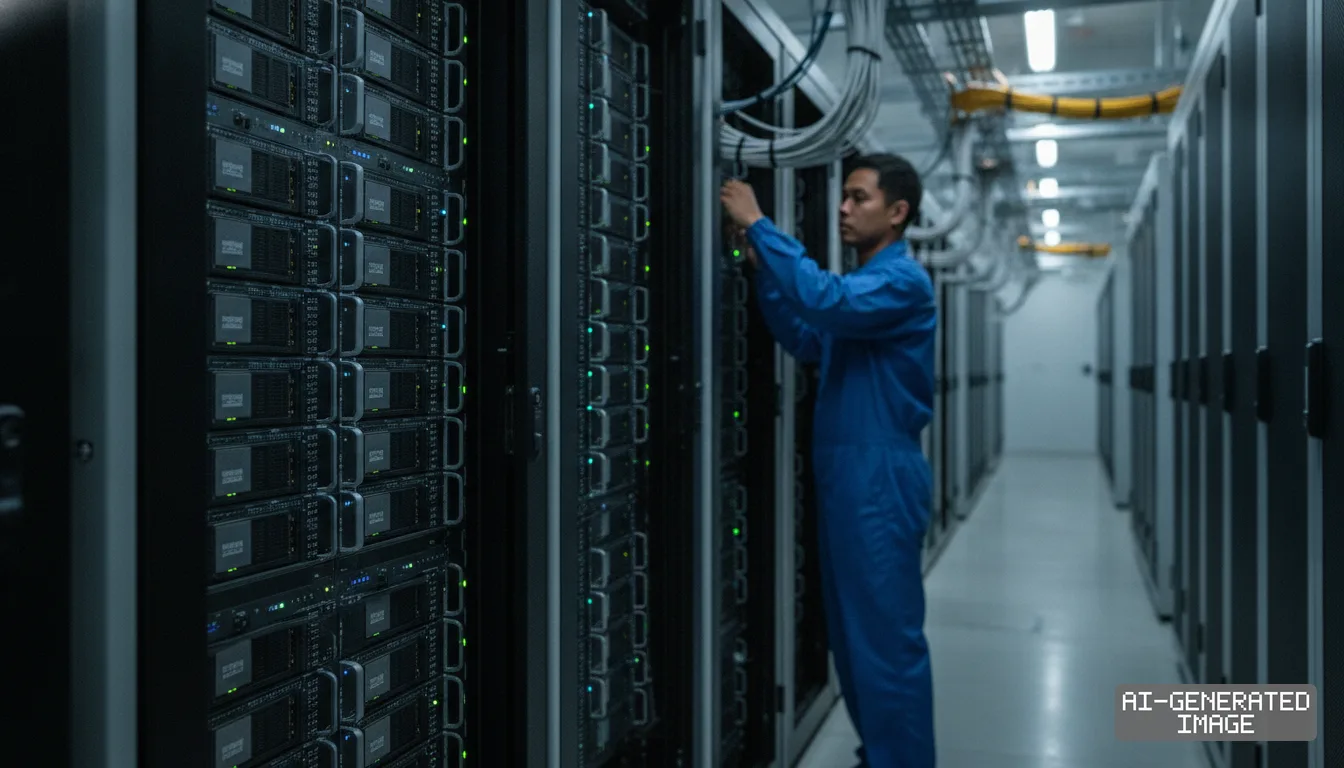
The US Commerce Department drafted export regulations on Nov. 12, 2026, requiring individual licenses to ship advanced computing chips to data centers across seven intermediary countries.
The measure expands physical and virtual semiconductor restrictions to Singapore, Malaysia, Thailand, Indonesia, Brazil, Norway and South Africa. The group includes prime expansion hubs for Southeast Asian data infrastructure.
The draft rules target high-performance artificial intelligence accelerators, including Nvidia's Blackwell architecture and next-generation Rubin processors. Nvidia generated $26.3 billion in data-center revenue last quarter, representing 88% of total corporate sales.
Under the regulatory framework, foreign-owned data centers operating in the seven designated nations must secure advance export authorizations from the Bureau of Industry and Security. Applicants must disclose all end customers and accept ongoing compliance audits.
Facilities operated by American cloud companies in those territories receive license exceptions under strict operational conditions. Those facilities must block remote access from countries subject to US arms embargoes, including China and Russia.
American operators must also implement mandatory customer verification protocols and report computing consumption metrics to Washington. The reporting requirements aim to prevent indirect access through commercial proxies or offshore corporate entities.
The draft framework builds on earlier geographic restrictions imposed on Middle Eastern hubs. The Commerce Department previously placed destinations such as the United Arab Emirates and Saudi Arabia under individual licensing mandates during 2023 and 2024.
The Bureau of Industry and Security issued enforcement guidance on May 31, 2026, confirming that export controls apply to foreign entities owned by Chinese parent companies regardless of physical location. That guidance targeted offshore shell companies procuring hardware.
The new rules address an operational pathway known as the cloud loophole. Chinese developers unable to buy physical chips have leased remote computing time from commercial data centers in Singapore and Malaysia to train advanced frontier models.
Chinese technology firms including Alibaba, Tencent and ByteDance previously secured multi-year compute contracts with third-party facilities in Southeast Asia. Those agreements allowed engineers in Shanghai and Shenzhen to run training jobs over ordinary cross-border network links.
Hardware vendors such as Nvidia face expanded compliance burdens across Southeast Asia, where data center investments have accelerated. International operators have committed billions of dollars to build multi-gigawatt facilities in regions like Johor, Malaysia.
Hyperscale operators in the seven listed countries must now establish technical barriers preventing Chinese developers from executing compute tasks. Failure to verify end users could disqualify overseas facilities from receiving future hardware shipments.
Legislative pressure in Washington accelerated the administrative action. The US House of Representatives passed the Remote Access Security Act by a 369-22 vote on Jan. 12, 2026, granting trade regulators explicit statutory authority over remote network access.
The legislation amended federal export control statutes to define remote computing access as an export transaction. Congressional leaders have sought to attach identical statutory provisions to the annual defense authorization package this winter.
The regulatory push forces international data center developers to divide their server fleets. Operators must either maintain verified American hardware pipelines or cater to non-compliant clients using legacy equipment, industry compliance managers said.
The Bureau of Industry and Security plans to circulate the finalized rule for interagency clearance ahead of expected publication in the Federal Register in late November 2026.
Congressional negotiators intend to advance the companion statutory authorities when the Senate reviews the National Defense Authorization Act in December 2026.
The Commerce Department has not published the official rule text in the Federal Register, and regulators have not settled the precise technical thresholds that will apply to managed platform services.
Impact map
How this development propagates across the region and out to global buyers.
| Event | Korea | China | Japan | Global impact |
|---|---|---|---|---|
| AI cloud bypass curb | no direct exposure, domestic CSPs maintain separate Western sovereign clouds | Alibaba and Tencent lose offshore GPU rental conduits for frontier model training | data center operators in Tokyo face increased customer audit requirements | hyperscalers operating in Southeast Asia face mandatory BIS customer monitoring |
In this story
- Companies
- Nvidia
- Tickers
- NVDA
- Exposed
- AlibabaTencentByteDance
- Policy
- Export Controls
- Impact
- Supply ChainComplianceOrder Book
Track every Export Controls development →
Related briefings
- Nvidia defends $7.9B China sales as Jensen Huang resists wider curbs Also on Alibaba, Tencent, ByteDance
- Nvidia halts H200 chip lines, shifting TSMC output to Rubin Also on Alibaba, Tencent, ByteDance
- China Telecom network hosts 32 barred Nvidia B300 chips in leak Also on Alibaba, Tencent, Nvidia
- Xi Jinping plans business delegation for Donald Trump summit Also on ByteDance, Nvidia, Export Controls
Sources
Primary documents
Reporting
Confidence: high — how we grade this
The documents behind this briefing are linked above. East Asia Brief produces its English text with AI assistance under human editorial review, and does not translate or republish other outlets' articles. See our methodology and AI policy. Spotted an error? Tell us.
The Morning Brief
What changed in Korean, Chinese and Japanese industry overnight — and what it means for your supply chain. One email, weekday mornings, US time. Free.
The Morning Brief is in preparation. Leave your address and we will write to you once — when the first issue is ready. Nothing before that.