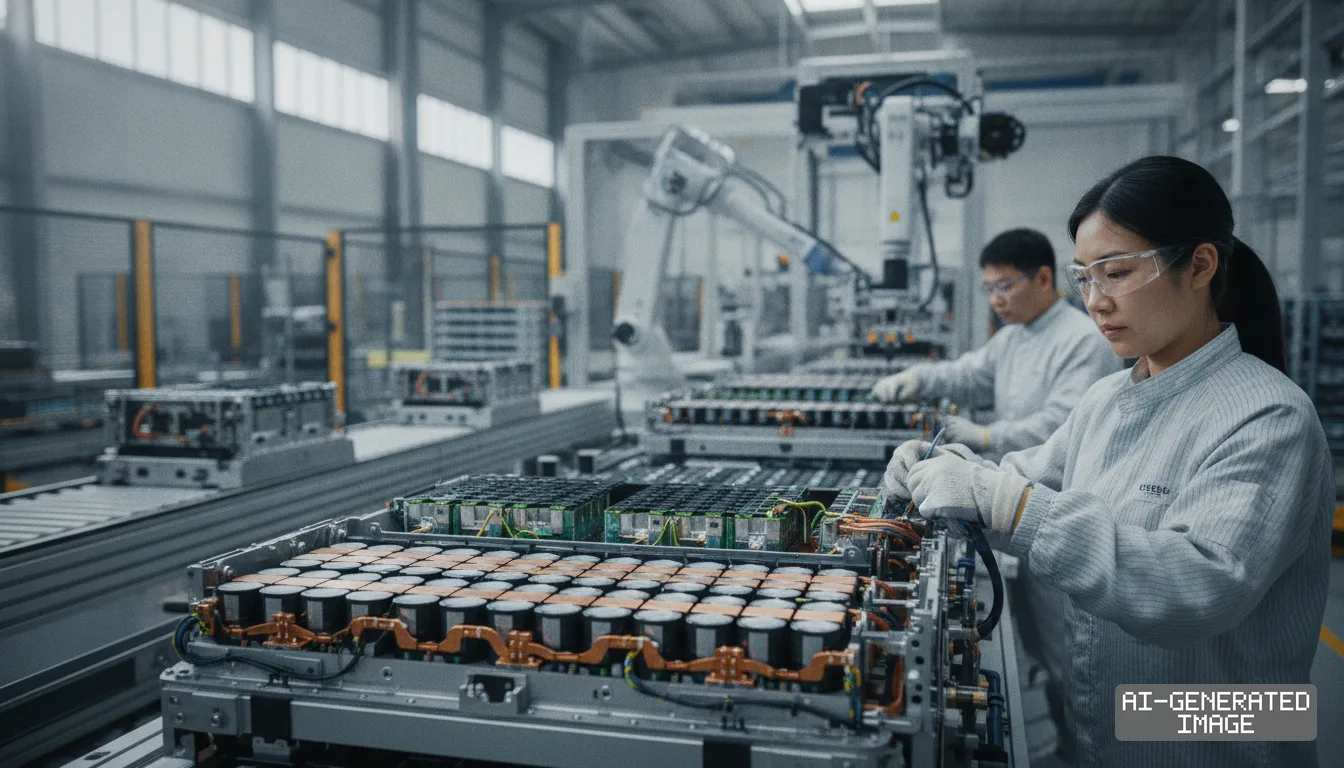
Lutnick halts Nvidia curbs on Megaspeed over White House row
The Commerce Department delayed Entity List action against the Singapore cloud firm over suspected diversion of 240,000 artificial intelligence processors.
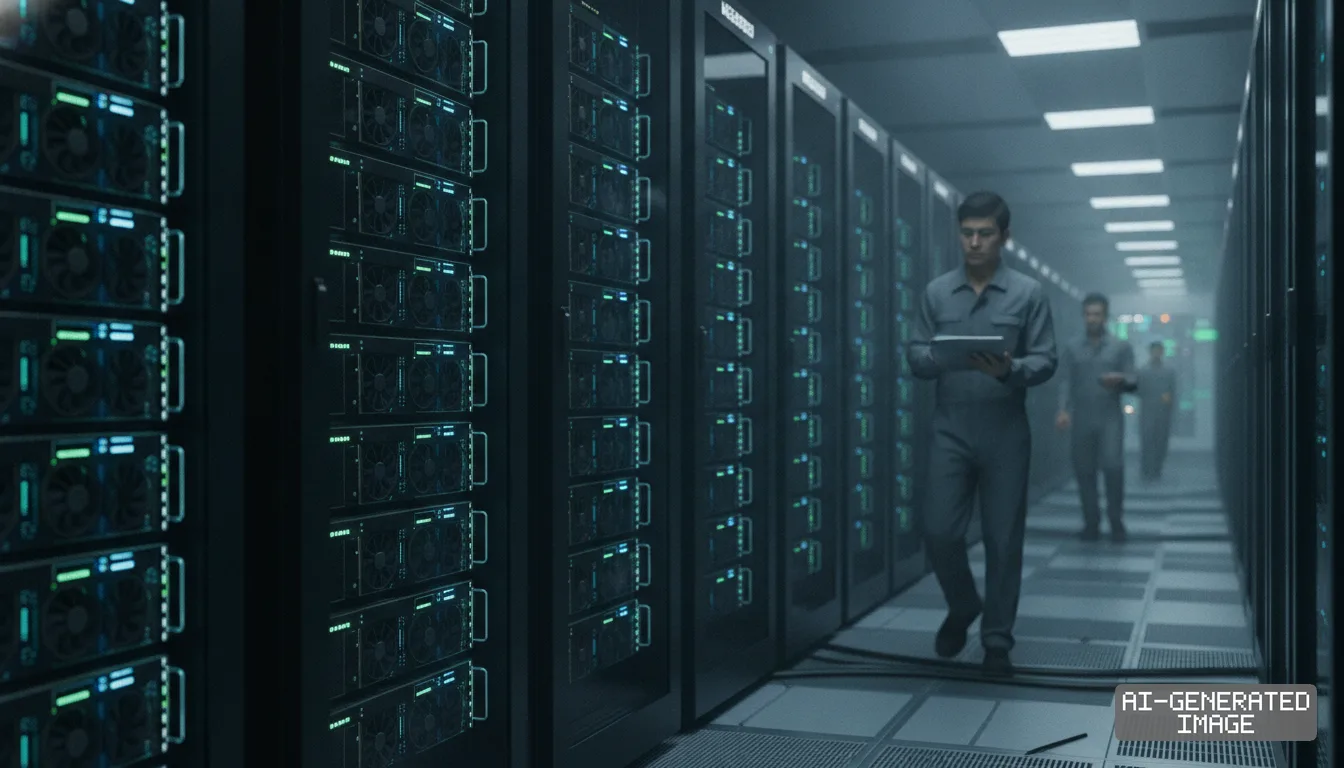
US Commerce Secretary Howard Lutnick stalled proposed export curbs against Nvidia customers on Nov. 12, following a White House clash over Chinese access to advanced artificial intelligence chips.
The disputed enforcement targets Singapore-based cloud provider Megaspeed, which purchased between $4 billion and $4.8 billion in Nvidia processors since mid-2024. That volume represents roughly 240,000 advanced graphics processing units.
Nvidia relies on third-party data center operators across Southeast Asia to distribute computing capacity throughout the Asia-Pacific market. Cabinet officials suspect Megaspeed diverted restricted processors to customers in mainland China through regional facilities.
Treasury Secretary Scott Bessent challenged Lutnick directly during a Situation Room meeting on Nov. 5, demanding why Megaspeed remained absent from the federal Entity List. The list bars designated foreign entities from purchasing American technology.
Defense Secretary Pete Hegseth, Secretary of State Marco Rubio and US Trade Representative Jamieson Greer supported the immediate addition of Megaspeed. Lutnick replied that he needed to consult President Donald Trump before taking regulatory action.
The cabinet members moved the dispute to the Oval Office later that afternoon. Trump discussed the enforcement measures during a telephone call with Tesla Chief Executive Elon Musk, who favored tightening the semiconductor restrictions.
Trump authorized export enforcement actions against chip diversion channels for the third time this year during the session. Previous presidential authorizations occurred in May and August, but the Commerce Department did not execute corresponding administrative orders.
Lutnick argued against immediate sanctions during the Oval Office discussion, warning that listing Megaspeed would ignite a broader trade dispute with Beijing. The Commerce Department oversees the Bureau of Industry and Security, which administers the Entity List.
Other cabinet officials pushed back, asserting that Beijing had already begun retaliatory trade measures. Lutnick nevertheless requested additional review time, effectively holding up publication of the licensing restrictions and company blacklists.
A Commerce Department spokesperson denied that a confrontation occurred between Lutnick and Bessent. The department has repeatedly declined to comment on specific licensing applications or confidential corporate compliance inquiries.
The Bureau of Industry and Security opened an inquiry into Megaspeed during 2024 after the firm established data center sites in Malaysia and Indonesia. Federal investigators examined whether those facilities leased computing capacity to Chinese state enterprises.
Megaspeed originated as a cloud gaming subsidiary founded in Shenzhen in 2008 before restructuring under Singapore incorporation in 2023. The firm operated out of modest commercial suites while ordering billions of dollars in high-performance hardware.
The regulatory standoff introduces commercial uncertainty for Nvidia, which generates large revenues from AI hardware deployed in regional data hubs. The company has stated that it complies with all US export control regulations.
The delay directly affects memory suppliers in South Korea, including SK hynix and Samsung Electronics. Both manufacturers produce high-bandwidth memory, known as HBM, which is stacked directly onto Nvidia accelerator architectures.
SK hynix supplies the majority of HBM3E packages used in Nvidia flagship AI systems, accounting for more than 50% of the global high-bandwidth memory market. Any disruption to Nvidia shipment volumes shifts procurement schedules for memory modules.
Samsung Electronics is completing qualification procedures to deliver advanced HBM3E chips to Nvidia server lines. Sudden changes in US export definitions threaten to alter delivery schedules for 12-layer memory stacks throughout 2027.
South Korean trade officials have maintained close contact with the Commerce Department to track potential revisions to foreign direct product rules. South Korean semiconductor exports to Southeast Asian logistics hubs grew by double digits during 2025.
Technology procurement managers across East Asia are monitoring the dispute to assess server delivery lead times. A sudden Entity List designation would freeze equipment deliveries, leaving multi-megawatt data centers without scheduled processor allocations.
Congressional scrutiny over export control enforcement has accelerated following the White House deliberations. Members of the Senate Select Committee on Intelligence formally requested interagency briefings on Megaspeed and semiconductor diversion networks.
Congressional committees have scheduled a closed-door briefing on semiconductor export enforcement with national security officials for Nov. 18. Lawmakers intend to question agency heads regarding stalled enforcement measures and corporate compliance reviews.
The Commerce Department has not published an administrative order or Federal Register notice designating Megaspeed or pausing enforcement, leaving the legal status of future Entity List actions unconfirmed.
Federal licensing records show that current export authorizations for general-purpose server shipments to Singapore data centers remain active through the end of the current quarter.
Impact map
How this development propagates across the region and out to global buyers.
| Event | Korea | China | Japan | Global impact |
|---|---|---|---|---|
| Megaspeed export control delay | SK hynix and Samsung face procurement volatility for HBM3E modules tied to Nvidia server channels | Chinese cloud providers retain temporary access to compute capacity in Southeast Asian data centers | Tokyo Electron and packaging suppliers face uncertain delivery pacing for advanced GPU substrates | AI server supply chains navigate delayed BIS enforcement and regulatory review |
In this story
- Companies
- Nvidia
- Tickers
- NVDA
- Exposed
- SK hynixSamsung Electronics
- Policy
- Export Controls
- Impact
- ComplianceSupply Chain
Track every Export Controls development →
Related briefings
- US lawmakers summon Nvidia CEO over China export diversion risks Also on Nvidia, SK hynix, Samsung Electronics
- Nvidia halts H200 chip lines, shifting TSMC output to Rubin Also on Nvidia, SK hynix, Samsung Electronics
- OpenAI abandons China chip curbs as Nvidia protects exports Also on Nvidia, SK hynix, Samsung Electronics
- Foreign funds pull $2B from Samsung and SK hynix in two-day rout Also on Nvidia, SK hynix, Samsung Electronics
Sources
Primary documents
Reporting
Confidence: high — how we grade this
The documents behind this briefing are linked above. East Asia Brief produces its English text with AI assistance under human editorial review, and does not translate or republish other outlets' articles. See our methodology and AI policy. Spotted an error? Tell us.
The Morning Brief
What changed in Korean, Chinese and Japanese industry overnight — and what it means for your supply chain. One email, weekday mornings, US time. Free.
The Morning Brief is in preparation. Leave your address and we will write to you once — when the first issue is ready. Nothing before that.